
My Cart
You have no items in your shopping cart.

The French word façade means “The Front Face”.
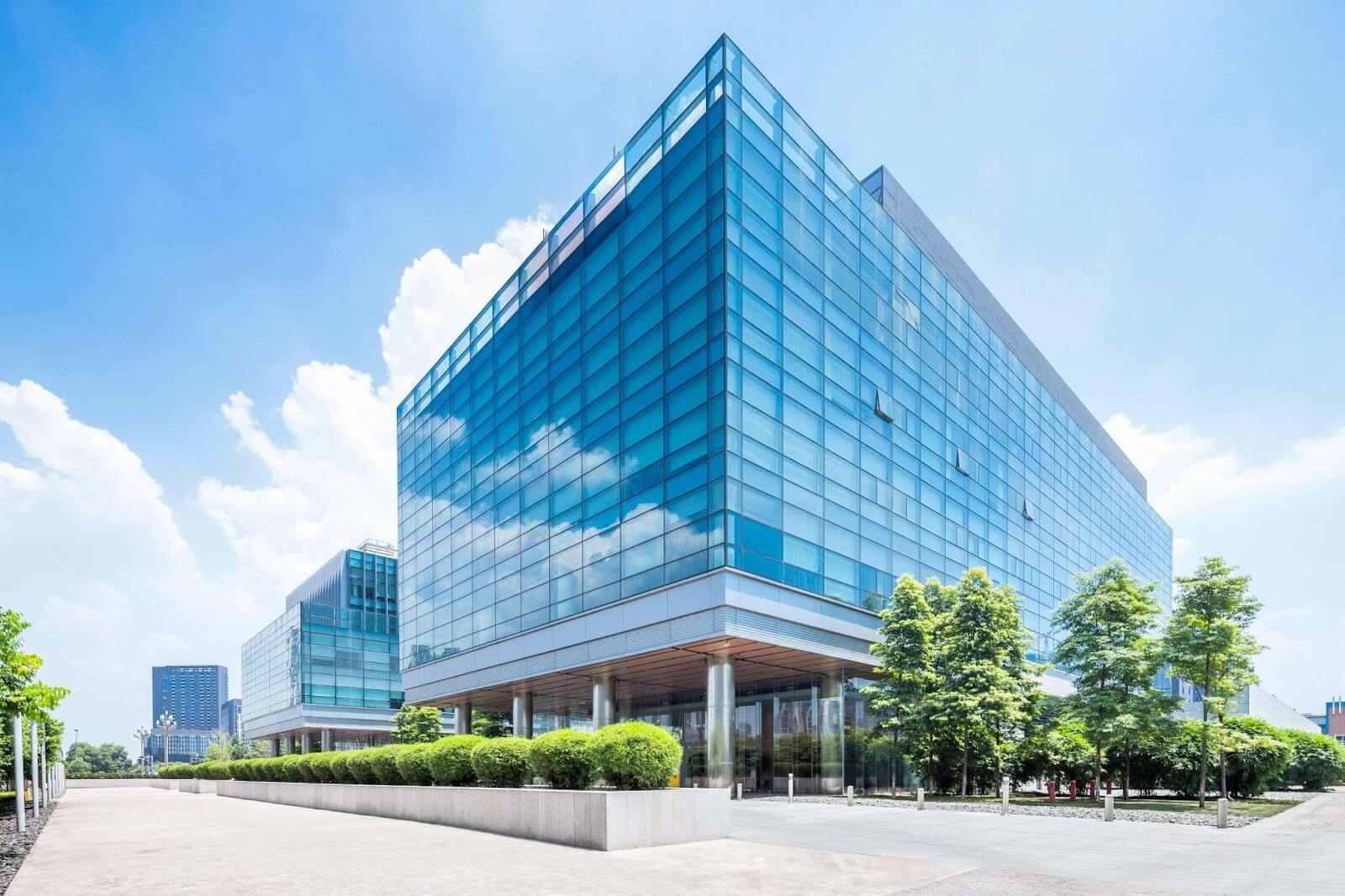
Glass facades are used in commercial architecture for making good first impressions. Commercial buildings and retail stores leverage glass fronts to deliver the perfect fusion of performance and aesthetics. Architects and designers regulate every aspect of structural performance by featuring the right type of glass in the building front. Maximum practical value and exceptional curb appeal have made the glass building facade a popular trend. Let’s explore the ins and outs of this building trend in this blog.
Table of Contents
The outer glass covering of a building is referred to as a glass facade. It is usually used to enhance commercial buildings and storefronts. A glass front is one of the most popular ways of instantly elevating the style statement of a building. Along with aesthetics, a glass front also offers sound insulation, thermal resistance, and uninterrupted light flow.
Glass is a versatile material. With the evolution of manufacturing techniques, different types of glass are now easily available in the market. Every glass type fits a different set of requirements. So you have a wide spectrum of options to choose from. For glass building facades, laminated and insulated glass is the preferred option.
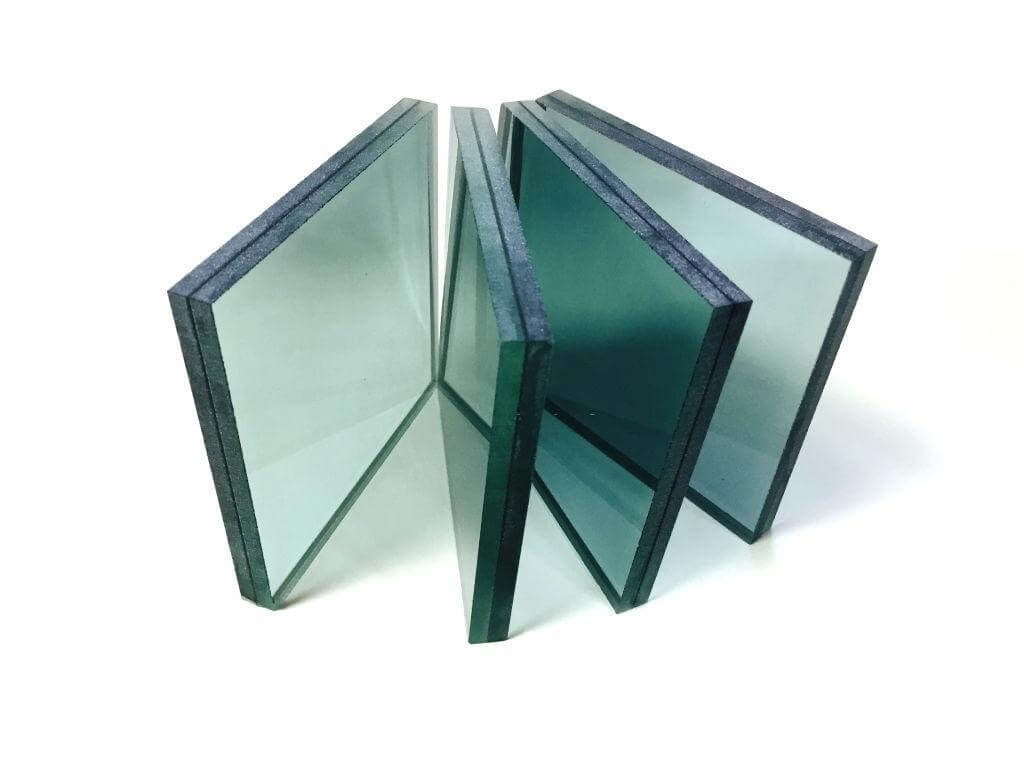
Laminated glass is a multi-layer glass type. The glass panes have a resinous adhesive in between that hold the glass panes together even in an event of very hard impact. Laminate glass is a potentially unbreakable glass. It also offers thermal and sound insulation. Therefore, it is a great option for glass fronts.
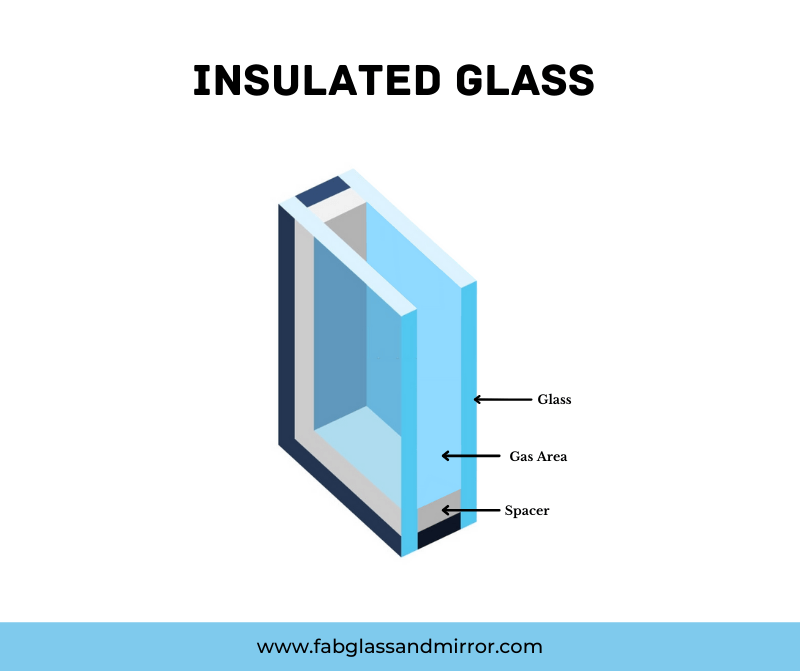
Insulated glass is similar to laminated glass in the fact that both glass types have multi-layer construction. The difference lies in the spacer material. In insulated glass units, the spacer material is an inert gas or vacuum. This interlayer is responsible for ideal thermal insulation. The layer between the glass panes doesn’t let the outside hot or cold air to flow through it. Thus maintaining a desired interior temperature. Due to maximum energy efficiency and reasonable strength, insulated glass units also qualify as a suitable choice to be used in glass building fronts.
A glass front is up against weather changes and temperature variations, so it’s important to choose the right glass thickness to lend suitable strength and resilience to the building facade. The recommended glass thickness for a glass front lies in the range of ⅜” to ½”. The laminated or insulated glass of this thickness range is perfect to endure the impact of temperature and weather changes.
Glass building fronts are an architectural marvel. They come in a variety of types based on the building structure. Here is a roundup of the different types of glass building facades.

Curtain wall facades feature a non-structural outer covering. The glass panels are then installed in these structures to achieve an outer glass covering. The curtain-like structures are incorporated to support the weight of the glass panels only. So lighter materials can be used for their construction thus lowering the construction cost. Connections are created between curtain walls and building columns to shift the wind load from the glass panels. The curtain wall design works great for achieving the uninterrupted aesthetics of the glass facade.
Storefront facades are non-load-bearing glass walls that extend from the ground floor to the roof of the building. This facade is designed for ground floors. Therefore, the retail stores usually boast this kind of building facade. The continuous facade design ensures optimal thermal and sound insulation. It gives a high-end feel to the store. Storefront wall facades can be customized for different building architectures.
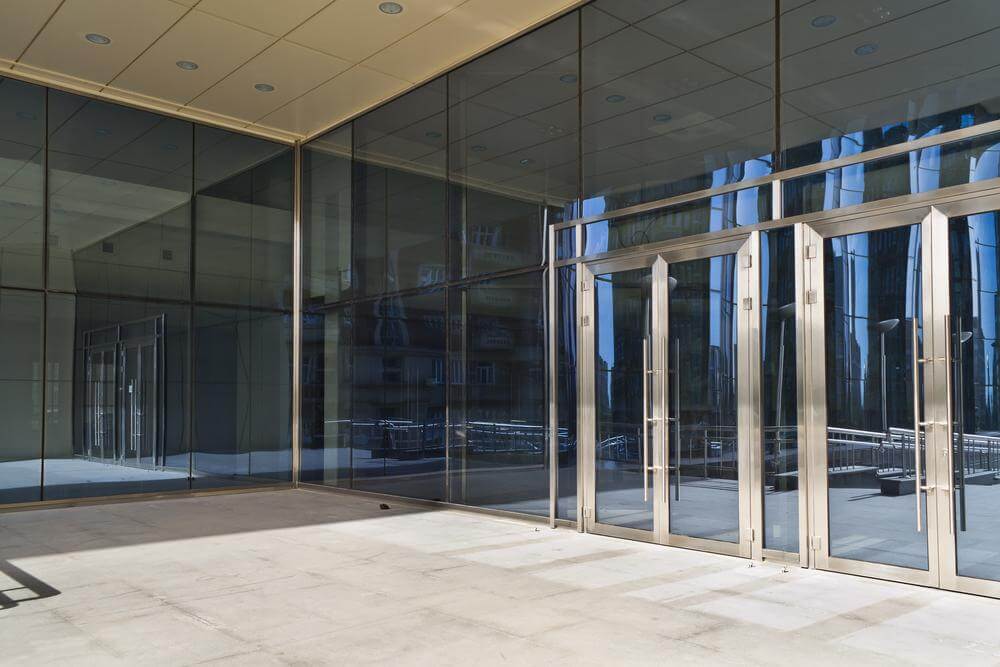
Framing building facades feature dedicated frames in which glass panels are fixed. The framing facades are further classified into two types.

Stick system gets its name from its long vertical posts structure. Vertical profiles are fixed to the building structure in which the glass panels are fixed. While the horizontal support is given by short horizontal projections that typically extend between vertical columns. The vertical posts and horizontal projections together form a rectangular frame that provides support to the glass from all four sides.
The unitized curtain walls are made up of huge pre-assembled and glazed units. The units are completely designed with glass panels fixed in framed structures. They serve as the building blocks for the glass front. The premade glass units are installed in the building front to provide an external envelope. The unitized curtain walls uphold high thermal efficiency, sound insulation, and fire safety value.
A semi-unitized wall is a sort of underlying glass front in which the core structural frames are raised and set separately in their places. In this structure, the vertical posts are fixed on the floor slabs first and then the horizontal projections are attached to achieve a grid-like support system.
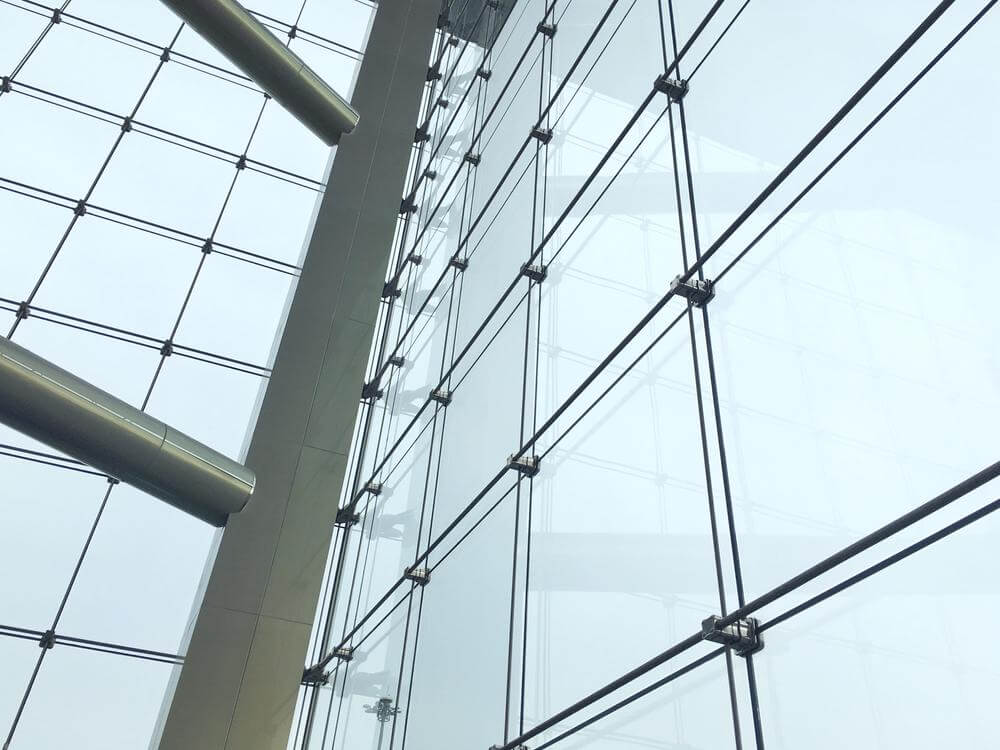
Frameless facades are the pinnacle of modern architectural design. They feature an all-glass design with a minimal support structure. Frameless facades open up the look and maximize the view. They radiate the ultimate aesthetic brilliance.

Tension rods and cable nets are mostly used to support the tension system facades. Due to the lack of framing material, these facades offer more transparency and an uninterrupted view.
Along with the evident aesthetic benefits, glass building facades also offer a number of structural benefits. Let’s explore some of the many benefits of investing in glass fronts.
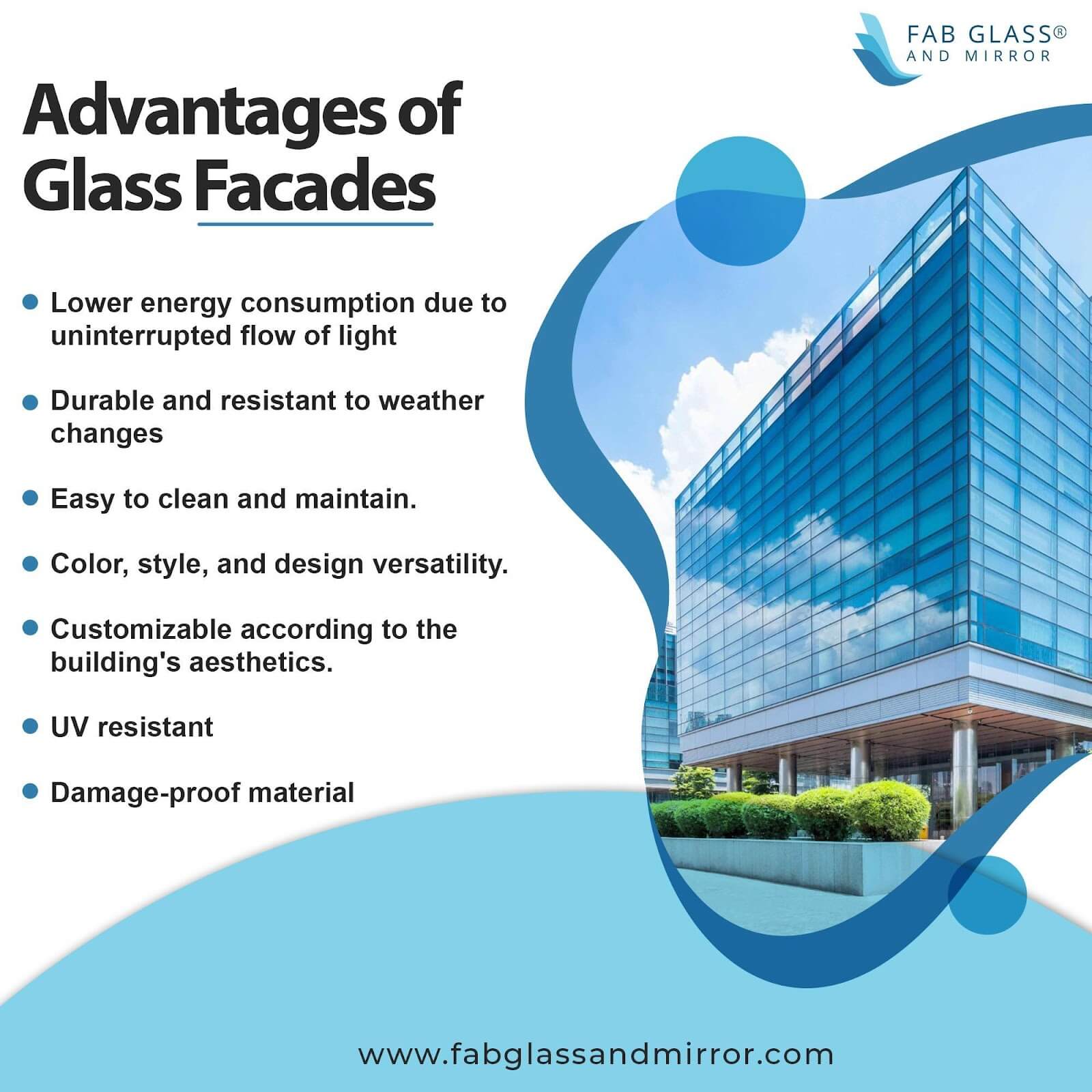
Due to the design flexibility and functional superiority, glass facades have already made their mark in the commercial building industry. Now, it is also becoming a popular trend in residential structures. From thermal and solar control to security, color, and overall aesthetic, you can control every noticeable building factor by choosing the glass front. Glass is an evergreen building material. The shiny aesthetics are never going out of style. So investing in glass facades is truly a lifetime deal.
Explore all things glass—from stylish table tops and insulated options to tinted and frosted designs. Discover guides on glass railings, custom cut glass, shelves, and stunning backsplash ideas for a modern home or office upgrade.