

My Cart
You have no items in your shopping cart.
The answer lies in Privacy Pattern Glass, a modern, elegant, and highly practical solution that merges form and function seamlessly.This article explores everything you need to know about privacy glass, what it is, how it works, where to use it, and how to choose the right type for your home or business. Whether you are considering frosted glass, or privacy pattern glass, this article gives you the clarity you need.
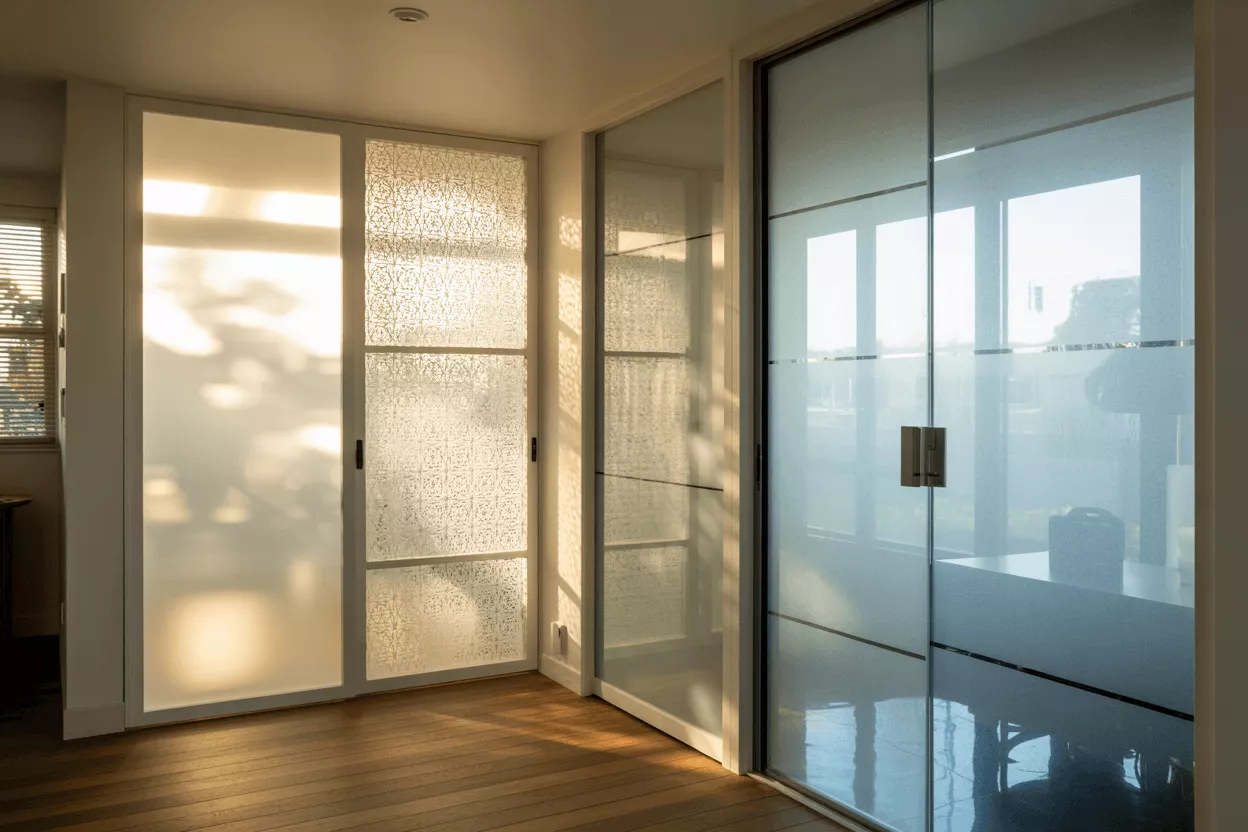
Table of Contents
Privacy glass is any glass that limits visibility through it while still allowing light to pass. It is designed to provide seclusion without making spaces feel closed or dark. From bathroom windows to glass shower doors and front door inserts, privacy glass is the practical alternative to blinds or curtains.
Produced by acid etching or sandblasting, frosted glass diffuses light and blurs visibility. It’s timeless, low maintenance, and perfect for bathrooms or office partitions.
This type incorporates pattern that reduce transparency. It’s common in offices and vehicles where both privacy and glare control are required.
Made by bonding two sheets of glass with an opaque or translucent interlayer for safety and privacy.
A thin frosted privacy glass window film can be applied directly to existing glass surfaces for an instant privacy upgrade, without replacing the glass.
Mimicking the elegant appearance of heavy rain trickling down a windowpane, this glass offers high obscurity. It provides a decorative, natural aesthetic that is extremely popular for shower enclosures and bathroom windows.
Also known as fluted or ribbed glass, this style features a vertical linear pattern. It elegantly distorts the view while creating an architectural, modern look ideal for room dividers, doors, and cabinet inserts.
Incorporating tiny air bubbles trapped within the glass during manufacturing, seedy glass offers a rustic, vintage look. It scatters light beautifully while providing mild privacy, making it great for decorative cabinetry and retro-inspired entryways.
Featuring a distinct, gently rippled texture, this glass provides a high level of obscurity without sacrificing brightness. It diffuses light softly and is a practical, widely used option for shower doors and interior partitions.
Exhibiting a vertical, grooved pattern that resembles natural bamboo stalks, this glass adds an organic, exotic texture to the room. It partially obscures the view while still letting in plenty of ambient light.
This style combines the organic bamboo stalk pattern with a frosted, etched finish. The frosted layering elevates the privacy level significantly, making it almost completely opaque while retaining its elegant, nature-inspired design.
Characterized by a coarse, flowing, abstract pattern with deep lines that warp the objects behind it. It allows plenty of light to pass through, but restricts visibility to mere contours, offering great privacy.
Taking the highly textured Delta pattern and adding a frosted finish, Delta Frost provides maximum privacy. It obscures vision completely while offering a bold, textured aesthetic for doors and windows.

The mechanism depends on the type:
This flexibility makes privacy glass an ideal balance, open when you want it, private when you need it.
| Benefit | Why It Matters |
| Light & Privacy Together | Enjoy daylight without sacrificing privacy. |
| Sleek, Modern Aesthetic | Eliminates clutter from curtains and blinds. |
| Versatility | From bathroom windows to sliding glass doors, applications are limitless. |
| Energy Efficiency | Some privacy glass types block UV and heat, improving comfort. |
| Hygiene & Maintenance | Easier to clean than fabrics, ideal for healthcare and kitchens. |
| Smart Control | With switchable glass, privacy is just a button away. |

Bathrooms need privacy but also natural light. Frosted privacy glass, privacy glass shower doors, and privacy frosted glass window films create elegant, moisture-resistant solutions. For luxury bathrooms, smart privacy glass lets you make the glass clear or opaque instantly, no curtains, no mildew.
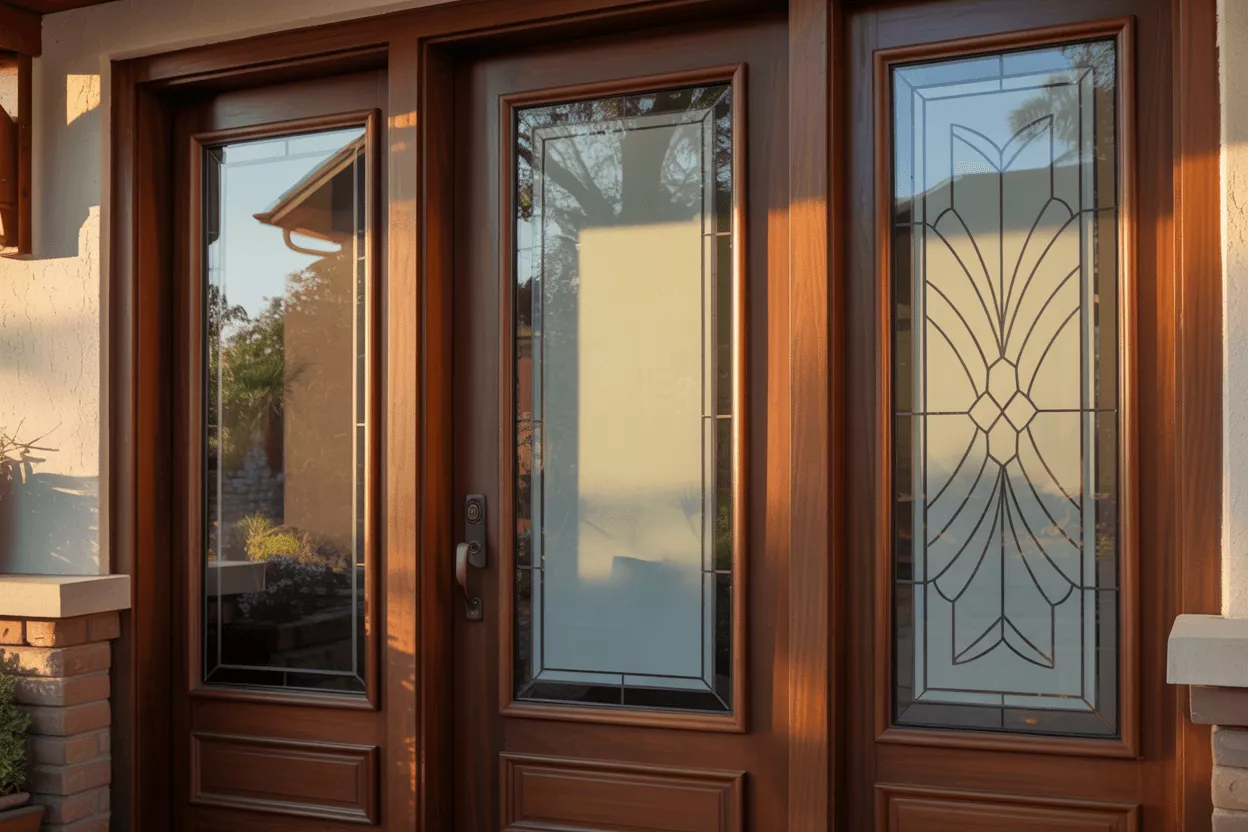
Your home’s entryway can look inviting while still protecting what’s inside. Front doors with privacy glass or glass front door privacy films give style and security simultaneously. Try frosted panels, decorative etched glass, or tinted inserts to balance privacy and aesthetics.

Large glass doors open spaces beautifully, but can expose your interior. Apply privacy film for sliding glass doors or sliding glass door privacy film for an easy retrofit that filters sunlight and blocks views from outside. If you’re designing new installations, laminated or smart privacy glass offers a permanent, durable upgrade.

In modern offices, transparency promotes openness, but not every meeting should be visible. Switchable privacy glass panels or glass door privacy film are perfect for conference rooms or manager cabins. You can instantly switch from open collaboration mode to private discussion at the flip of a switch.
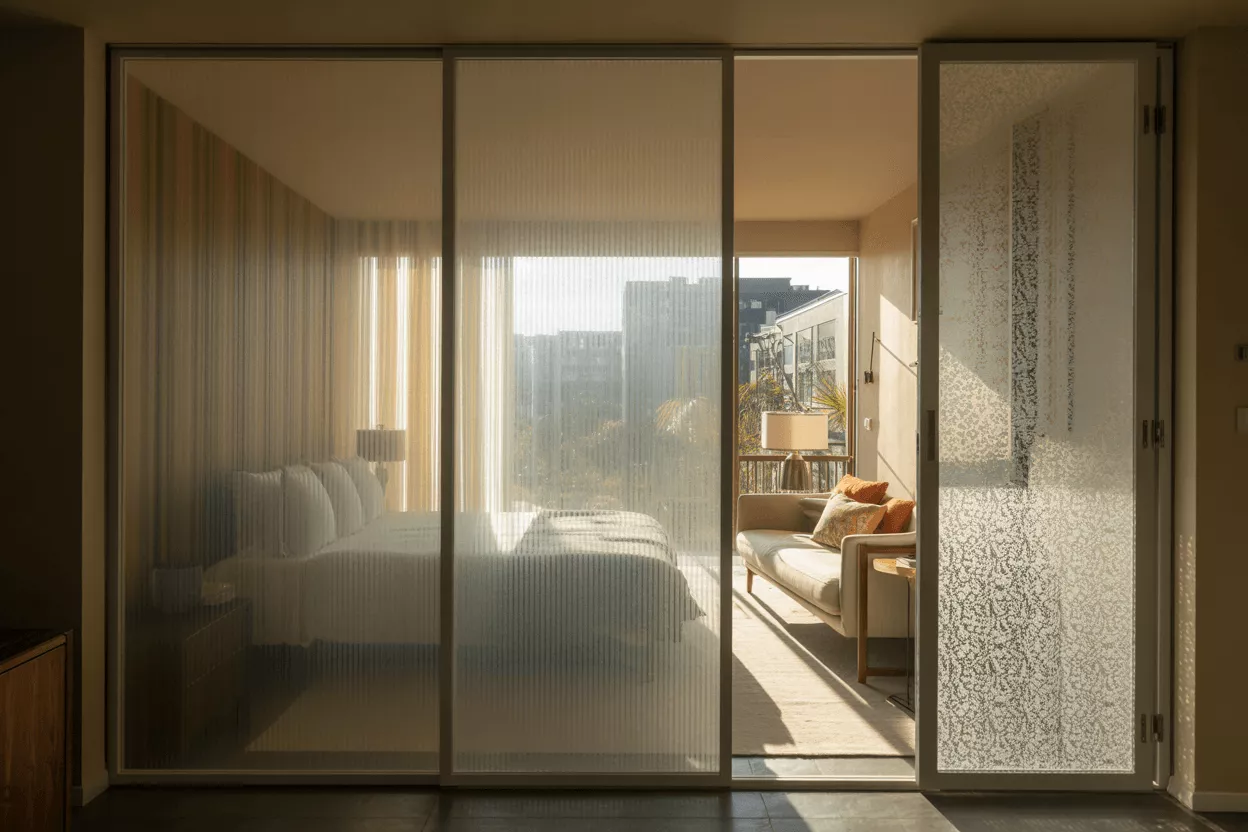
Glass walls between rooms add openness but can compromise privacy. Use privacy frosted glass or privacy glass film to separate spaces elegantly, maintaining design flow without visual intrusion.
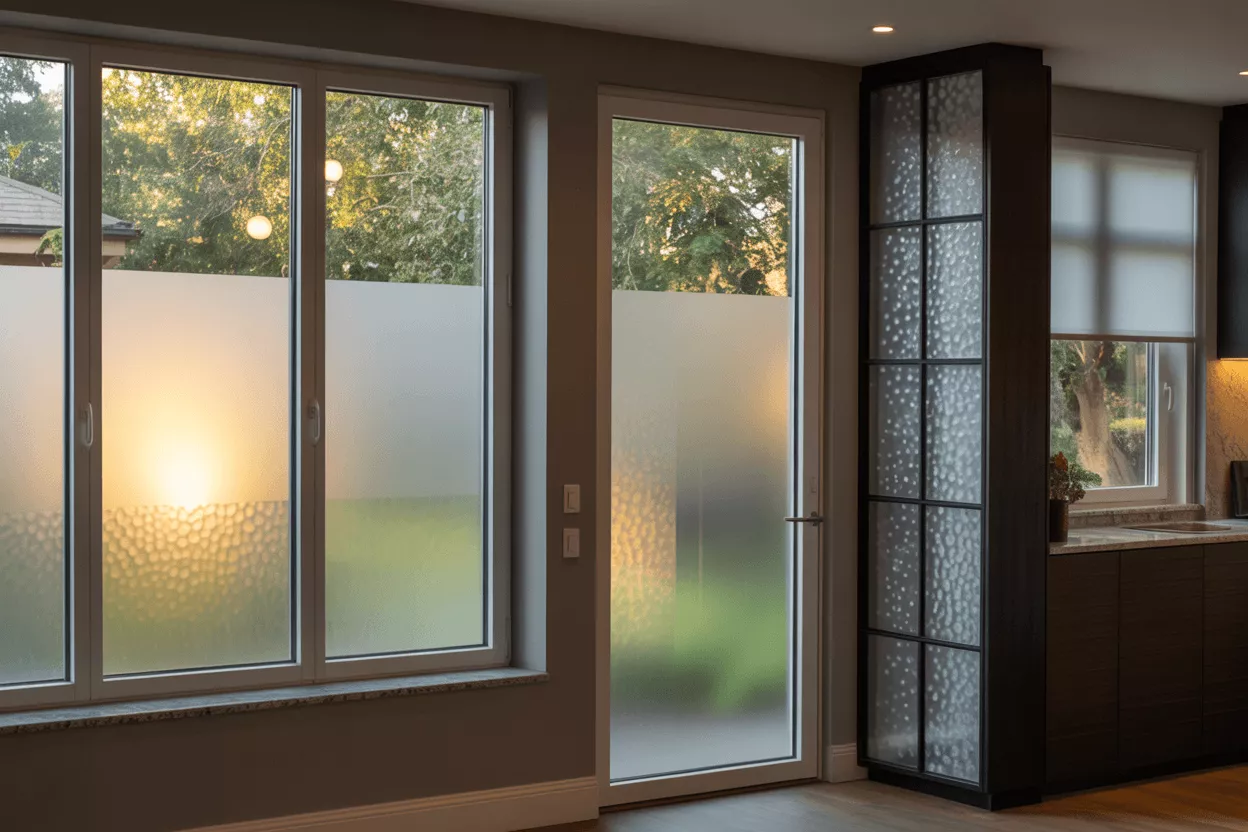
If you are wondering how to cover glass doors for privacy without ruining design, here are several methods:
Quick, affordable, and removable. Choose between frosted privacy glass window film, privacy frosted glass window film, or one-way mirror films. Ideal for renters or DIYers.
Replace clear glass with frosted glass panels. It’s permanent, elegant, and needs no upkeep.
Perfect for high-end installations. Pattern glass for privacy adds a decorative touch to cabinet doors, tabletops, and furniture, using styles such as Seedy Glass, Gluechip, Bubble Glass, and Spraylite.
For a semi-permanent solution, laminated glass incorporates opaque interlayers during manufacturing.
Stained, patterned, or textured glass adds privacy with a unique design flair.
Each option offers different price points and privacy levels, letting you customize based on need and budget.
Beyond architecture, privacy glass has made its mark in personal tech. A tempered glass privacy screen protector or privacy glass screen protector uses micro-louver technology to restrict viewing angles on phones or tablets, preventing others from seeing your screen.
If you have wondered “what is a privacy screen protector”, it is essentially the same concept, it controls light direction to ensure only the direct viewer sees the display.
With minimal upkeep, privacy glass remains pristine and functional for years.
Advantages
Limitations
Still, when chosen wisely, privacy glass pays off in aesthetics, efficiency, and long-term satisfaction.
Before deciding, consider these factors:
Privacy no longer means pulling heavy curtains or blocking sunlight. With privacy glass (pattern glass), you can achieve the perfect blend of illumination, aesthetics, and discretion, whether it is for a bathroom window, front door, or double sliding shower glass door.
Fab Glass and Mirror offer a wide range of glass solutions, from timeless frosted finishes to frosted and tinted glass solutions, helping you protect your privacy while preserving design integrity.
Privacy glass is any pattern glass designed to obscure vision while allowing light through. It ranges from frosted glass to switchable smart panels.
It works by scattering or filtering light using texture, coatings, making the glass translucent or opaque.
A tempered glass privacy screen protector uses special optical filters to block side views of a screen, keeping your display private.
Generally, no. Frosted glass diffuses light, meaning that while people outside might see soft silhouettes or shadows if a bright light is on inside, they cannot see distinct details or clear images.
Yes, privacy glass is typically more expensive than standard clear glass because it requires additional manufacturing processes, such as acid etching, sandblasting, or laminating. However, the exact price depends on the specific type of texture or pattern, you choose.
Yes! The most cost-effective way to achieve this is by applying a privacy glass film. These films come in various styles, including frosted, tinted, and patterned, and can be applied directly to your existing windows or shower doors without replacing the actual glass.
For a front door, you want a balance of natural light, security, and aesthetics. Frosted glass, Seedy glass, and Pattern #62 glass are excellent choices because they obscure the view into your home while still keeping your entryway bright and welcoming.
It depends on the type. While standard frosted or textured glass diffuses sunlight, it does not inherently block all UV rays. However, tinted privacy glass, laminated privacy glass, and certain high-quality privacy window films are specifically designed to block up to 99% of harmful UV rays, protecting your furniture and floors from fading.
Absolutely. When ordering privacy glass for bathrooms or shower enclosures (like Rain Glass or Spraylite), it is always fabricated using tempered safety glass. This ensures it is highly durable, impact-resistant, and safe for wet environments.
If you want maximum obscurity where shapes and silhouettes are completely hidden, Delta Frost or Bamboo Frost Glass are your best options.