
My Cart
You have no items in your shopping cart.

In restaurants and cafés, tabletops do far more than hold plates—they shape the dining experience, influence your brand aesthetic, and determine how efficiently your staff can work. Poor-quality surfaces stain, scratch, warp, and wear out quickly. That means constant reinvestment, frustrated staff, and a dining room that looks older than it is.
This is exactly why glass tabletops have surged in popularity across the hospitality industry. Stronger, cleaner, safer, and longer-lasting than traditional surfaces, they offer restaurants a premium look without forcing constant replacement.
Whether you’re searching for glass table top replacement, exploring glass tops for tables, or investing in custom glass table tops for a new dining concept, this guide walks you through everything you need to know—materials, safety, sizing, durability, design, ordering, installation, and more.
Table of Contents
Hospitality environments demand surfaces that can handle spills, scratches, heat, constant cleaning, and heavy guest turnover. Wood stains, stone etches, laminate warps and metal scratches.
Glass, on the other hand, offers:
The rising demand for glass on table tops, including rectangular designs, round glass table tops, and custom-cut solutions, is driven by one core advantage: glass is the rare material that is simultaneously durable, hygienic, and visually premium.
Whether you are looking for a glass top for dining table, coffee table, cocktail table, or full tabletop glass replacement, you will find the complete framework here.
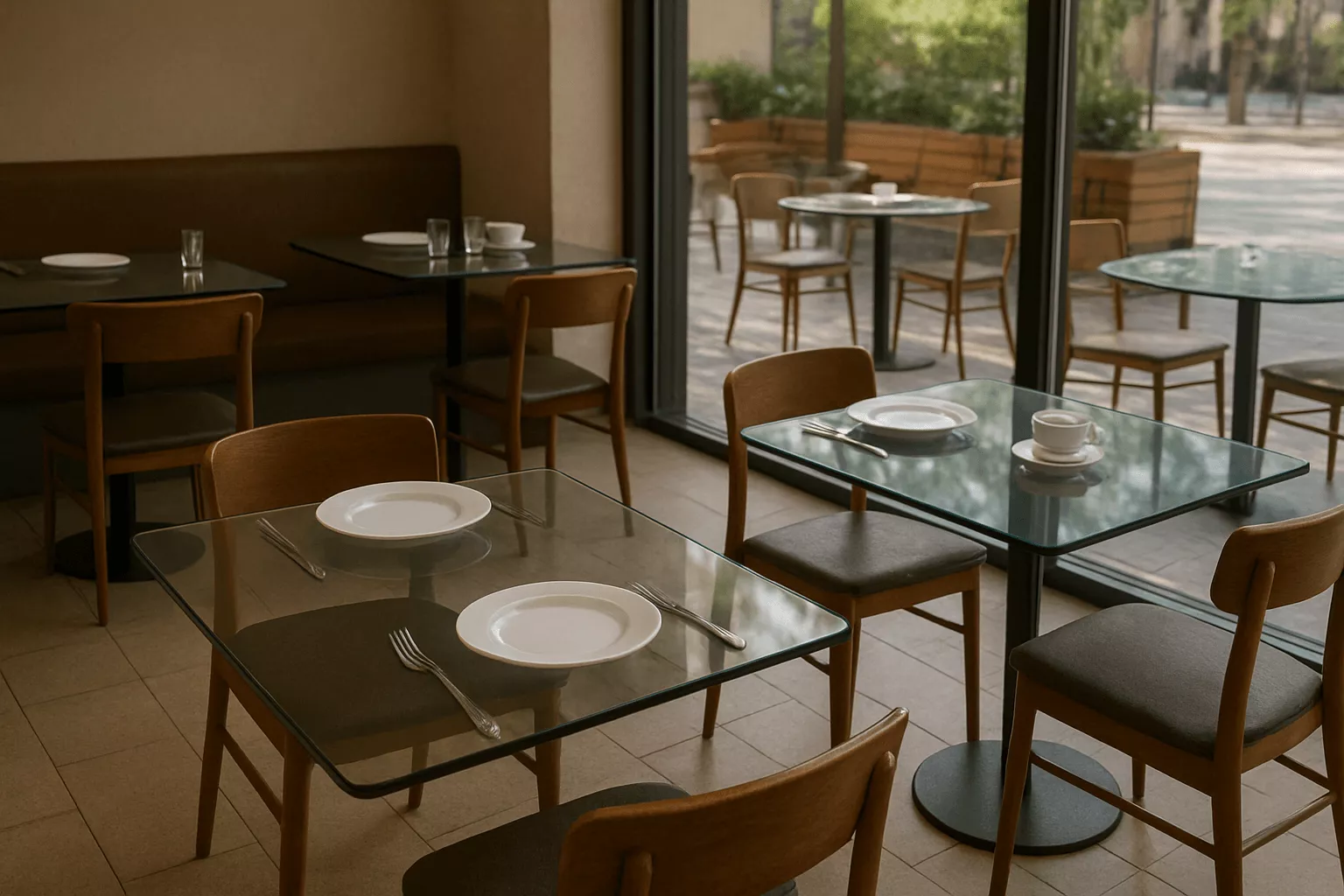
Restaurants and cafés typically choose between two commercial-grade options: tempered glass tabletops and laminated glass tabletops.
Tempered glass is strengthened using high heat and rapid cooling, making it up to five times stronger than standard glass.
It is the most common choice for:
Laminated glass is created by bonding two glass layers around a protective interlayer. When broken, the glass adheres to the film, making it even safer.
Best for:
If you are exploring glass top circular tables, dining room tables, or outdoor replacement options, laminated glass may be the right choice.
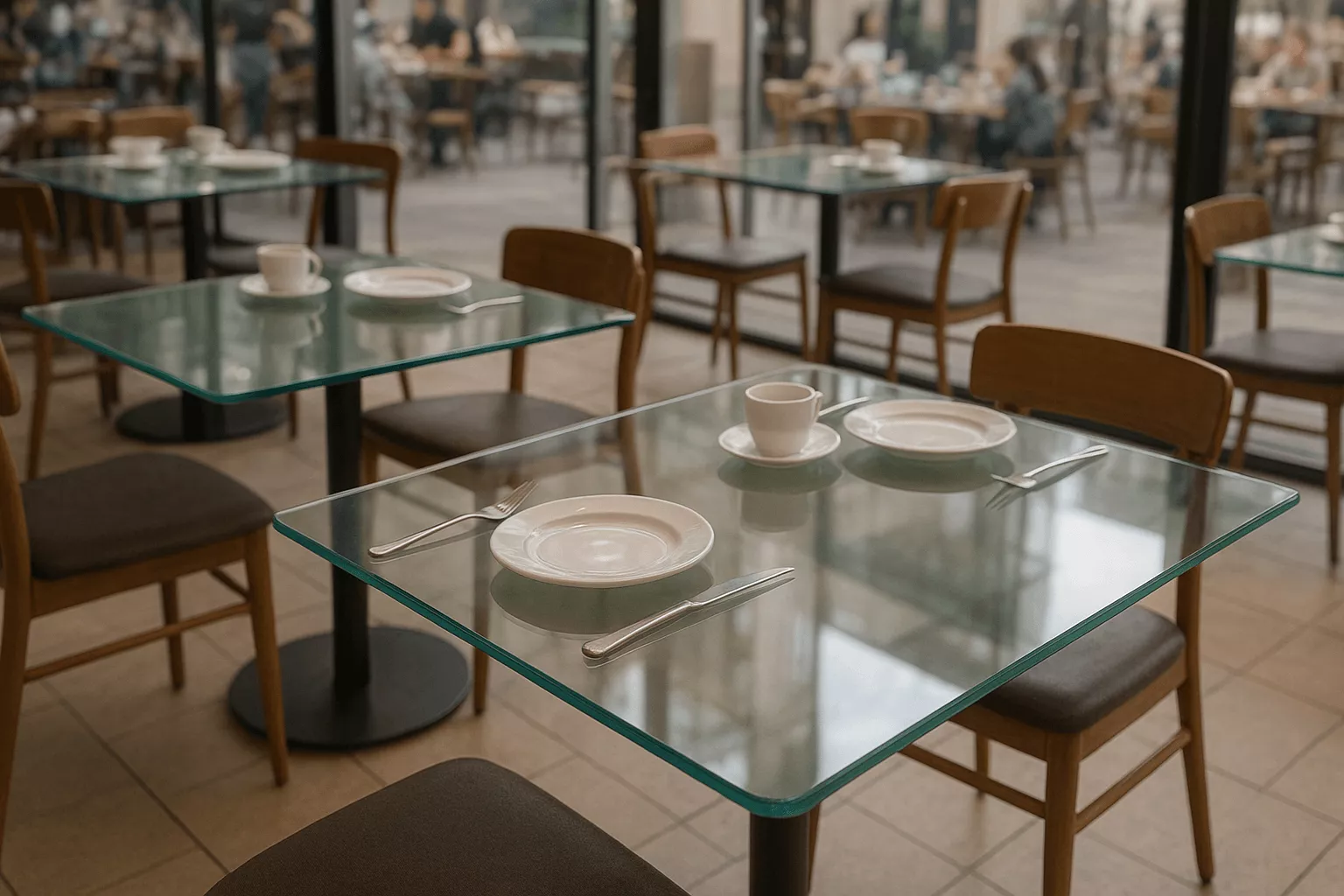
Glass is naturally non-porous. It doesn’t stain, absorb odors, or trap bacteria. Your staff can clean a tabletop in seconds with minimal effort, making it perfect for fast restaurants and busy cafés.
Traditional tabletops show wear quickly:
Tabletop glass eliminates nearly all of these issues. Its scratch resistance and durability drastically extend table lifespan.
Glass offers unmatched design versatility:
For restaurants modernizing their look, simply replacing tops with custom glass table tops creates an immediate visual upgrade.
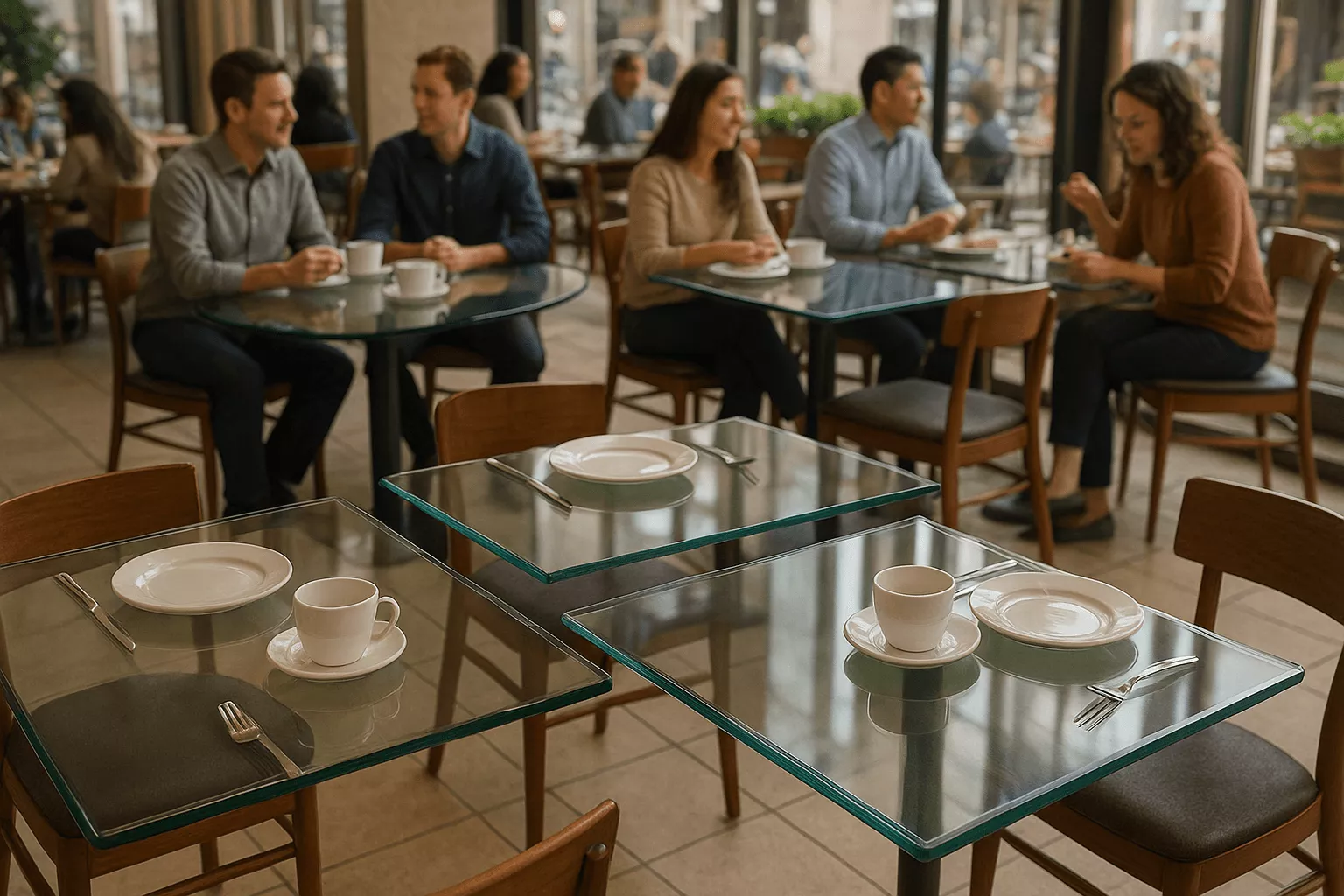
Commercial settings should use:
If you are replacing an existing surface, choose matching or slightly upgraded thickness.
Sharp edges or unfinished edges should never be used in commercial dining.
Your glass tabletop should meet:
These certifications guarantee commercial-grade safety and impact resistance.
A busy café replaced wooden surfaces with 3/8″ tempered glass.
Results:
A boutique hotel installed laminated, tinted circular glass tops.
Outcomes:
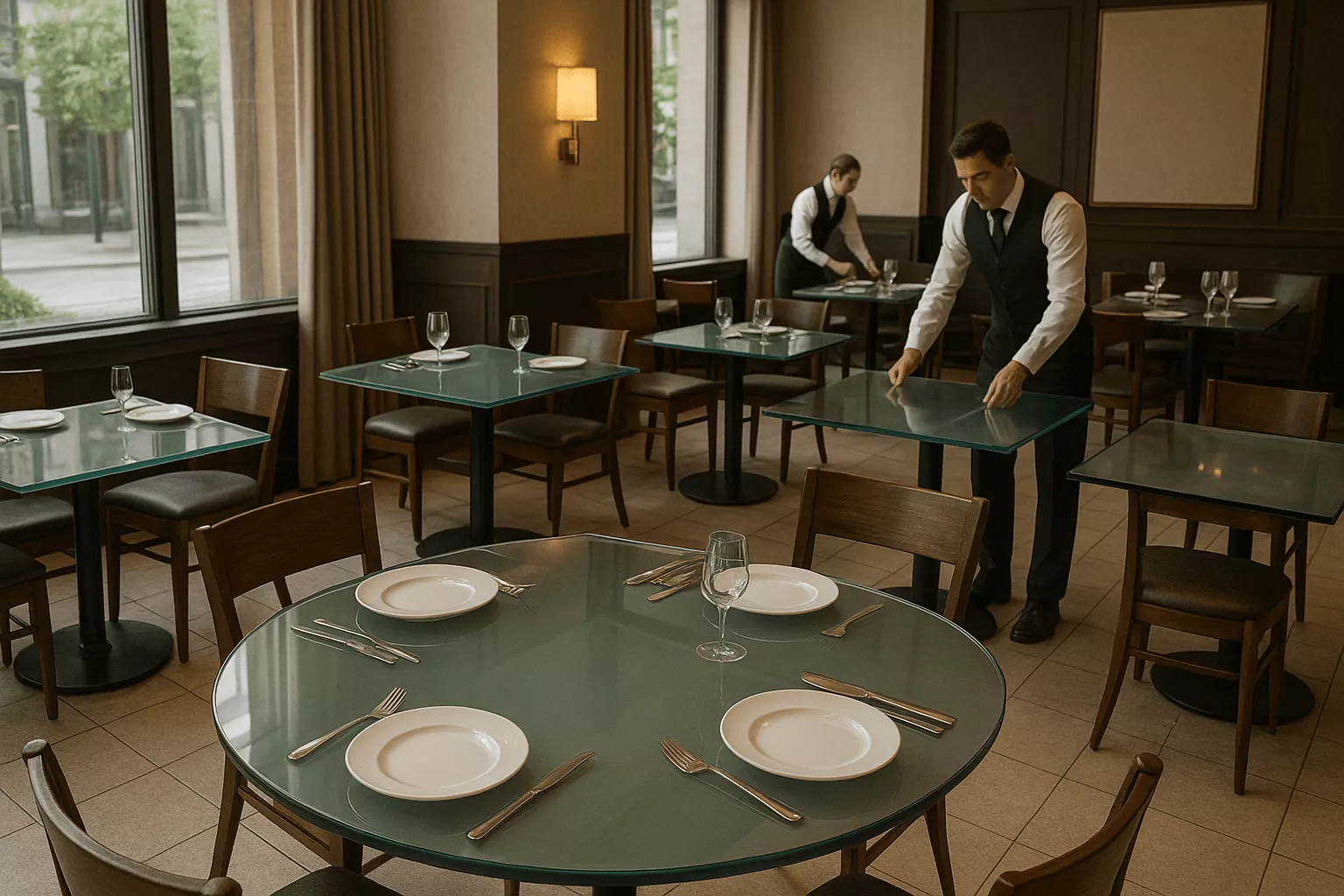
Commercial settings should choose 3/8″ minimum.
Flat polished is the go-to choice for restaurants.
Check for:
Upgrade your tables with durable, elegant, custom-cut glass tabletops built for commercial spaces.
Your tables should work as hard as your staff—and look good doing it.
Glass tabletops offer restaurants and cafés a combination of durability, hygiene, design flexibility, and long-term value that few other materials can match. Whether you choose tempered or laminated glass, upgrading to glass ensures your tabletops remain beautiful, safe, and easy to maintain—even in the busiest environments.
Ready to elevate your dining experience? Contact Fab Glass and Mirror to get the perfect custom glass tabletop for your space.
Yes. Tempered and laminated glass meet commercial safety standards and resist impact.
Tempered glass is scratch-resistant and ideal for heavy restaurant use.
3/8″ is the industry standard for restaurants.
Yes. Custom shapes are ideal for unique layouts or branding.
Yes—laminated glass is the best choice for outdoor dining.
Tempered glass generally needs no protector, but felt pads can prevent base friction.
Not if properly cleaned with ammonia-free cleaner.
3/8″ and 1/2″ glass easily support standard restaurant loads.
Yes—round shapes improve seating flow in tight layouts.
10–15+ years with proper care.
Explore all things glass—from stylish table tops and insulated options to tinted and frosted designs. Discover guides on glass railings, custom cut glass, shelves, and stunning backsplash ideas for a modern home or office upgrade.