Acrylic vs. Glass – Best Surface for Product Photography
Choosing the right shooting surface is one of the most overlooked but most critical decisions in product photography. Your surface directly affects reflection quality, lighting behavior, shadow depth, and perceived product value. Acrylic and glass remain the two most-used materials because they produce premium, polished, high-end visuals, but they behave very differently under studio lighting.
Acrylic is the most versatile and budget-efficient option for everyday product photography, while glass delivers unmatched optical clarity and luxury-grade reflections ideal for premium campaigns.
This guide breaks down both surfaces with technical precision, real-world photographer use cases, and expert recommendations to help you choose the best material for your studio setup.
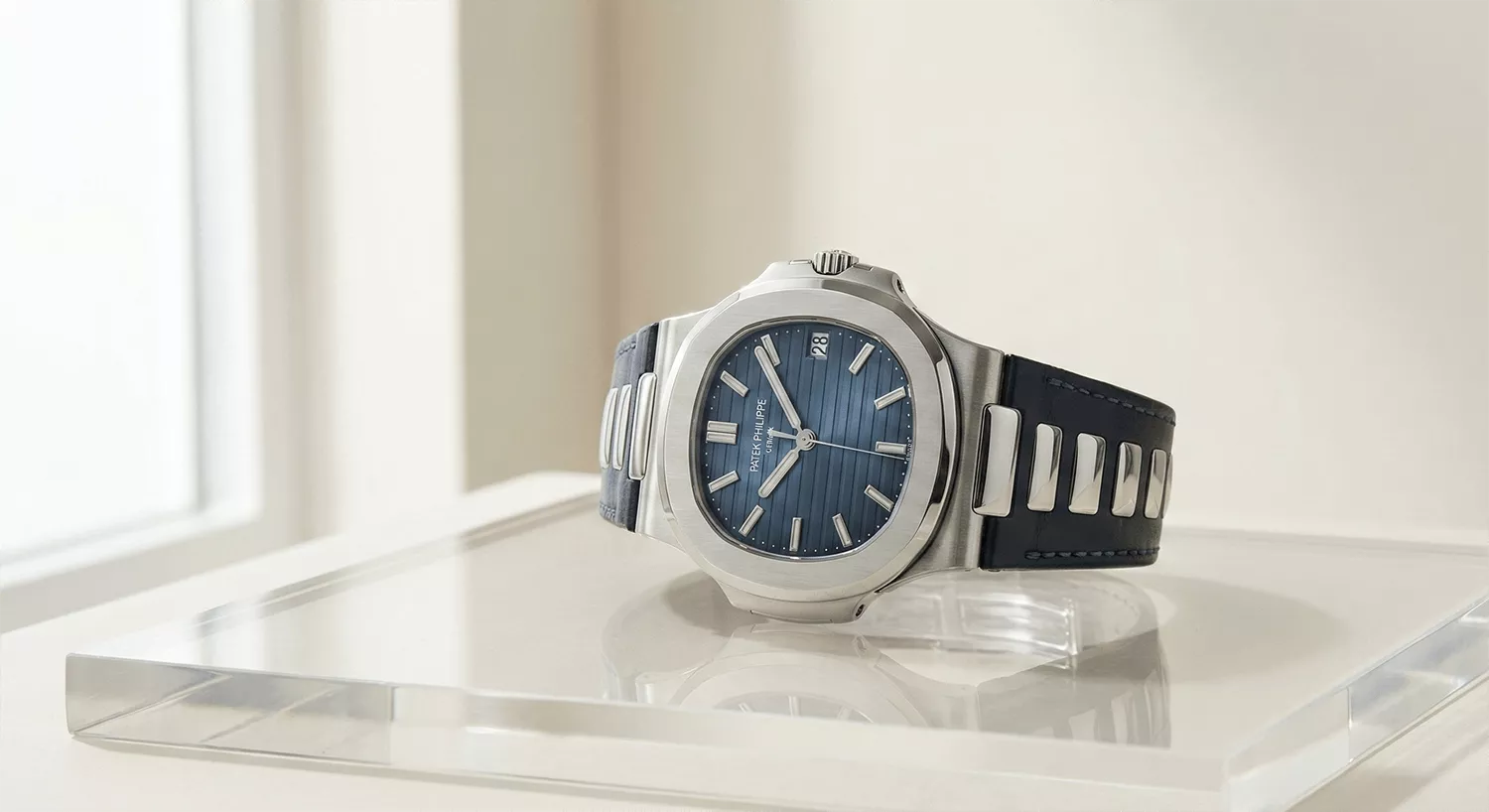
Table of Contents
- 1 Why Do Photographers Use Acrylic or Glass in Product Shoots?
- 2 Why They Outperform Paper or Cloth Backdrops
- 3 Difference Between Acrylic and Glass
- 4 When Should You Use Acrylic for Product Photography?
- 5 When Should You Use Glass for Product Photography?
- 6 Acrylic vs. Glass: Which One Is Better for Reflection Shots?
- 7 Which Surface Is Better for DIY Product Photography at Home?
- 8 How Light Reacts Differently on Acrylic vs. Glass
- 9 What Size Acrylic or Glass Sheet Do You Need for Product Photography?
- 10 Best Types of Acrylic and Glass Sheets for Product Photography
- 11 Can You Use Colored Acrylic Sheets for Product Photography?
- 12 How to Keep Acrylic and Glass Dust-Free During a Shoot
- 13 Step-by-Step Setup: How to Use Acrylic or Glass for Product Photography
- 14 Where to Buy High-Quality Acrylic and Glass Sheets for Product Photography (USA)
- 15 Final Thoughts
- 16 FAQs
Why Do Photographers Use Acrylic or Glass in Product Shoots?
Photographers choose acrylic and glass because these surfaces deliver high-contrast reflections, clean highlights, and a premium commercial look that traditional backdrops simply cannot create.
Why Reflections Increase Product Value
A controlled reflection adds:
- Perceived luxury
- Depth and dimension
- Visual symmetry
- A polished, editorial finish
Luxury brands use reflective surfaces because they make products instantly appear more expensive and professionally photographed, which increases conversion rates and perceived product trust.
Why Light Behaves Better on Acrylic and Glass
Both materials:
- Provide consistent, even reflections
- Minimize surface texture that causes noise
- Produce clean highlight lines
- Help photographers shape light precisely
This means less time in post-production and more consistency across shots
Why They Outperform Paper or Cloth Backdrops
Paper absorbs light, creating dull spots. Cloth introduces texture and micro-shadows. Acrylic and glass eliminate these problems by giving a minimal, crisp surface that keeps attention where it belongs: on the product.
Acrylic and glass provide:
- A flawless shooting surface
- No texture
- No wrinkles
- Zero light absorption
- Perfect, intentional reflections
This instantly elevates any product photography setup — whether professional or DIY.
Difference Between Acrylic and Glass
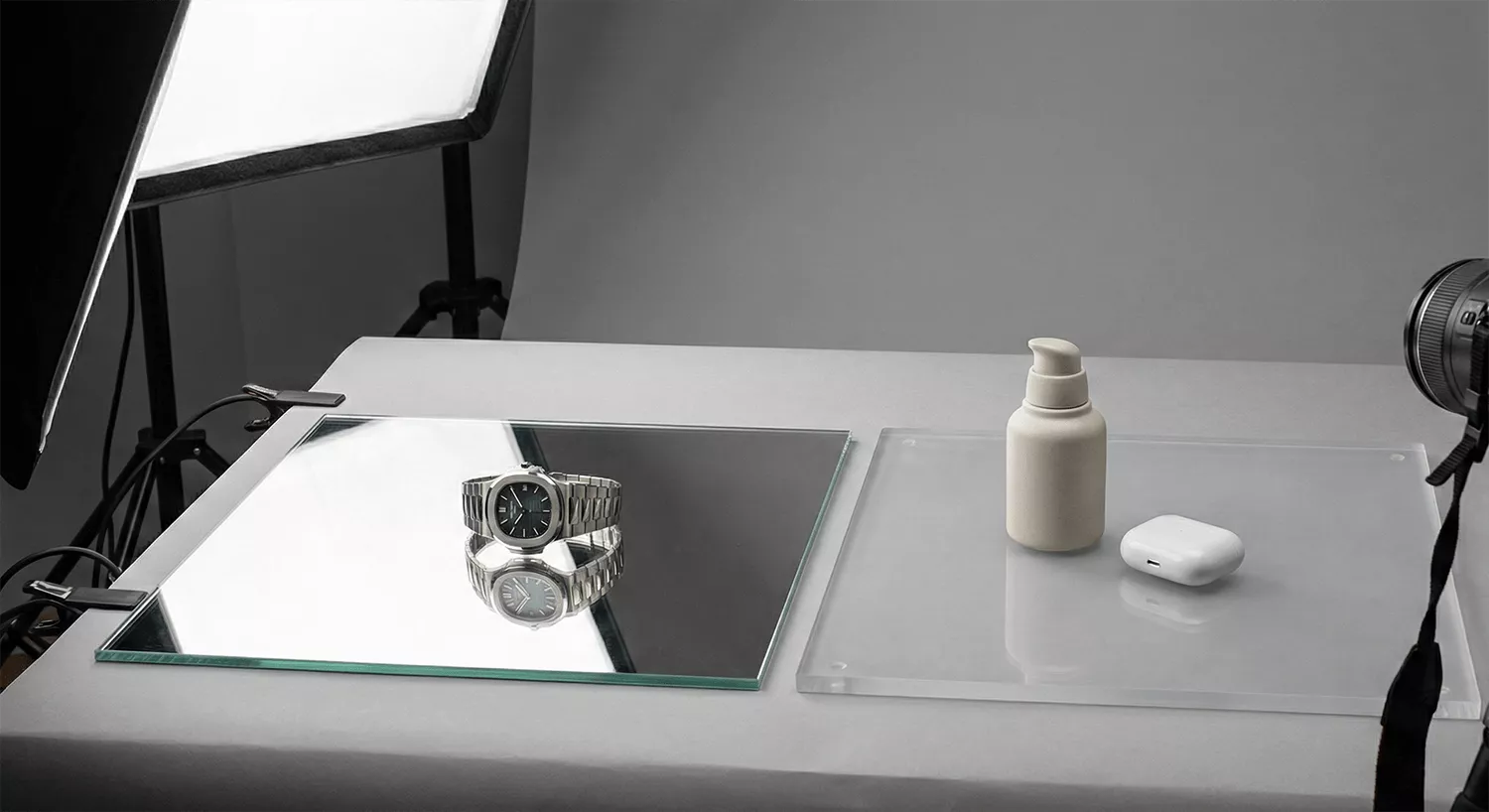
Acrylic and glass may look similar in final images, but their optical performance, durability, and lighting behavior are entirely different.
Acrylic Advantages (Best for Everyday Shoots)
- Extremely lightweight and easy to move
- Safer for mobile or small studios
- Doesn’t shatter — perfect for home use
- Comes in black, white, clear, frosted, and vibrant colors
- Produces soft, forgiving reflections
- Most cost-effective option
- Easy to cut to custom sizes
Glass Advantages (Best for Luxury Shots)
- Optically clearer
- Stronger, sharper reflections
- Scratch-resistant
- Ideal for “high luxury” shoots
- Works beautifully with hard light
Reflection & Hotspot Control
Acrylic reflects softly, ideal for cosmetics, skincare, and everyday products. Glass reflects sharply, perfect for luxury jewelry, watches, perfumes, and tech.
Cost Breakdown
Acrylic is cheaper and easier to replace if scratched. However, glass is long-lasting and more resistant to signs of wear.
When Should You Use Acrylic for Product Photography?
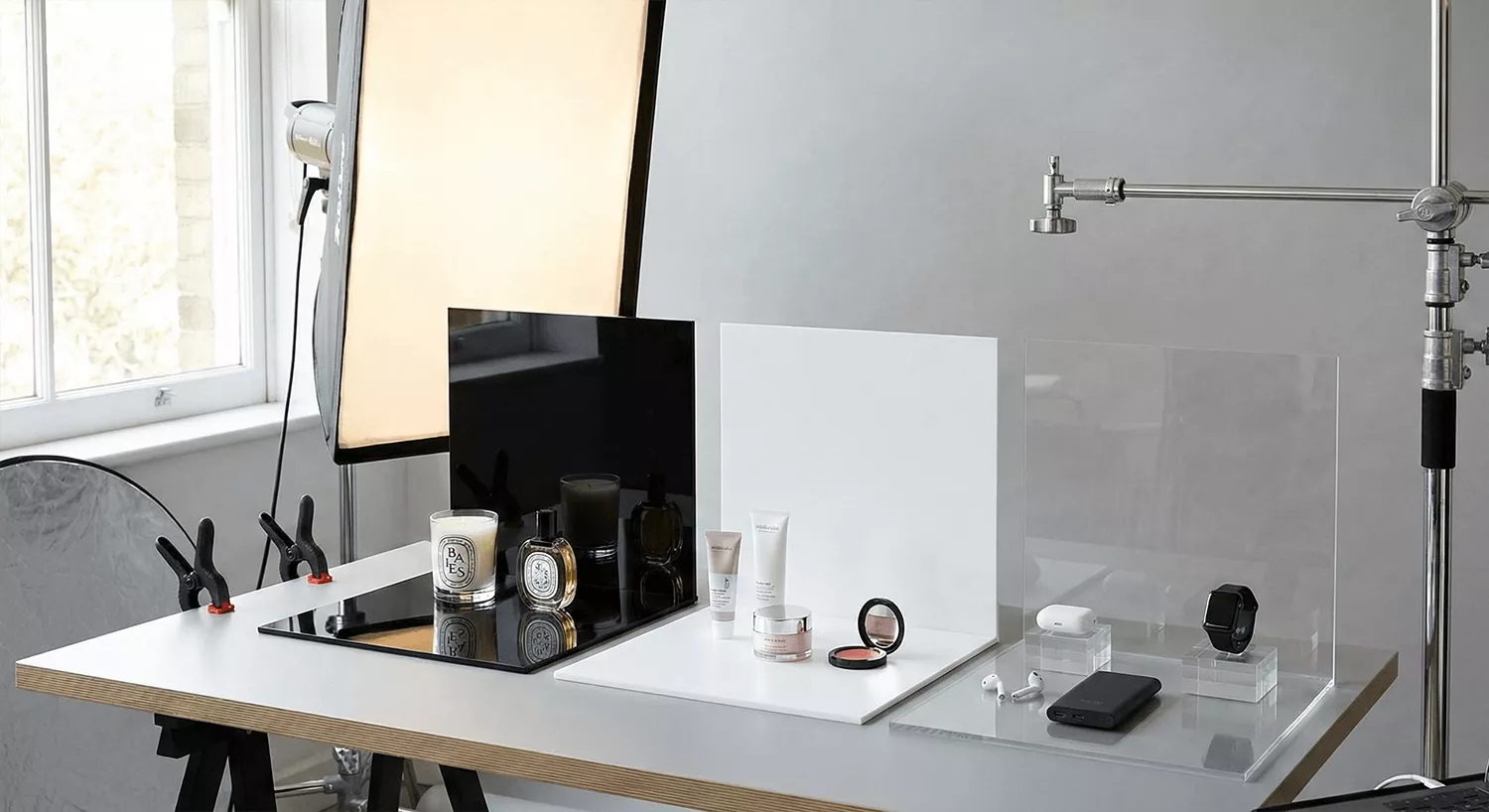
Acrylic is the go-to choice for most product photographers because it offers the versatility needed for large batches, e-commerce shoots, or DIY studios.
Best Use Cases
- Cosmetics
- Skincare
- Electronics accessories
- Packaged goods
- Candles
- E-commerce product listings
- Social media product content
Types of Acrylic That Perform Best
- Black Acrylic Sheet: Creates dramatic, glossy reflections that enhance depth.
- White Acrylic Sheet: Perfect for clean, bright, Amazon-style product shots.
- Clear Acrylic Sheet: Used for floating product illusions and layered lighting setups.
- Anti-Glare Acrylic: Softens reflections under diffused softbox lighting.
Why Photographers Prefer Acrylic in Daily Workflows
- Easy to reposition
- Perfect for mobile studios
- Doesn’t crack under small mishandles
- Easy to polish with microfiber and Novus products
- Lightweight enough to mount vertically for creative setups
Acrylic is especially popular in studios that shoot hundreds of SKUs per week because it reduces prep time and cleanup.
When Should You Use Glass for Product Photography?
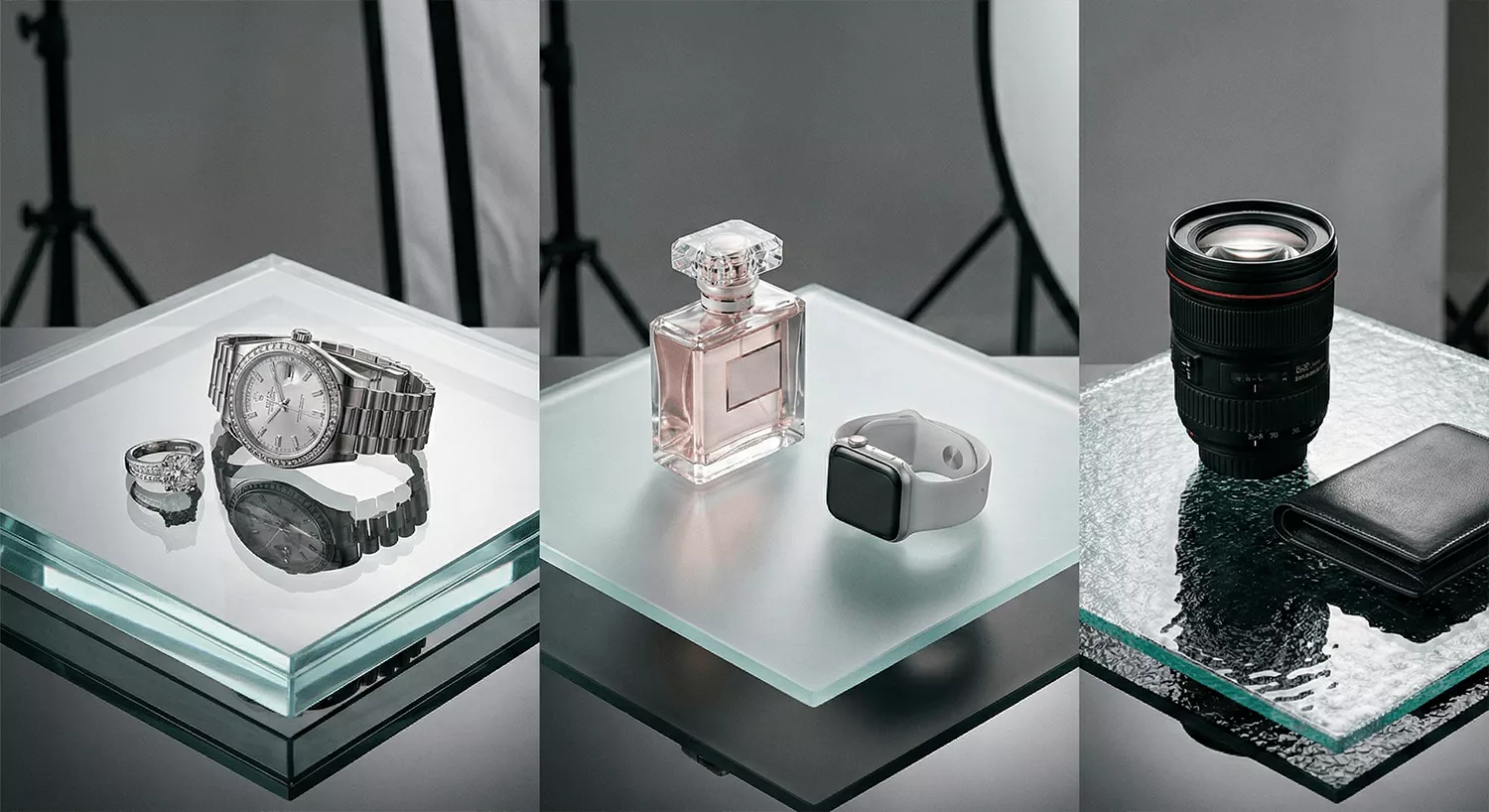
Glass surfaces deliver precision, crispness, and “true-to-life” reflections that acrylic cannot replicate. If the product demands a luxury vibe, glass is non-negotiable.
Best Use Cases
- Jewelry
- Watches
- Luxury perfumes
- High-end electronics
- Collectibles
- Glassware itself
Types of Glass to Consider
- Clear Tempered Glass: The strongest reflection quality for upscale visual appeal.
- Frosted Glass: Softens shadows and reduces hotspots for a delicate, misty look.
- Low-Iron Glass: Eliminates green tint and provides true optical clarity.
How Glass Interacts with Light
- Hard light = crisp reflections
- Soft light = smooth gradients
- Backlighting = surreal glow under translucent products
Glass allows dynamic lighting techniques that acrylic cannot match.
Why Luxury Photographers Prefer Glass
You get:
- Unmatched clarity
- Zero distortion
- Minimal surface flex
- No color casting
- Premium aesthetic clients instantly recognize
Acrylic vs. Glass: Which One Is Better for Reflection Shots?
Both deliver reflections, but the “type” of reflection differs.
- Glass Reflection: Sharp, mirror-like, crisp. Perfect for luxury branding.
- Acrylic Reflection: Soft, diffused, elegant. Great for cosmetics, consumer goods, and storytelling visuals.
When to Choose Which
- Choose glass if you want “magazine-tier sharpness.”
- Choose acrylic for emotional, lifestyle, or brand storytelling visuals.
Which Surface Is Better for DIY Product Photography at Home?
Acrylic wins easily here. It is safer, lighter, easier to set up, and less likely to break.
Home photographers benefit from:
- Zero risk of shattering
- Easy portability
- Low cost
- Multiple colors available
- Easier dust control
If you are photographing at home for eCommerce, Etsy, or social media, acrylic is the smart bet.
How Light Reacts Differently on Acrylic vs. Glass
This is where true technical expertise matters.
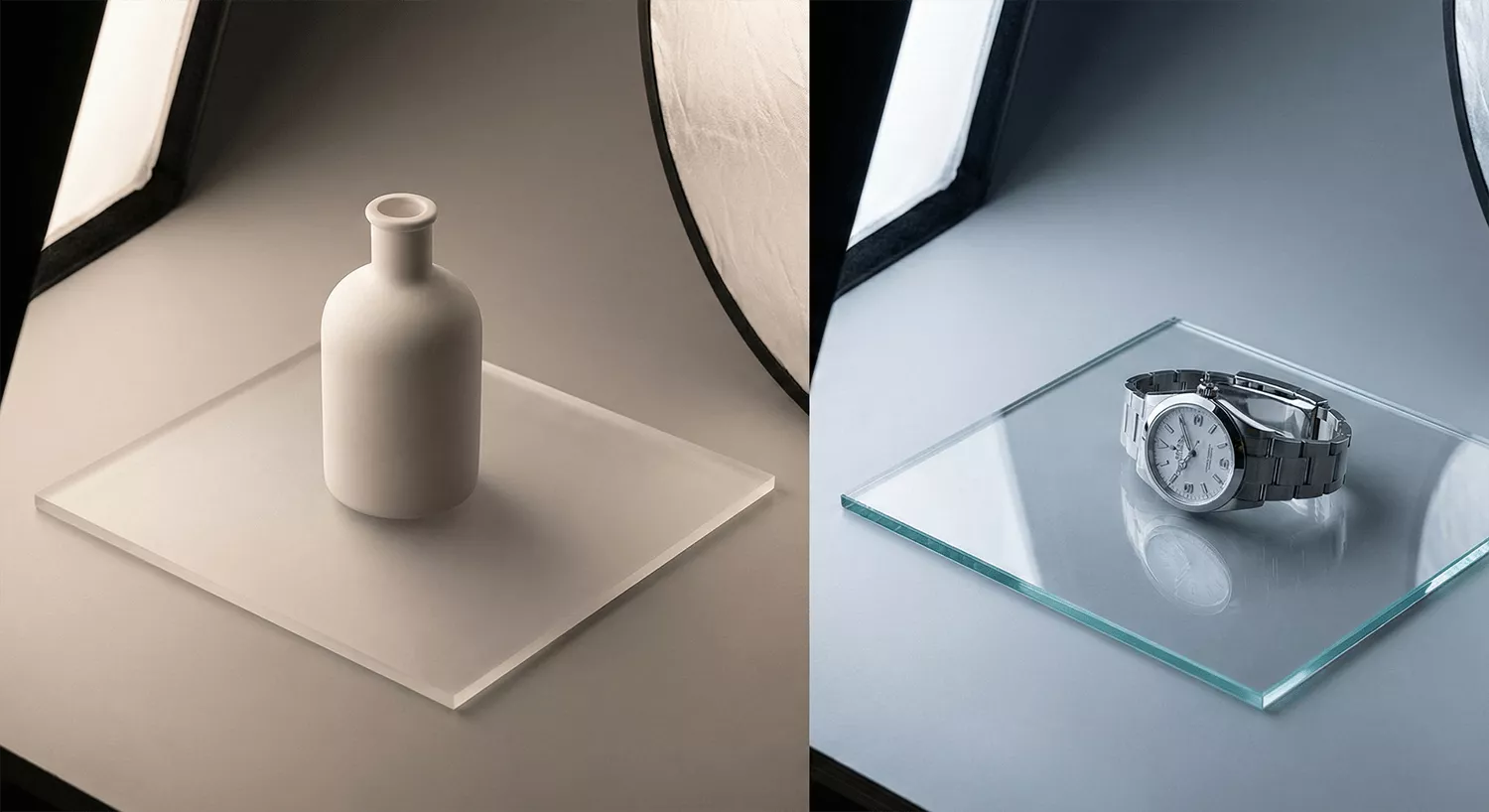
On Acrylic
Great for soft product presentations.
- Light diffuses slightly
- Hotspots soften
- Shadows are less intense
- Color tints (if any) subtly affect the scene
On Glass
Glass gives you more control, but demands more technical skill.
- Light reflects harshly if uncontrolled
- Hard falloff creates crisp edges
- Color neutrality remains true
- Backlighting becomes more effective
Color Temperature and Tinting
Glass maintains neutrality better than acrylic. Some acrylics may slightly warm tones depending on formulation.
What Size Acrylic or Glass Sheet Do You Need for Product Photography?
Sizing depends on the product category.
Common Photographer Sizes
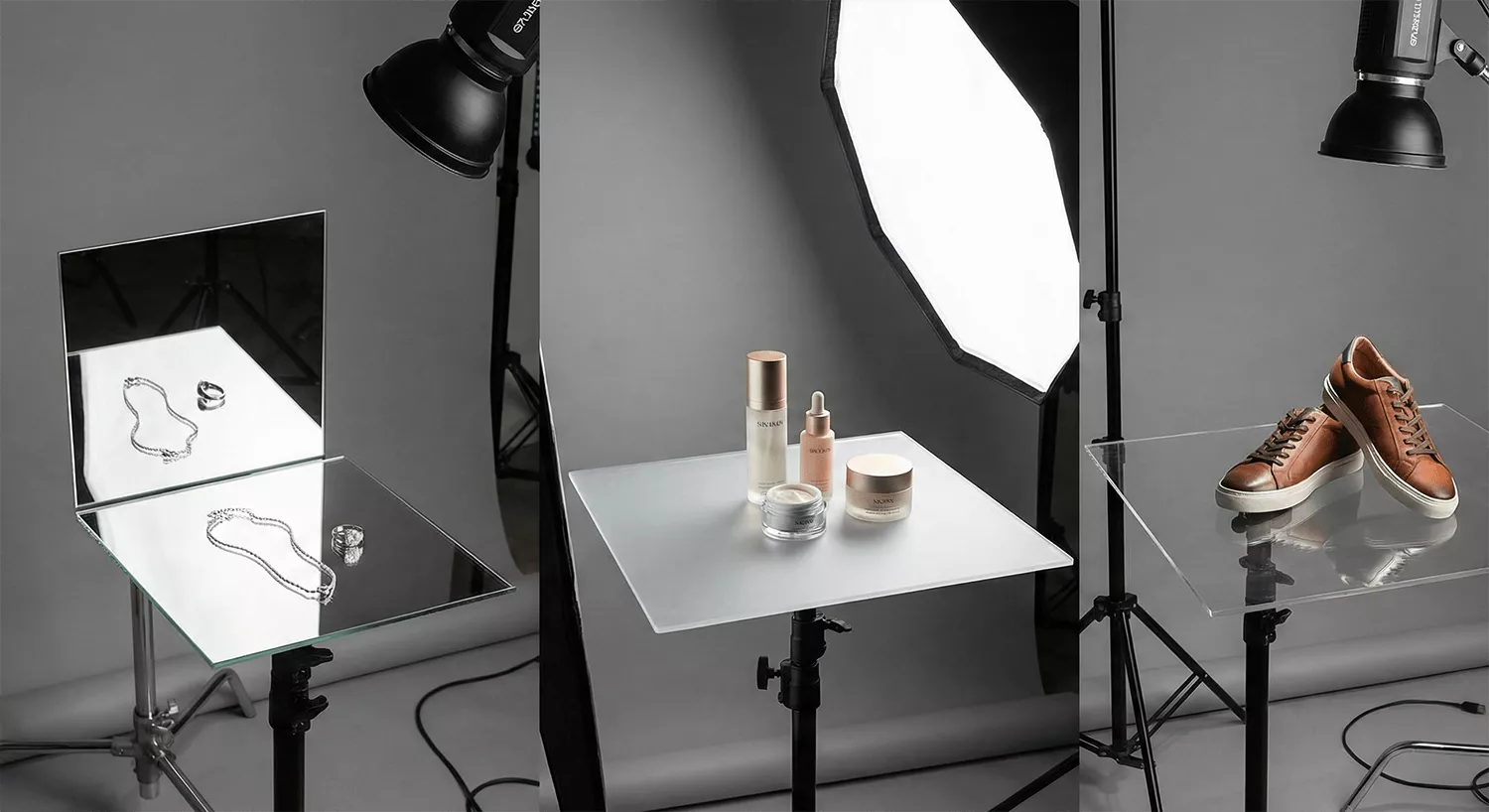
- 12×12 inches: Small items like jewelry, cosmetics
- 16×16 inches: Small electronics, packaged goods
- 24×24 inches: Shoes, handbags, larger products
Guidance by Product
Most professionals use multiple surfaces depending on the job.
- Jewelry → 12×12 glass
- Skincare → 12×12 or 16×16 acrylic
- Perfume bottles → 12×12 glass
- Shoes → 24×24 acrylic
- Electronics → 16×16 acrylic or glass
Best Types of Acrylic and Glass Sheets for Product Photography
Acrylic
| Type | Best For | Reflection Style |
| Black Acrylic | Dramatic hero shots | Bold, glossy reflection |
| White Acrylic | E-commerce visuals | Clean, neutral reflection |
| Clear Acrylic | Floating effects | Soft reflection |
| Colored Acrylic | Creative campaigns | Mood-enhancing reflection |
Glass
| Type | Best For | Reflection Style |
| Tempered Glass | Jewelry & perfumes | Mirror-styled reflection |
| Low-Iron Glass | High-end branding | Crystal-clear reflection |
| Frosted Glass | Soft, dreamy visuals | Diffused reflection |
Can You Use Colored Acrylic Sheets for Product Photography?
Absolutely — colored acrylic sheets are a rising trend in commercial and social media photography.
Why Use Colored Acrylic?
- Enhances brand storytelling
- Creates emotional tone
- Helps products stand out in saturated markets
- Reduces reliance on digital backgrounds
Popular colors include:
- Pastels (skincare, beauty)
- Bold reds/blues (electronics)
- Warm tones (lifestyle brands)
How to Keep Acrylic and Glass Dust-Free During a Shoot
Dust ruins reflections instantly. Here is how professionals avoid it:
Surface Prep
- Use microfiber cloths
- Apply anti-static spray (especially on acrylic)
- Keep canned air ready
- Wear gloves to avoid fingerprints
Why Acrylic Attracts Dust More
Acrylic gains static charge easily. A quick anti-static wipe eliminates this issue. Circular polarizers can eliminate surface glare — but they can also reduce reflection intensity if overused. Use them selectively.
Step-by-Step Setup: How to Use Acrylic or Glass for Product Photography
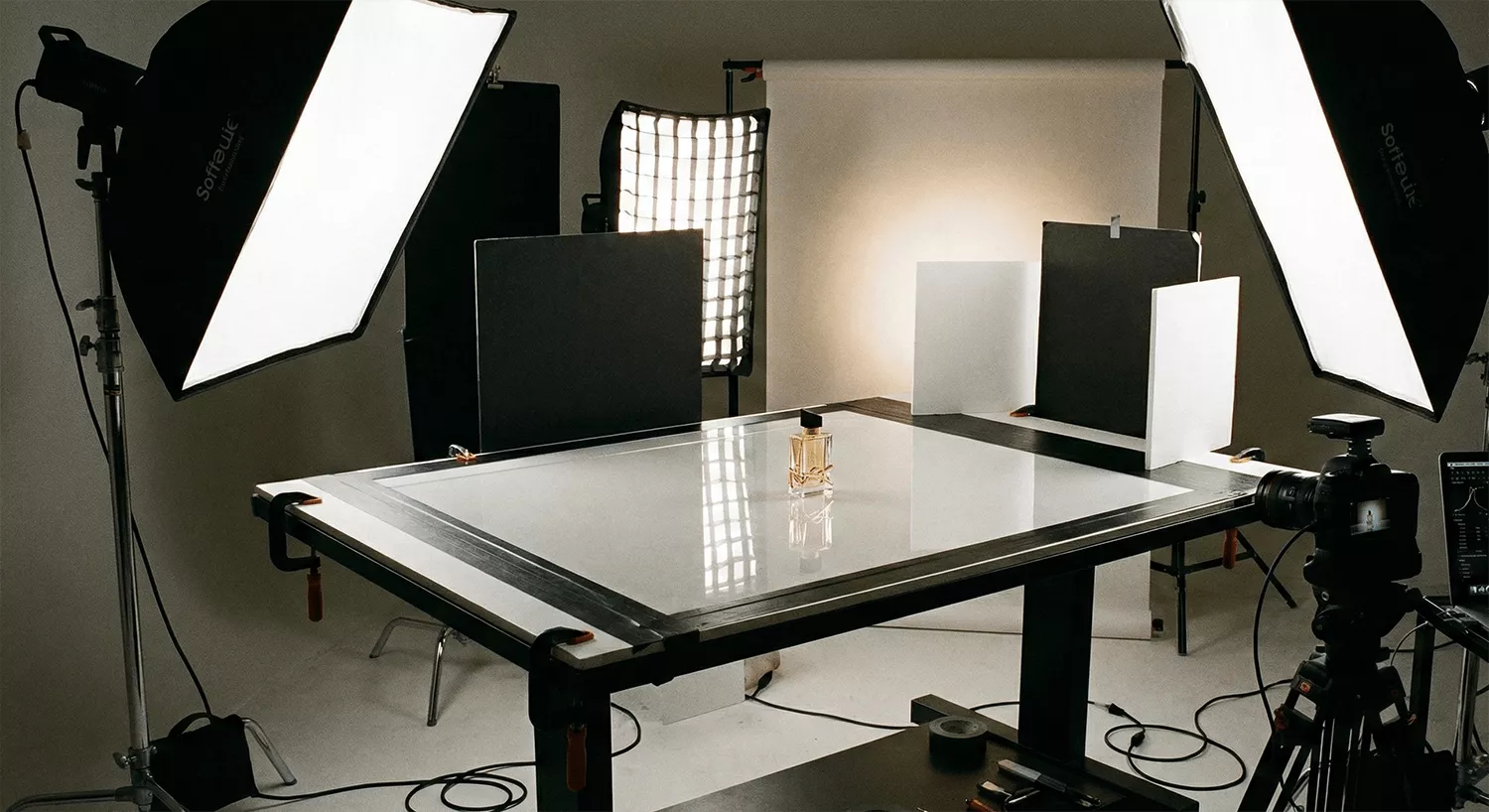
1. Position the Surface
Place acrylic or glass on a sturdy background, with edges hidden from the camera.
2. Set Up Lighting
Use two softboxes at 45 degrees for even lighting. Add a backlight for gradient effects.
3. Control Reflections
Use flags or black cards to sculpt the reflection shape. This is crucial for glossy products.
4. Place the Product
Center it, and inspect for fingerprints or dust before shooting.
5. Capture
Shoot tethered for real-time monitoring. Adjust highlights, avoid overexposure.
6. Retouching Tips
- Heal stray dust spots
- Enhance the reflection by doubling it slightly
- Adjust contrast to give depth
- Maintain color accuracy
Where to Buy High-Quality Acrylic and Glass Sheets for Product Photography (USA)
For photographers wanting the highest-quality surfaces, Fab Glass and Mirror provides:
Why Photographers Choose Fab Glass and Mirror
- Custom sizes (perfect for studio needs)
- High optical clarity
- Scratch-resistant surface options
- USA-based manufacturing
- Secure packaging for shipping
- Fast delivery nationwide
Recommended Products from Fab Glass and Mirror
All available in custom thicknesses and sizes.
- Black Acrylic Sheets
- White Acrylic Sheets
- Clear Acrylic Sheets
- Tempered Glass Panels
- Low-Iron (Ultra-Clear) Glass
- Frosted Glass Sheets
What Commercial Photographers Say
Top product photographers consistently report:
- Glass is superior for premium campaigns.
- Acrylic is the most practical daily driver.
- Colored acrylic is invaluable for brand-specific shoots.
- Dust control is half the job when working with reflections.
Final Thoughts
Acrylic and glass both have a place in modern product photography. Acrylic offers versatility, safety, and budget-friendliness, ideal for high-volume shoots. Glass remains unbeatable for luxury, clarity, and sharp reflections. The best photographers use both, choosing surfaces based on the product and campaign style.
For U.S. photographers seeking premium-quality materials, Fab Glass and Mirror deliver custom-cut glass and acrylic sheets engineered specifically for clean reflections and studio durability.
FAQs
Yes, acrylic is ideal for versatile, daily studio work due to its lightweight structure and clean reflection.
It produces bold, high-contrast reflections perfect for cosmetics and hero shots.
Tempered or low-iron glass gives the clearest, sharpest reflections.
Use a microfiber cloth and anti-static cleaner. Avoid harsh chemicals.
More than glass, yes — but scratches can often be polished out.
⅛” to ¼” is sufficient for most setups.
Yes, but acrylic is safer for beginners.