
My Cart
You have no items in your shopping cart.

Aquariums are a mesmerizing interior element. The concept of integrating an utterly different ecosystem into your home interior is truly fascinating. It not only widens your perspective but also serves as an absolutely stunning interior element. Spotless glass aquariums, often made with tempered glass cut to size, are a sign of extreme luxury. You can find them in their full glory in the interior halls of posh houses, furnished apartments, and high-end restaurants. Every time you pass by an aquarium, an invisible force makes you stop and look at the life inside. This small yet exquisite fish house has a spellbinding effect on us. Doesn’t it amaze you how a small clear glass tank is holding this much water? And how is it a complete world for the fish inside? We will talk about the wonders of a glass fish tank in this blog. Tag along to know the marvels of aquarium glass.

What Is Aquarium Glass?
As the name implies, aquarium glass is basically a special type of glass that is meant to be used in fish tanks. As the fish tanks typically have multiple gallons of water storage, the glass used in aquariums must be strong enough to hold it. Moreover, the glass is treated to boast a high level of clarity to achieve the spotless fish tank look. In general, tempered glass is used in aquariums. However, the tempering process is done keeping the above-mentioned properties in consideration. A common question arises: can tempered glass be cut? The answer is no; once glass is tempered, it cannot be cut or altered without compromising its strength and safety.
The glass panel used at the bottom of the fish tank is exceptionally strong to support the weight of the water as well as the substrates and aquarium rocks. So is the case for the aquarium walls. However, the aquarium walls are only supposed to hold the weight of the water. So, the bottom is more susceptible to damage. A thicker panel of tempered aquarium glass is therefore used in the fish tank base.
Table of Contents
Although tempered glass is the preferred option for fish tanks, there are other types of aquarium glass that can be used in the construction of an aquarium. When comparing ceramic vs tempered glass, each has its unique properties and applications. Here are some insights into your fish tank glass options.
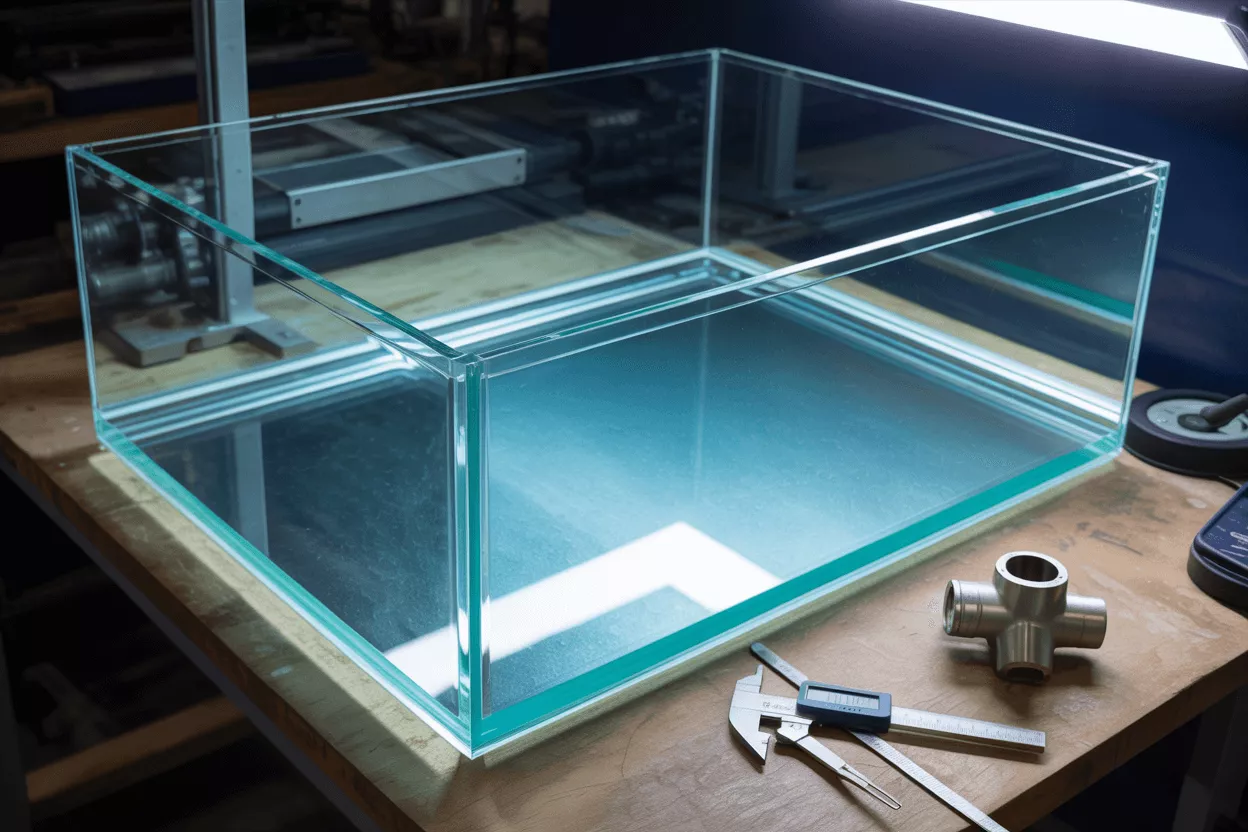
Tempered glass is annealed float glass that has been heat-treated and then rapidly cooled to produce surface compression, increasing strength. It is stronger in tension/compression, resists impact better than standard annealed, but if it fails, it explodes into small fragments rather than cracking in one clean line (important safety note).
Mass-market aquariums often use tempered bottom panels, because they bear the full weight. But many premium tanks avoid tempered sides because drilling/porting is often needed and the failure mode is undesirable. Tempered glass has higher tensile capacity but fails explosively; many builders avoid it for side panes.
Smaller to medium tanks where drilling is not required, or bottom panels where strength is key.
Custom tanks require drilling, or tall/unbraced panels where you’d rather have gradual crack/leak rather than sudden explosion.
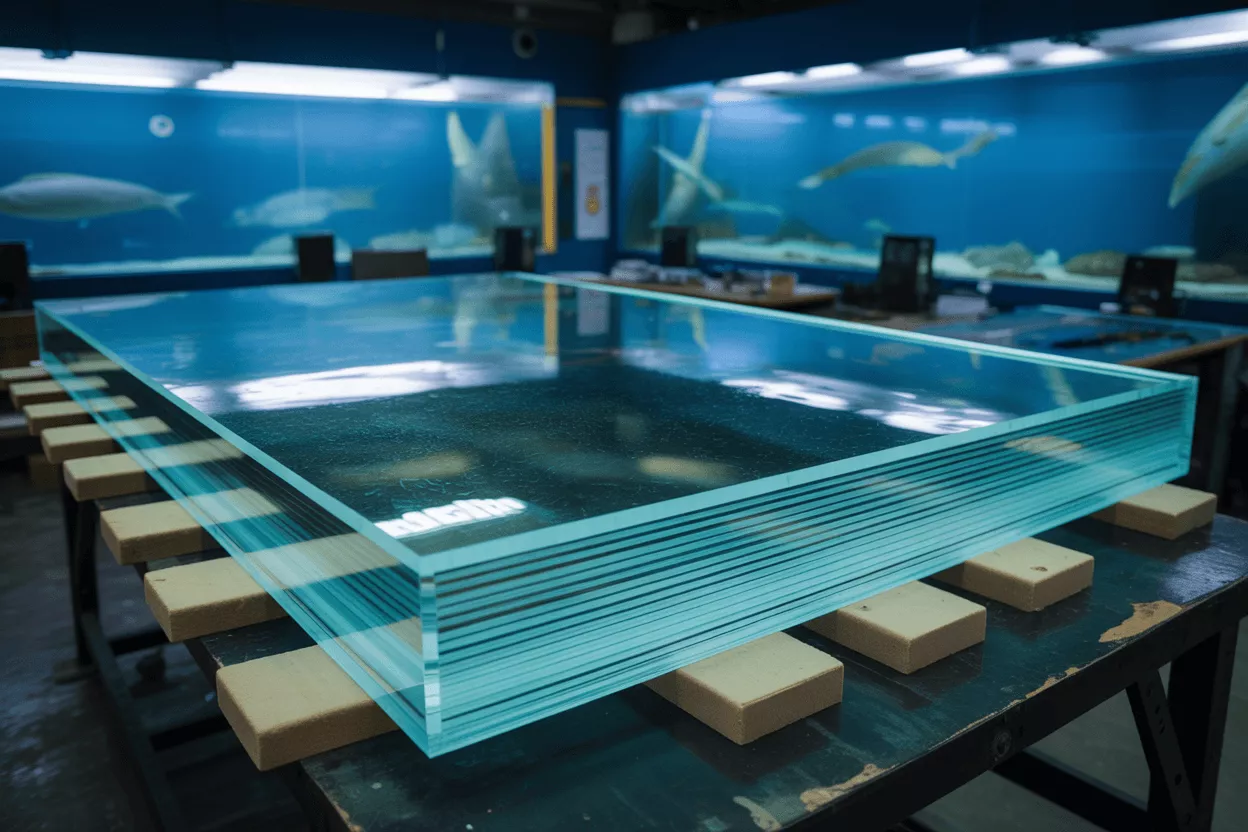
Laminated glass is two or more panes of glass bonded with a polymer interlayer (resin). It boasts an exceptionally high strength value. The glass panes, which are also commonly used for windows in attics, are fused together with an interlayer of resin. The adhesive resin keeps the glass panes together. Laminated glass is practically unbreakable. Even in a rare case of visible damage, the laminated glass sustains cracks from the impact. But it still stays intact, thanks to the adhesive interlayer. So, if you want to ensure maximum safety for your aquatic pets, go for the laminated glass option. Unlike tempered glass, laminated glass is somewhat hard to access. It is typically made to order due to its complex manufacturing process.
If one pane cracks, the interlayer holds it in place and greatly reduces risk of catastrophic collapse.
Used especially in public / large display aquariums for the redundancy layer of safety.
Higher cost, more complex manufacturing, lead times may be longer (make-to-order).
Public/ commercial builds, high-risk environments (children’s areas, display windows).
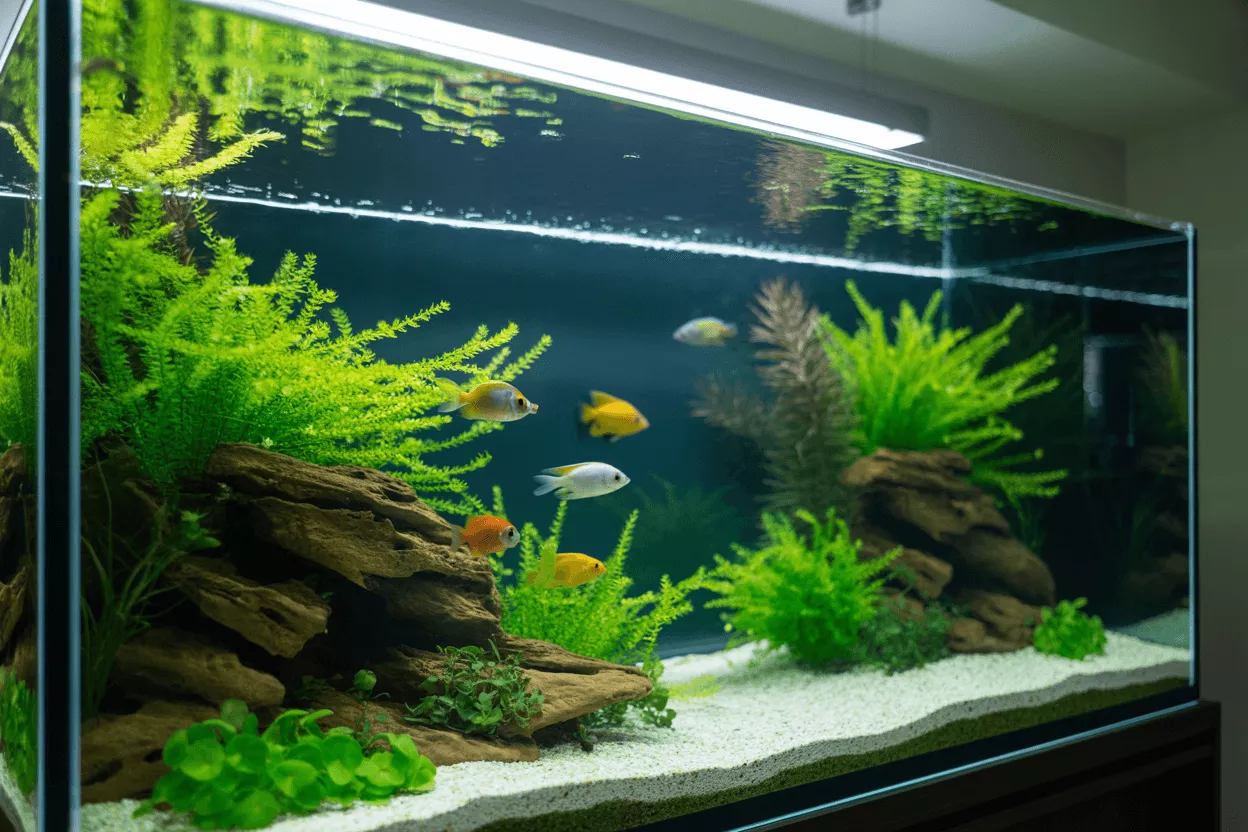
“Low-iron” (sometimes branded “ultra-clear”, “starphire” etc.) has reduced iron content to minimize the green-blue tint visible in standard float glass. The beauty of fish tanks lies in the clarity of the glass walls, which significantly contributes to the overall aesthetic and enhances the wall finishing. Even the slightest impurity or cloudiness in the glass walls can lower the aesthetic appeal of the aquariums. Low iron glass, therefore, is a great option for fish tank construction. Small amounts of iron are added to the standard glass to achieve absolute optical clarity. The standard glass has a natural greenish-blue tint. Iron additives remove this tint and make the glass extremely clear. This clarity, along with the improved wall finishing, is highly desirable in fish tanks.
Exceptional optical clarity, especially on large viewing panels, corners, or tanks with long span where tint becomes noticeable.
It’s not that “iron additives remove the tint” rather iron content is reduced to remove the tint.
Slightly higher cost; optical benefits may be less important in smaller tanks.
Many low-iron panels are non-tempered because tempering may slightly distort clarity; so, if drilling is required, this is often the route.
Aquariums where viewing clarity is a major feature, e.g., living walls, large built-in, rimless design.
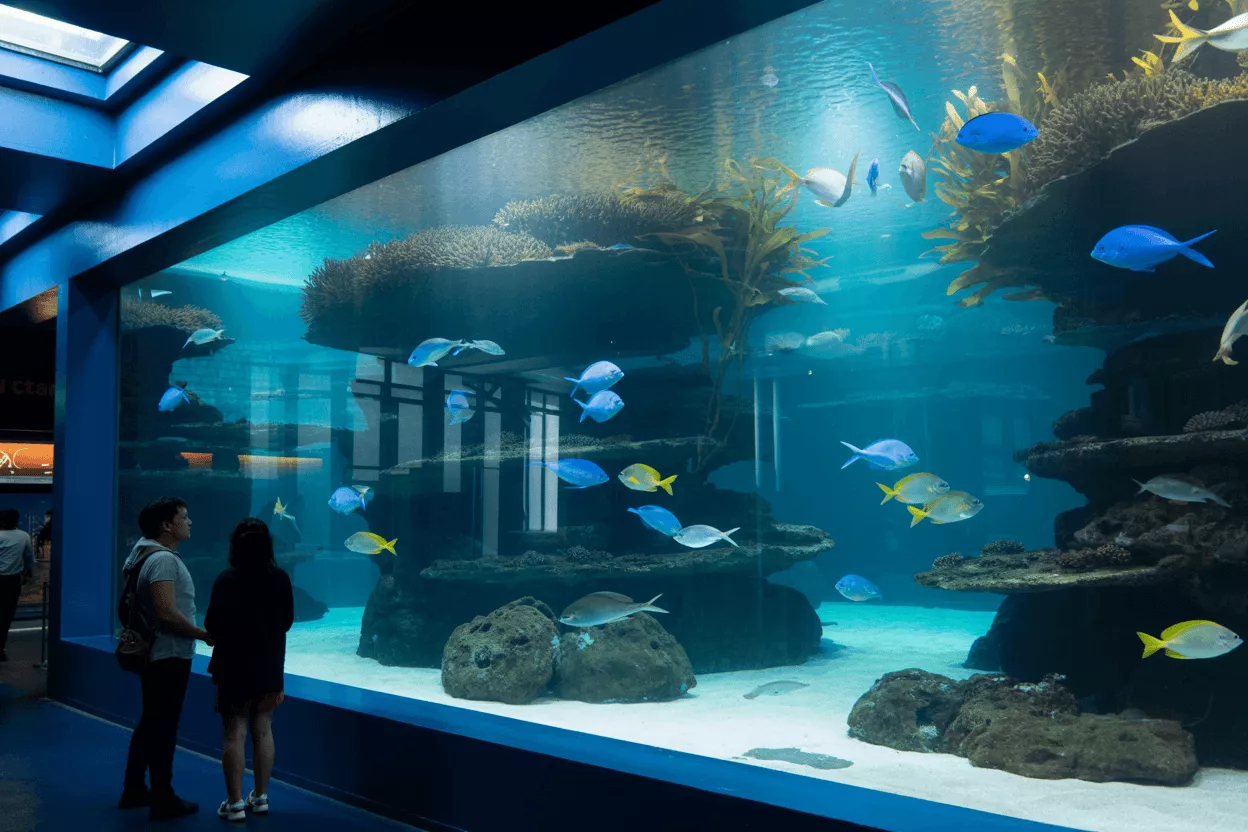
A thermoplastic similar to acrylic, but typically tougher (impact resistance), though optical clarity and scratch resistance may be inferior to acrylic or glass. According to many U.S. sources this is a niche material for very specific display situations (e.g., blast-proof or ultra-large commercial tanks) rather than typical home aquariums.When To Choose: Specialty builds, large public installations where impact resistance is a prime factor.
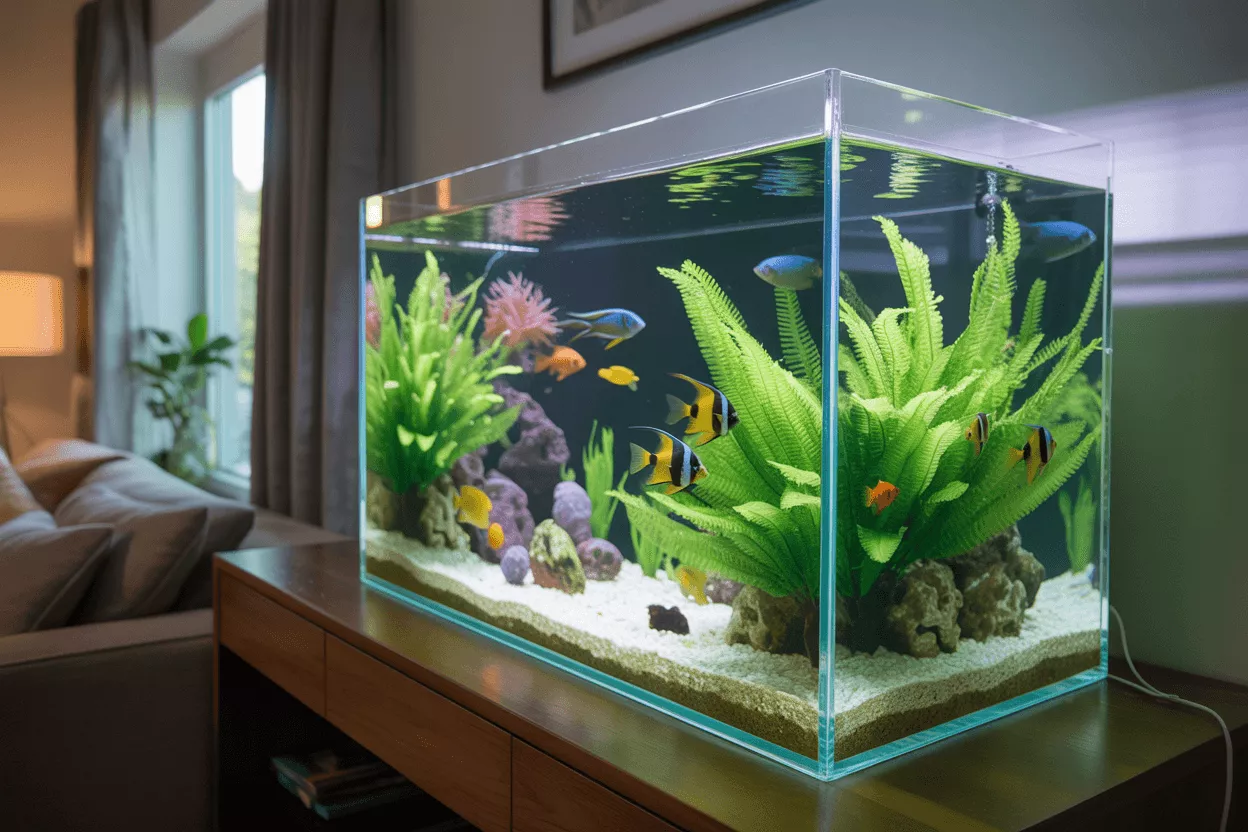
Acrylic or plexiglass is another well-suited option for aquarium construction. Just like polycarbonate, it is highly transparent and demonstrates reasonable strength value. However, plexiglass is not as strong as polycarbonate. It is a great alternative to glass for DIY fish tanks and home aquariums.
The required thickness of aquarium panels depends on water height, panel span, brace structure (rimless or braced), material, and safety factor.
If you under-spec the glass, you risk bowing, seaming failures, leaks, or worse. Over-spec and you increase cost, weight, shipping, and installation complexity.
Aquarium tanks have to hold water, so the glass used in the structure must be sturdy enough to bear the weight. When deciding between tempered glass vs annealed glass, it is essential to choose the one that meets the structural and safety requirements of your aquarium. The ideal glass thickness for an aquarium depends on the size of the tank. A relatively thin glass sheet would do for a smaller tank. However, a mighty fish tank would require thicker glass walls and a base to hold the water. Aquariums are available in endless size variations. The rule of thumb is to consider the size of the fish tank to choose the right glass thickness. Here are a few common aquarium sizes and the recommended glass thickness.
These aquarium glass thickness recommendations are meant for tempered glass. The suitable thickness may vary a little bit depending on the type of glass used in the aquarium.
Here is a rough guideline (but always verify with a calculator or engineer):
| Tank Height | Typical Glass Thickness* | Notes |
| Up to 12″ | ¼ in (6 mm) | Small desktop tanks |
| 12-24″ | ⅜ in-½ in (9-12 mm) | Medium tanks with bracing |
| 24-36″ | ½ in (12-15 mm) or more | Larger tanks => more thickness or bracing |
| Above 36″ | ⅝ in-¾ in (15-20 mm) or thicker, or consider laminated/engineered | Large builds, display tanks |
*These are guidelines, actual value may differ based on dimensions/bracing/material.
Rimless builds (no visible top frame) look sleek, but require thicker glass or internal bracing because the top rim/frame isn’t supporting load. Braced builds (euro-brace, center bar) help reduce bowing, allowing slightly thinner glass for the same safety factor. If you are specifying a large tank, ask “Is it rimless?” “Is there a center brace?” “What is the depth of span?” These affect material and cost.
If your tank is:
Contains saltwater reef or heavy rock load, it’s wise to engage a fabricator or structural engineer.
The cost of aquarium glass (and overall build) is influenced by: glass type, thickness, panel size (shipping/handling), finishing (polishing, edge beveling), drilling/porting, bracing/frames, custom shapes, and material (standard vs low-iron vs acrylic).
Here are some quick takeaways:
Factors like whether you choose tempered glass vs laminated glass can also play a significant role in determining the overall cost. However, the biggest factor that influences the cost of aquarium glass is the size of the aquarium. You can get a small aquarium for as low as $100 to $500. But if you aim to cherish the life-size fish tank experience, you can expect to pay $700 to a whopping $7000.

Are Aquariums Worth the Hype?
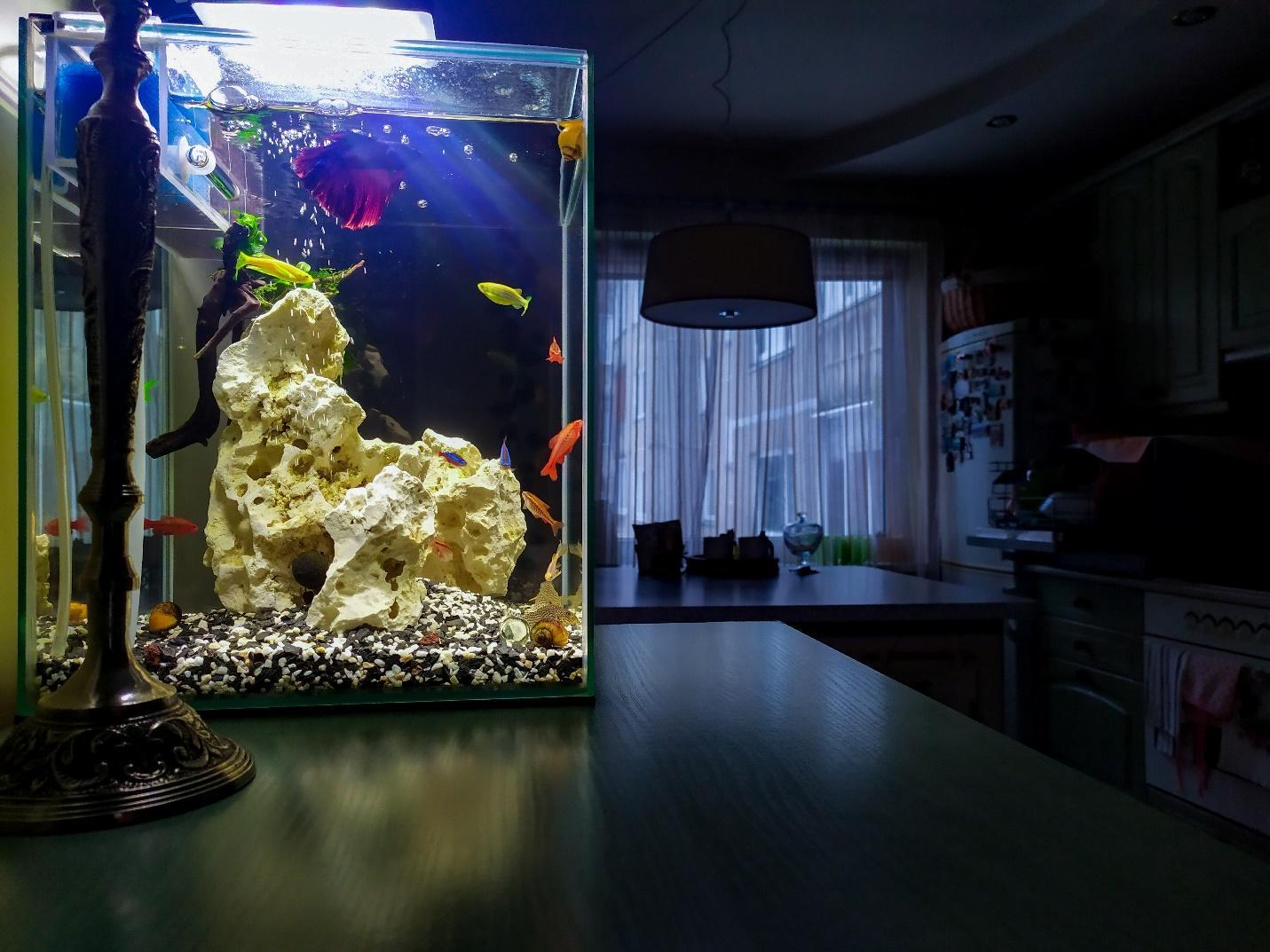
Yes. For many homeowners, offices and commercial spaces, aquariums are design features and living ecosystems.
Fish tanks not only add a wow factor to the home interior, but they also offer a plethora of other benefits. Aquariums have proven to be helpful against stress and anxiety. They have a psychologically calming effect on your mind. Fish tanks can have an impact on managing sleep patterns. The hyperactive kids can learn a great deal by watching the fish swim in their water homes. Moreover, aquatic pets offer great companionship. Considering these merits, it’s a great decision to integrate fish tanks into your home. You can enhance this experience further by ordering glass and mirror online to customize and maintain the perfect aquarium setup.
If you are ready to turn your vision into reality, follow these simple steps:
Submit Your Tank Specifications: Length × Width × Height, Rimless or Braced, Overflow/Drill plan, Preferred glass type (standard vs low-iron), Budget.
Receive Professional Consultation: We review with your space, stand, substrate/rock load, shipping/install logistics.
Get A Detailed Quote: Once you are done with the dimensions and glass type with thickness, get a detailed quote.
Production & Delivery: Precision cut glass, factory polish/beveled, and shipping to your doorstep.
Choose glass not just by gallons, look at height, span, material, bracing, drilling needs, and aesthetic clarity. Use expert guidance to set thickness and safety factors, don’t rely on gallons only.” Consider low-iron for clarity, laminated for heavy duty, acrylic for large/curved designs. At Fab Glass and Mirror, we supply premium cut-to-size glass if needed along with expert consultation and support.
For most home aquariums, a safety factor of 3.8 is common. More conservative users or large/unbraced tanks might go 4.0-5.0. The higher the SF, the thicker (and costlier) the glass.
Yes. Many high-end tanks use ultra-clear low-iron glass for front viewing and standard glass for sides/back where clarity is less critical. This can balance cost and aesthetics.
In most cases, no. Once glass is tempered it cannot be safely cut or drilled without compromising strength and warranty. If drilling/porting is required, you will need non-tempered (annealed or laminated) glass with a low-iron option if view clarity is key.
Depends on the use case. Acrylic is lighter and better for very large/curved tanks; glass is more scratch-resistant, more cost-effective for many home installs, and often better long-term clarity if maintained. Use acrylic when weight or shape demands it.
If your tank span is long (e.g., front width >48″) or water height is high (>30″), or you’re going rimless, you very likely need bracing (center bar or euro-brace) to control bow/deflection and support structural integrity.
Explore all things glass—from stylish table tops and insulated options to tinted and frosted designs. Discover guides on glass railings, custom cut glass, shelves, and stunning backsplash ideas for a modern home or office upgrade.