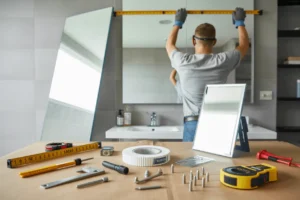
Install Like a Pro – Bathroom Mirror Installation Tips & Tools
Bathroom mirror installation may seem like a simple task, but it can quickly become overwhelming without the right guidance. Whether you are replacing an old mirror, adding a new frameless wall mirror, or figuring out how to hang a mirror on drywall, knowing the proper tools and techniques will make all the difference.
This comprehensive guide not only teaches you how to install a bathroom mirror like a professional, but also helps you make confident decisions that eliminate frustration, reduce costs, and boost your bathroom’s style and function. For custom sizing or expert advice, Fab Glass and Mirror is here to help
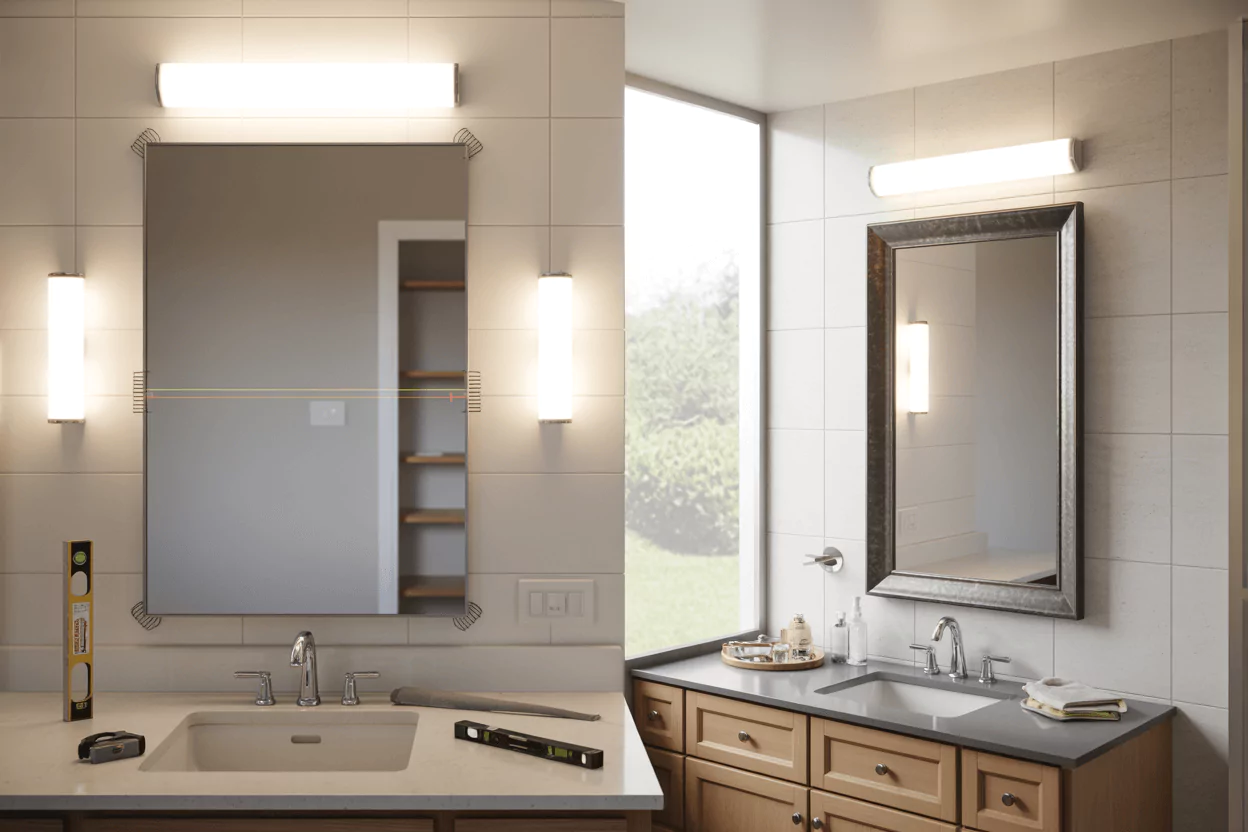
Table of Contents
- 1 Why Proper Bathroom Mirror Installation Matters
- 2 Types of Bathroom Mirrors
- 3 Choosing the Right Mirror for Your Bathroom Wall
- 4 Tools for Bathroom Mirror Installation
- 5 How to Install a Bathroom Mirror: Step-by-Step Guide
- 6 How to Hang a Mirror on Drywall
- 7 How to Hang a Heavy Mirror Safely
- 8 Bathroom Mirror Placement Over Vanity
- 9 Determining the Right Mirror Height Above Vanity
- 10 Using Mirror Mounting Clips and Holders
- 11 Mirror Mounting Methods (Adhesive vs. Clips vs. Brackets)
- 12 Frameless Wall Mirror vs. Framed Bathroom Mirrors
- 13 Bathroom Mirror Replacement – What You Should Know
- 14 Common Mistakes to Avoid When Hanging Mirrors
- 15 Cost Considerations – Mirror Pricing
- 16 Styling Ideas – Vertical Mirrors, Bathroom Gold Mirror & More
- 17 Final Bathroom Mirror Installation Tips
- 18 Conclusion
- 19 FAQs
Why Proper Bathroom Mirror Installation Matters
A mirror isn’t just a decorative element; it is a focal point. A poorly installed mirror can compromise safety, functionality, and design flow. Here is why correct bathroom mirror placement and secure mounting are vital:
- Aesthetic Balance: The right mirror height above vanity contributes to symmetry and makes small bathrooms feel larger.
- Functionality: Proper lighting and angle help in grooming, makeup, and daily routines.
- Safety: Using the right mirror mounting clips, mirror holders, or adhesive ensures your mirror stays put, particularly with hanging heavy mirrors.

Types of Bathroom Mirrors
Before installation, it is essential to select the correct mirror type based on style and functionality. Common types of bathroom mirrors include:
- Frameless Wall Mirrors: Sleek and modern; often mounted with adhesive or clips.
- Framed Mirror Bathroom Styles: Classic or ornate, these use brackets or screws.
- Bathroom Gold Mirrors: Add elegance and work well with contemporary or luxury decors.
- Vertical Mirrors: Ideal for narrow spaces and full-length reflection.
Each type requires a different mirror mount and may influence your choice of tools.
Need a Mirror?
Browse Fab Glass and Mirror’s collection of framed, frameless, and custom vanity mirrors, perfect for any bathroom style.
Choosing the Right Mirror for Your Bathroom Wall
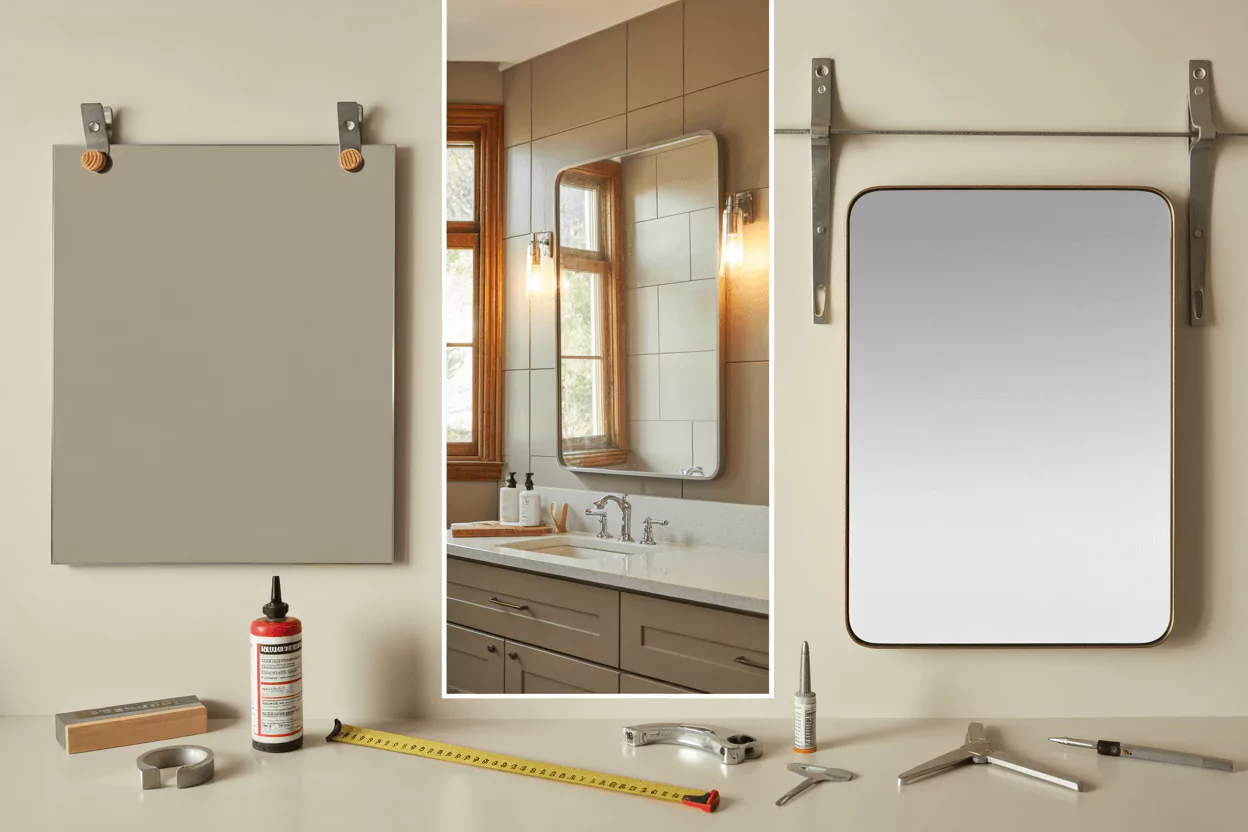
When selecting a mirror for bathroom wall, consider:
- Wall Size: How the mirror fits proportionally.
- Mirror Weight and Thickness: Important for choosing the proper mounting technique.
- Vanity Width: Ideally, your mirror should be 2–4 inches narrower than your vanity.
Style Preference: Whether you want a frameless wall mirror for a clean look or a framed mirror bathroom piece for traditional charm.
Understanding these factors will shape your entire installation approach and determine the best mirror holder clips, adhesives, or mounting hardware.

Tools for Bathroom Mirror Installation
Here is a list of must-have tools for bathroom mirror installation:
- Level
- Tape measure
- Pencil or painter’s tape
- Stud finder
- Drill and bits
- Screwdriver
- Anchors (toggle bolts or plastic wall anchors)
- Mirror mounting clips or brackets
- Safety gloves and goggles
- Caulk gun (if using mirror adhesive)
- Adhesive (mirror-safe)
Having these on hand will ensure a clean, accurate, and safe bathroom mirror installation, whether you are hanging a lightweight mirror or securing a heavy framed piece.
How to Install a Bathroom Mirror: Step-by-Step Guide
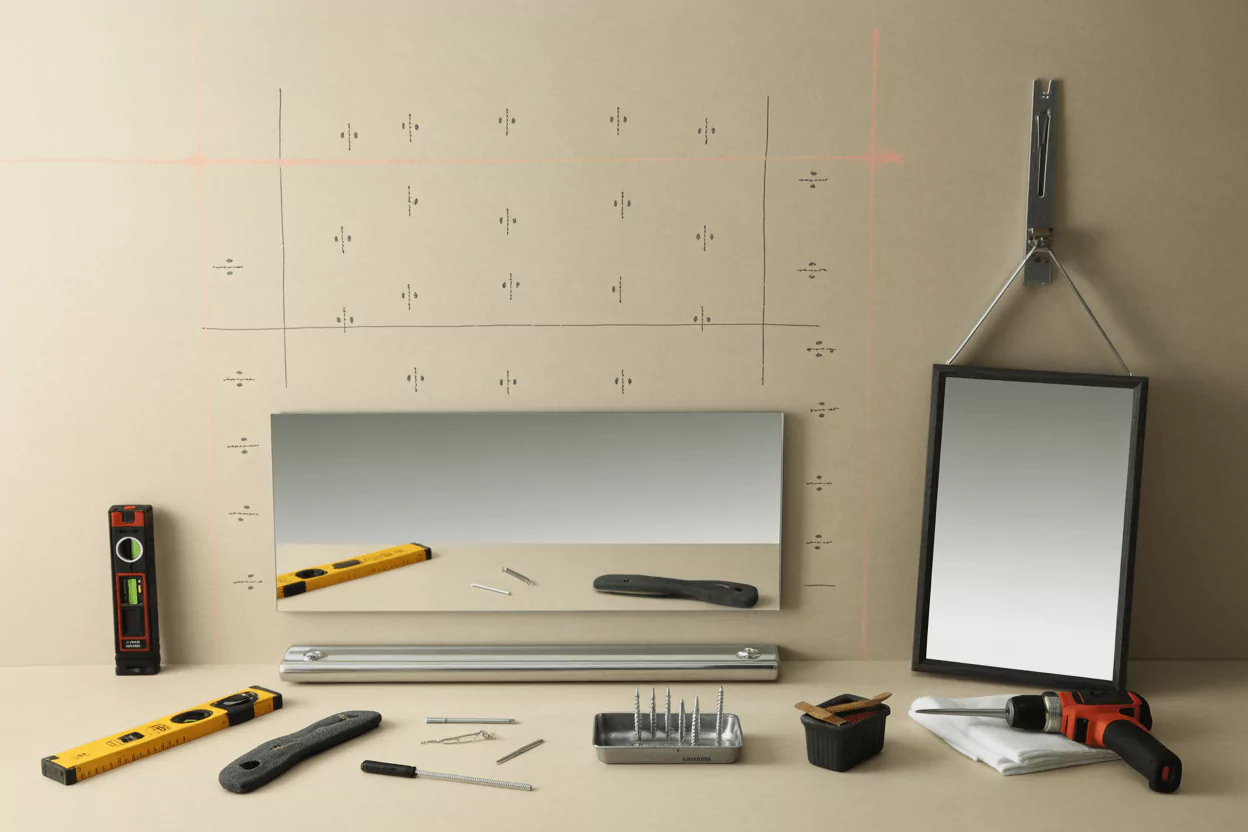
Whether you are a DIYer or just want to avoid overpaying for professional help, follow these step-by-step mirror installation instructions:
Step #1: Mark Your Placement
Measure the wall area and the mirror dimensions.
- Use a pencil or painter’s tape to mark the top edge and center line of where the mirror will hang.
- Verify the alignment using a level.
Step #2: Locate Studs or Use Anchors
- Use a stud finder to locate studs for extra support. If unavailable, use wall anchors rated for your mirror’s weight.
- Mark screw holes accordingly.
Step 3: Install Mirror Mounting Hardware
Depending on your mirror type, install:
- Mirror mounting clips or mirror holder clips for framed or frameless mirrors.
- Mirror brackets or Z-clips for large or heavy mirrors.
- Or apply mirror-safe adhesive (avoid standard construction adhesive, which may damage the silver backing).
Step #4: Secure the Mirror
- Gently position the mirror against the wall.
- If using adhesive, press firmly and let it cure per the manufacturer’s instructions.
- If using clips, slide the mirror into place and tighten the top clips to secure it.
How to Hang a Mirror on Drywall
Drywall mounting requires extra attention to weight and anchoring:
- Use toggle bolts or molly bolts if no studs are available.
- For lightweight mirrors (under 20 lbs), plastic anchors may suffice.
- Avoid mounting directly with screws into drywall—it will fail over time.
- For a hanging mirror, use D-rings or a wire, but make sure to install heavy-duty wall hooks.
Pro Tip
Add a small adhesive pad or bumpers behind the bottom edge to prevent wall contact and vibrations.
How to Hang a Heavy Mirror Safely
Installing a heavy framed bathroom mirror or large vanity mirror?
- Always find at least one stud to anchor into.
- Use two-person assistance to lift and align the mirror.
- Use mirror mount brackets or French cleats for added safety.
- Consider using vertical mirrors with multiple anchor points for tall, weighty mirrors.
Safety Tip
Wear safety goggles and gloves during installation to avoid injury from dropped glass or slips.

Bathroom Mirror Placement Over Vanity
Proper bathroom mirror placement over vanity ensures both visual symmetry and usability. Here’s how to plan:
- Width: Mirror should be slightly narrower than the vanity (by 2–4 inches).
- Height: Leave 5–10 inches of space between the vanity top and mirror bottom.
- Lighting Consideration: Account for light fixtures above or on the side.
- Double Vanity: Use two mirrors or one large mirror depending on preference.
Determining the Right Mirror Height Above Vanity
- This is one of the most common concerns during bathroom mirror installation:
- Standard placement is between 55–65 inches from the floor to the mirror center.
- Adjust based on your height and average family height.
- Allow enough space above faucets and under lights.
Using Mirror Mounting Clips and Holders
Mirror mounting clips and mirror holder clips are great for:
- Frameless wall mirrors
- Medium-weight rectangular mirror or oval mirrors
- Bathroom mirrors in rental properties (easy removal)
Clip Types:
- Spring-loaded clips: For easier removal
- Fixed clips: Permanent and secure
- Plastic or chrome clips: Style options for visible edges
Make sure clips are level, equidistant, and firmly attached to studs or anchors.
Ready to Transform Your Bathroom Wall?
Find the perfect frameless mirror for your vanity and install it with ease, at Fab Glass and Mirror, where style meets simplicity.
Shop Frameless Mirrors for Bathroom
Mirror Mounting Methods (Adhesive vs. Clips vs. Brackets)
There are several mirror mounting approaches based on weight, wall type, and design:
| Mounting Type | Best For | Pros | Cons |
| Adhesive | Frameless, modern look | No visible hardware, clean finish | Permanent, hard to replace |
| Clips | Light–medium framed or frameless mirrors | Easy to install & remove | Clips may be visible |
| Brackets/Z-Clips | Heavy mirrors | Extremely secure | Requires exact measurements |
| Wire & Hooks | Framed mirrors | Simple setup | Needs strong hooks or studs |
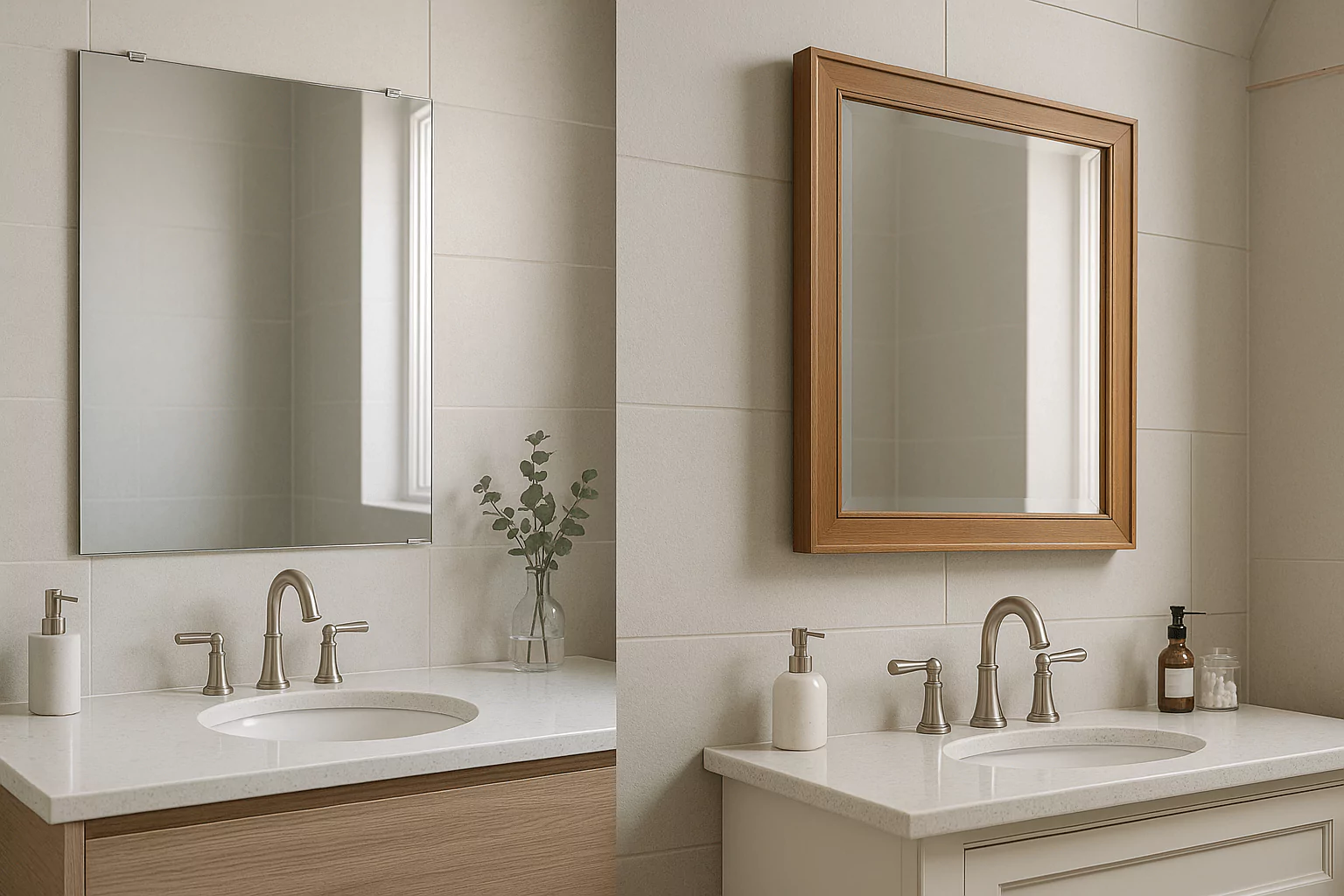
Frameless Wall Mirror vs. Framed Bathroom Mirrors
Choosing between a frameless wall mirror and a framed mirror bathroom style affects both aesthetics and installation.
Frameless Mirrors
- Sleek, modern
- Mounted with clips or adhesive
- Ideal for minimalist bathrooms
Framed Mirrors
- Classic, elegant
- Usually heavier
- Mounted using D-rings, brackets, or French cleats
Style Tip
A bathroom gold mirror adds warmth and luxury, ideal for high-end or transitional spaces.
Bathroom Mirror Replacement – What You Should Know
If you are performing a bathroom mirror replacement, keep these in mind:
- Remove Carefully: Use painter’s tape over glass and gently pry off with suction cups or flat bars.
- Clean the Wall: Remove leftover adhesive or anchor plugs.
- Check Condition: Replace drywall if it’s damaged.
- Upgrade Hardware: Use stronger mirror mounting clips or adhesive suited for the new mirror weight.
Common Mistakes to Avoid When Hanging Mirrors
Avoid these common pitfalls during bathroom mirror installation:
- Not using a level, resulting in crooked alignment
- Ignoring studs or skipping wall anchors
- Mounting too high or low relative to vanity
- Using non-mirror-safe adhesives (which cause silvering damage)
- Relying solely on double-sided tape (unless rated for weight)
Cost Considerations – Mirror Pricing
Understanding mirror pricing helps you make informed buying decisions.
Mirror Cost Breakdown:
| Feature | Approx. Cost (USD) |
| Small basic mirror (24″x30″) | $30 – $60 |
| Medium framed mirror | $80 – $150 |
| Large frameless wall mirror (48″+) | $100 – $250 |
| Custom cut or specialty finish | $200+ |
| Mirror wall cost (floor-to-ceiling) | $500 – $1200 |
Pro Tip
Compare mirror mount options and DIY vs professional mirror installation charges to stay within budget.
Styling Ideas – Vertical Mirrors, Bathroom Gold Mirror & More
Beyond installation, the style you choose can transform your space:
- Vertical mirrors: Add height and elegance to narrow spaces
- Bathroom gold mirror: Complements warm metal finishes and adds a luxury touch
- Double mirrors: Over dual sinks for symmetry
- Oversized mirrors: Create illusion of space
- LED vanity mirrors: Combine function and flair
Style is just as important as function when it comes to bathroom wall mirrors.
Final Bathroom Mirror Installation Tips
To wrap up your pro-level setup, here are final bathroom mirror installation tips:
- Always clean the wall before applying adhesive.
- Use mirror-safe backing material if placing on tiled or uneven surfaces.
- Double-check vanity mirror height with intended lighting.
- For large mirrors, use a helper to prevent slips or injuries.
- Label mounting holes before you drill to avoid drywall surprises.
Conclusion
Installing your own bathroom mirror not only saves money, it gives you total control over your space. By understanding how to install a bathroom mirror using the right tools, avoiding common mistakes, and styling with intention, you’ll enjoy a stunning result that looks like it came from a professional designer.
Now that you are equipped with expert-level bathroom mirror installation tips, it is time to take action.
Need Help in Selecting the Best Mirror for Your Bathroom?
Contact Fab Glass and Mirror for the best mirror for your bathroom along with expert advice on mirror wall type, cost, size selection, and safe installation practices.
FAQs
You will need a level, tape measure, drill, screwdriver, anchors, mirror clips or adhesive, a stud finder, and safety gear like gloves and goggles.
Yes, but use toggle bolts or molly bolts for support if no studs are available. For best results, anchor at least one side into a stud.
Typically, the mirror center should be 55–65 inches from the floor and 5–10 inches above the vanity top.
Frameless mirrors can be mounted with mirror-safe adhesive for a clean look or with mirror mounting clips for easier removal.
Tape over the glass, use suction cups or a flat bar to loosen it gently, clean leftover adhesive, and inspect the wall before installing the new mirror.