Best Greenhouse Roof Material Guide
The quality of a greenhouse’s roof is crucial to the health of the plants grown inside. Even though the roof and sides of a greenhouse are often made of the same material, more sunlight will enter the greenhouse through the roof during the day. That’s why it’s crucial to pick a roofing material that’s both durable and affordable. Here you have multiple options to choose the best greenhouse roof material. Let’s dig into it!

It is impossible to have a completely solid roof on a greenhouse since the plants inside need access to light. The roof of a greenhouse needs to be made of a clear or nearly clear material so that enough light can enter. Direct sunlight will enter the greenhouse through the roof as the sun moves across the sky. Hence, its best for the plants. When the temperature inside a greenhouse rises, that warmth stays put, making it perfect for cultivating plants, vegetables, and fruits.
Table of Contents
4 Best Materials for a Greenhouse Roof!
Greenhouse roofing options include a wide variety of materials. Which materials to employ in the greenhouse’s construction depends on a number of factors, including the type of greenhouse being built and the available budget. Think about whether you want a permanent, semi-permanent, or movable greenhouse, as different framing materials work best for different greenhouse sizes. Because of this, we’ll need to adjust our material selection accordingly.
Glass Roofing
The glass was once the only material used in greenhouse construction. Glass, when properly installed, is a long-lasting and permanent option for any greenhouse. It lets in the most light due to its optical clarity.
Pros
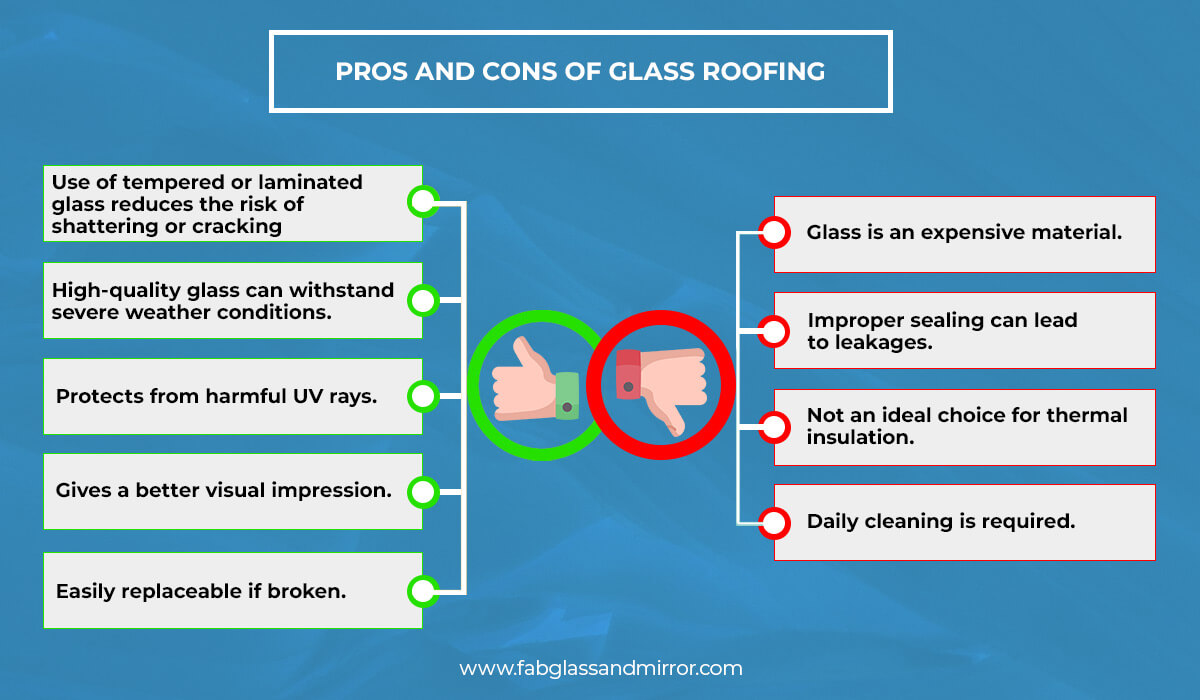
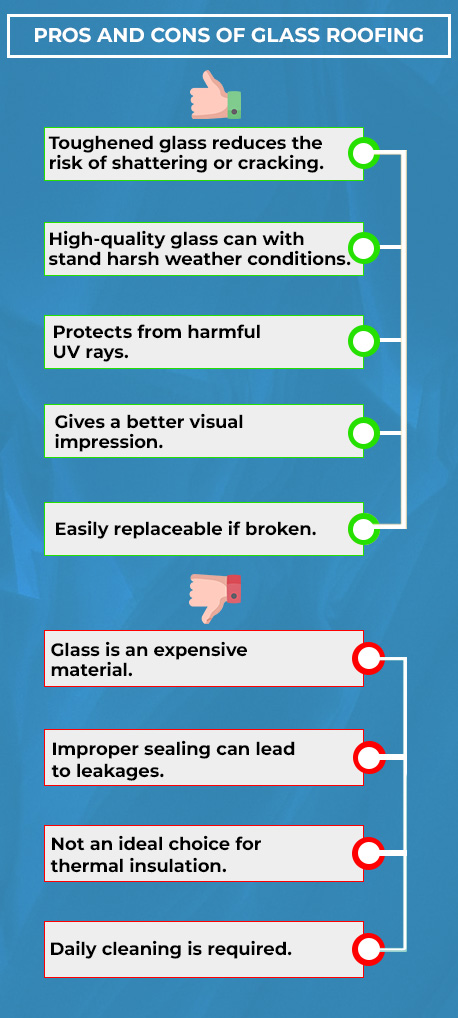
- There is significantly less danger of shattering or cracking with tempered glass because it is far stronger and thicker than regular glass.
- Tempered glass, if broken, shatters into tiny fragments.
- As a result of being laminated glass is highly robust and can withstand severe conditions such as high winds and rain.
- As much as 99 percent of harmful UV rays can be obstructed by the laminated glass.
- A greenhouse with clear glass makes a better visual impression.
- When glass breaks, it’s simple to get a new pane.
Cons
- Glass is a relatively expensive material.
- Leaks can be a major problem if the glass on a greenhouse’s roof isn’t properly sealed.
- In terms of thermal insulation, glass is not ideal.
- Apart from laminated glass, glass is one of the easiest materials to break.
- To keep light flowing into the greenhouse, the glass windows must be cleaned regularly.
Polycarbonate/Acrylic Roofing
This durable roofing material is ideal for use on sloping roofs and has a ten-year lifespan.
Pros
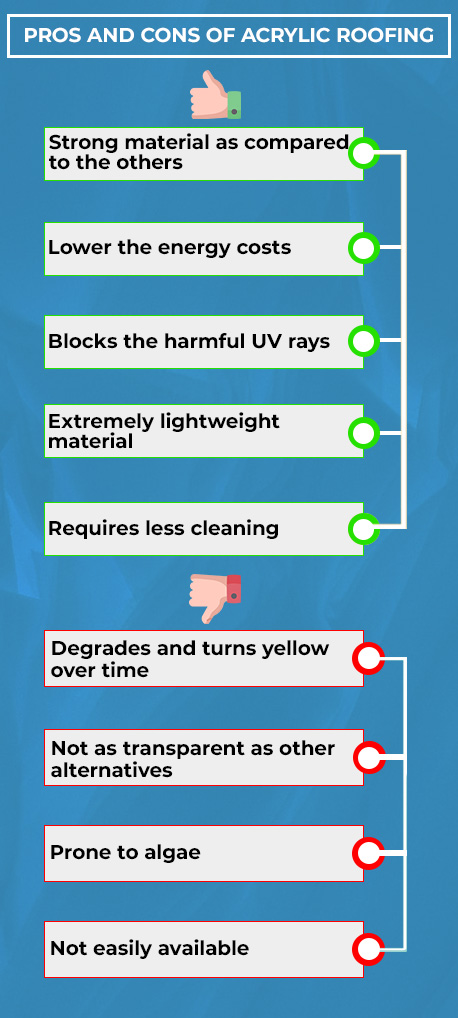
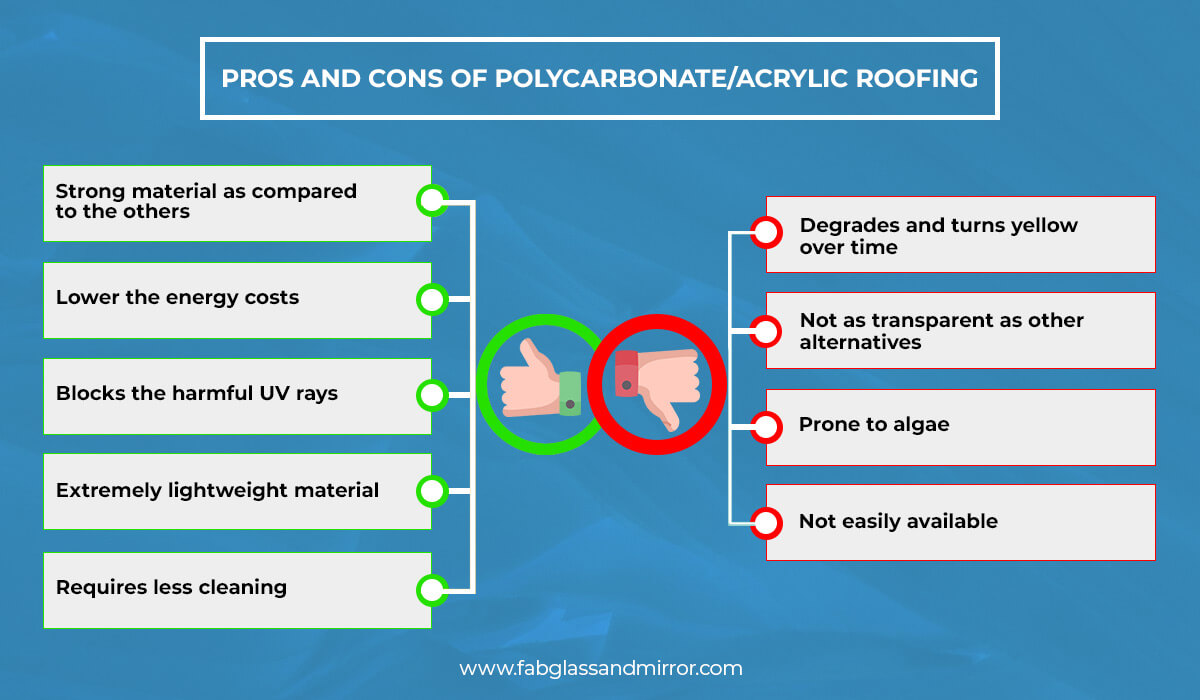
- When compared to other roofing materials, polycarbonate roofing stands tall and sturdy.
- This is the finest material for use on roofs since it reduces energy costs and keeps its warmth.
- Light and heat from the sun can enter while harmful UV rays are blocked.
- Since it weighs practically nothing, polycarbonate is a breeze to deal with.
- To keep it in pristine condition, just one or two cleaning sessions are enough.
Cons
- Unlike glass or fiberglass, polycarbonate degrades over time.
- This material tends to turn yellow with time.
- The double-layer construction is not as transparent as glass or fiberglass.
- Algae can form in the spaces between the double-layer construction walls if the walls aren’t sealed properly after installation.
- Panels are not widely available and must be purchased from the specified manufacturer, thus replacing damaged sheets may take some time.
Fiberglass Sheets/Paneling

Greenhouses that will remain in place for an extended period of time benefit the most from fiberglass sheets or panels. This alternative to glass roofing is lighter and doesn’t need the same robust supporting structure.
Pros
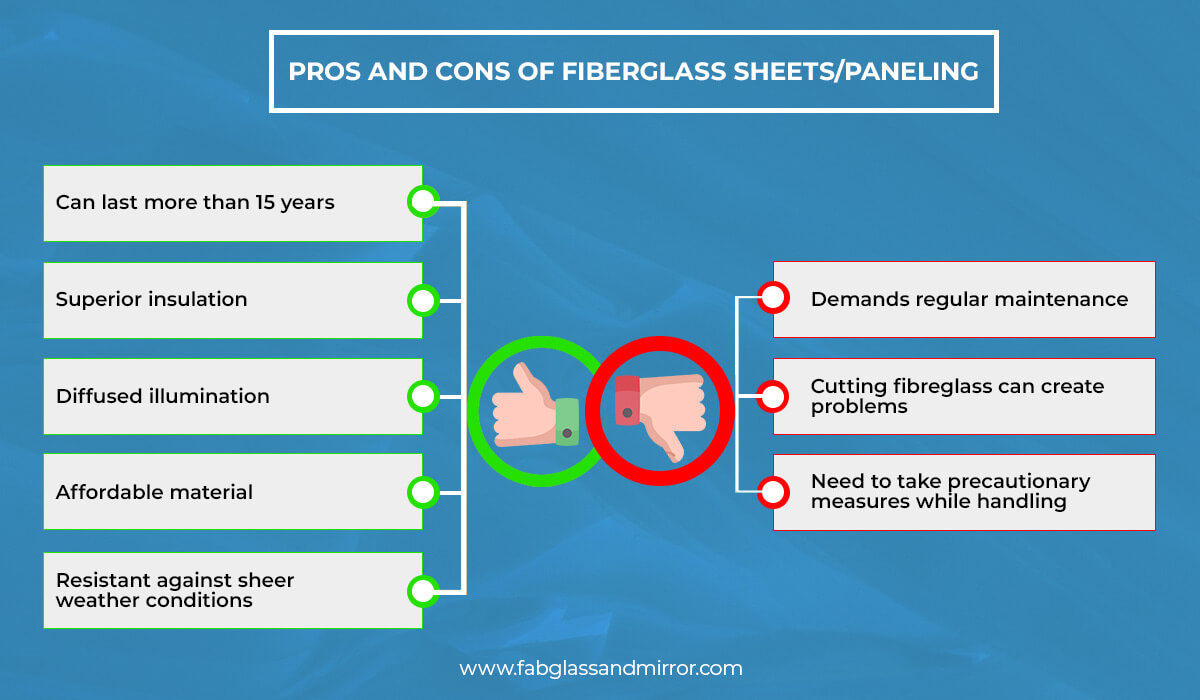
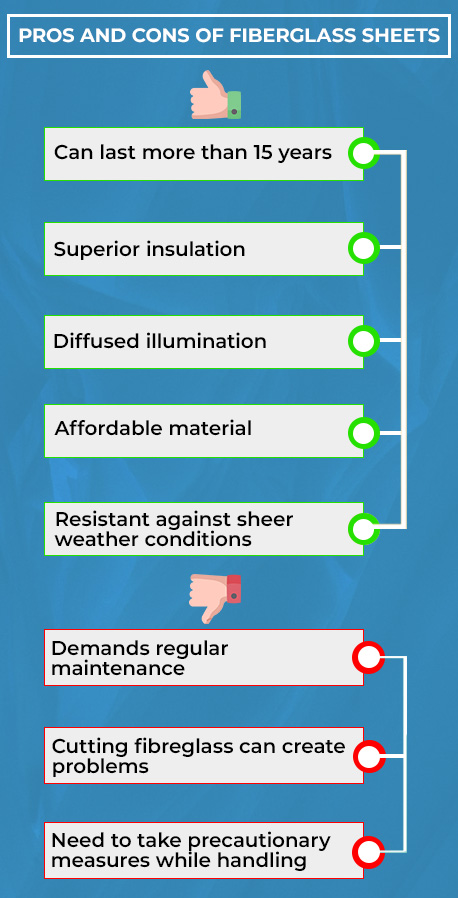
- Once installed permanently, fiberglass can survive for at least 15 years.
- As a result, fiberglass is impervious to the elements.
- Superior insulation and diffused illumination are two benefits you’ll reap from this material.
- Sheets of fiberglass are affordable and simple to work with.
- One of the least expensive roofing materials for greenhouses is fiberglass.
- Fiberglass doesn’t shrink or swell with the weather changes.
Cons
- Maintaining optimal light transmission via fiberglass requires regular upkeep.
- Cutting fiberglass can release sharp glass fibers that are difficult to remove and can be harmful.
- When handling fiberglass sheets, it’s important to take precautions by wearing protective clothing and equipment.
Polyethylene/Plastic Film Roofing
For short-term, portable, compact, or seasonal greenhouses, polyethylene makes for an ideal roofing material. Because of its high light transmission, it is frequently used on greenhouses with curved or arched roofs.
Pros
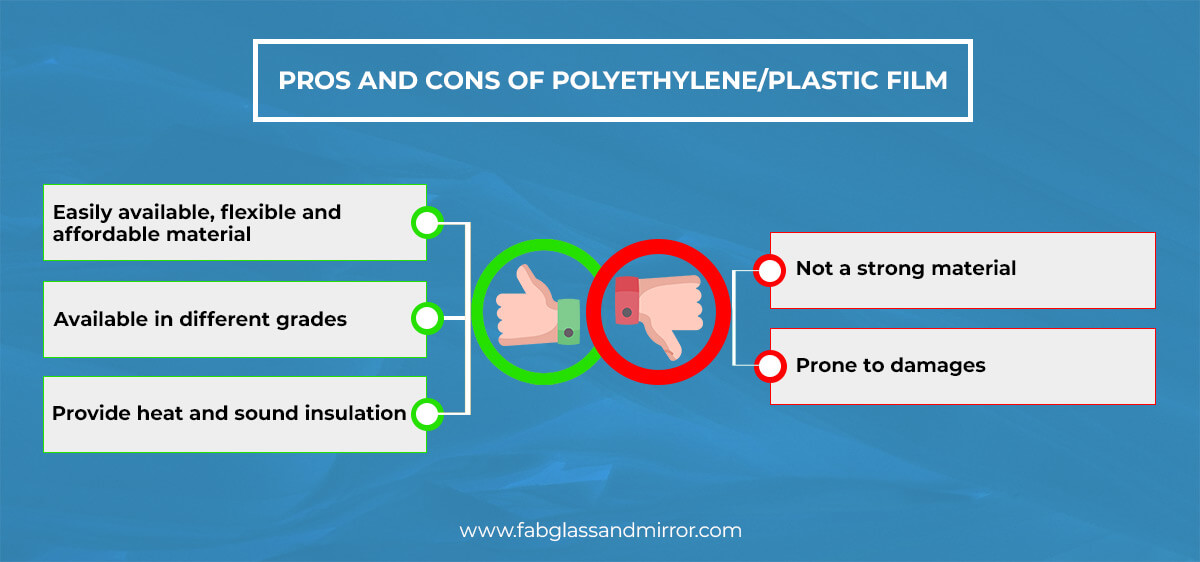
- Polyethylene is commonly available, flexible, and affordable.
- Polyethylene comes in a variety of grades, the most lasting of which can serve you for five years.
- Provides high insulation from heat and sound.
Cons
- Compared to glass or fiberglass, polyethylene is not very sturdy.
- It’s more susceptible to damage than other kinds of roofing.
Final Words!
The roof of a greenhouse is the most important component. Although there are a number of choices to be made during greenhouse construction, picking the right roofing materials is the most important thing. Producing your own vegetables in a greenhouse is possible if you take the time to ensure optimal growth conditions for your plants.