
My Cart
You have no items in your shopping cart.



Minimalism is at the core of modern interior aesthetics. The quintessential neutral colors, light furniture, and elegant decor constitute the statement contemporary interior design. Clear furniture is an important element of modern decor. The neat and sophisticated look of clear furnishing items reflects the novel interior trends. Glass is a common transparent material used to achieve a clean and uncluttered look. However, many other alternatives to glass are also easily available now. Clear thermoplastics have emerged as a terrific substitute for glass. Acrylic and glass are the main contenders when it comes to the application of table tops. Let’s delve into the acrylic vs glass table top discussion to determine the right choice for everyday use.
Table of Contents
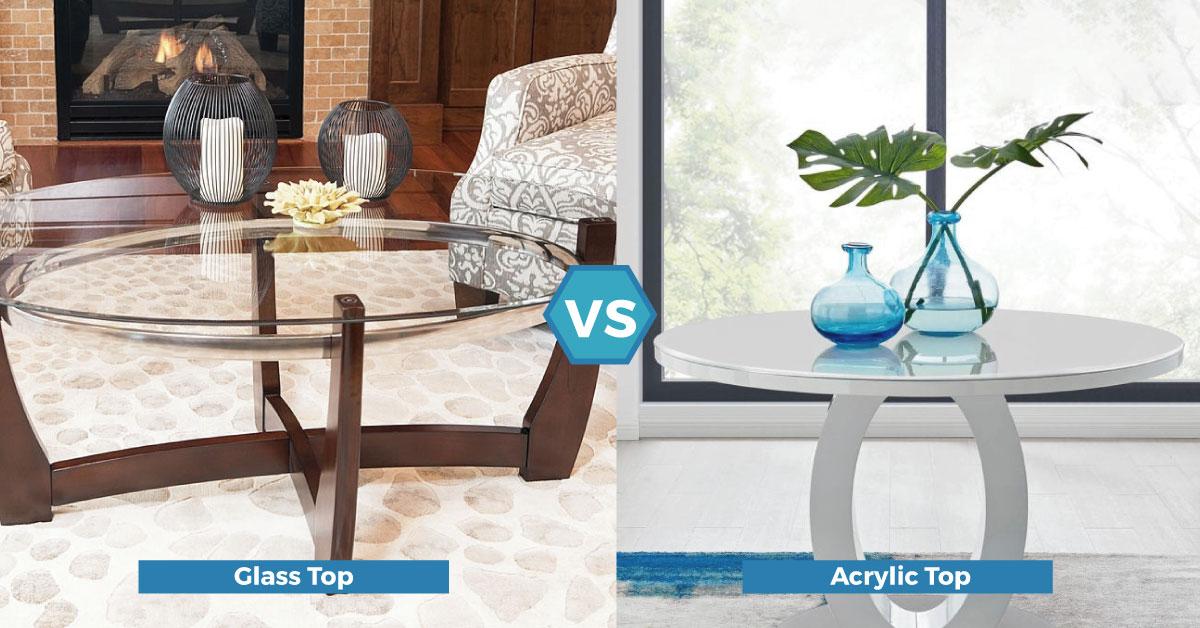
Tables are an important part of our furniture sets. Clear table tops are prioritized these days due to their posh aesthetics. Glass is well-known for its transparency and luxe aesthetics. Clear thermoplastics have also evolved as a suitable option for achieving the contemporary aesthetic. Let’s analyze the differences between acrylic and glass table tops to pick the right one.
Due to the polished surface, dust, and debris don’t usually stick to the surface of the glass. However, in the case of any stains or marks, you can easily clean the glass top with a clean cloth and soap water solution. For hard stains, a glass cleaner can be used.
The acrylic table top also follows suit. Warm water and soap solution is the ultimate cleaning agent for an acrylic top. Chemical cleaners are not recommended for cleaning acrylic surfaces as they can crack the acrylic, necessitating its replacement.
Glass is prone to scratches, but it is quite hard to scratch the glass surface. Only careless or heavy-duty use can lead to scratching in the case of glass table tops.
On the contrary, acrylic table tops get scratched quite easily. Acrylic is a comparatively soft material, so harsh cleaners or steel wire cleaning cloth can easily leave penetrable marks on the surface. Glass is potentially scratch-resistant in comparison to acrylic glass.
Glass is naturally resistant to UV radiation. Its UV resistance can be enhanced even more by adding a layer of UV protective coating on the surface.
In the case of constant exposure to UV rays, acrylic has the tendency to become yellow over time. However, acrylic can be made UV-resistant by adding a film or UV protection coating to the surface.
Glass is an incredibly clear material. Whether it’s etched, frosted, or laminated, glass doesn’t show any visual distortions. Glass is a luxury material that adds a touch of class and excellence to whatever thing it is used.
Acrylic glass table tops, on the other hand, are intrinsically clear. But you might notice some distortions in the standard acrylic glass. This issue can be avoided by the integration of thicker acrylic sheets into the tabletop or by getting museum-quality acrylic glass.
Both glass and acrylic can be molded into any shape and design. However, in order to cut or mold glass, professional skills and special tools are required. However, acrylic glass is preferred for DIY projects as it can easily be cut and molded at home.
Standard glass is prone to breakage from a hard impact. Glass is toughened through extensive manufacturing processes to achieve endurance against hard impacts.
Acrylic, on the other hand, is a strong thermoplastic material that is potentially unbreakable. Its strength makes it perfect for use in heavy-traffic areas.
Glass has a considerable weight, and you have to be very careful while handling glass. A minor bump or jolt may also cause cracks or edge chipping. Glass tables, therefore, are typically heavy and hard to move.
Acrylic is a lightweight material. Its weight makes it extremely easy to handle. Acrylic is easy to ship and deliver too. Shipping glass in bulk could be a challenging endeavor, while acrylic could easily be transported from one place to another without the fear of damage.
| Properties | Glass Tabletop | Acrylic Tabletop |
| Material | Clear amorphous | Transparent plastic-like |
| Strength | Standard glass is prone to breakage on hard impacts | Acrylic can endure hard impacts without breaking |
| Design versatility | Available in different shapes and styles | Available in different colors, shapes and styles |
| Weight | Heavy. Needs to be handled carefully | Lightweight and easy to handle |
| Durability | Long service life | Highly durable with proper maintenance |
| Shape | Needs professional cutting and molding. | Can be DIY cut and molded into any shape. |
| Scratch resistance | Prone to scratches from heavy-duty use. | Gets scratches easily |
| Maintenance | Low maintenance | Require a little more maintenance than glass to serve longer. |
Both acrylic and glass are exceptional materials. Individually, they are the true definition of perfection. But when compared to each other, acrylic and glass both have some ups and downs. So, making a choice between an acrylic table top and a glass table top would totally depend on our personal preferences and requirements.

If you have a limited budget but you want a tabletop that can endure hard impacts without breaking, go for an acrylic table top. Keep in mind that you might have to clean and maintain the acrylic table top regularly if you want it to serve you for a long period of time.

However, if you want your table top to be ultra-luxe and visually perfect, go for a glass table top. If your tabletop is in a heavy-traffic area or you have kids or pets in the house, a glass top may not be an ideal choice. So consider your personal requirements, evaluate your options, and choose accordingly.
Explore all things glass—from stylish table tops and insulated options to tinted and frosted designs. Discover guides on glass railings, custom cut glass, shelves, and stunning backsplash ideas for a modern home or office upgrade.