Frameless vs Framed Mirrors – Which Is Right for Your Space?
Choosing the right mirror is more than a matter of reflection. It is about improving the design, mood, and function of your space. Whether you are remodeling a bathroom, revamping a bedroom, or designing a new home from scratch, the decision between a frameless vs framed mirror is a critical one.This comprehensive guide will walk you through everything you need to know about frameless mirrors and framed mirrors, from design and installation to maintenance, cost, and ideal use cases. With expert tips and detailed comparisons from Fab Glass and Mirror, you’ll be equipped to make a well-informed choice that suits your space, style, and needs.

Table of Contents
- 1 What Are Frameless Mirrors?
- 2 What Are Framed Mirrors?
- 3 Design Considerations
- 4 Installation Differences
- 5 Installation Differences
- 6 Framed Mirror Installation
- 7 Maintenance & Durability
- 8 Cost Comparison
- 9 Pros and Cons – Frameless vs. Framed Mirror
- 10 Choosing Based on Space & Function
- 11 Expert Tips for Mirror Selection
- 12 Final Verdict
- 13 FAQs
What Are Frameless Mirrors?
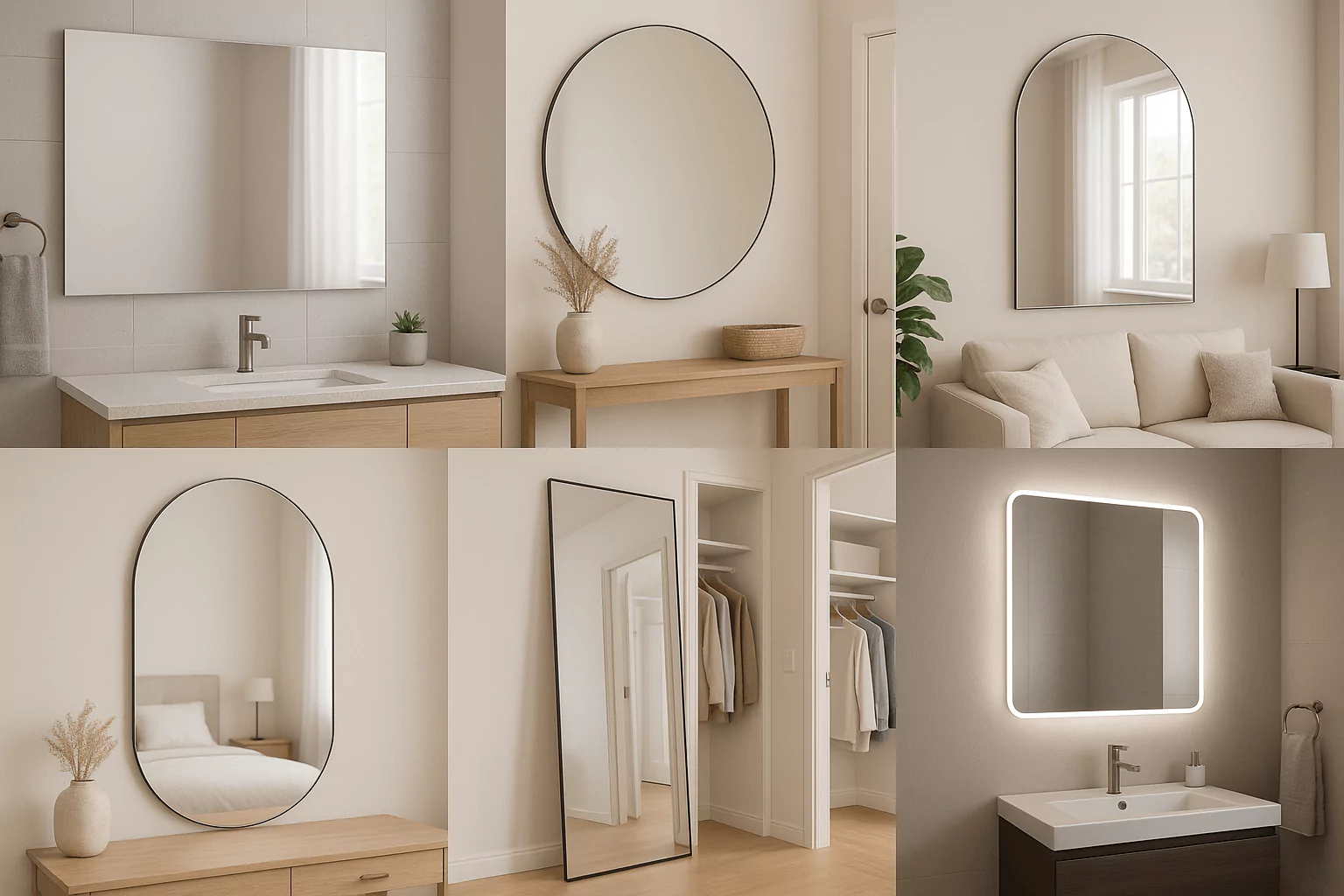
A frameless mirror is exactly what it sounds like, a mirror without a surrounding frame. Instead of being encased in wood, metal, or other materials, frameless mirrors typically feature clean-cut edges, often polished or beveled for safety and style. They’re popular in modern and minimalist interior designs.
Popular Types of Frameless Mirrors
- Bathroom Mirror: A staple in contemporary bathrooms for a seamless look.
- Wall Mirror: Ideal for entryways, living rooms, or bedrooms.
- Vanity Mirror: Adds sleekness to makeup stations and dressing areas.
- Full Length Mirror: Perfect for bedrooms, closets, or hallway installations.
- LED Mirror: Combines lighting functionality with minimalistic aesthetics.
- Custom Frameless Mirror: Tailored to specific shapes, sizes, and applications.
Shape & Design Variations
These shapes cater to diverse design tastes and offer unmatched versatility.
Advantages of Frameless Mirrors
- Sleek, modern appearance
- Blends well with various styles
- Easier to clean due to no frame
- Great for small spaces, gives the illusion of a larger area
Common Applications
- Bathrooms
- Entryways
- Gyms and dance studios
- Contemporary interiors
Looking For a Frameless Mirror with Minimalistic Design to Make Your Space Look Luxury?
Explore our frameless mirrors for a luxury look experience

What Are Framed Mirrors?
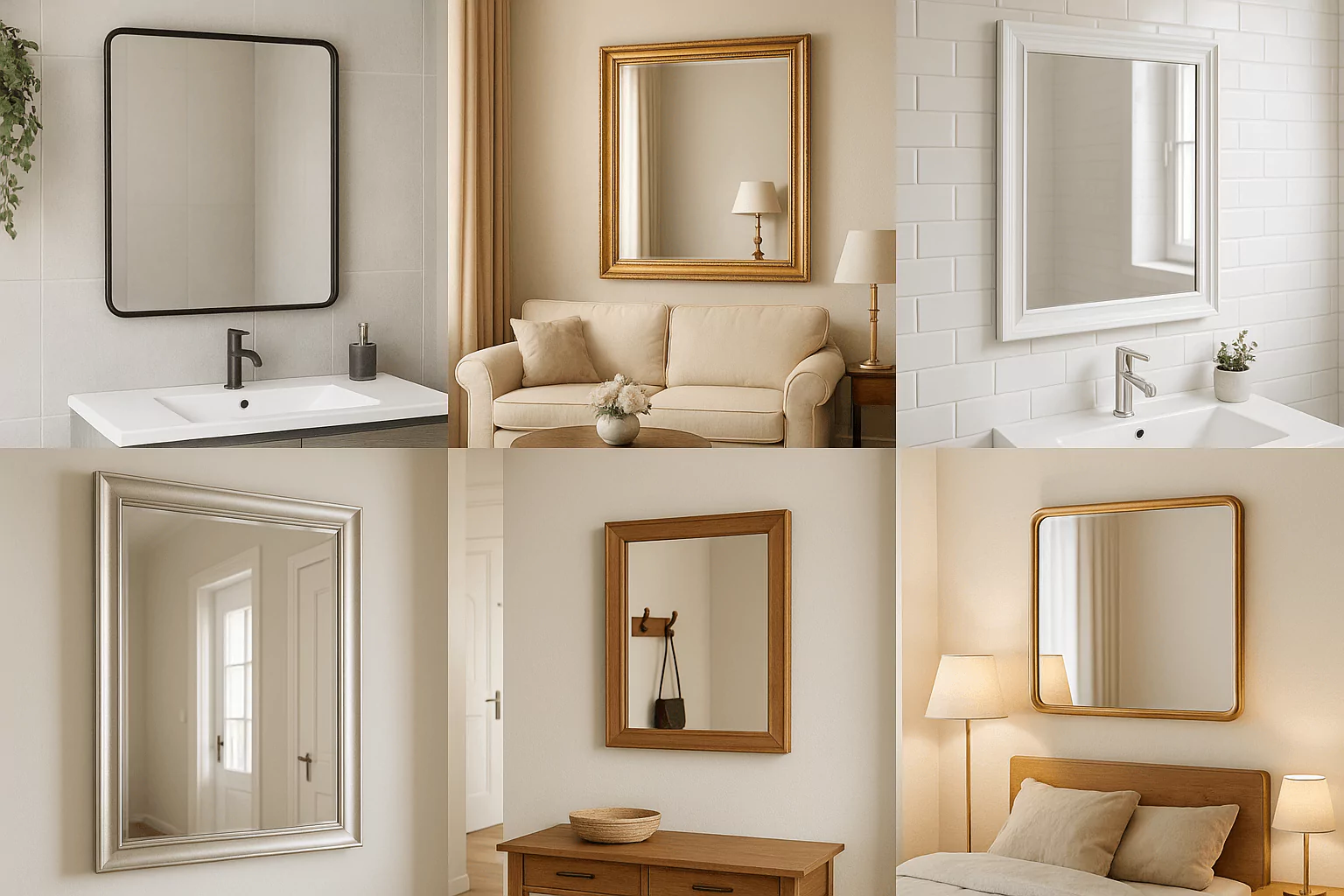
Framed mirrors are mirrors encased in a decorative or structural frame. These frames can be made of wood, metal, plastic, or other materials, and they serve both a functional and aesthetic purpose. Framed mirrors often convey a more classic or traditional feel but can also be modern depending on the frame style.
Frame Material Options
- Wood (rustic, vintage, or elegant aesthetics)
- Metal (industrial, sleek, or contemporary)
- Plastic (lightweight and budget-friendly)
- Composite (durable and moisture-resistant)
Popular Styles & Finishes
- Black Framed Bathroom Mirror
- Gold Framed Mirror
- White Framed Bathroom Mirror
- Brass Framed Mirror
- Silver Framed Mirror
Size & Placement Variations of Framed Mirrors
- Large Mirror: Ideal for expansive walls and living areas.
- Small Mirror: Great for accent purposes.
- Rectangular Mirror: Most versatile and traditional.
- Vanity Mirror: Combines style with daily utility.
- Bathroom Mirror: Frames that resist moisture and complement tiles.
Framed Mirror Benefits
- Visually impactful and decorative
- Frames offer structural protection
- Can complement other elements like fixtures and cabinetry
Ready To See How Each Style Looks in Real Life?
Check out our variety of sleek and stylish framed mirrors designed to match every room and budget.

Design Considerations
Choosing between a frameless vs framed mirror should start with your interior design goals.
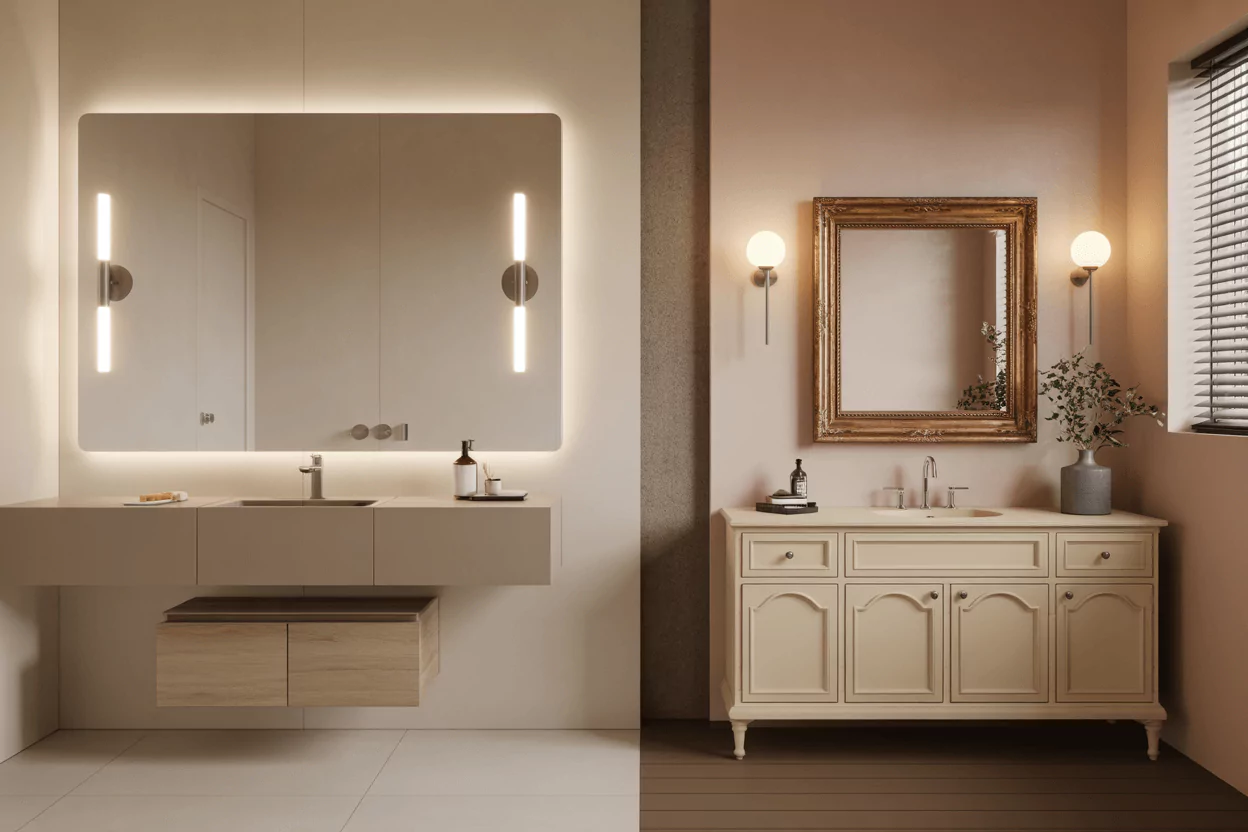
Modern vs. Traditional Spaces
- Frameless Mirrors: Work best in modern, industrial, or minimalist designs.
- Framed Mirrors: Improve traditional, farmhouse, or bohemian aesthetics.
Visual Space Enhancement
- Frameless mirrors create an illusion of more space, making them excellent for small bathrooms and narrow hallways.
- Framed mirrors, depending on thickness, can feel more grounded or heavy.
Frameless Bathroom Mirror Ideas
- Pair with wall-mounted sconces.
- Install floating vanities for a seamless look.
- Choose LED backlit options for functionality.
Framed Bathroom Mirror Ideas
- Use ornate frames for vintage charm.
- Match frames with cabinet finishes or hardware.
- Mix and match mirror sizes for gallery-style walls.

Installation Differences
Installing a mirror depends greatly on whether it has a frame.
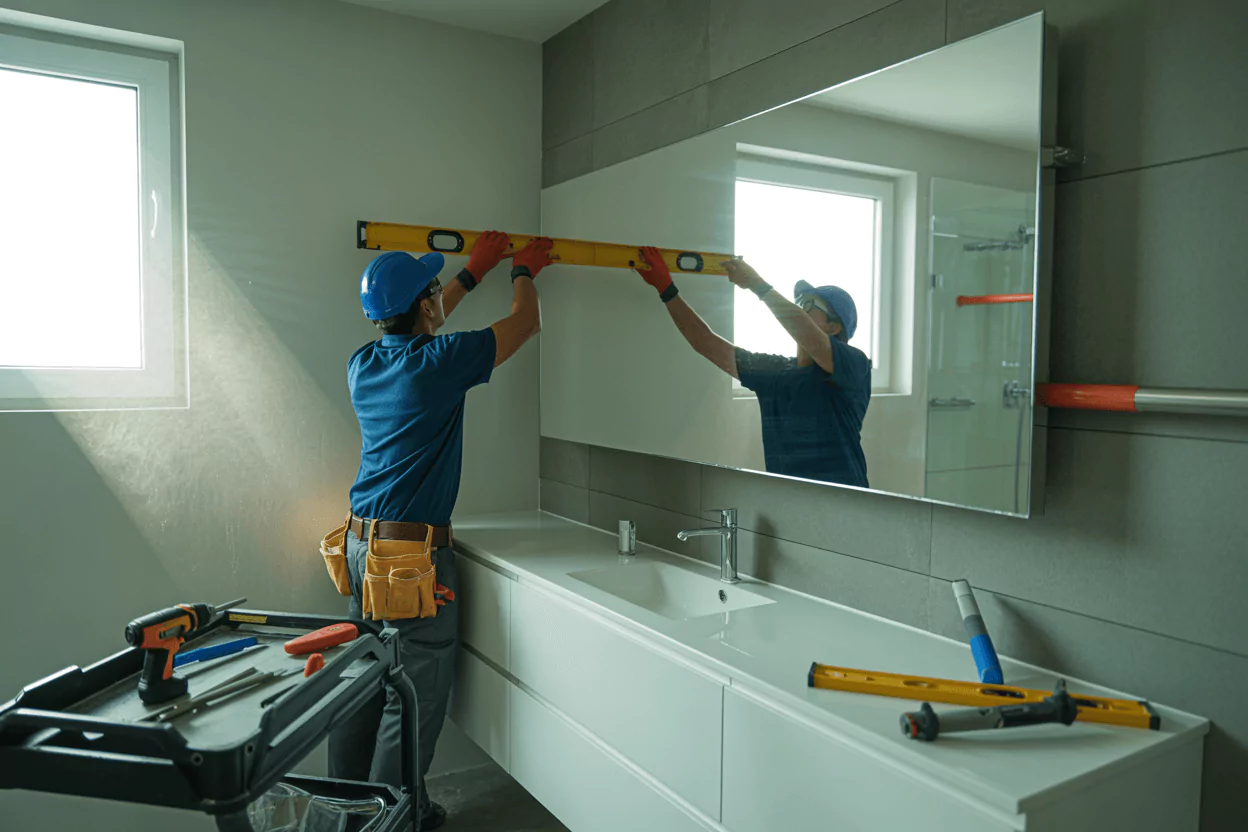
How to Hang a Frameless Mirror?
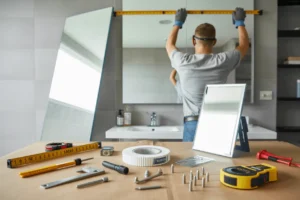
Frameless mirror mounting clips are essential hardware components. They grip the mirror edges securely and keep them flush with the wall.
Tools Required:
- Drill
- Level
- Anchors and screws
- Mirror adhesive (optional)
Steps:
- Mark the desired height and width.
- Install bottom clips or support brackets.
- Carefully slide the mirror into position.
- Secure top clips.
Installation Differences
Installing a mirror depends greatly on whether it has a frame.
How to Hang a Frameless Mirror?
Frameless mirror mounting clips are essential hardware components. They grip the mirror edges securely and keep them flush with the wall.
Tools Required:
- Drill
- Level
- Anchors and screws
- Mirror adhesive (optional)
Steps:
- Mark the desired height and width.
- Install bottom clips or support brackets.
- Carefully slide the mirror into position.
- Secure top clips.
Expert’s Advice
Always use wall anchors or toggle bolts for drywall to avoid damage.
Framed Mirror Installation
Framed mirrors usually come with pre-installed hanging brackets.
Tools Required:
- Measuring tape
- Pencil
- Wall anchors
- Screws and brackets
Steps:
- Mark and drill holes.
- Install screws or anchors.
- Hang using D-rings or wire backing.
Tip
Ensure the wall can support the mirror’s weight, especially for larger framed mirrors.

Maintenance & Durability
Both framed and frameless mirrors have their own care requirements.
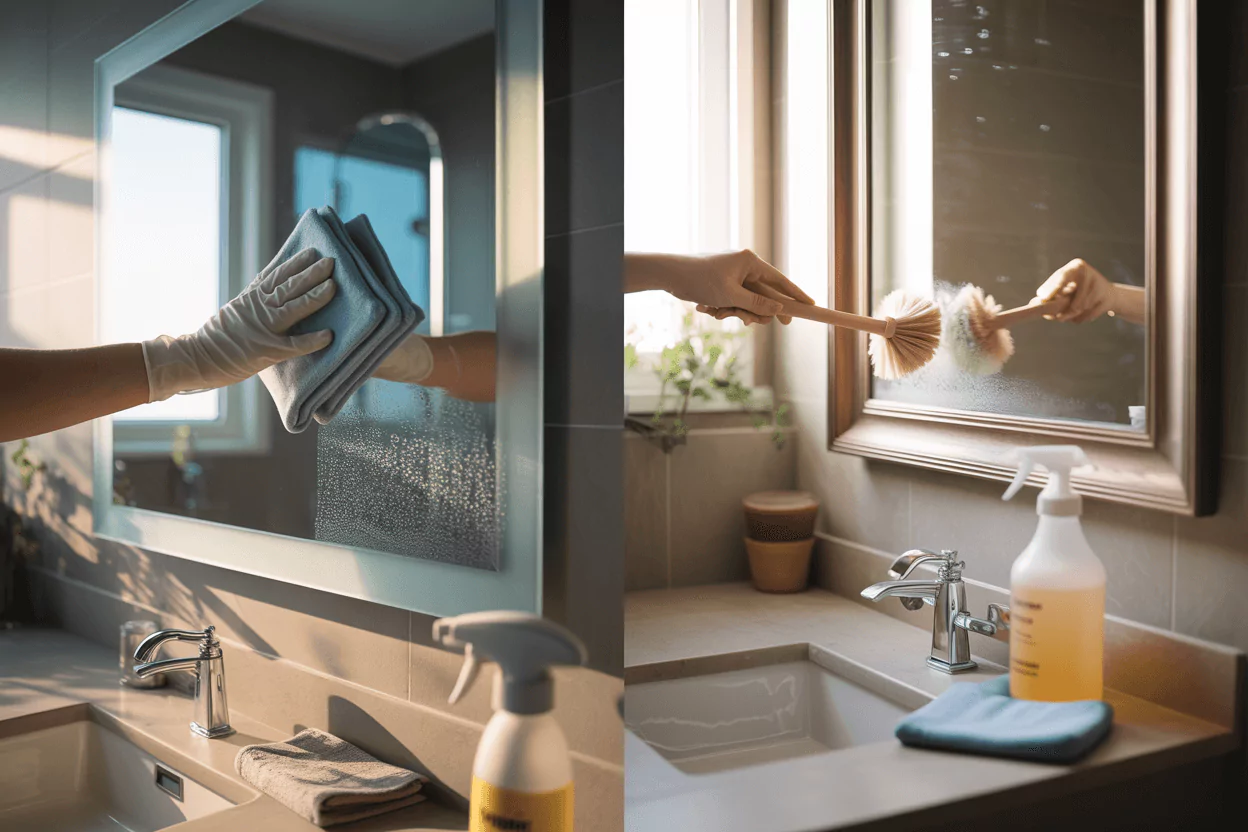
Frameless Mirror Maintenance
- Clean edges regularly to prevent corrosion.
- Use non-abrasive cleaners.
- Avoid excessive moisture unless sealed for bathrooms.
Framed Mirror Maintenance
- Dust the frame regularly.
- Clean metal or wood with appropriate cleaners.
- Watch for water damage, especially in bathrooms.
Durability in Bathrooms
- Frameless mirrors may need edge sealing.
- Framed mirrors should have moisture-resistant frames.
Cost Comparison
Cost is a major consideration in the frameless vs. framed mirror debate.
Frameless Mirror Pricing
- Generally, more affordable due to lack of materials
- Price influenced by size, thickness, and beveling
- LED options or custom cuts increase the cost
Framed Mirror Pricing
- Frame materials add to the cost
- Wood and metal are more expensive than plastic
- Custom framing and designer brands raise prices
Customization Costs
- Custom Frameless Mirror: Price based on dimensions and glass type
- Framed Mirror: Price affected by frame design and craftsmanship
Pros and Cons – Frameless vs. Framed Mirror
| Feature | Frameless Mirror | Framed Mirror |
| Appearance | Sleek, modern | Stylish, traditional |
| Cost | Lower | Can be higher |
| Cleaning | Simple, no frame | Frame adds cleaning needs |
| Installation | Requires clips or adhesive | Easier with brackets |
| Durability | Needs edge care | Frame adds protection |
| Space Illusion | Enhances openness | May limit perceived space |
Choosing Based on Space & Function
- Small Spaces: Use a large frameless mirror to reflect light and expand the room.
- Modern Bathrooms: Install a frameless bathroom mirror or frameless full length LED mirror for clean lines.
- Traditional Bathrooms: Opt for a white framed bathroom mirror or gold framed mirror for elegance.
- Vanity Areas: Frameless vanity mirror for sleekness.
- Framed vanity mirror: Coordinate with vanity cabinet finish.
Hallways & Living Rooms
- Use framed mirrors as statement decor.
- Add a frameless arched mirror for a modern gallery look.
Expert Tips for Mirror Selection
- Measure Twice: Ensure your mirror fits the wall and intended purpose.
- Check Lighting: Mirrors reflect light; choose placement wisely.
- Frame Coordination: Match frames with hardware or fixtures.
- Consider Moisture: Use moisture-proof backing in bathrooms.
- Minimal vs. Statement: Frameless for minimalism, framed for bold accents.
Still Have Questions About Your Space or Installation?
Our mirror specialists are here to help you choose the perfect mirror with confidence.
Talk to Our Mirror Expert Today
Final Verdict
So, which is right for your space? Choose a frameless mirror if you want clean lines, modern style, and minimal bulk. They’re perfect for small spaces, sleek bathrooms, and contemporary interiors. You can opt for a framed mirror if you desire a decorative touch, structural protection, or a way to tie in other design elements like cabinet hardware or lighting fixtures.
Quick Decision Guide
- Modern bathroom: Frameless LED mirror
- Vintage powder room: Gold framed mirror
- Minimalist bedroom: Frameless mirror full length
- Luxury vanity: Brass framed mirror
- Small hallway: Frameless oval mirror
- Traditional living room: Large framed mirror
In the end, it is about the vibe you want to create. Mirrors are not just functional; they are focal points. Choose wisely, and your mirror will reflect not only your space but your style.
FAQs
Yes, if sealed and properly mounted, frameless bathroom mirrors are safe and durable.
Yes, using mirror adhesive or a bracket system. However, mirror clips for frameless mirrors are often more secure.
Frames offer added protection, but modern frameless mirrors are also built to last.
Go with a frameless round mirror, frameless LED mirror, or frameless rectangular mirror.
Absolutely. Both custom frameless mirrors and custom-framed options are widely available.