
My Cart
You have no items in your shopping cart.


Once you have decided which type of shower door to opt for, it’s time to get it installed. Now, before installation, you’ll need a shower door measurement guide. The right measurements are the foundation for a successful and hassle-free installation process.
A well-measured shower door or custom shower enclosure perfectly fits the given shower space and minimizes the risk of water leaks. A well-fitted shower door also provides visual appeal. Whether you are renovating your bathroom or just upgrading your shower area, knowing how to measure shower doors accurately is very important to ensure an efficient installation.
In this blog, we will explore the process of how to measure a shower door. This guide will also help you understand the basics of general shower measurements, including how to measure a shower and how to measure shower size accurately.
Table of Contents
There are some tools and materials that are required to measure the shower doors accurately. By gathering these essential tools, you will be well-equipped to carry out the measurement process.
Here is a list of the tools required to measure the shower door.
Taking the measurements is the most basic and important step in installing a shower door. Accurate and well-documented measurements serve as a valuable guide for selecting and installing the right shower door, ensuring it complements your bathroom’s design, including any shower window ideas you might have. Once you have the necessary tools and materials, it’s time to prepare the shower door area for the measuring process.
Here is the Step-by-Step Guide on How to Measure for a Shower Door.
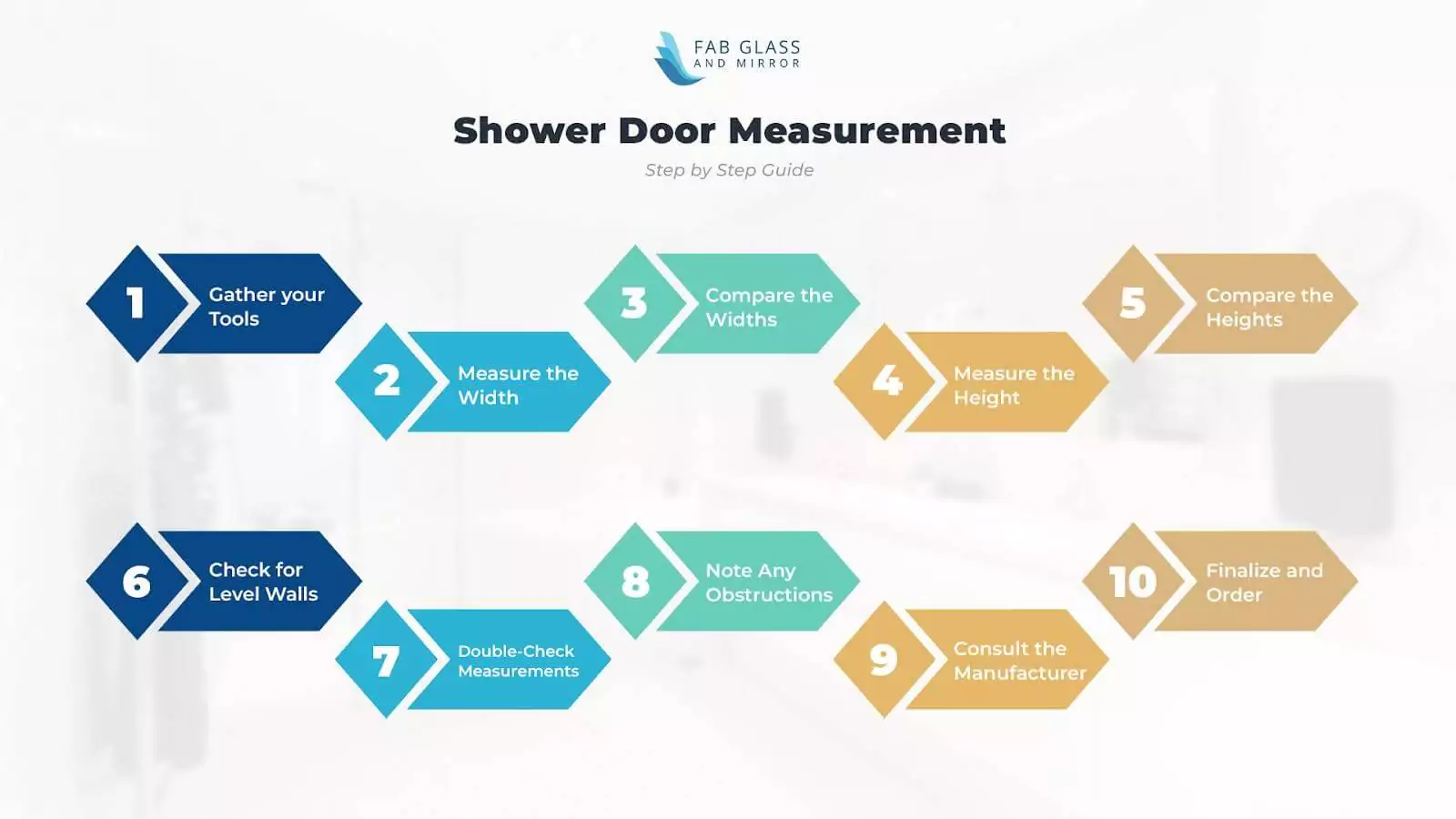
Step 1: Gather Your Tools
Before you start measuring, make sure you have the necessary tools:
Step 2: Measure the Width
Start by measuring the width of the shower opening.
Place the tape measure at the top of the shower opening.
Measure from one wall to the other.
Write down the measurement.
Measure the width in the middle of the opening.
Ensure the tape measure is straight for an accurate reading.
Record this measurement as well.
Measure the width at the bottom of the opening.
Note down this measurement.
Compare the three width measurements. If they are different, use the smallest one. This ensures the sliding bathroom door will fit even if the walls are slightly uneven, making it ideal for implementing various sliding bathroom door ideas seamlessly.
Next, measure the height of the shower opening.
Measure from the base to the top of the opening on the left side.
Record this measurement.
Measure from the base to the top on the right side. Write down this measurement.
Compare the left and right height measurements. If they differ, use the smaller one to ensure the door will fit properly.
Use a level to check if the walls are plumb (perfectly vertical). This can help you understand if adjustments are needed for installation.
Go over all your measurements again to make sure they are accurate. It’s better to measure twice and cut once.
Look for any obstructions like handles, tiles, or fixtures that might affect the installation. Note their positions and dimensions.
Check the manufacturer’s guidelines for any specific measurement instructions or additional requirements.
With your accurate measurements, you can now confidently order your shower door. Make sure to provide all the measurements to the supplier.
When planning for a new shower door, knowing the common dimensions and industry standards is essential. So, let us get a bit deep into it!
Standard Shower Door Dimensions
1. Width:
2. Height:
1. Minimum and Maximum Widths:
2. Custom Sizes:
3. Clearance and Overlap:
4. Considerations for Frameless Doors:
Taking precise measurements plays a vital role in ensuring a successful shower door installation. The accuracy of your measurements directly impacts the fit, functionality, and aesthetic appeal of the door. Whether you’re purchasing from a glass and mirror online shop or a local store, be sure to take your time and execute this step properly to ensure a perfect fit and seamless installation.
Follow the step-by-step guide on how to measure frameless shower doors for reference. Adhere to the key points and tips and accurately measure your shower door to achieve the shower space of your dreams.
To measure for a corner shower door, start by measuring the width of each shower wall. Use a tape measure to get the width from one corner to the other. Next, measure the height from the base of the shower to the top where the door will be installed. Make sure to take measurements at different points to ensure accuracy.
To measure for replacing shower doors, first measure the width of the opening from wall to wall at the top, middle, and bottom. Use the smallest measurement. Then, measure the height from the base to the top of where the door will be. Take the height measurement on both sides to ensure accuracy.
To measure for a shower replacement, measure the width and height of the shower space. For the width, measure from one side to the other at the top, middle, and bottom. For the height, measure from the base to the top on both sides. Use the smallest width and the tallest height for your measurements.
To know what size shower door to buy, measure the width of the shower opening at the top, middle, and bottom, and use the smallest measurement. Also, measure the height from the base to the top on both sides and use the tallest measurement. These measurements will help you choose the correct size door.
A shower door should have a small gap of about 1/8 inch (3mm) to allow for expansion and contraction. This gap helps prevent the door from binding and ensures smooth operation. It also allows water to drain properly.
Yes, you can replace just the doors on a shower. If the shower frame and structure are in good condition, you can simply remove the old doors and install new ones. This is a cost-effective way to update the look of your shower without a full renovation.
Explore all things glass—from stylish table tops and insulated options to tinted and frosted designs. Discover guides on glass railings, custom cut glass, shelves, and stunning backsplash ideas for a modern home or office upgrade.