

My Cart
You have no items in your shopping cart.

Scratches on plexiglass/acrylic can make a once-clear surface look cloudy, dull, and unattractive. So, how to remove scratches from plexiglass? You can often restore clarity to scratched plexiglass using simple tools like plastic polish, fine-grit sandpaper, and a microfiber cloth. Whether you’re fixing a small scuff on a display case or deeper gouges on a window pane, this guide will show you the safest and most effective methods to remove or reduce scratches, while preserving the surface.
Let’s break it down step-by-step.

Table of Contents
Plexiglass, also known as acrylic glass or polymethyl methacrylate (PMMA), is a lightweight and shatter-resistant alternative to traditional glass. While it’s stronger and safer than regular glass, plexiglass scratches more easily due to its softer surface.
Whether you’re dealing with an acrylic window, tabletop, sign, or aquarium panel, knowing how to fix scratched plexiglass is essential for long-term clarity and visual appeal.
Looking for High-Quality Plexiglass Sheets?
Explore a wide range of clear, frosted, and colored plexiglass options perfect for DIY, commercial, and home projects, all at unbeatable prices.
Before you begin any repair method, it’s important to assess the depth of the scratch. Not all scratches require the same approach. There are generally three categories:
Understanding the scratch type will guide you toward how to get scratches out of plexiglass effectively without worsening the damage.
You don’t always need professional equipment to restore plexiglass. Depending on the severity of the scratch, these materials can be used:
By using the right materials, you’ll be better equipped for removing scratches from plexiglass safely and efficiently.
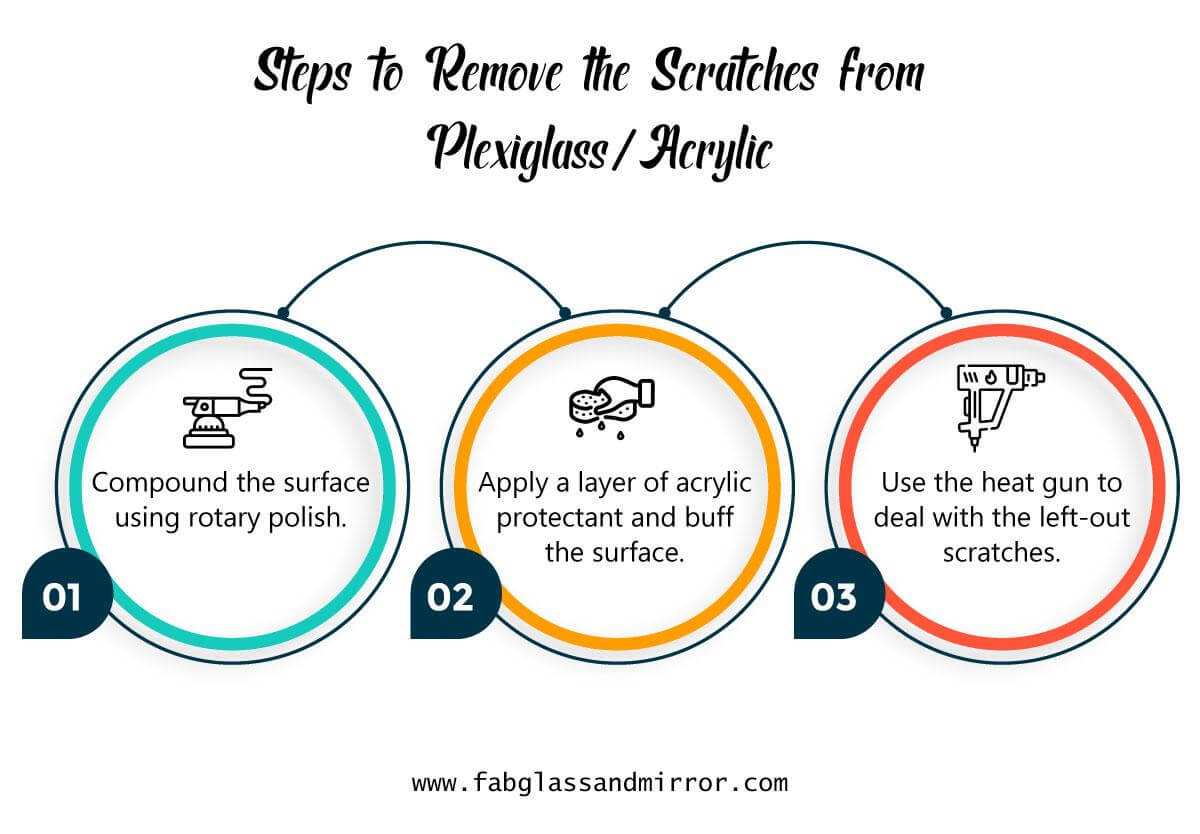
Light scratches can typically be polished out with household or commercial plastic polish. Here’s the correct process:
Use warm water and a drop of dish soap to remove any dust or debris from the scratched area. Dry with a clean microfiber cloth.
Apply a small amount of non-abrasive toothpaste (not gel) or a dedicated plastic polish onto the scratch.
Using a soft microfiber cloth, polish the scratched area using gentle, circular motions. Continue for 30–60 seconds.
Wipe the area clean with a dry cloth. If the scratch remains, repeat the process until it fades.
Deeper scratches need a more advanced repair method that includes wet sanding and machine polishing. Here’s how to do it:
Start with 800-grit wet/dry sandpaper, and soak it in water for 10–15 minutes. Gently sand the scratch using even strokes in one direction.
Gradually increase to 1000- and 2000-grit sandpaper, alternating directions to level the surface. Keep the surface wet throughout to avoid heat buildup.
Once the scratch has been sanded down, apply a specialized plastic polish or compound to the area.
For a professional finish, use a rotary buffer or drill with a foam pad to polish the surface. Keep the tool moving constantly to avoid overheating.
Wipe away any residue and inspect the surface. Repeat the polish step if necessary for enhanced clarity.
This multi-step approach is perfect for those wondering how to take scratches out of plexiglass or how to restore it after significant damage.
Yes, you can get scratches out of plexiglass, especially light and moderate ones. Deeper scratches may not disappear entirely, but with careful sanding and polishing, you can significantly reduce their appearance and restore surface transparency.
Those asking how to get scratches off plexiglass often don’t realize that most minor imperfections can be fixed at home, saving time and money.
Upgrade Your Projects with Premium Plexiglass
Whether you need durability, clarity, or custom sizing, find the perfect plexiglass sheet to match your vision.
Prevention is just as important as correction. Once you’ve learned how to remove scratches from plexiglass, it’s smart to take precautions to avoid future damage:
These best practices help reduce the need for frequent polishing and ensure your surfaces remain crystal clear.
Some applications of plexiglass, like aquariums, greenhouses, vehicle windows, or protective shields, may require extra caution. In these cases:
Understanding how to remove scratches from plexiglass in these environments ensures you don’t compromise safety or function.
Understanding how to remove scratches from plexiglass empowers you to protect and preserve acrylic surfaces in your home, office, or vehicle. With the right tools, materials, and techniques, you can get scratches out of plexiglass, whether they’re shallow blemishes or deeper imperfections.
Always start with the gentlest method, assess results, and move to more intensive steps only when necessary. And once restored, proper care will ensure your plexiglass stays flawless for years to come.
You can use non-abrasive toothpaste, baking soda paste, or plastic polish with a soft cloth to remove surface-level scratches. For deeper marks, wet sanding with fine-grit sandpaper followed by polishing works best.
Yes, but it requires wet sanding and mechanical buffing to reduce visibility. Deeper gouges may not fully disappear but can be minimized significantly.
No, the repair methods are the same. Plexiglass is a brand name for acrylic, and both respond to polishing and sanding the same way.
When done correctly using non-abrasive products, you can polish plexiglass multiple times without reducing strength or clarity.
Yes, a paste of baking soda and water can help with light surface marks. Apply in gentle circular motions and rinse thoroughly.
Explore all things glass—from stylish table tops and insulated options to tinted and frosted designs. Discover guides on glass railings, custom cut glass, shelves, and stunning backsplash ideas for a modern home or office upgrade.