
My Cart
You have no items in your shopping cart.

When it comes to balancing elegance and practicality in kitchen design, glass front kitchen cabinets remain one of the most sophisticated choices. They bring brightness, depth, and character to any kitchen, from minimalist urban spaces to cozy farmhouse interiors. Yet, choosing the right style, glass type, and placement requires more than aesthetic intuition. It’s about finding the perfect harmony between function, maintenance, and everyday usability.This guide dives deep into everything homeowners, designers, and remodelers need to know about selecting, installing, and maintaining kitchen cabinets with glass doors, covering glass types, frame styles, design compatibility, and cost factors. By the end, you will know exactly which cabinet with glass doors best fits your kitchen’s purpose and personality, and how partners such as Fab Glass and Mirror can help bring that vision to life.
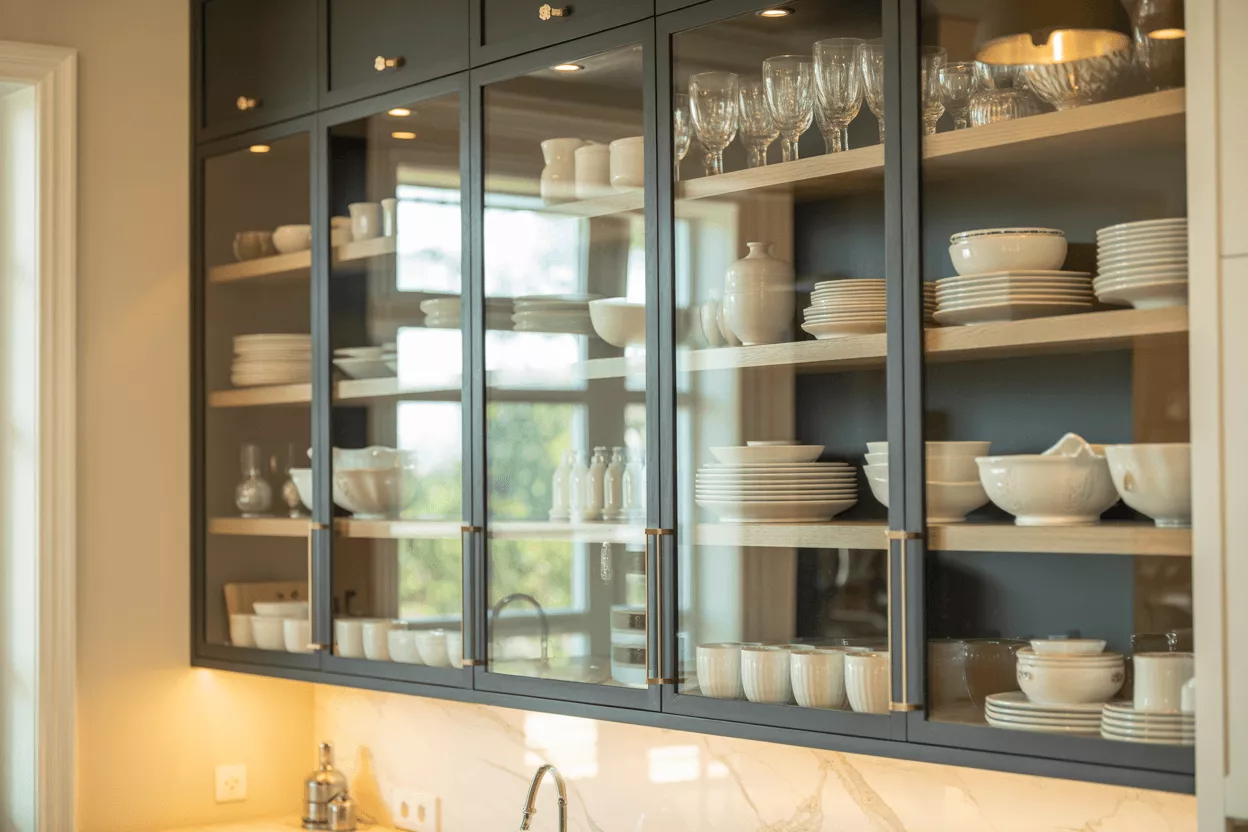
Table of Contents
Glass front kitchen cabinets are far more than a design statement. They create a sense of openness that can make even small kitchens feel expansive. By reflecting light, glass cabinet doors brighten interiors naturally, minimizing the need for artificial lighting during the day.
From a practical standpoint, glass kitchen cabinets help you see where everything is stored, no more guessing which door hides the coffee mugs or wine glasses. This visibility promotes organization and encourages maintaining a clutter-free space.
Yet, there’s a deeper psychological reason behind their appeal. Glass-front cabinetry evokes transparency and cleanliness, values that resonate deeply with modern homeowners. It also introduces a layer of personal expression: displaying beautiful ceramics, heirloom China, or curated collections behind cabinet glass doors transforms everyday storage into visual storytelling.
However, it’s important to acknowledge that cabinets with glass doors aren’t for everyone. If your kitchen often sees heavy traffic, messy cooking, or young children, you’ll need to weigh maintenance and durability against aesthetics. The following sections will help you find the right balance.
Before diving into the aesthetics, it’s crucial to understand the structural and material variations that define different kinds of glass front cabinets.
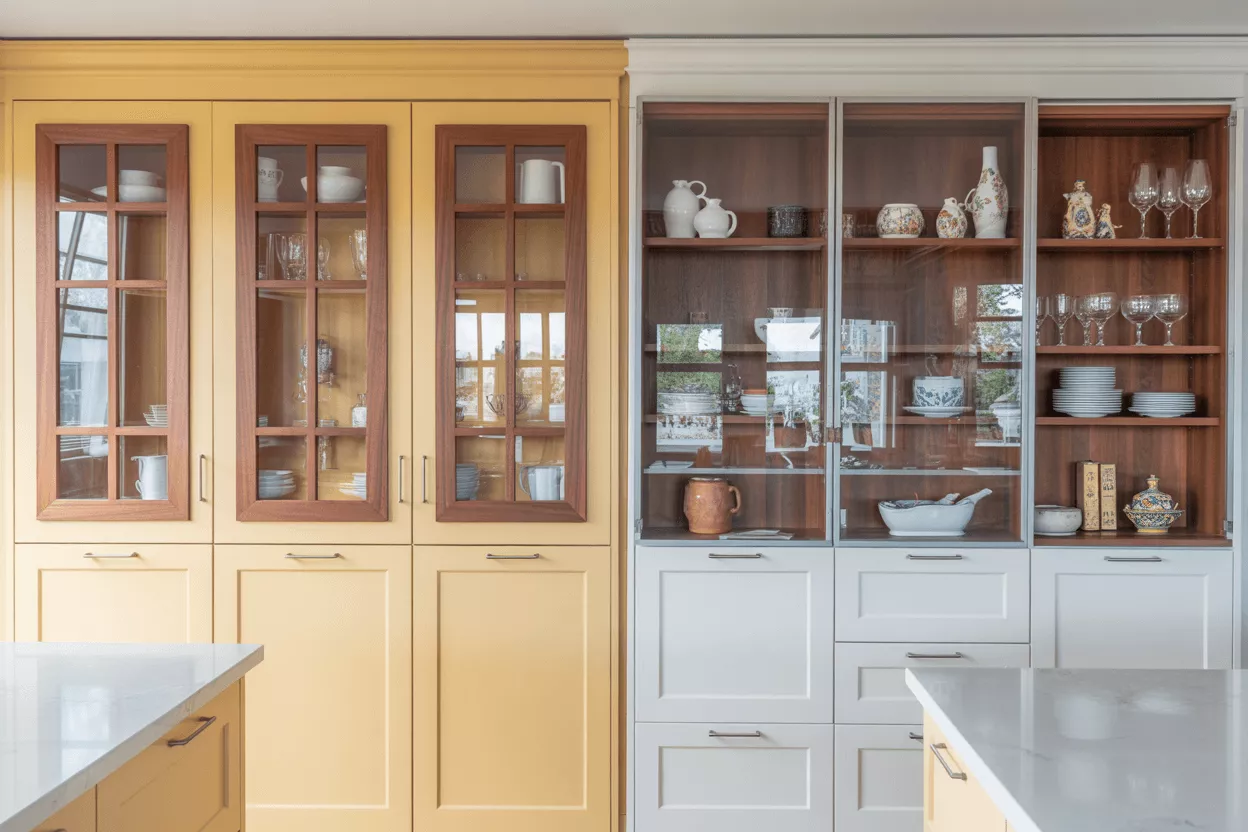
Framed glass cabinet doors feature a visible border, usually wood, aluminum, or steel, that holds the glass insert securely. They exude a traditional charm and blend seamlessly with most classic or farmhouse kitchens.
Frameless glass cabinet doors, on the other hand, create a sleek, modern appearance. With minimal borders and clean lines, they allow the glass itself to dominate the visual field, ideal for contemporary or minimalist spaces.
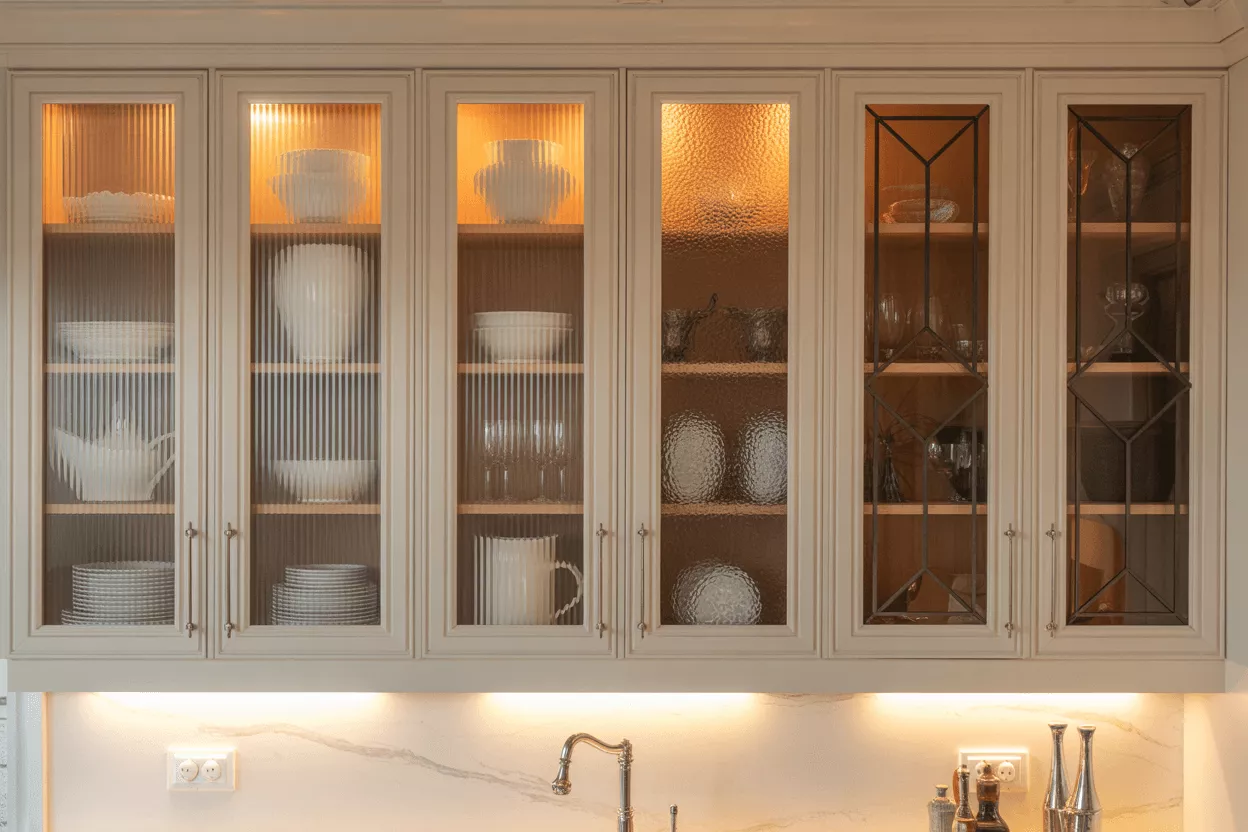
The type of cabinet glass you choose drastically affects both function and visual impact. Here’s a breakdown:
Each glass type has its own pros and cons related to privacy, maintenance, and light diffusion. A well-chosen combination of cabinet glass inserts can even create a layered visual texture throughout your kitchen.
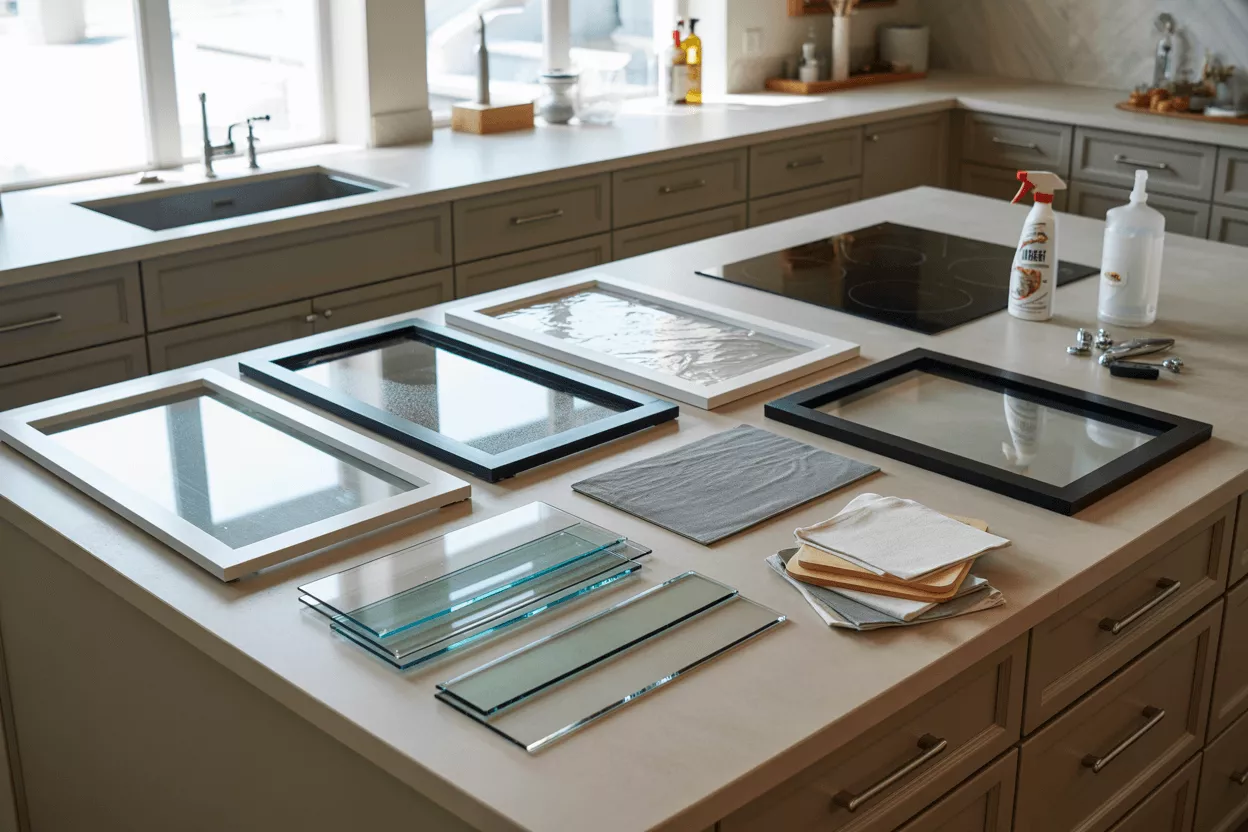
Choosing glass for cabinet doors isn’t purely about looks — it’s a functional decision that affects cleaning, safety, and longevity.
Always opt for tempered cabinet glass, especially in kitchens. It’s four to five times stronger than regular glass and, if broken, shatters into blunt granules rather than sharp shards. This makes it far safer for households with children or frequent kitchen activity.
The standard thickness for glass kitchen cabinet doors ranges between 3mm and 6mm. Thicker glass adds weight but increases durability. Low-iron glass provides exceptional clarity, perfect for highlighting decorative interiors or showcasing fine dishware.
Clear glass shows smudges and grease easily, so placement matters. Avoid installing clear-glass cabinets near cooking zones. Instead, place them over counters or islands away from splatter. For a low-maintenance alternative, frosted glass cabinet doors or textured glass types conceal fingerprints effectively.
Modern cabinet manufacturers offer cabinet glass inserts that can be replaced or upgraded independently from the frame. This modularity allows you to refresh the look without replacing entire doors. Some even offer interchangeable decorative panels or tint overlays.
The beauty of glass front kitchen cabinets lies in their adaptability. Whether your style is traditional, rustic, or ultramodern, there’s a configuration that fits.
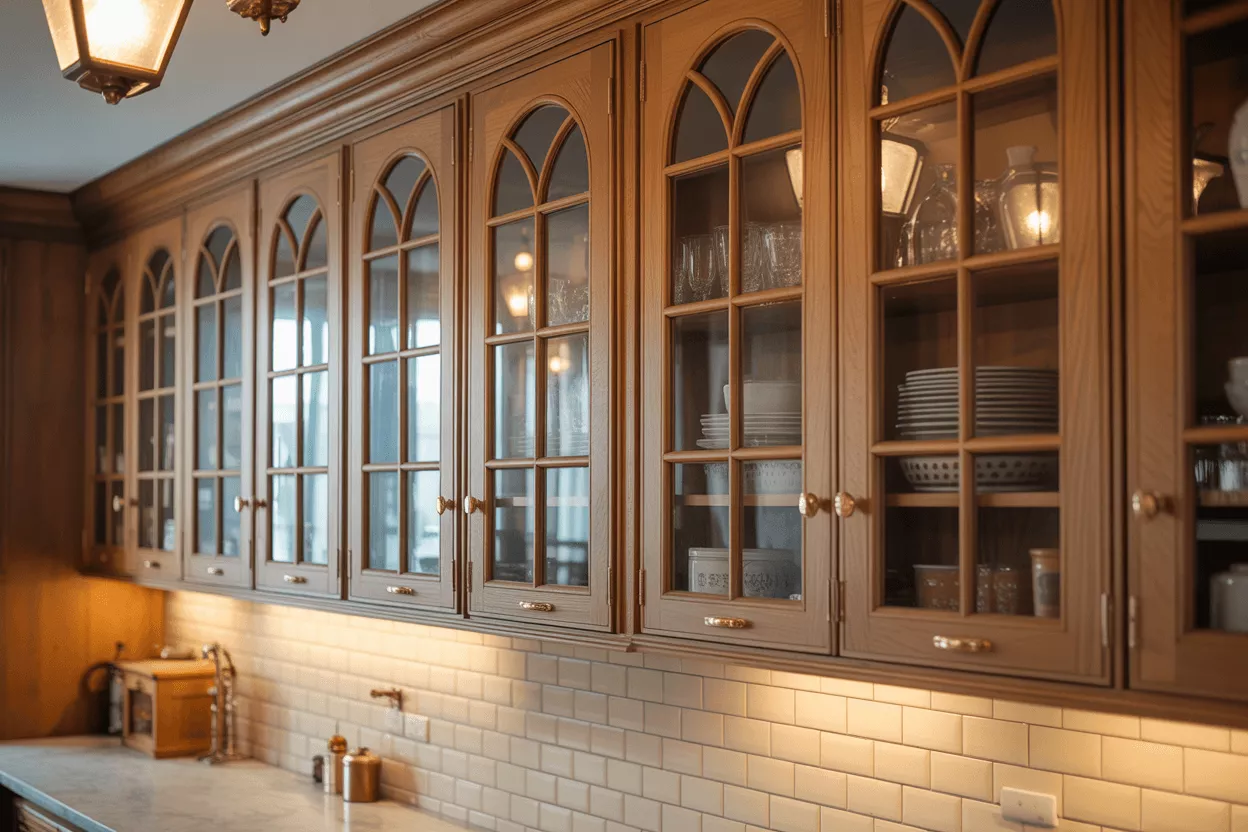
Traditional kitchens often pair arch cabinet with glass doors and decorative mullions (the bars dividing glass panes). These details create timeless charm and emphasize craftsmanship. Frosted or textured glass complements warm wood tones and classic paint palettes.
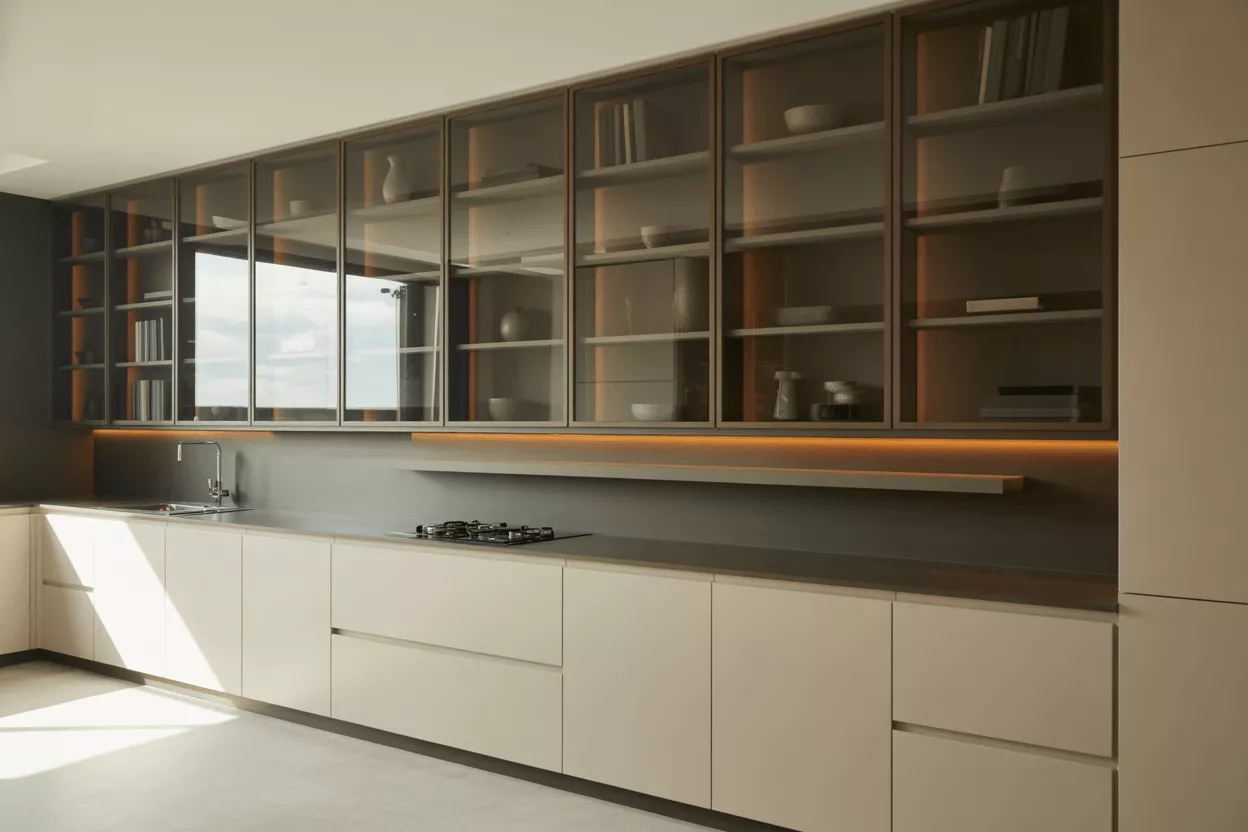
In modern designs, frameless glass kitchen cabinets with flat-panel doors and neutral tones create sleek sophistication. Tinted or smoked glass adds contrast while concealing clutter. LED backlighting enhances this aesthetic dramatically.
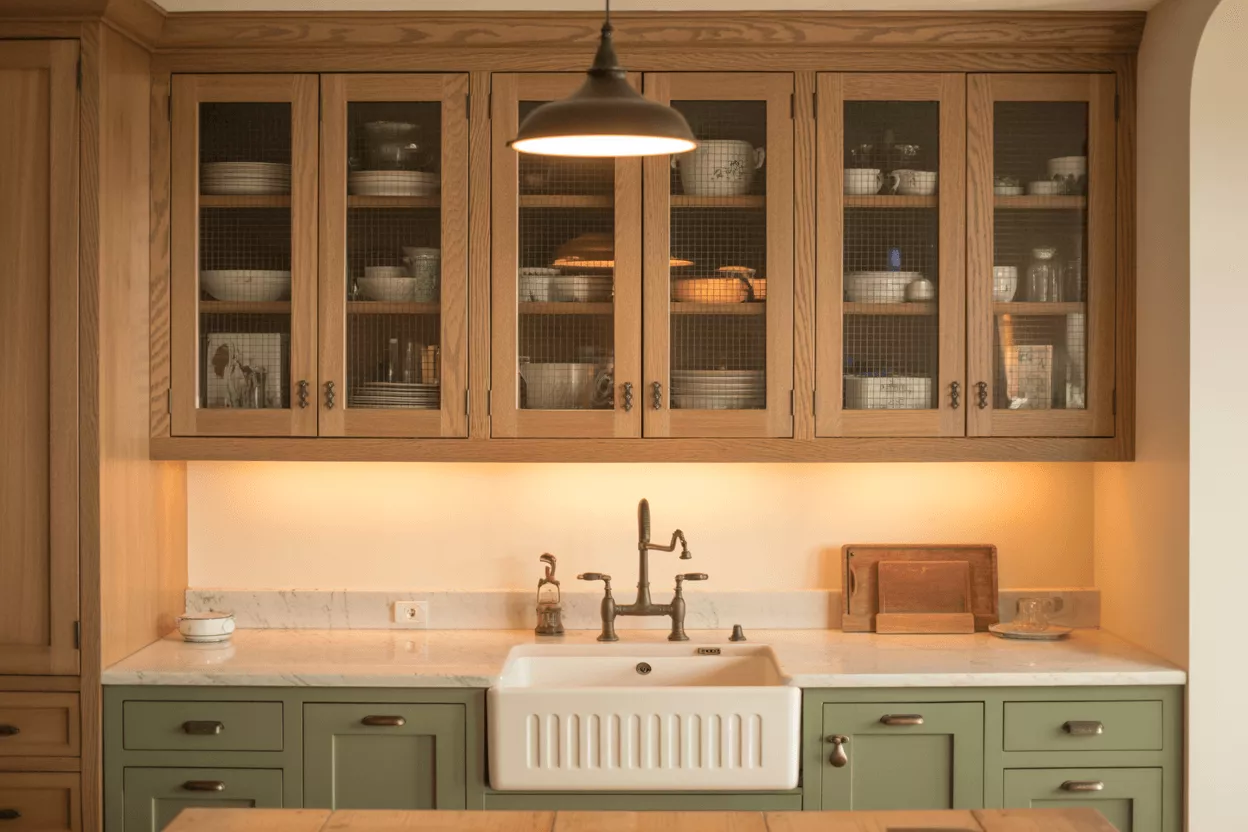
A cabinet with glass doors featuring seeded or ribbed glass feels right at home in rustic or farmhouse settings. Combine with shaker-style frames, natural wood finishes, and bronze handles for authenticity. Transitional kitchens, bridging classic and modern, benefit from mixing clear upper glass cabinets with solid lower cabinetry.
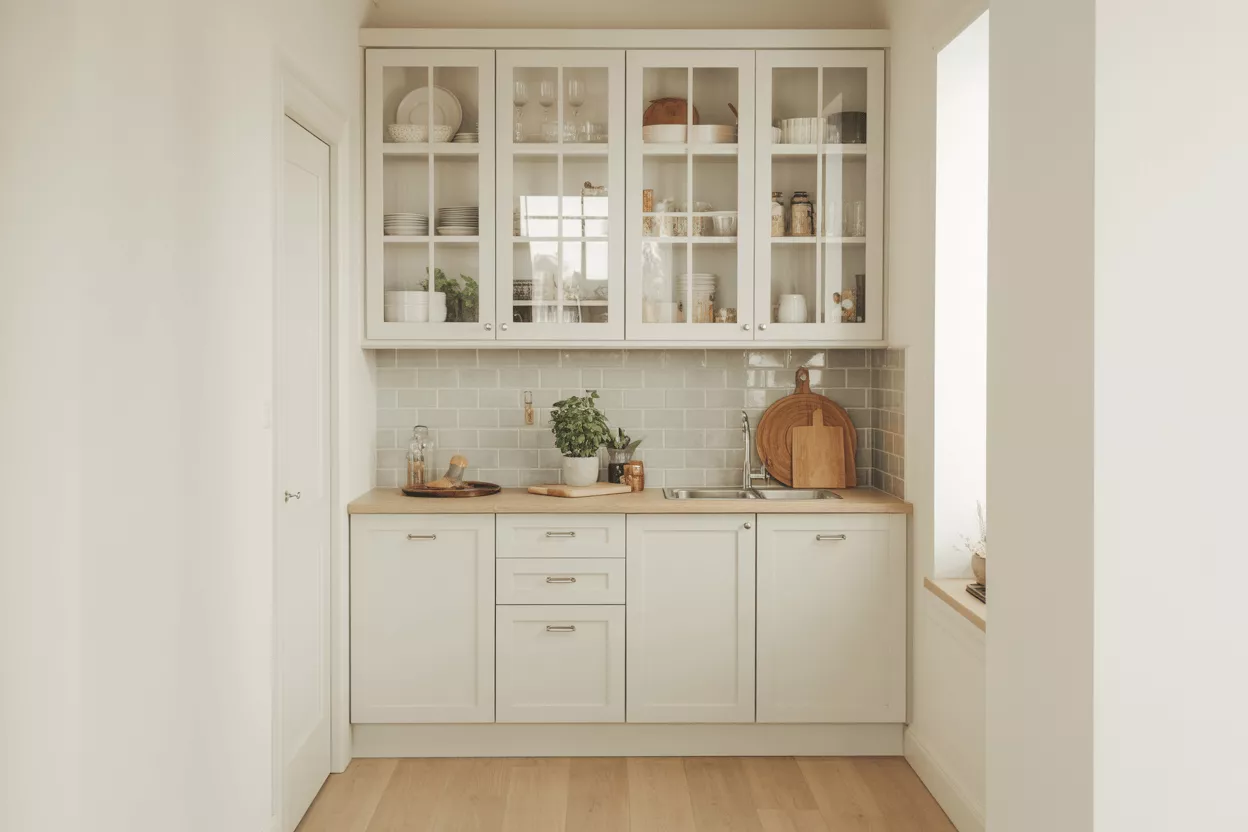
In smaller spaces, kitchen glass cabinets visually expand the area. By reflecting light, they make walls appear further apart. Pair with bright or neutral colors for an airy feel.
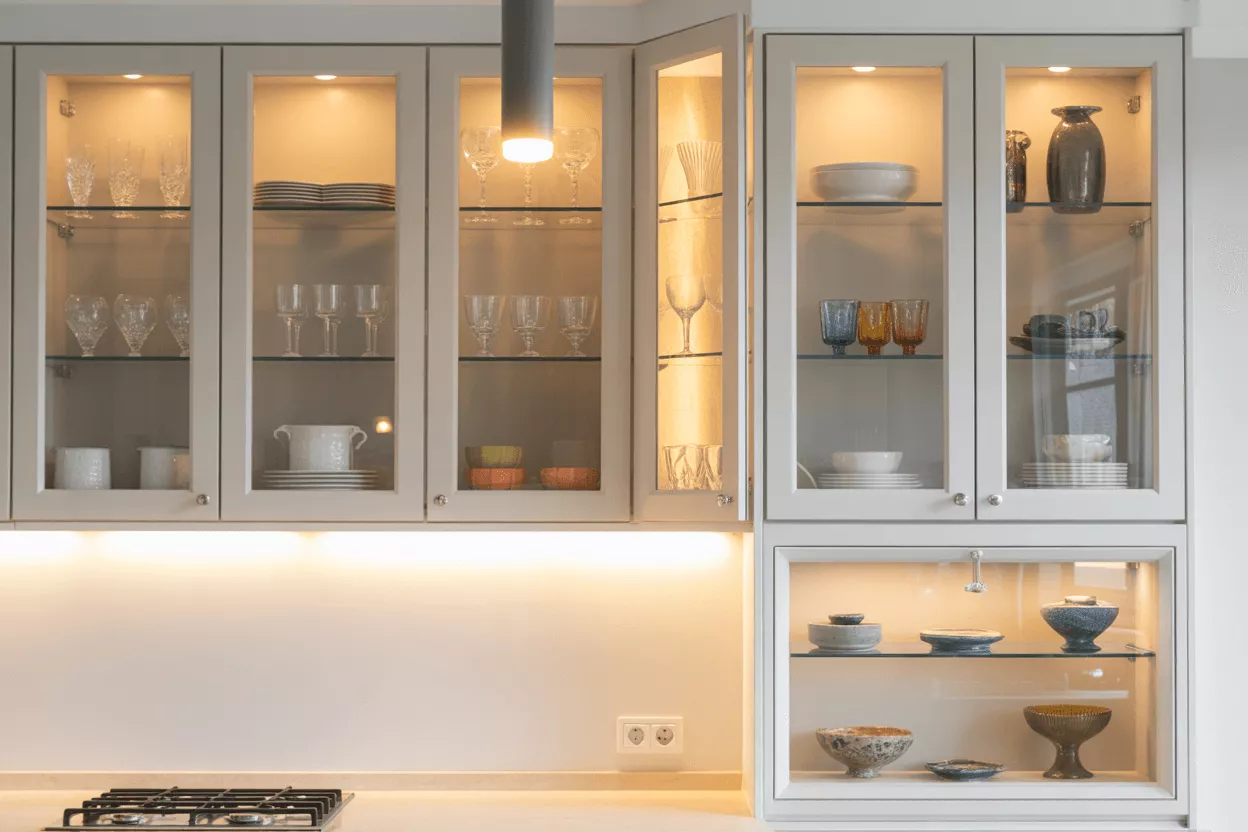
Placement can make or break the success of your glass cabinet doors kitchen design.
Lighting plays a crucial role. Interior LED lighting enhances visibility and ambience. Consider soft warm-white strips hidden behind frames to highlight the cabinet’s interior.
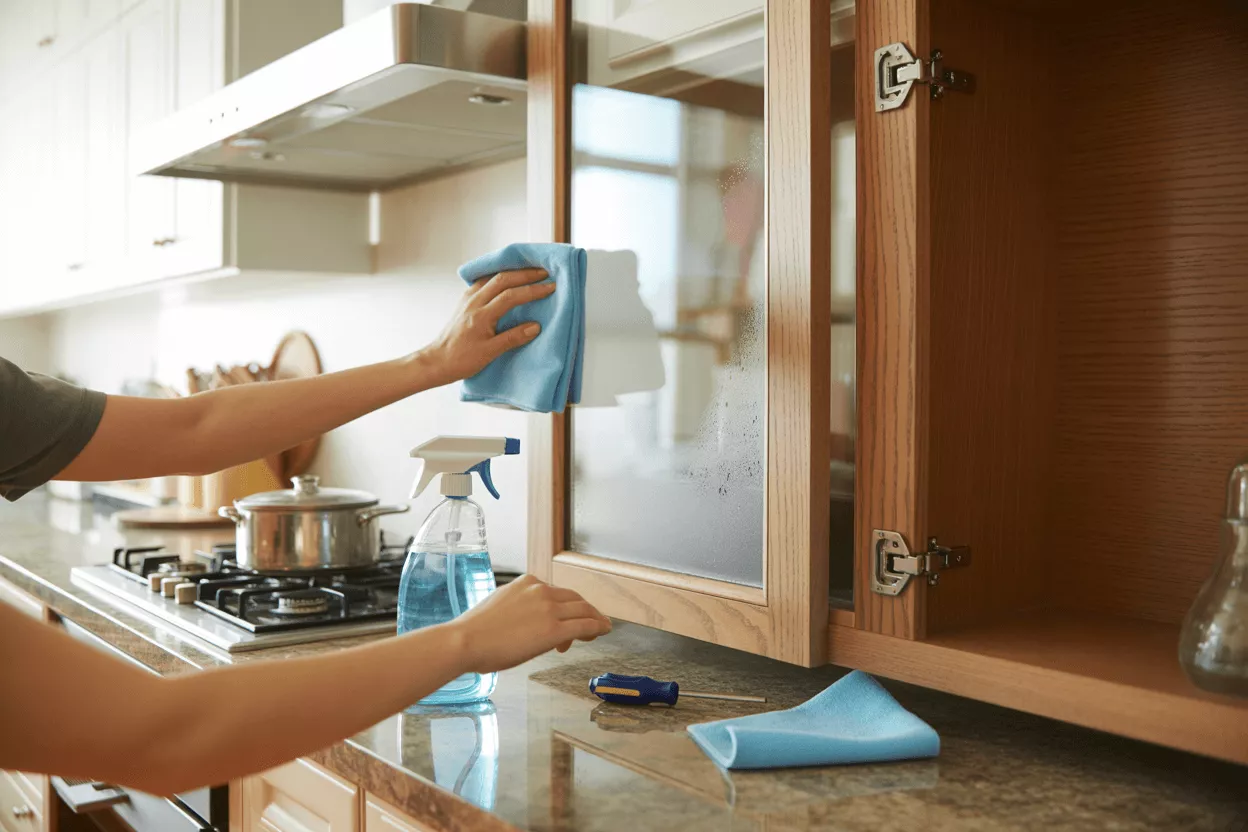
While glass kitchen cabinets look pristine, they require consistent care to preserve clarity and shine.
A well-maintained glass front cabinet not only looks elegant but also extends its lifespan significantly.
Even experienced homeowners or remodelers fall into these traps:
Choosing glass front kitchen cabinets involves balancing cost and performance. Here’s what drives the price:
Regular cleaning supplies and potential replacement of damaged glass panels should be factored into long-term ownership.
Overall, the price for glass kitchen cabinet doors typically ranges from $200 to $600 per door, depending on glass style, customization, and frame material.
When comparing vendors, always confirm whether the glass is tempered, whether replacement inserts are available, and if the warranty covers accidental damage.
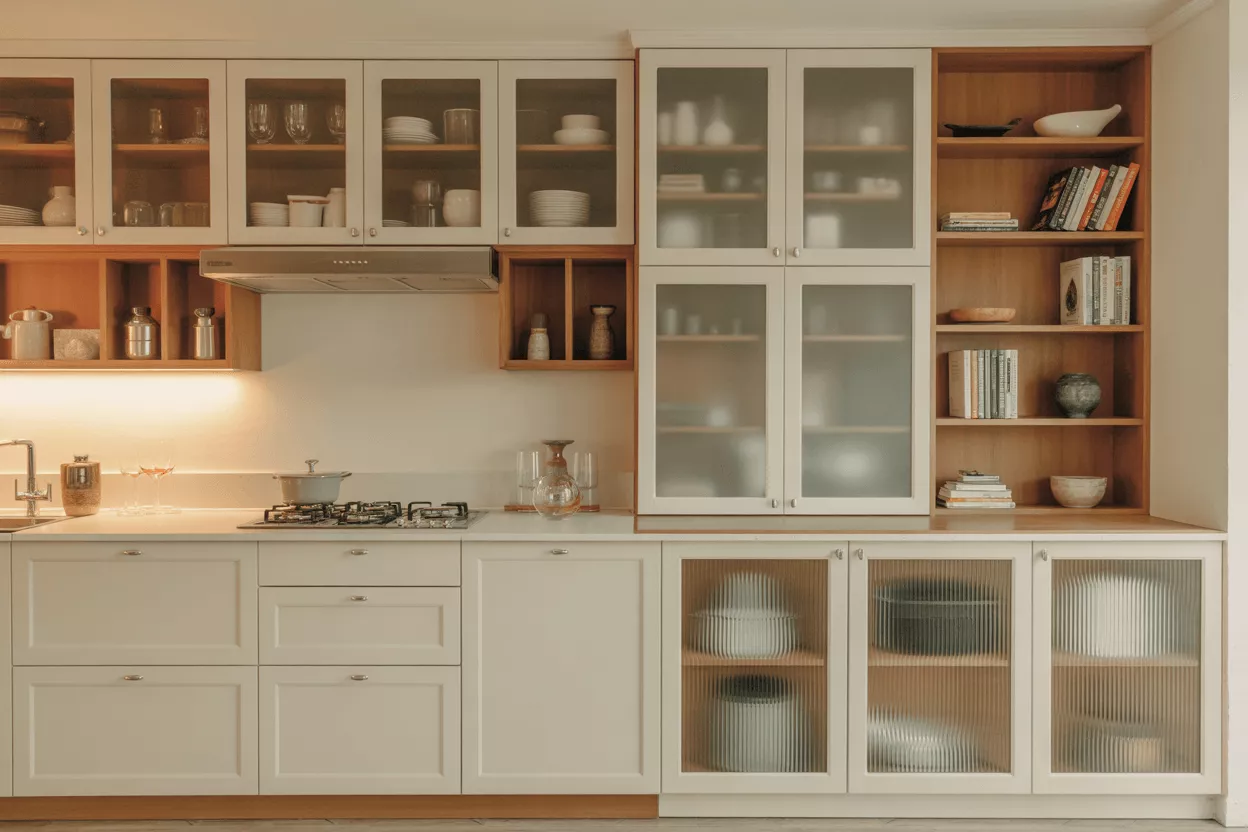
For a real-world design solution, consider mixing solid and glass cabinetry. For instance:
These combinations allow homeowners to enjoy the visual benefits of glass while keeping practicality intact.
Illumination transforms a standard cabinet with glass doors into a showpiece. Use interior LEDs to highlight textures or reflective surfaces.
Under-cabinet lighting can also complement upper glass kitchen cabinets, ensuring visual balance.
From an environmental perspective, glass is one of the most sustainable materials available. It’s recyclable and doesn’t emit harmful chemicals. Choosing tempered glass cabinet doors with eco-friendly frames (like FSC-certified wood or recycled aluminum) aligns aesthetics with sustainability.
Long-term, glass front kitchen cabinets increase resale value by elevating the perceived luxury of your kitchen. They demonstrate design intent and quality, qualities that appeal strongly to buyers.
Glass front kitchen cabinets are more than just a design flourish, they are a statement of openness, order, and sophistication. Choosing the right glass cabinet doors kitchen style means evaluating function, lifestyle, and aesthetic goals.
Ultimately, your kitchen should reflect your personality and purpose. Whether you prefer a frosted glass cabinet door for subtle elegance or an arch cabinet with glass doors for timeless appeal, the right choice transforms a functional storage unit into a centerpiece of refined design.
When chosen thoughtfully, glass front kitchen cabinets merge form with function, turning everyday storage into an enduring statement of beauty and practicality.
Yes. Glass front kitchen cabinets are practical when used strategically, especially for upper or display storage. Choosing tempered or frosted glass makes them safe, durable, and easier to maintain while adding openness and light to the kitchen.
Tempered glass is best for cabinet doors because it’s stronger and safer than regular glass. You can choose clear, frosted, textured, or tinted glass depending on privacy and style preferences.
Use a mild vinegar-water mix or glass cleaner with a soft cloth. Avoid harsh chemicals or abrasive pads. Clean frames gently and wipe fingerprints frequently, especially on clear glass surfaces.
Frosted glass cabinet doors hide clutter while still diffusing light attractively. They’re ideal for busy kitchens or for homeowners who want privacy without losing brightness.
Yes. Glass front kitchen cabinets add perceived luxury, brightness, and sophistication, enhancing both aesthetic and resale value. They signal quality craftsmanship and thoughtful design.
Explore all things glass—from stylish table tops and insulated options to tinted and frosted designs. Discover guides on glass railings, custom cut glass, shelves, and stunning backsplash ideas for a modern home or office upgrade.