Laminated Safety Glass for Architectural & Specialty Construction
Updated on December 8, 2025 By Muhammad Bilal
Are you choosing glazing for facades, railings, skylights, floors, canopies, storefronts, or security applications — and need material that protects people, performs under stress, reduces noise, meets code, and stays intact even after breaking?
Fab Glass and Mirror offers Laminated safety glass is the most reliable multi-performance glazing used in modern architectural and specialty construction.
This guide gives you the technical clarity, structural insights, standards, comparisons, and selection framework required to specify laminated glass correctly and confidently.
What You’ll Learn in This Article
You will walk away with:
A clear understanding of what laminated safety glass is
How it performs in architectural, commercial, and specialty construction
Key differences between laminated and tempered glass
The benefits, limitations, and applications
Code requirements, safety standards, and selection guidelines
A step-by-step framework for choosing the right glass
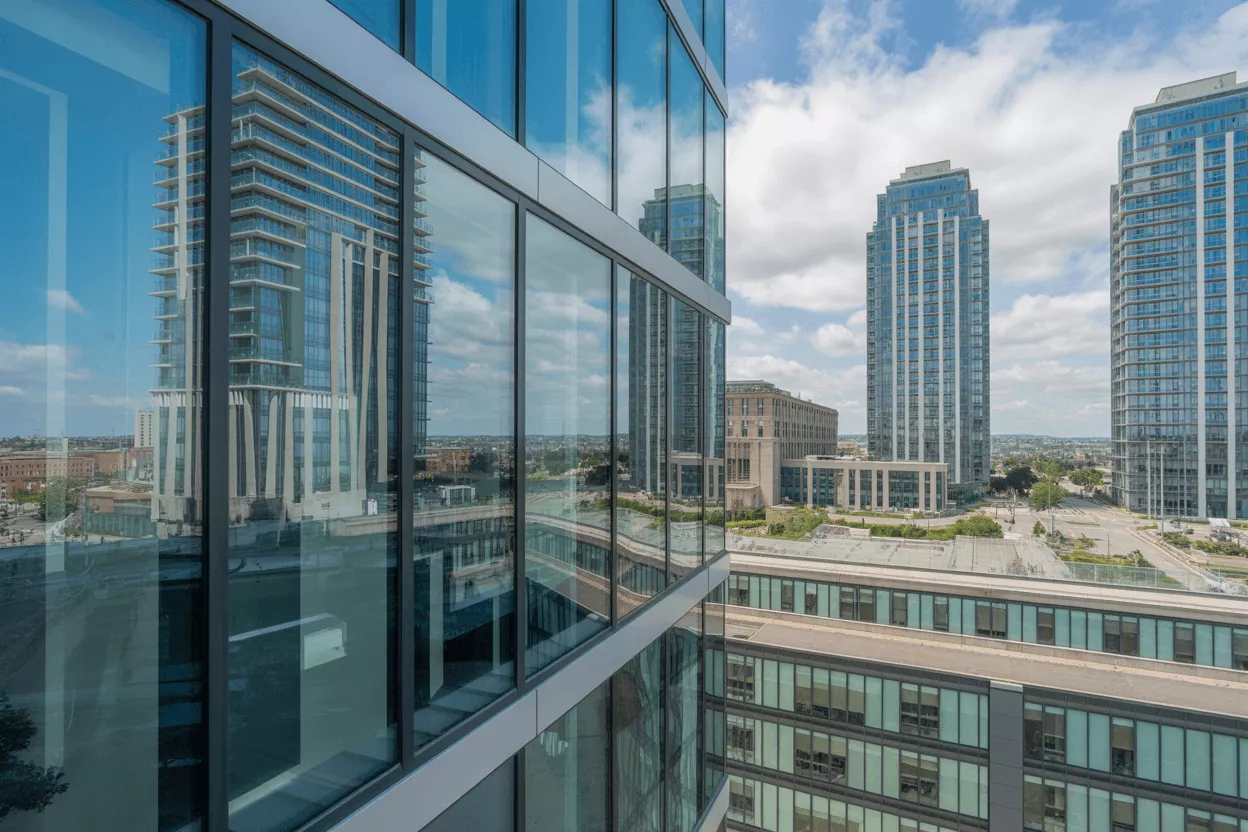
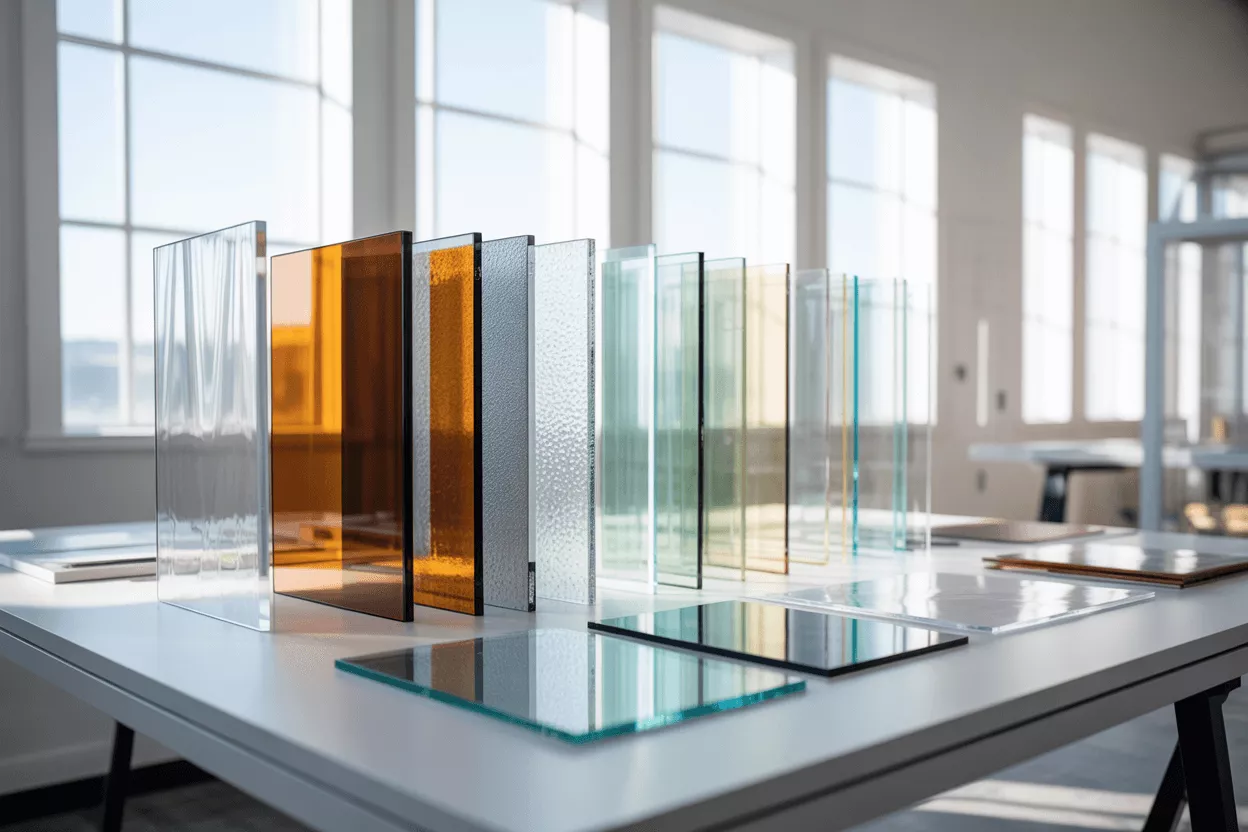
Laminated glass is made by bonding two or more sheets of glass — annealed, heat-strengthened, or tempered — with a durable interlayer such as PVB, SGP (ionoplast), EVA, or acoustic PVB.
When broken, the interlayer holds fragments in place and maintains a barrier. Depending on the glass type and interlayer, laminated glass can offer:
It is widely used in:
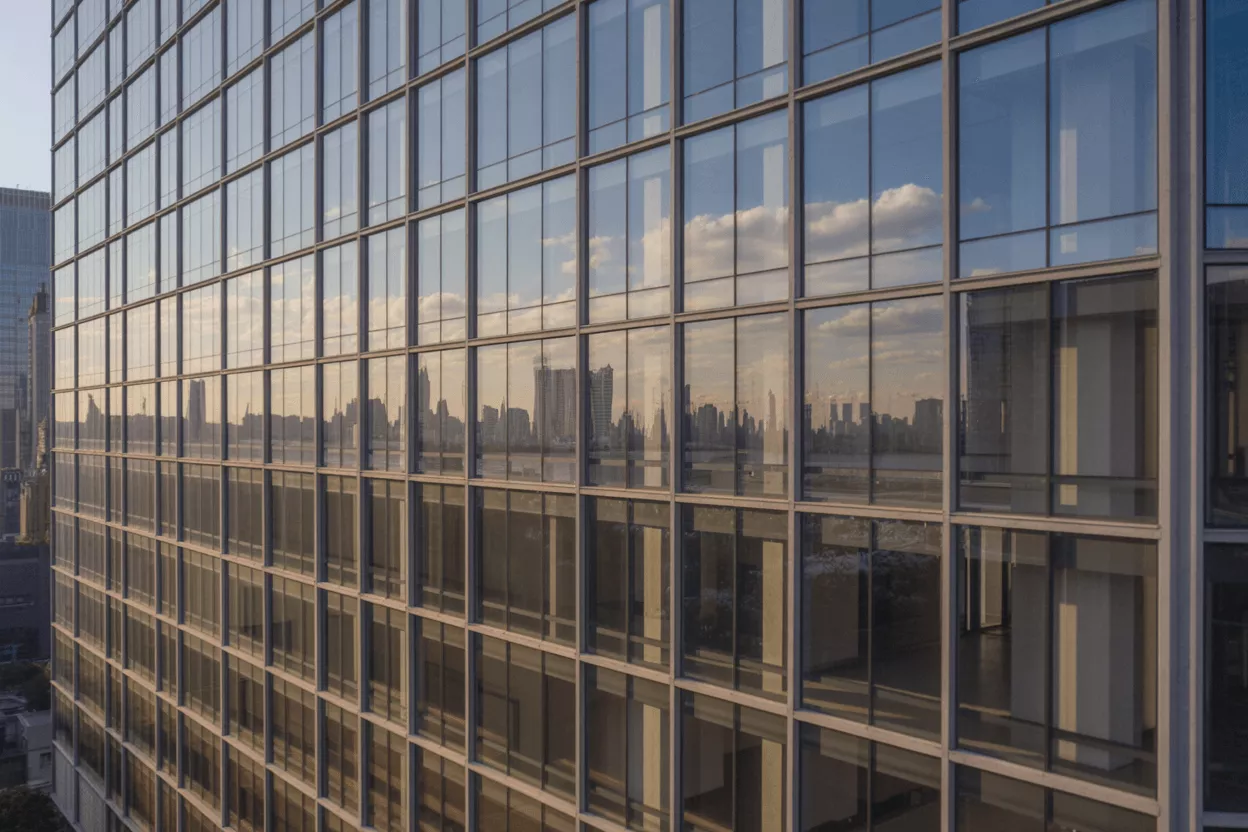
Architectural facades
High-rise buildings
Educational facilities
Healthcare institutions
Retail storefronts
Government and security-sensitive buildings
Luxury residential spaces
If you need glass that delivers protection, performance, and compliance, safety glass is the solution.
Why Traditional Glass Fails in Modern Building Requirements
Annealed glass breaks into sharp, dangerous shards. Tempered glass is stronger, but when it breaks it disintegrates completely, leaving an opening and losing all residual structural function.
Today’s architectural demands require glazing that can:
Stay intact after impact
Resist forced entry
Meet safety codes
Reduce exterior noise
Withstand weather, storms, and structural loads
Block UV radiation
Protect occupants and property
Laminated glass is specifically engineered to meet these demands.
How Custom Laminated Glass Solves Architectural Challenges
1. Impact Protection & Human Safety
Unlike ordinary glass:
Remains intact after breakage
Fragments adhere to the interlayer
The glazing stays in place, maintaining a barrier
This helps prevent:
Injury from falling glass
Complete breach after impact
Sudden openings during accidents
Laminated tempered glass meets or exceeds:
CPSC 16 CFR 1201 (safety glazing in hazardous locations)
ANSI Z97.1 (impact safety requirements)
ASTM E1300 (structural performance of glazing systems)
2. Security & Forced Entry Resistance
Improves security because:
It takes repeated, aggressive impacts to penetrate
The interlayer stretches instead of breaking apart
Even after cracking, the glass remains difficult to breach
SGP (ionoplast) laminates are widely used in:
Banks & financial institutions
Luxury storefronts
Government buildings
Schools / educational facilities
Residential security upgrades
3. Noise Reduction
Laminated glass significantly improves acoustic performance due to vibration damping properties of the interlayer.
Typical improvements range from:
3–7 dB with standard laminates
Even higher with specialized acoustic PVB
Applications include:
Buildings near highways
Airports
Rail lines
Urban commercial spaces
Hospitals and offices
4. UV Protection
Most laminated glass, even clear PVB, blocks up to 99% of harmful UV.
Furniture fading
Flooring discoloration
Interior material degradation
5. Hurricane, Storm & Impact Protection
When paired with the correct glass thickness and interlayer, laminated glass can meet:
ASTM E1886 / E1996 (hurricane-impact resistance)
High-velocity wind zone requirements
Laminated glass is required in many coastal and hurricane-prone regions.
6. Structural Applications
SGP (ionoplast) structural laminates provide:
Glass floors
Stair landings
Walkways
Balustrades
Structural facades
Canopies
SGP provides:
Higher post-breakage capacity
Reduced deflection
Enhanced edge stability
Types of Laminated Safety Glass Used in Construction
Suitable for interiors and many exterior applications
SGP (Ionoplast) Laminated Glass
Approx. 5x stronger and 100x stiffer than PVB
Superior structural performance
Excellent for exterior, high-load, and security applications
EVA Laminated Glass
Strong adhesion
Used frequently in decorative laminations
Good moisture resistance, but not typically used in structural exterior applications
Expert-Verified Insights
According to the National Glass Association (NGA) and Glass Association of North America (GANA):
Laminated glass is one of the safest glazing materials due to post-breakage retention.
SGP laminates significantly reduce deflection, making them ideal for structural applications.
Acoustic laminated glass provides measurable improvements in sound transmission loss.
PVB-based laminates maintain long-term durability when properly installed and sealed.
These findings align with international standards and real-world testing, not marketing claims.
When Should You Use Laminated Glass?
Ideal applications include:
Doors and entry systems
Storefronts and curtain walls
Skylights and overhead glazing
Balustrades and railings
Floors, bridges, and walkways
High-security installations
Sound-sensitive environments
Coastal and high-wind zones
If your priority is safety, performance, longevity, or compliance, laminated glass is the superior choice.
How to Choose the Right Laminated Glass for Your Architectural Project
Step 1: Identify Required Safety Standards
Check local regulations to determine:
Impact classification
Load requirements
Building code compliance (IBC, CPSC, ANSI, ASTM)
Step 2: Define Your Performance Priorities
Based on the project, choose:
PVB: General safety, acoustic control
Acoustic PVB: Noise reduction
SGP: Structural, exterior, or high-security applications
Multi-layer laminates: Maximum protection
Step 3: Select Glass Composition and Thickness
Common laminated configurations:
1/4″
5/16″
3/8″
1/2″
9/16″
1″ or thicker (multi-ply)
Step 4: Choose Aesthetic Features
Clear or low-iron
Tinted
Frosted
Patterned
Decorative interlayers
Step 5: Source From a Qualified Fabricator
Ensure your partner can deliver:
Precision cutting
CNC fabrication
Holes / notches
Polished edges
Heat-treated laminates
Certified safety glazing
Limitations You MUST Consider
A complete guide includes the downsides:
Heavier than monolithic glass
More expensive than tempered
Requires proper edge sealing to prevent moisture creep
Lead times are longer
Fabrication must be precise — holes/notches must be cut before lamination
Delamination risk if improperly fabricated or sealed
When Should You Use Laminated Glass?
Ideal for:
Doors & entrance systems
Storefronts and curtain walls
Skylights and overhead glazing
Railings & balustrades
Floors, bridges & structural walkways
High-security applications
Noise-sensitive environments
Coastal, hurricane, and high-wind zones
If your priorities include safety, structural reliability, longevity, noise control, or compliance, laminated glass is the superior, code-driven choice.
Conclusion
Laminated glass is the most reliable choice for architectural and specialty construction due to its proven safety, security, structural, and acoustic advantages. It meets modern building demands, aligns with strict global standards, and delivers long-term performance.
If you are ready to enhance your project with certified, precision-engineered laminated glass, Fab Glass and Mirror is your trusted fabrication partner.
FAQs
Tempered glass is strong but breaks completely. Laminated glass stays intact, preventing openings and reducing injury risk. It is often required in overhead or exterior applications.
Yes. PVB works for most exterior uses; SGP is recommended for structural or high-moisture environments.
Properly fabricated and installed laminated glass can last decades with stable performance.
Muhammad Bilal
Muhammad Bilal is a senior writer with 17 years of experience, specializing in engaging, well-researched content on glass and mirror products. His writing offers practical tips and insights tailored for homeowners and designers alike. With a clear, approachable style, he helps readers solve problems and explore ideas with confidence.
Related Posts
Explore all things glass—from stylish table tops and insulated options to tinted and frosted designs. Discover guides on glass railings, custom cut glass, shelves, and stunning backsplash ideas for a modern home or office upgrade.