

My Cart
You have no items in your shopping cart.

Are you struggling with glare, distortion, or color inaccuracies when filming in front of a mirror? Many creators discover, after setting up their studio, that ordinary mirrors simply aren’t made for professional film, photography, or content production.
This guide breaks down the best mirrors for film, photography & content creator studios, how to choose the right one, and how to set it up for flawless results. Whether you are filming beauty tutorials, fashion videos, dance content, product ads, or commercial campaigns, the right mirror can dramatically elevate your recording quality.
This article walks you through everything using a professional, easy-to-understand approach, so you can make the right decision, faster.

Table of Contents
The most effective mirrors used in filming and photography share three qualities:
Here is a quick overview of the best mirror types you will see in professional studios:
These mirror types are engineered to provide the clarity and accuracy cameras demand, something standard home mirrors can’t match.
If you have ever tried filming in front of a typical home mirror, you may have run into issues like:
Professional-grade studio mirrors eliminate these issues with better materials, thicker glass, and low-iron clarity.

| Feature | Regular Mirror | Low-Iron Mirror | Best Option for Studios |
| Clarity | Moderate clarity; reflections can appear slightly dull | Ultra-clear reflections with maximum sharpness | Low-Iron |
| Color Accuracy | Noticeable green tint due to iron content, affects skin tones & product colors | No green tint; true-to-life color rendering | Low-Iron |
| Light Transmission | Lower light transmission; can create uneven brightness | High light transmission, ideal for controlled studio lighting | Low-Iron |
| Distortion | More prone to warping, especially in large sizes or thin glass | Virtually zero distortion when using ¼-inch thickness | Low-Iron |
| Best for Filming in 4K/8K | Not recommended; imperfections are amplified on high-resolution cameras | Perfect for high-resolution filming; precision clarity | Low-Iron |
| Glare Control | Reflects light harshly; difficult to manage with studio lights | Works better with diffused lighting and softboxes | Low-Iron |
| Skin Tone Representation | Often inaccurate due to tinting and color shift | Accurate, natural skin tones on camera | Low-Iron |
| Recommended Mirror Thickness | 1/8″–3/16″ (higher distortion risk) | ¼” professional-grade glass | Low-Iron |
| Durability for Large Installations | Can warp or flex over time | Stable and rigid, ideal for wall-to-wall studio installs | Low-Iron |
| Price Range | Budget-friendly | Slightly higher cost due to clarity & purity | Depends on budget — Low-Iron is worth it for studios |
| Overall Performance in Studios | Adequate for casual use but not for professional content creation | Industry-standard for film, photography & content creators | Low-Iron Mirror is the clear winner |
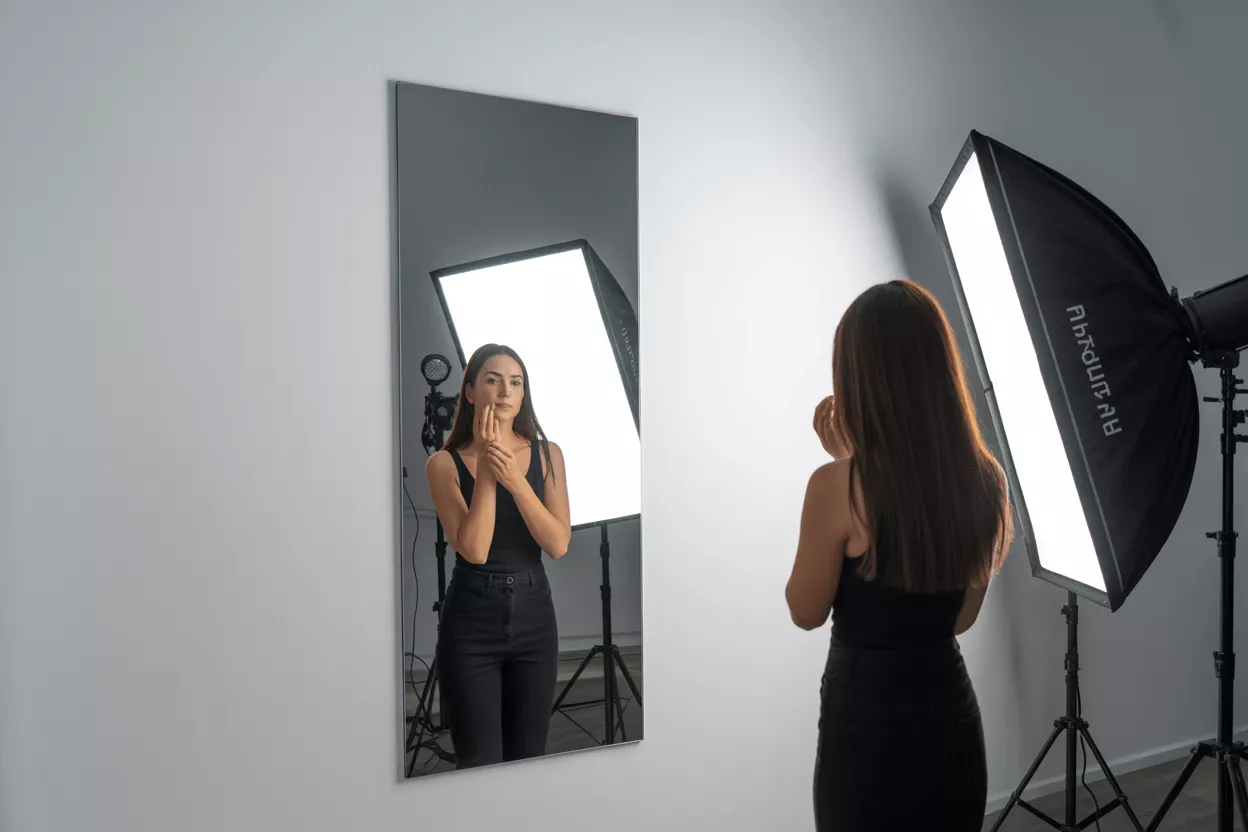
Low-iron mirrors remove the greenish tint standard glass produces. This means your video footage will show:
Best for: Beauty creators, commercial videographers, professional photography studios
Here is a practical breakdown:
If you are filming anything full-body or using wide lenses, ¼” thickness is non-negotiable.
Great for:
Great for:
Choose LEDs with CRI 90+ to guarantee accurate skin tone representation.
Great for:
They are lightweight, safe, and easy to reposition during shoots.
Mirrors amplify both good and bad lighting. To avoid issues:
Pro Tip: If you use RGB lighting or neon backlights, low-iron mirrors will show the colors more accurately.
Depending on your studio layout:
For commercial settings or dance studios, look for safety-backed mirrors to meet building standards.
“Color accuracy and distortion-free clarity are the two most important factors for camera-facing mirrors. Low-iron ¼-inch glass has become the industry standard for professional filming.”— Fab Glass and Mirror Technical Team“Even minor distortion becomes obvious when shooting in wide-angle or 4K footage. The quality of the mirror becomes part of the image pipeline.” — Lead Glass Engineer, Commercial Installations
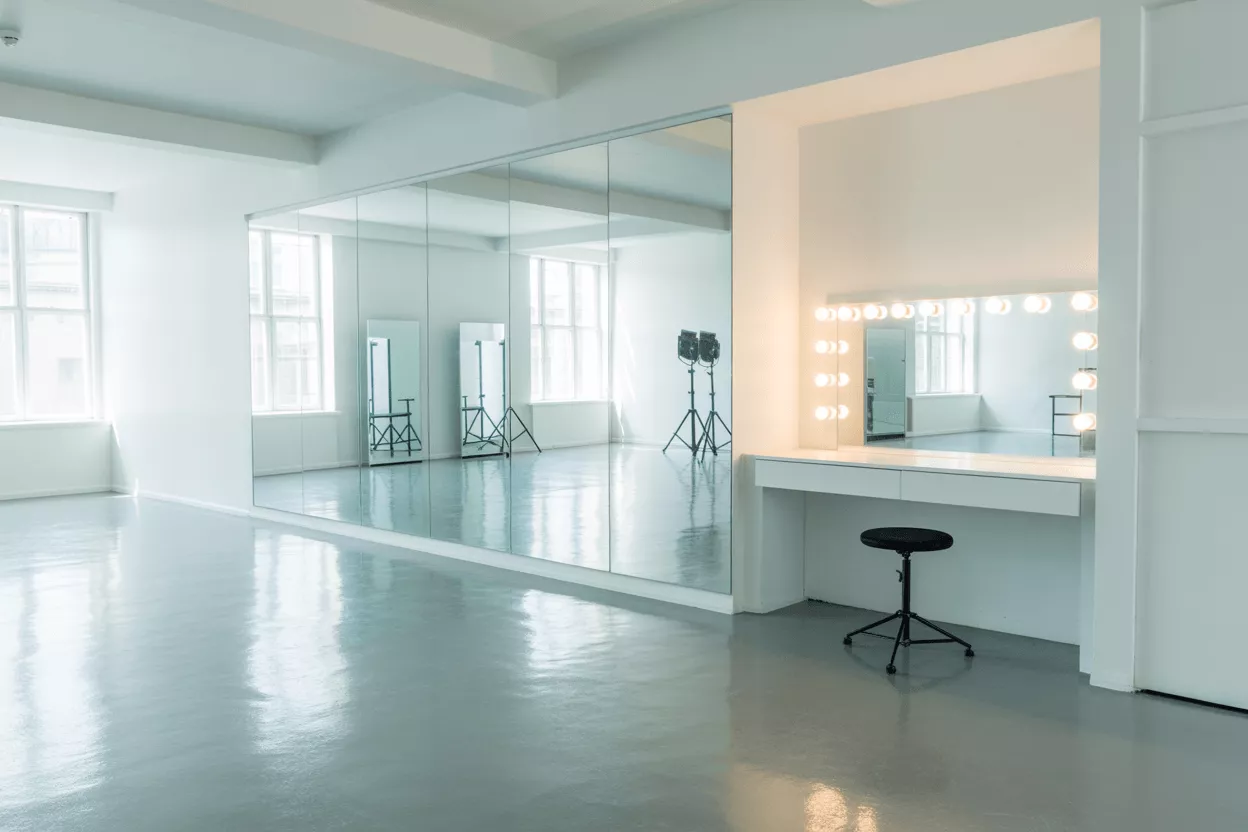
Decide whether you need:
Match it to your content style:
Choose ¼-inch for distortion-free professional output.
If your set has movement or foot traffic, choose:
You want a supplier who offers:
“Switching to low-iron mirrors completely transformed the way my makeup videos look. No more weird green tint.”— Beauty Influencer, 600k followers
“We installed wall-to-wall mirrors for our content studio. The difference in video clarity was immediate.”— Fashion Creator
“Acrylic mirrors were a lifesaver for our portable TikTok dance classes.” — Fitness Studio Manager
The right mirror can improve lighting, enhance camera quality, expand your studio visually, and increase the professionalism of your content. Whether you are filming tutorials, commercial content, dance videos, or photography sessions, choosing the right mirror type will dramatically impact your final result.
Technically yes—but they cause glare, tinting, and distortion. Professional mirrors prevent this.
¼-inch is the standard for crisp, distortion-free reflections.
They’re excellent for portable setups, dance content, and high-movement environments.
Yes—mirrors bounce and brighten light. With correct placement, they improve your lighting setup.
Explore all things glass—from stylish table tops and insulated options to tinted and frosted designs. Discover guides on glass railings, custom cut glass, shelves, and stunning backsplash ideas for a modern home or office upgrade.