
My Cart
You have no items in your shopping cart.



Glass is a versatile material. It is manufactured by heating sand or quartz to extremely high temperatures. The manufacturing process of glass has evolved a lot in the past few years. Now it is toughened through extensive processes to achieve very high strength value. Due to better strength and durability, glass is used in a wide range of applications. From building interiors to exterior and decor items to furniture, glass is everywhere around us. Custom insulated glass panels have further expanded its utility in modern applications. In this article, we will specifically discuss commercial glass in detail. We will see how glass is a primary unit of commercial projects these days and what are its uses in the commercial realm.
Table of Contents
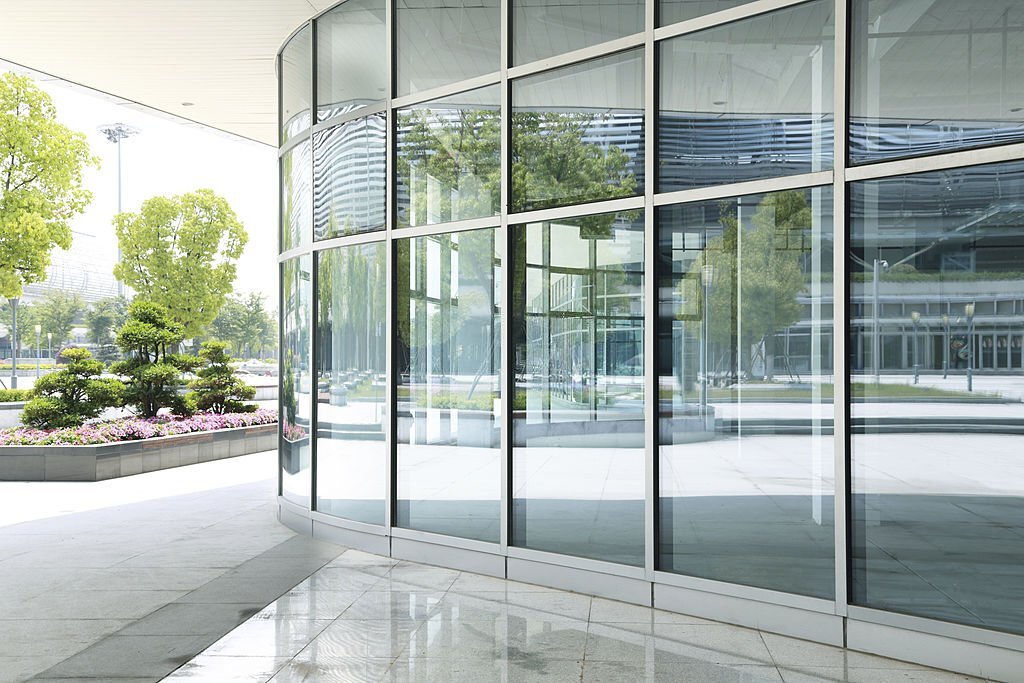
Be it a small retail store or a multi-national office, every property requires glass in its design. The glass used in commercial projects is commonly referred to as commercial glass. While it may seem similar to regular glass, commercial-grade glass is typically thicker to withstand heavier use and greater wear. Whether you need to replace door glass or upgrade your property’s aesthetics, commercial glass ensures durability and functionality.
Commercial spaces require a different glazing technique due to their size and scale. Not only is more glass used in commercial applications, but the installation process is also complicated.
That’s why a specialized branch of glazing, commercial glazing, is created. Commercial glaziers require special equipment to offer a safe and secure glass installation.
There are a number of reasons why glass is so trendy in the market. Some of them are as follows.
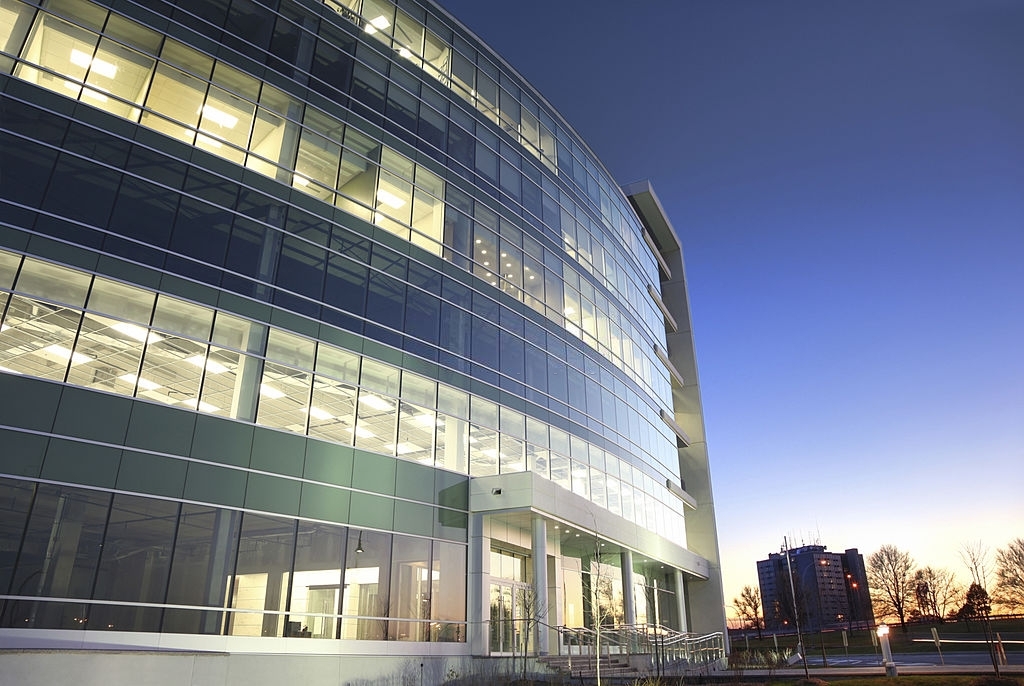
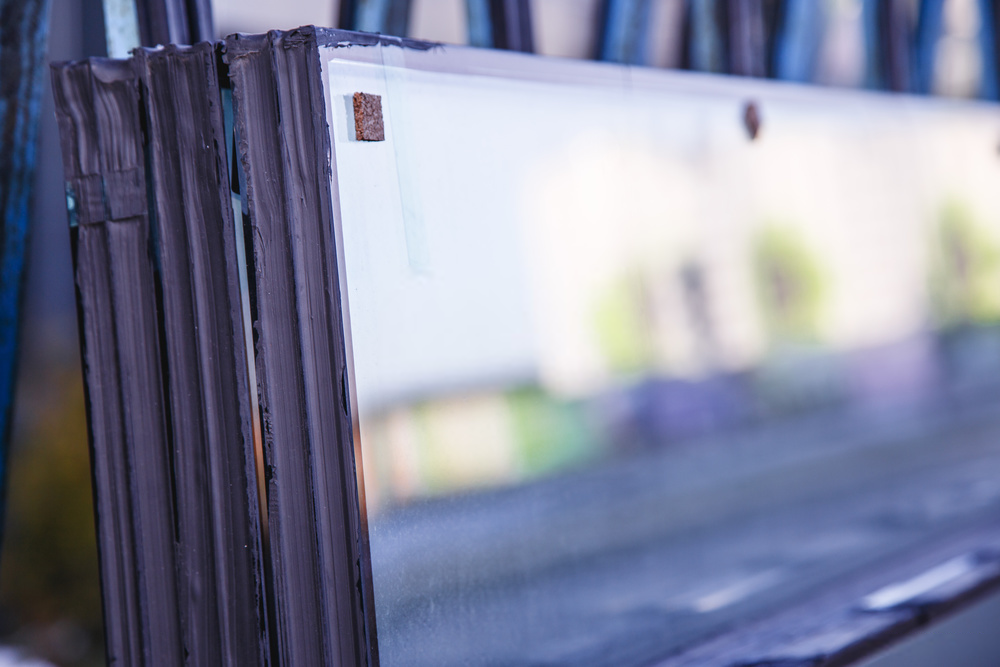
As the height of a building increases, the chances of damage to the structure also rise. Therefore, the glass used in high-rise buildings must be exceptionally strong and thicker compared to glass used for other purposes. It should possess high impact resistance, excellent workability, and superior transparency, along with heat resistance. Additionally, factors like the cost of bow windows may influence decisions when selecting glass for such specialized applications.
Plexiglass: It is a shatter-resistant glass widely used in the construction of skylights, aquariums, building windows, displays, and security barriers. Plexiglass is available in different tints and comes with a protective UV coating.
Laminated Glass: This type of glass is crafted by bonding two or more glass panels together with interlayers of polyvinyl. It is designed to be hurricane-resistant, reduce noise, and safeguard your property from burglars. If you’re wondering how to fix foggy glass, addressing issues with laminated glass may require professional assistance to restore its clarity and functionality effectively.
Insulated Glass: Using insulated glass in commercial buildings increases energy efficiency and is UV resistant. The glass panes are separated by a half-inch vacuum space. This space is filled with an inert gas to ensure high energy efficiency. The multi-pane structure with air-space in the center ensures a very high strength value.
Tempered Glass: The tempered glass is a safety glass which is not easily breakable due to its tough nature. It is a heat resistant glass and is available in various sizes and thickness options.
Frosted Glass: Another popular type of glass is frosted glass. It has a frosted effect that restricts you from seeing the other side of the glass. It is widely used to create partitions in commercial spaces to add privacy.
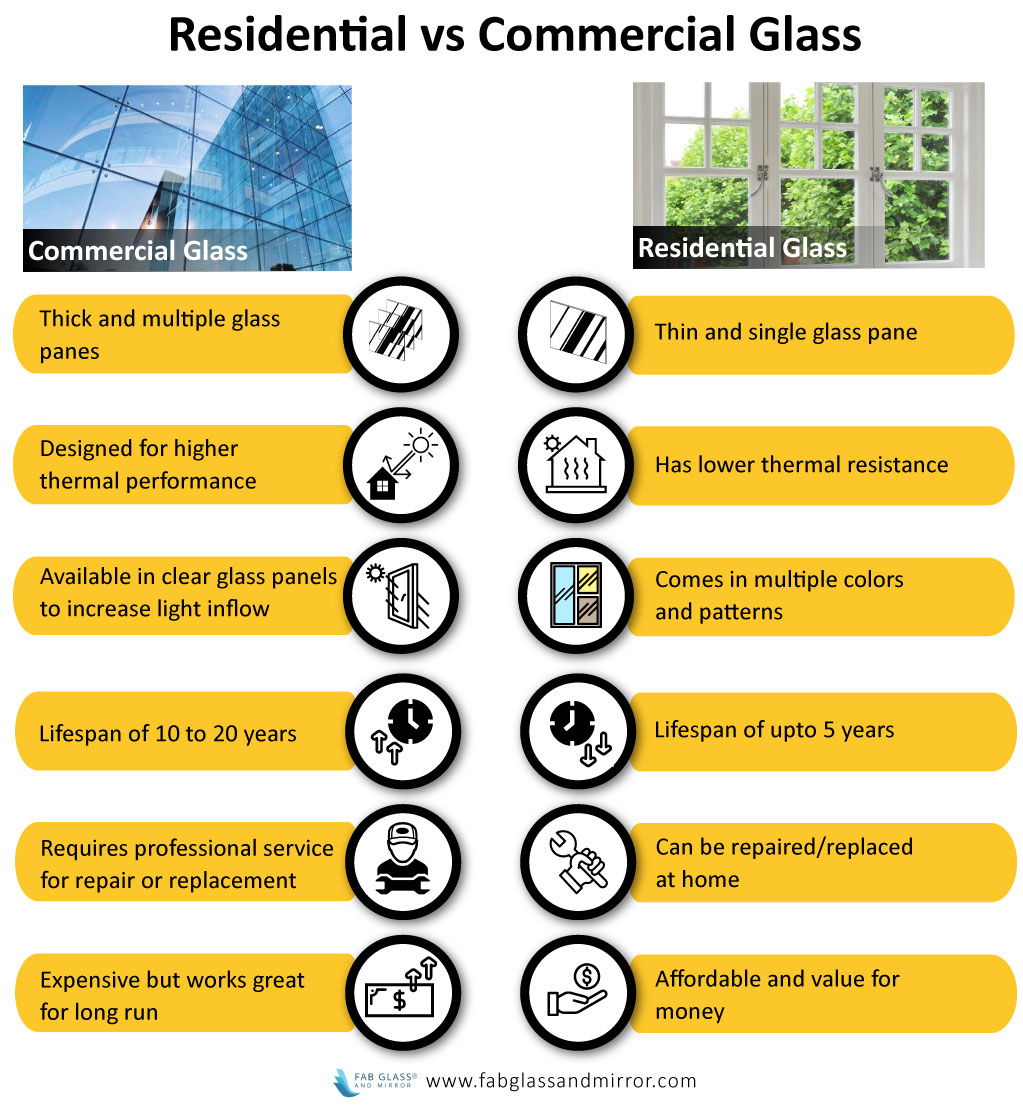
Although there is no apparent difference between the commercial and residential glass. You cannot see any visible difference between the two. But there are many factors that differentiate regular glass from commercial one. Here are some insights into the major differences between the two types of glass.
Commercial glass doors and windows should meet specific structural requirements, as these protocols are typically set by the administration. They are designed with heavy-duty construction and reinforced glazing on the panes. This robust structure ensures the ability to withstand higher wind pressures and overall structural loads. In such cases, a thicker multi-pane glass is used; however, many businesses prefer to remove double-pane windows to achieve a balance between functionality and aesthetic needs.
While residential spaces don’t have the constraints of high altitudes or structural pressure. So they feature thinner glass and less glazing on windows and doors.
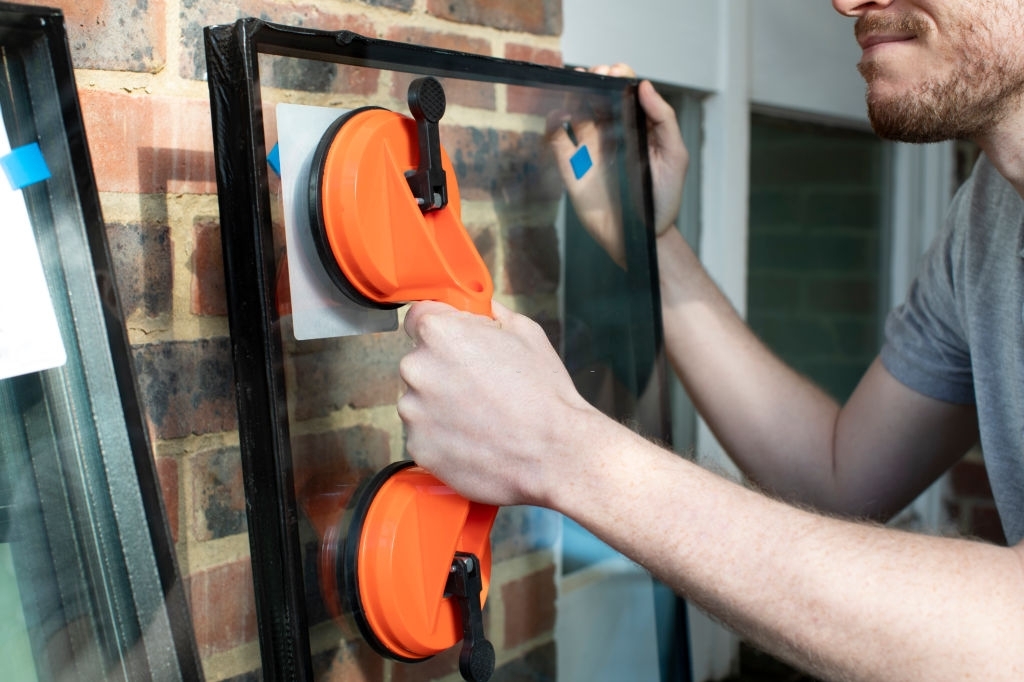
Commercial buildings are usually bigger in size. So the commercial windows and doors are also larger. This results in greater sunlight surface absorption and more heat accumulation. The presence of more people in the commercial spaces also impacts the temperature. So the business glass is designed to absorb a lesser amount of heat in order to reduce energy expenses. Commercial buildings would overheat if the right materials and glazing were not used. Thus burdening the cooling systems and associated costs.
Residential buildings are often less congested and do not generate much heat. So in order to keep energy expenses low, the residential glass has lower U-factor ratings.

Another difference between the commercial and residential glass is its appearance. Commercial glass is designed to allow more light into the interior spaces. The manufacturers don’t favor adding any tint to the building glass to maximize the flow of light. Simpler fronts, windows, and doors are more common in commercial buildings. The focus is usually on functionality rather than style
In residential structures, the windows and doors are usually smaller. So you’ll see less glass and more paneling in action. There is more focus on overall aesthetics in residential spaces. So residential glass sometimes has patterns, textures, and even tints.
Commercial glass is more durable and harder than residential glass.
Residential glass, in itself, is quite sturdy. It can easily take hard impacts and resists weather changes. Commercial grade glass is designed to survive severe weather changes for long.
In case of any issue, repairing home glass is easier than replacing the commercial panels. Repairing business glass requires a professional team and special equipment. While you can replace glass panels in the home windows and doors on your own.

Commercial-grade glass usually costs more than residential glass. However, there are different types of panels that come at different price ranges. You can choose the glass that suits your requirements best. Commercial or business glass lasts longer. So it ultimately becomes an economical choice for the constructors.
The glass used in commercial projects is somewhat different from regular glass. Fab Glass and Mirror offer high-quality glass for commercial projects. We also provide custom commercial glass tailored to your specific preferences. Whether you need durable materials or expert advice, our team ensures every detail is covered. Choose cheap glass and mirror solutions that blend affordability with premium quality, and let our professionals deliver exceptional glass and installation services.
Explore all things glass—from stylish table tops and insulated options to tinted and frosted designs. Discover guides on glass railings, custom cut glass, shelves, and stunning backsplash ideas for a modern home or office upgrade.