
My Cart
You have no items in your shopping cart.

Life-size glass doors are one of the most sought-after design features in contemporary homes. They create a flexible living space that blends seamlessly with the outdoors. Glass doors not only add a wow factor to the home structure but also ensure the three most important factors of a model house – Proper ventilation, Maximum light flow, and Aesthetic view. Considering the practical and appeal value, sliding and bifold glass doors have grown more popular than ever.

Glass doors are considered for every new structure or a remodeling project to maximize the living space and create an artsy connection with the outside. Sliding and bifold doors resemble in many aspects but both of them meet a different set of requirements. We will give a detailed comparison of both types of glass doors to help you make the right decision.

Table of Contents
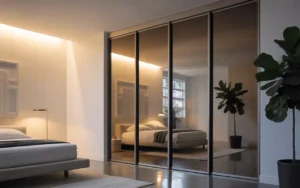
Sliding doors are made of two or more glass panels. The glass panels slide past each other to operate. A metal track is installed at the top or bottom for smooth gliding. In some sliding doors, the glass panels can move across each other. While in some variants, one glass panel is stationary and the other is moveable.
The sliding doors provide a continuous view. They are perfect for wide-length openings and optimizing the flow of light. However, unlike bi-folding doors, they cannot provide a full-scale opening because the doors must move back against one other, leaving one pane exposed at all times. Sliding doors are ideal for small interiors as they take up less space as compared to bifold doors.
Bi-fold doors have at least two door leaves in their construction. When opened, the door panels fold back against each other in a squeezebox style. The panels are held together by door hinges while a carriage system is installed to support the back and forth movement along the top and bottom tracks.

Due to the multiple glass panels construction. The glass bi-fold doors can create a room-wide opening. They make it easier to link the inside of your home with the outdoor space and create a more open floor plan. Some bifold glass doors also come with an easy-access or traffic door that makes it easier to move from your garden or patio to your house without having to slide all of the doors back.
Now that you have some idea of the basic construction of both bifold and sliding doors, we can explore more about them. Here is a comparison between the characteristic features of bifold and sliding doors for you to make the right choice.
| Properties | Sliding Doors | Bi-fold Doors |
|---|---|---|
| Operating Mechanism | Doors slide along the door rails | Folding door mechanism |
| Outside View | Gives a wider view when closed | Provides a wide outside view when open |
| User Convenience | Sliding doors provide extra user convenience while opening and closing the door | Bi-fold doors are also user convenient but a little lesser than the sliding ones. |
| Configuration Options | Fewer configuration options than a bi-fold glass door | Highly configurable |
| Energy Efficiency | Gives better energy efficiency compared to bi-fold glass doors | Furnishes with low thermal energy efficiency |
| Design Versatility | Highly Versatile | |
| Cost Value | Cost value depends upon the style, size, and material. | Cost value depends upon the style, size, and material. |
The most apparent difference between bifold and sliding doors is their construction and operating mechanism. The bifolding glass doors follow a folding mechanism leaving a full opening for entering or leaving the space.
The glass panels in sliding doors, on the other hand, slide along the door rails to allow entry and exit.

Both bifold and sliding doors have glass in their construction. So both of them effectively give a wide view of the outside. However, glass bifold doors offer a wider view when they are open. Due to multiple glass panel designs, there are more door frames to obstruct the view when the bifold doors are closed.
Whereas, sliding doors provide a larger view when they are closed because you only need two sliding doors even to cover a complete wall. Fewer glass panels mean fewer frames and lower interruption in the view.
If you have folding glass doors, open them to enjoy the unobstructed outside view. While close the doors in case you have sliding glass doors installed in the home.
When it comes to convenience, both sliding and bifold doors are easy to operate. The modern operating mechanism takes away the complexity of use.
However, sliding doors are one step ahead of folding glass doors in the ease of use. You can move the sliding doors with just a touch of a finger. While for bifold doors, you might have to walk them back to the origin place.
Sliding doors cannot be positioned in bays or corners. The installation space should be level and wide enough to support sliding doors. So they typically have fewer configuration choices than bifold doors.
There are more configuration choices for bifold doors. They can have two to eight doors in their structure to fit in any place. You also get to choose whether the doors should open outward or inward.
The energy is mostly lost through the hinges and gaps in the doors rather than the glass panels themselves. So folding doors are at a loss in this case. They feature more hinges and frames in their structure. So glass bifold doors have a lower thermal efficiency.
Sliding glass doors, on the other hand, only have minimal framing and no door hinges. So there are fewer outlets for the loss of energy.
Both sliding and folding glass doors are a marvel of modern design. So both of them are known for their aesthetic worth. Bifold and sliding doors can be custom-made according to personal preferences. You can choose any type of glass to give a creative flair to the space. However, sliding doors take a lead in elegance due to the sleek and polished look. The lack of frames and hinges gives the sliding doors a more futuristic look.

There is no absolute distinction between the cost value of sliding and glass bifold doors. The price of these glass doors largely depends on the size, style, and mechanism of the doors. The framing material, glazing options, and labor cost also impact the total cost of the project. So in order to identify your options, it’s best to get price quotes from notable glass vendors.
Both sliding and folding glass doors have their pros and cons. The ultimate choice depends on your project requirements and choice. A design feature that is perfectly fine for one building might not go with another structure. So before choosing any element for your building or home remodeling project, make sure to do some research. Make the decision, keeping all the factors in view. Only then can you achieve the milestone of an unparalleled remodeling venture.
Explore all things glass—from stylish table tops and insulated options to tinted and frosted designs. Discover guides on glass railings, custom cut glass, shelves, and stunning backsplash ideas for a modern home or office upgrade.