
My Cart
You have no items in your shopping cart.

City life is tough. The hustle of urban life keeps you awake all the time. The cheers and squeals of the kids playing in the street don’t let you nod off in the middle of the day. While the honking cars snatches away the calm of the night. Moreover the never ending construction projects keep you distracted all the time. This leads to busy days followed by restless nights.
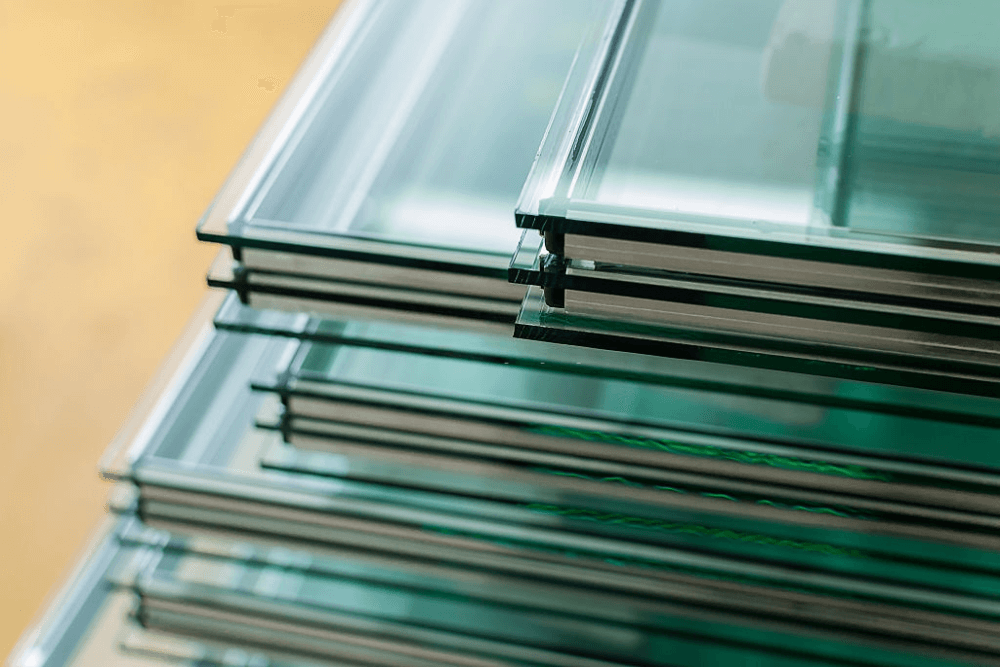
Home is the place where you find comfort. But in the fast city life, home loses its true convenience. Noise pollution is a major issue in cities. However, you can isolate your home from the hubbub of urban life by choosing the right amenities. Windows and doors are the main outlets of the home. Most of the noise and sound travel through the glass. So you should be very careful about choosing the glass for your windows and doors. Soundproof glass is an absolute best solution to block off all the unwanted sound. We will discuss all about sound resistant glass in this article. So let’s dive in!
Table of Contents
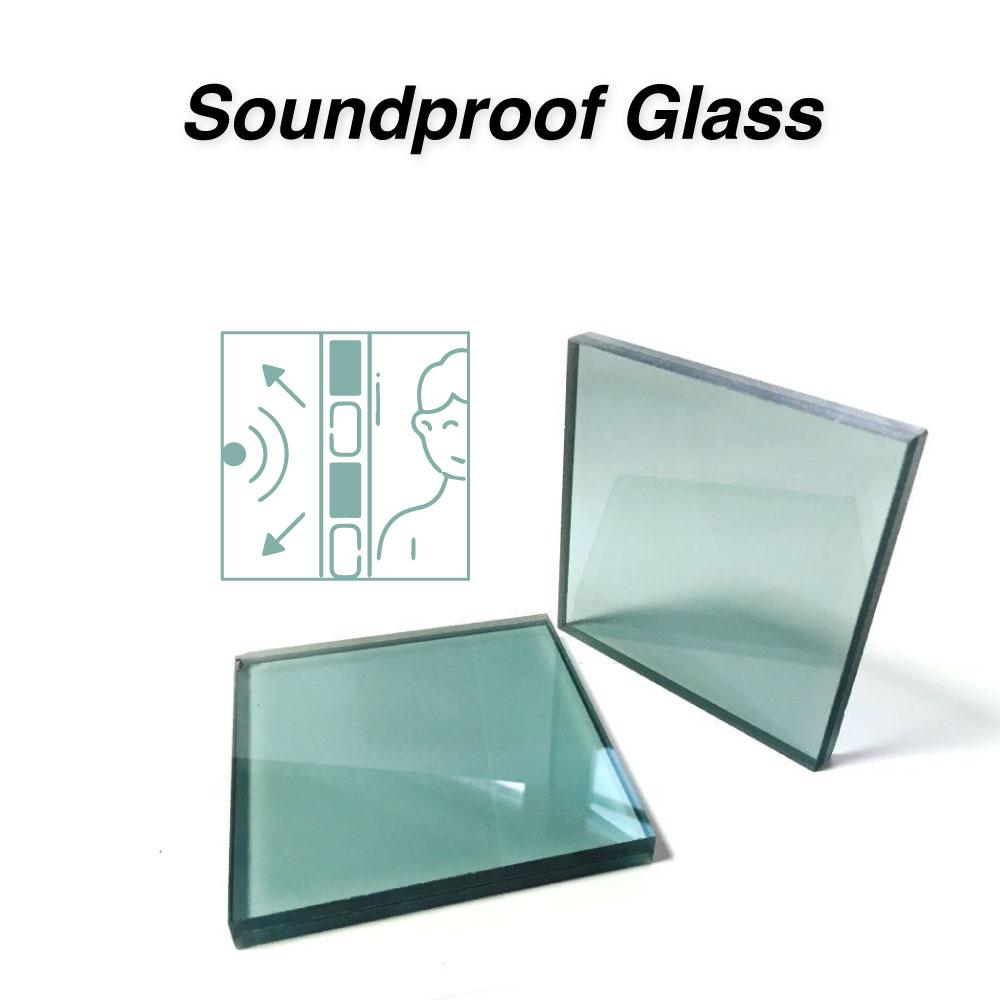
Soundproof or acoustic glass, is made by fusing two layers of glass together with a layer of PVB. The interlayer joins the glass sheets together into a single pane of glass. This layer functions as an acoustic layer that absorbs and blocks the sound.
Soundproof glass works by forming an impenetrable barrier between sound and the interior. The resinous interlayer prevents the sound from vibrating from one pane to the next. You can also install glass of different thicknesses to achieve your desired level of sound insulation.
It should be noted that completely soundproofing a space is nearly impossible. The word “soundproof does not refer to the absence of sound”. Rather, it means a noise reduction of 90 to 95 percent. For maximum soundproofing invest in commercial-grade materials. Even then, achieving soundproofing of more than 95% is difficult.
The mid to upper-range frequencies can be blocked by almost all the soundproof materials. Low-frequency frequencies, however, are far more difficult to block
Although the sound insulation benefits of acoustic glass are quite evident. But that’s not it!

Acoustic glass offers some other practical benefits. These benefits make acoustic glass a great pick for residential and commercial spaces.
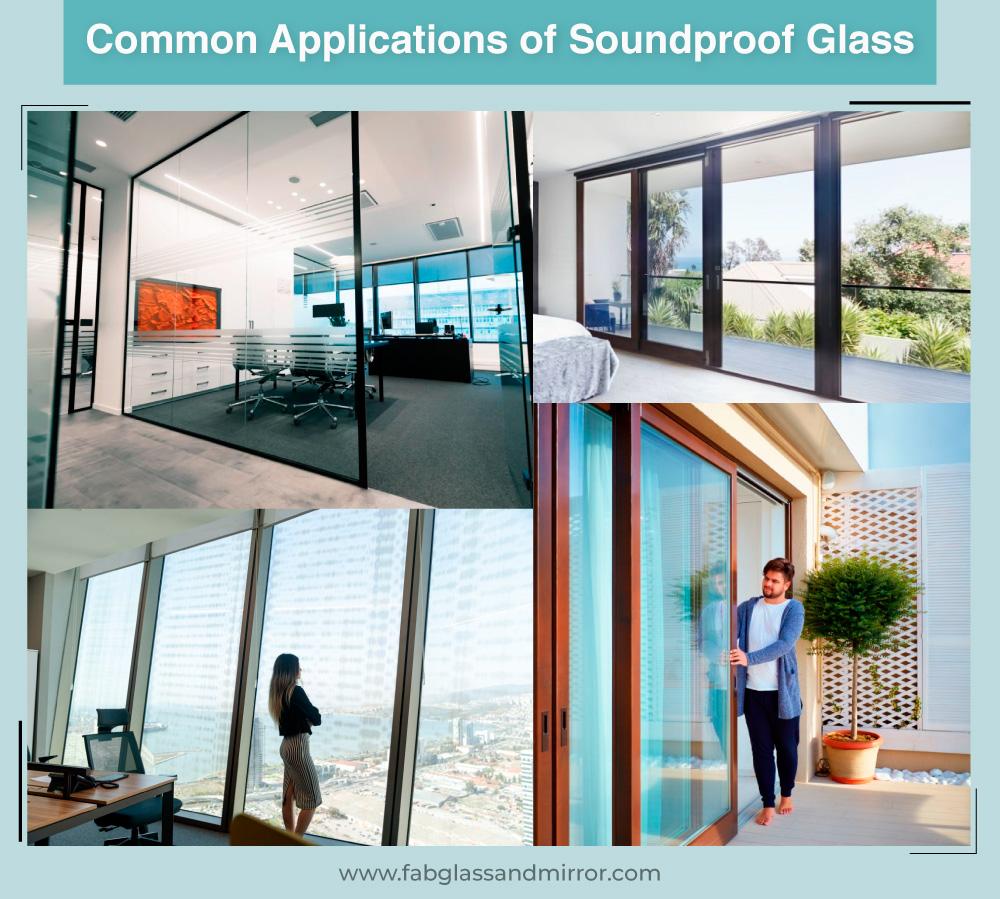
Sound-resistant glass is used in offices to provide the employees with a suitable work environment. It is also making appearances in the residential and commercial spaces. We will discuss the major applications of acoustic glass here.
Windows are one of the most popular applications of sound proof glass. Soundproof windows are used in homes as well as commercial buildings as a best noise reduction solution.
In order to achieve a highly noise-free atmosphere, thick soundproof windows are employed. Soundproof window frames are fused and double-sealed to the glass. High-quality silicon materials are used for this purpose. This combination aids in providing the ideal noise-reduction solution for your home.
Just like windows, doors are also the main source of noise. Therefore, soundproofing the doors is very important to achieve a noise-free and safe interior. Acoustic glass is highly used in glass doors to seal off the apertures that let the noise in.
Wall separators and room dividers are mainly used in offices, cafes and commercial spaces to increase practical value of the space. Acoustic glass dividers ensure a private space for working peacefully.
Recording studios are especially made with soundproofing glass to produce great tunes.
Noise can be truly harmful for the patients. So acoustic glass is used in the construction of hospitals.
Classrooms are a space dedicated to learning. The students can learn better when they are not distracted by the outside world. Therefore, contemporary school buildings, nowadays, employ soundproof glass. This ensures a learning atmosphere for the students.
Windows, doors and room dividers, everything is made up of soundproof glass in commercial buildings. This is done to set up a high-end interior space.
In order to ensure better living standards, sound resistant glass is used in the windows and doors of the residential apartments.
Sound proof glass is used in music recording and teaching studios to set up an isolated space for the students. A soundproof atmosphere also helps identify each and every symphony and master it.

Different types of glass can be used for sound reduction purposes. However, there are two glass types that are mostly used for this purpose. We will discuss those two here.
Laminated glass has multiple glass panes. These layers are held together with an adhesive interlayer. This construction is practical for sound reduction. So laminated glass is used for sound insulation purposes.
Just like laminated glass, insulated glass also has two or more glass panels in its constriction. The glass panes have an air filled layer in between. This layer blocks the sound from traveling through the glass panes.
Most of us would think that more layers of glass means more noise reduction. Well, this isn’t necessarily the case.
With the right thickness, a double pane window can provide better sound insulation as compared to the triple pane glass. However, for equal glass thickness, a triple pane window is better at sound reduction than double pane. Similarly, double pane glass is better as compared to single pane window glass.
The degree of noise reduction you want to achieve would determine the type and thickness of glass that’s best for you.
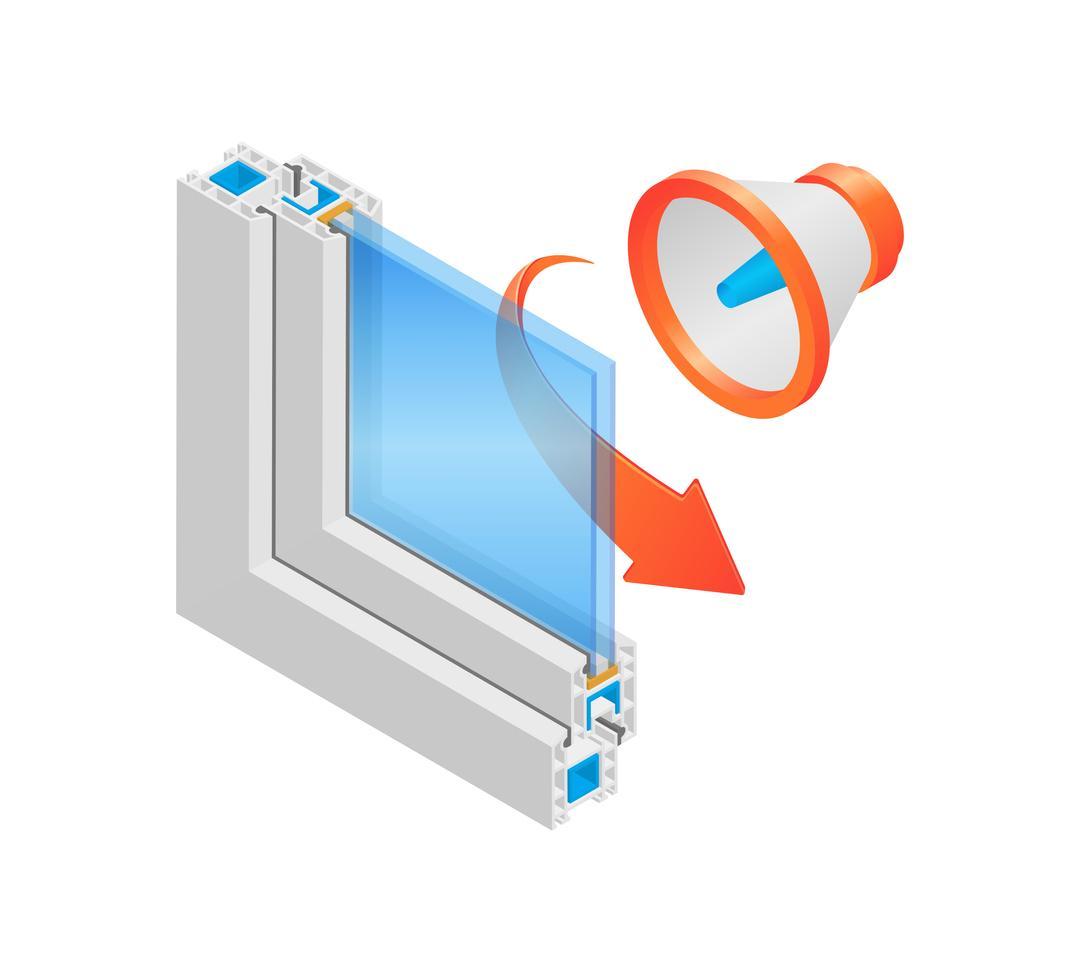
Both laminated and insulated glass is effective for reducing the noise. But insulated glass is more widely and easily available as compared to laminated glass. Moreover, the cost value of laminated glass is much higher than the insulated glass. So considering all these factors, we can conclude that insulated glass is best for soundproofing your space.
Fab glass and mirror offers superior quality insulated glass that not only provide sound proofing but also highly energy efficient. So explore your options and place your orders for insulated glass and get your order shipped at your doorsteps. We believe that you deserve a peaceful space to relieve everyday fatigue, so don’t wait! Just Upgrade Your Doors and Windows Glass.
Explore all things glass—from stylish table tops and insulated options to tinted and frosted designs. Discover guides on glass railings, custom cut glass, shelves, and stunning backsplash ideas for a modern home or office upgrade.