
My Cart
You have no items in your shopping cart.
Not all glass is created equal, and the wrong choice can impact safety, durability, and energy efficiency. In this comprehensive guide, we will dive deep into how tempered glass compares to regular glass, where each is used, and how to choose the best one for your needs.
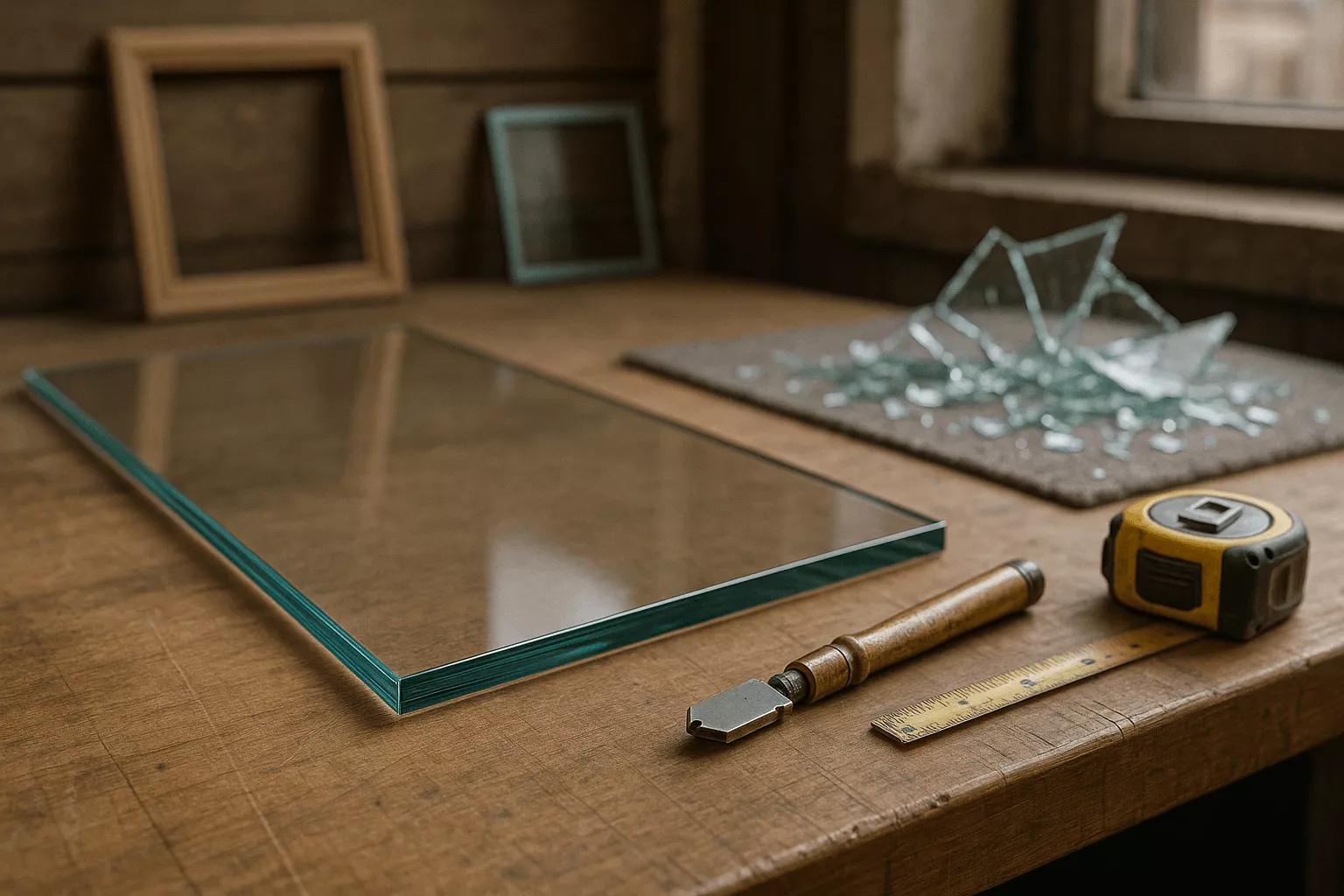
Table of Contents
Regular glass, also known as annealed glass, is the most common and inexpensive form of glass. It is made by slowly cooling molten glass to relieve internal stresses, a process called annealing.
However, it lacks the strength and safety features of processed glass like tempered or laminated glass.
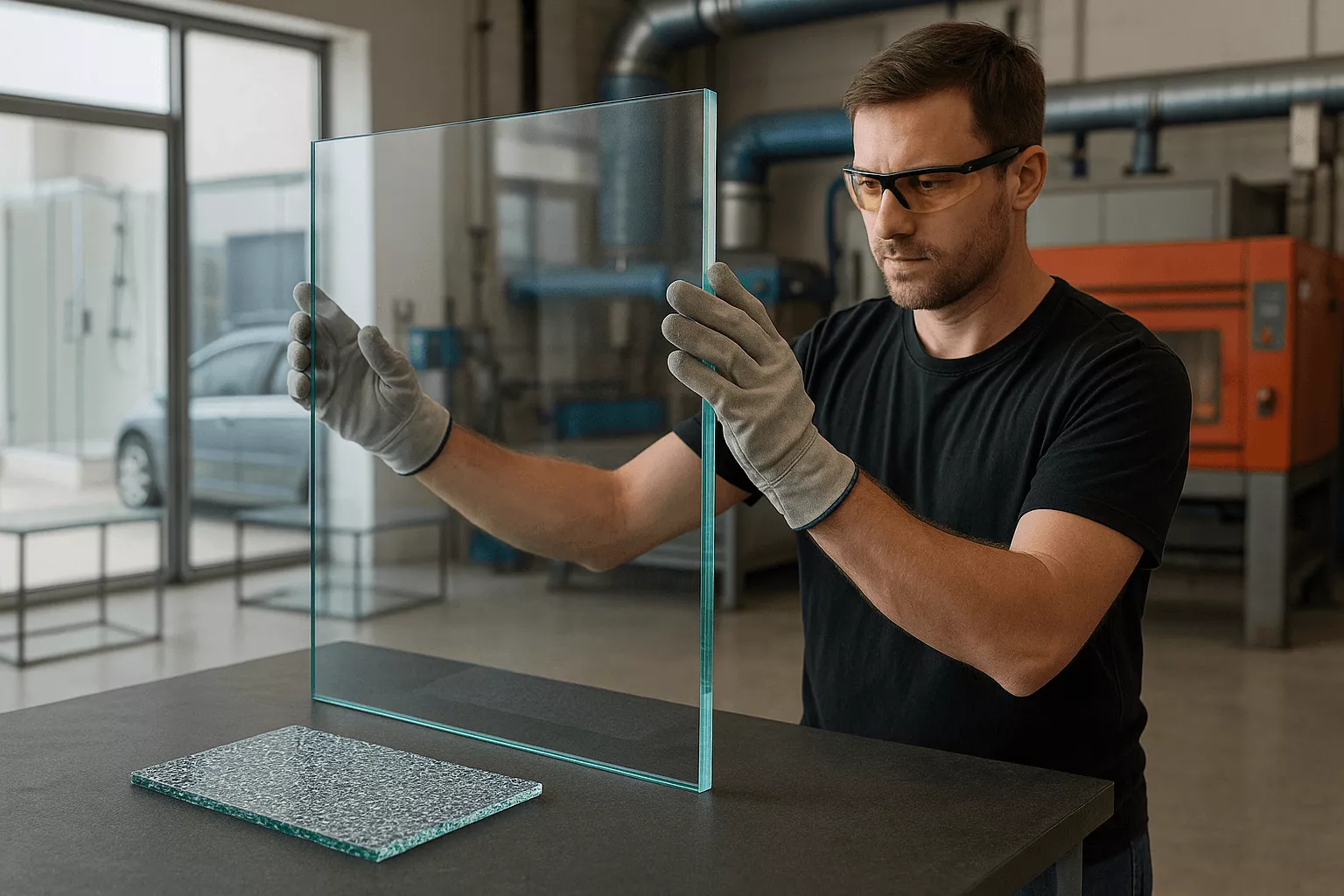
Tempered glass, also called toughened glass, is a type of safety glass that undergoes thermal or chemical treatments to enhance strength.
The next thing that will possibly come to your mind is how tempered glass is made. The glass is heated to over 1,100°F and then rapidly cooled using high-pressure air jets. This creates compressive stress on the surface and tensile stress inside, giving it 4–5x more strength than annealed glass. Please read on to learn more about what is tempered glass;
Ideal for windows, doors, glass tables, glass shower enclosures, car windows
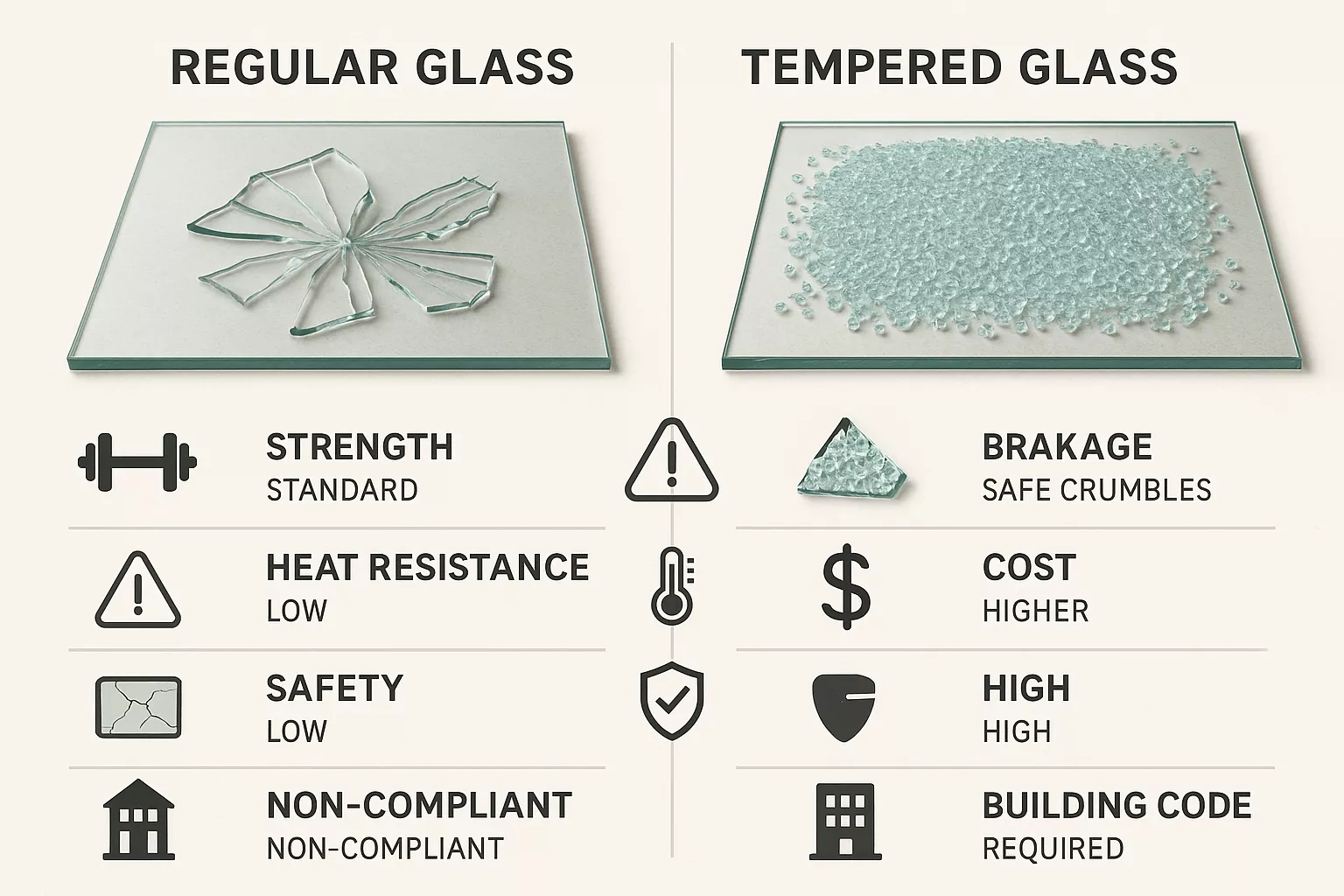
| Feature | Regular Glass (Annealed) | Tempered Glass |
| Strength | Standard | 4–5 times stronger |
| Breakage | Sharp, dangerous shards | Crumbles into safe, rounded pieces |
| Heat Resistance | Low | High (up to 470°F or more) |
| Cost | Lower | Higher due to processing |
| Safety | Low | High (classified as safety glass) |
| Use in Building Codes | Often non-compliant | Required in most safety applications |
Tempered vs Non-Tempered Glass is a safety-critical comparison. For doors, storefronts, skylights, and glass near stairways or floors, building codes typically require tempered or laminated glass.
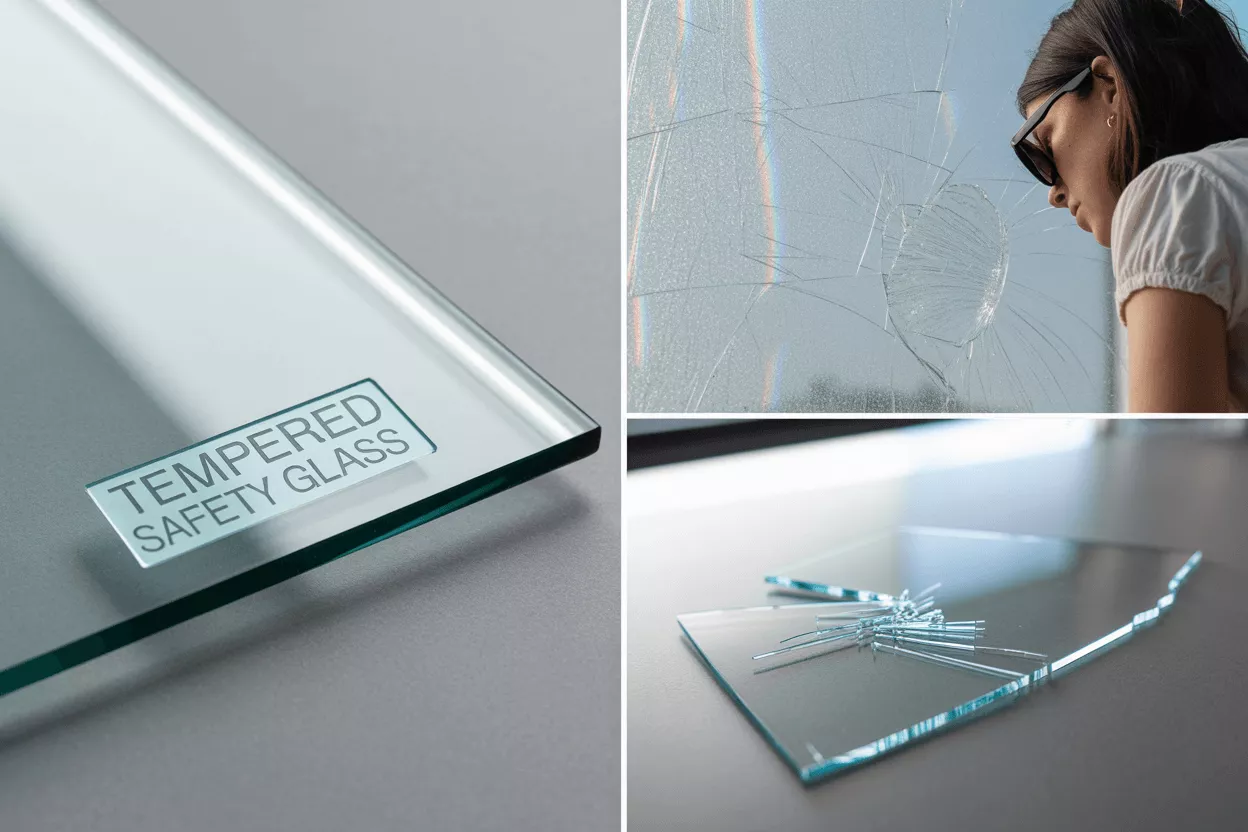
It is not always easy to distinguish them just by looking, but here are key signs:
If you are wondering how to tell if a glass is tempered vs regular glass without destruction, always look for the etched safety stamp or ask the manufacturer.

Many people use the term regular glass to mean annealed glass, glass that hasn’t been heat-treated. Here is the difference between annealed vs. tempered glass;
This distinction, tempered vs annealed glass, is crucial when planning projects that require post-installation modifications.
While strength is key, the difference between laminated and tempered glass is found in how they react to impact—one shatters, while the other holds together. Because of this resilience, another popular option is laminated glass, especially for windows and skylights.
It is made by sandwiching a plastic interlayer (usually PVB) between two sheets of glass. Here is the difference between laminated vs. tempered glass;
| Feature | Laminated Glass | Tempered Glass |
| Breakage | Cracks but holds together | Breaks into small granules |
| Soundproofing | Better (due to plastic layer) | Moderate |
| UV Resistance | Higher | Moderate |
| Security | Higher (can withstand forced entry) | Lower than laminated |
| Cost | Higher than tempered | Higher than regular glass |
When deciding between tempered vs laminated glass, consider the use case. Laminated is best for hurricane zones and soundproofing. Tempered is ideal for high-impact but non-security applications.
Tempered glass is a type of safety glass, but not the only one. Laminated glass also qualifies as safety glass.
Low-E (Low Emissivity) glass is coated to reduce UV and infrared light transmission while maintaining visible light flow. It improves energy efficiency in windows.
| Factor | Low-E Glass | Tempered Glass |
| Purpose | Energy efficiency | Safety and strength |
| Coating | Microscopically thin metallic layers | None (unless combined with Low-E) |
| Usage | Windows, skylights | Doors, partitions, glass panels |
| Combination | Can be tempered + Low-E | Can be Low-E tempered |
Many energy-efficient windows use tempered Low-E glass to combine safety and thermal performance.
Plexiglass, or acrylic, is a lightweight plastic alternative to glass. Comparing tempered glass vs plexiglass can be confusing, so let’s break it down:
| Feature | Tempered Glass | Plexiglass (Acrylic) |
| Strength | Very strong | Impact-resistant but scratches easily |
| Weight | Heavier | Light and easy to handle |
| Breakage | Crumbles into safe chunks | Bends or cracks under pressure |
| Clarity | Crystal clear | Slightly less clear |
| UV Resistance | Good | Varies; needs coating |
| Cutting | Needs special tools | Easy to cut and drill |
While a standard tempered glass price is often more affordable for large-scale window projects, it is primarily chosen for its durability and scratch resistance. Plexiglass remains the preferred choice where extreme weight reduction or specialized shatter-resistance is more important than the initial cost.
While tempered glass is the “gold standard” for safety in doors and windows, certain environments, like fireplaces, wood stoves, and high-performance cooktops, require a different kind of transformation. This is where Ceramic Glass (often called glass-ceramic) enters the picture. While tempered glass is heat-resistant up to roughly 470°F, ceramic glass is engineered to withstand “thermal shock” and constant temperatures exceeding 1,200°F. Choosing ceramic glass isn’t just about a material change; it’s about ensuring your home’s hearth remains a safe, glowing centerpiece without the risk of shattering under extreme stress.
In the “Economic Equation” of your home project, the value of ceramic glass lies in its specialized performance. If you are designing a high-efficiency heating source, the Quality of Improvement offered by high-heat ceramic panels is unmatched. Unlike tempered glass, which can break if a cold liquid hits it while hot, ceramic glass stays stable and clear even under the most intense conditions.
| Feature | Tempered Glass (The Safety Destination) | Ceramic Glass (The High-Heat Destination) |
| Primary Result | High impact safety and moderate heat. | Extreme thermal endurance. |
| Best Future State | Shower doors, tabletops, and partitions. | Wood stoves, fireplaces, and lab equipment. |
| Thermal Limit | Approx. 470°F | Approx. 1,200°F+ |
| Thermal Shock | May shatter if cooled rapidly. | Virtually immune to temperature swings. |
If you are weighing tempered glass vs regular glass, ask yourself:
In most modern building projects, tempered glass is the safer, longer-lasting, and more compliant option. It may cost more up front, but the benefits in safety, durability, and peace of mind are well worth it.
However, regular glass still has its place in low-risk and budget-sensitive applications. Understanding when and where to use each can save you money, and protect you from accidents.
Tempered glass is heat-treated to be 4–5 times stronger and safer than regular glass. It shatters into blunt granules, while regular glass breaks into sharp shards.
Look for a safety stamp etched in the corner or view it through polarized sunglasses to see stress patterns. Tempered glass usually lacks sharp edges and has a distinct break pattern.
Yes, tempered glass is a type of safety glass. However, not all safety glass is tempered—laminated glass is another safety glass alternative.
No. Once glass is tempered, it cannot be cut or drilled. Any modifications must be made before the tempering process.
Tempered glass is better for impact and heat resistance. Laminated glass is superior for soundproofing, UV protection, and security against forced entry.

Explore all things glass—from stylish table tops and insulated options to tinted and frosted designs. Discover guides on glass railings, custom cut glass, shelves, and stunning backsplash ideas for a modern home or office upgrade.