
My Cart
You have no items in your shopping cart.



If your backdrop wrinkles, dents, discolors, or creates unpredictable shadows, you are losing time, quality, and consistency. Most creators spend more effort fixing background issues than producing content.
Back-painted glass solves these problems at the root. It provides a smooth, color-stable, professional backdrop that stays visually consistent for years, with minimal maintenance and no warping or sagging. With high-quality panels from Fab Glass and Mirror, creators and studios get reliable, precision-finished back-painted glass designed specifically for durable, professional visual environments.This guide breaks down how back-painted glass works, why professional studios are adopting it, how it compares to common backdrop materials, and how to choose the right panel for your setup.
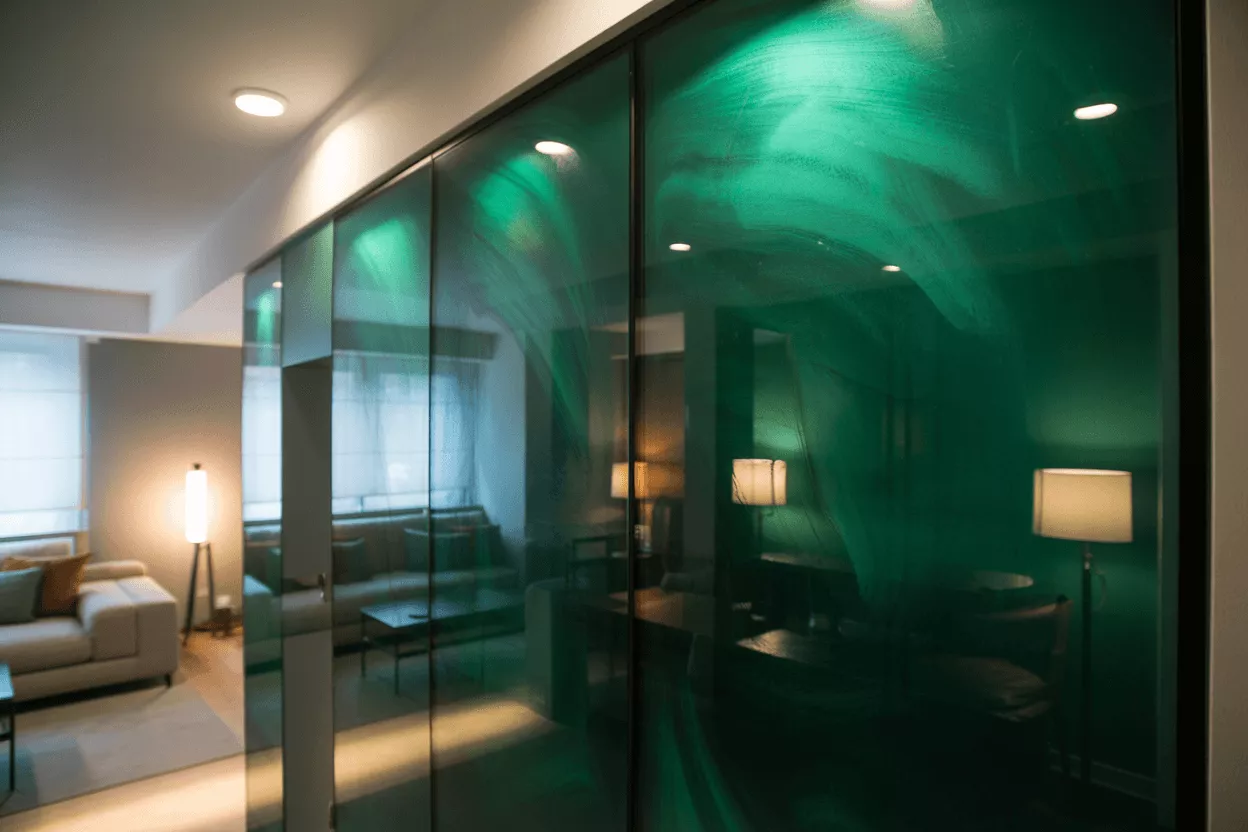
Table of Contents
Back-painted glass is made by applying specialized paint to the reverse side of standard or low-iron glass. The paint is typically cured or baked to create a durable, uniform finish.
This gives you:
Because the paint is behind the glass, the front surface remains clean and protected.
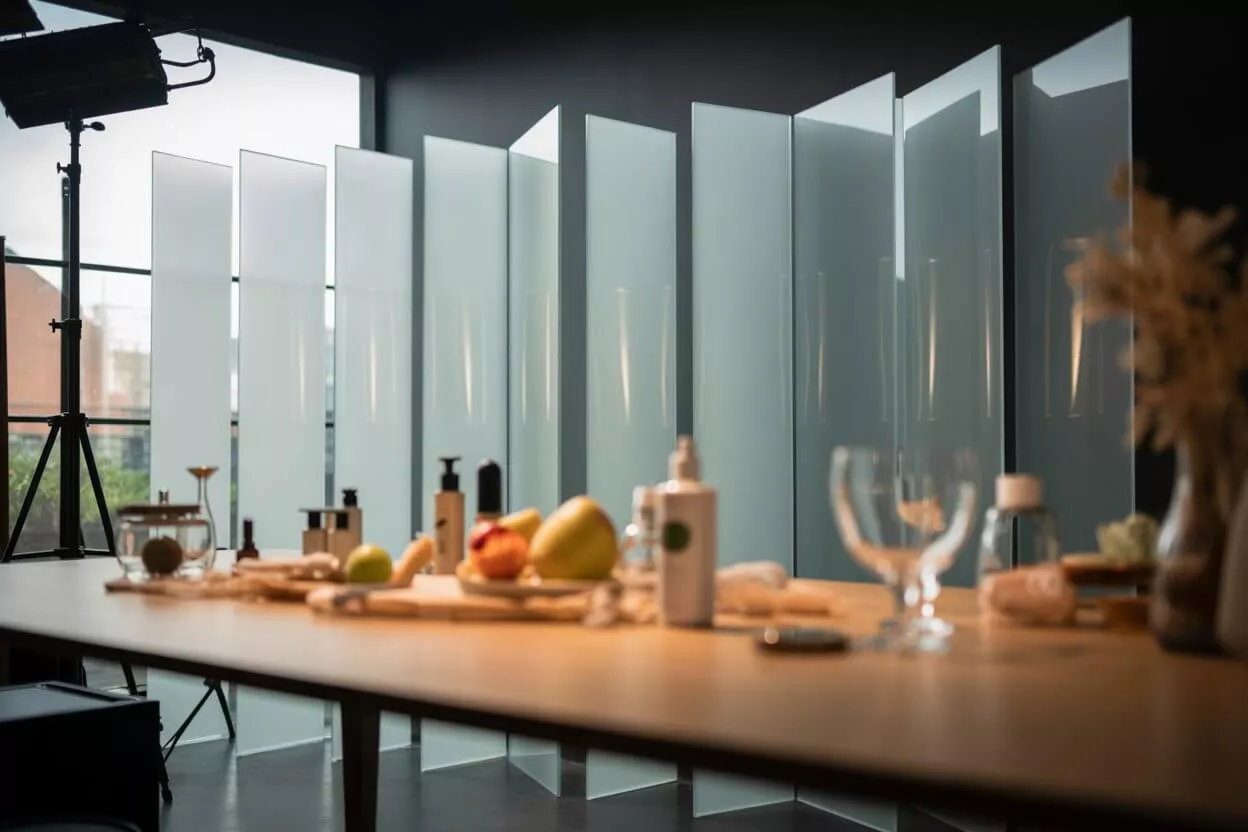
Every traditional material has a flaw:
Glass remains completely flat and stable, making it ideal for:
You get a consistent background in every frame without steaming, stretching, or replacing anything.
Because the painted surface is sealed behind glass:
Low-iron (ultra-clear) glass removes the natural green tint found in standard glass, making it the preferred option for:
This makes color grading and matching far more predictable.
Back-painted glass comes in two useful finishes:
Important: Gloss can reflect lights, lenses, and talent. Matte is usually the safer choice unless your style intentionally includes reflections.
Glass is naturally:
This makes it the ideal surface for messy or high-detail environments:
A quick wipe brings it back to perfect condition.
| Material | Advantages | Limitations |
| Fabric | Affordable, lightweight | Wrinkles, absorbs stains, visible texture |
| Paper Rolls | Clean look, smooth | Creases easily, not durable long-term |
| Vinyl/PVC | Wipeable, flexible | Can warp in heat/humidity, scratches |
| Acrylic | Lightweight, glossy | Prone to scratches, bowing, distortion |
| Back-Painted Glass | Flat, stable, durable, long-lasting | Heavier, requires careful installation |
In a studio environment with controlled lighting, glass is the only backdrop material that maintains its shape, finish, and visual look for years of repeated use.
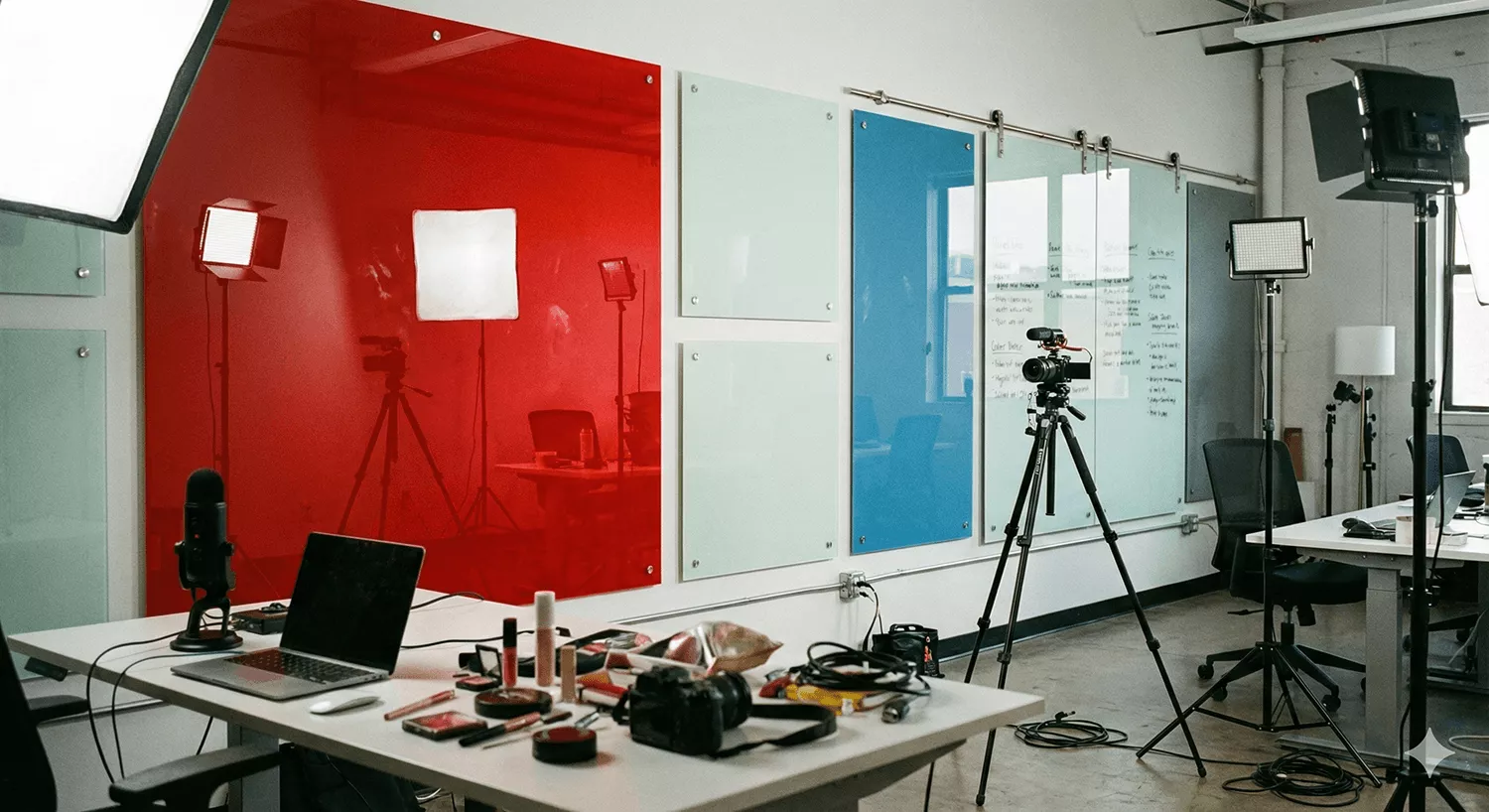
Reliable for most photography and video sets.
Provides maximum color accuracy by eliminating green tint.
Recommended for:
Ideal for creators who switch backgrounds often. Requires magnetic rails or a ferrous mounting surface.
Excellent for:
Match:
Perfect for brand-consistent visual sets.
Compared to other materials, glass is uniquely resistant to:
A properly coated and mounted panel maintains the same optical appearance over long-term use. This predictability is why commercial studios rely on glass for repeatable product shoots.
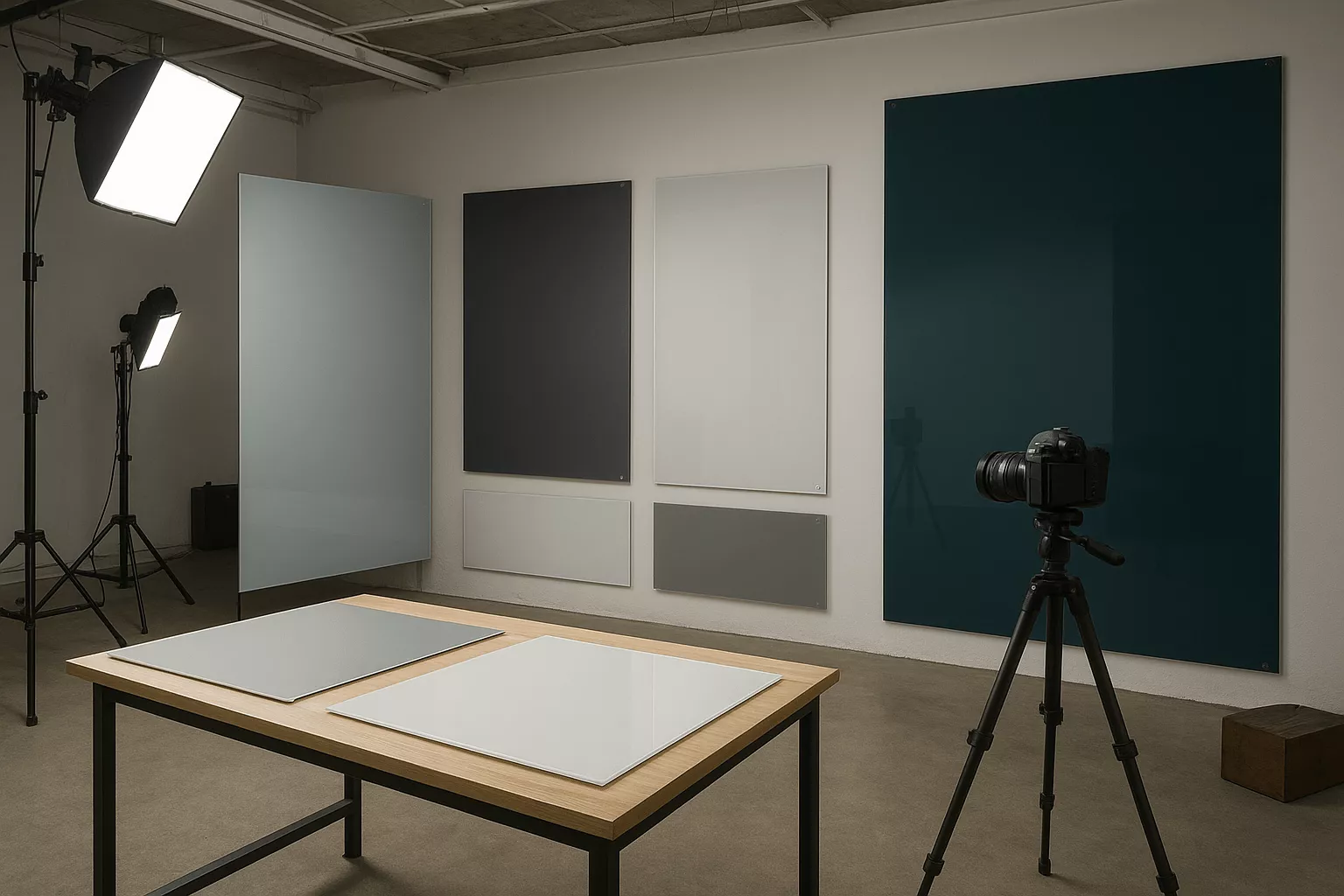
Determine whether you need:
Most-used tones:
Panels wider than 36″ should be installed by professionals due to weight and handling risks.
Switching to back-painted glass provided:
Reported improvements included:
Back-painted glass delivers long-term visual consistency, modern aesthetics, and unparalleled durability. It solves the everyday problems creators face, wrinkles, texture, staining, warping, inconsistent colors, while offering a clean, dependable surface that performs in professional environments.
If you are building a studio designed to stay visually flawless for years, back-painted glass is one of the most reliable backdrop materials available today.
Gloss may reflect light sources; matte/acid-etched finishes reduce this significantly.
If mishandled or mounted incorrectly, yes. Tempered glass is recommended for large panels.
They’re excellent for portable setups, dance content, and high-movement environments.
1) Tempered glass breaks into smaller, safer pieces if impacted.
2)Laminated glass holds together even if cracked.
Both are widely used in interiors and studios.
For small panels, you can install them DIY, but for large wall panels, it is recommended to hire professionals.
Yes — Pantone, HEX, RGB, and brand-matched samples can be produced accurately.
Explore all things glass—from stylish table tops and insulated options to tinted and frosted designs. Discover guides on glass railings, custom cut glass, shelves, and stunning backsplash ideas for a modern home or office upgrade.