
My Cart
You have no items in your shopping cart.

If you’re wondering whether you can build a DIY greenhouse using plexiglass or polycarbonate panels, the answer is a resounding yes. A plexiglass greenhouse or one made from polycarbonate sheets is an excellent solution for gardeners seeking durability, light efficiency, and year-round plant protection. This guide provides easy DIY greenhouse plans using either plexiglass greenhouse panels or polycarbonate panels, ensuring beginners can confidently create a productive gardening space.
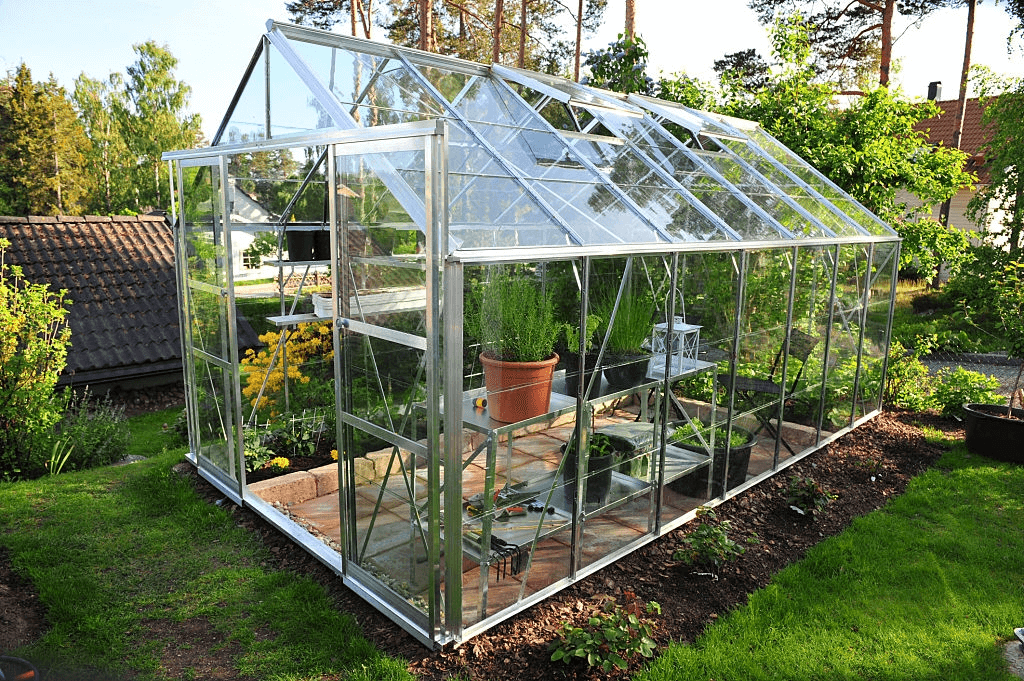
Table of Contents
Whether you’re growing herbs or propagating vegetables, a greenhouse gives you control over the growing environment. Using greenhouse plexiglass or polycarbonate panels elevates that experience by offering high light transmission, weather resistance, and long-term durability.
Both materials outlast traditional glass and plastic films, making them top choices for any acrylic greenhouse project.
Yes, you can. Many small and large greenhouses with plexiglass use these clear, durable sheets for roofing and side panels. They’re lightweight, easy to install, and more budget-friendly than you might think.
When crafting your greenhouse blueprint, your first step should be determining the best layout and size.
Before beginning, gather your materials. Your frame can be made of wood, aluminum, or galvanized steel, depending on your budget and skills.
It would be fantastic unless you can construct a greenhouse almost anywhere. However, that isn’t how it works.
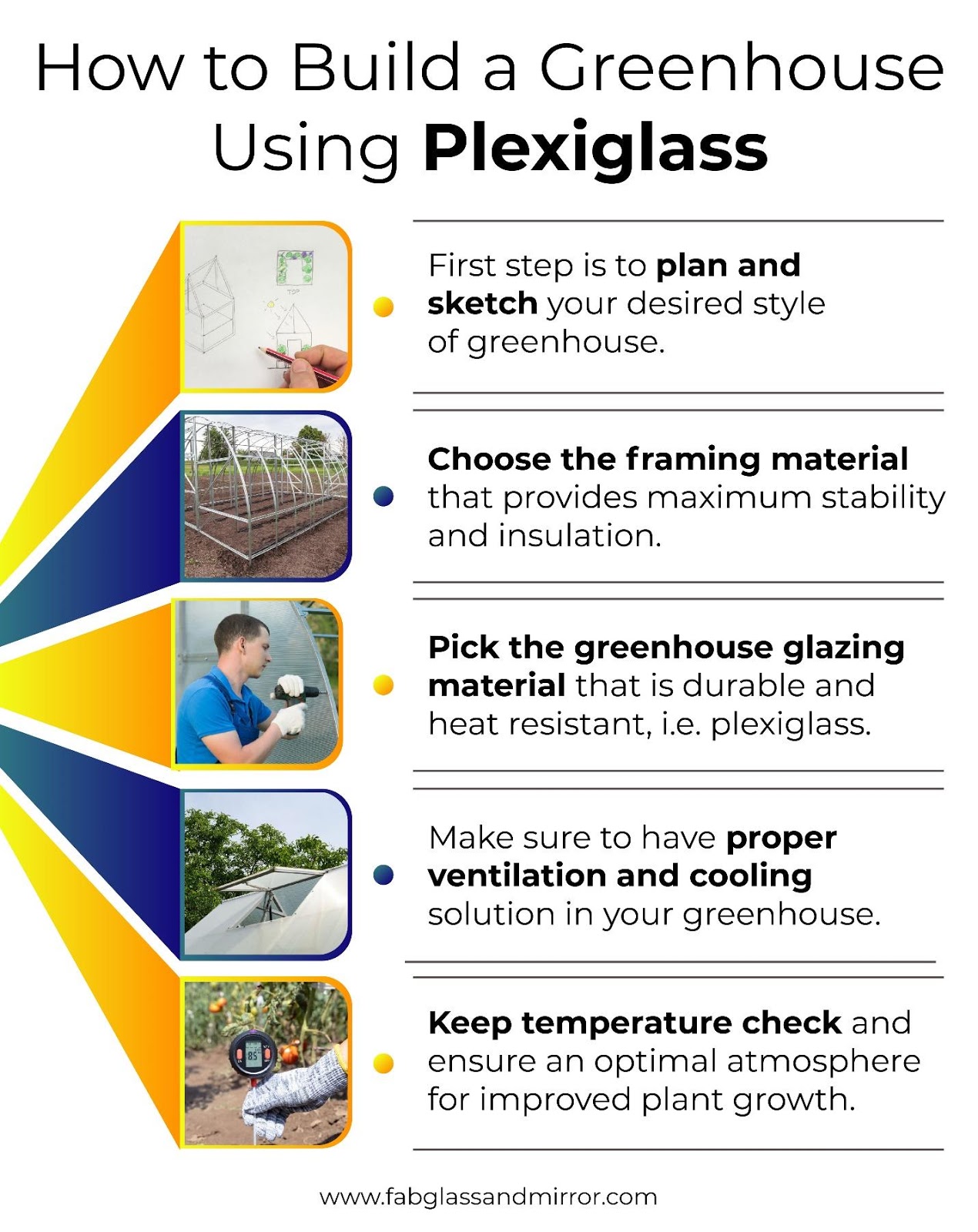
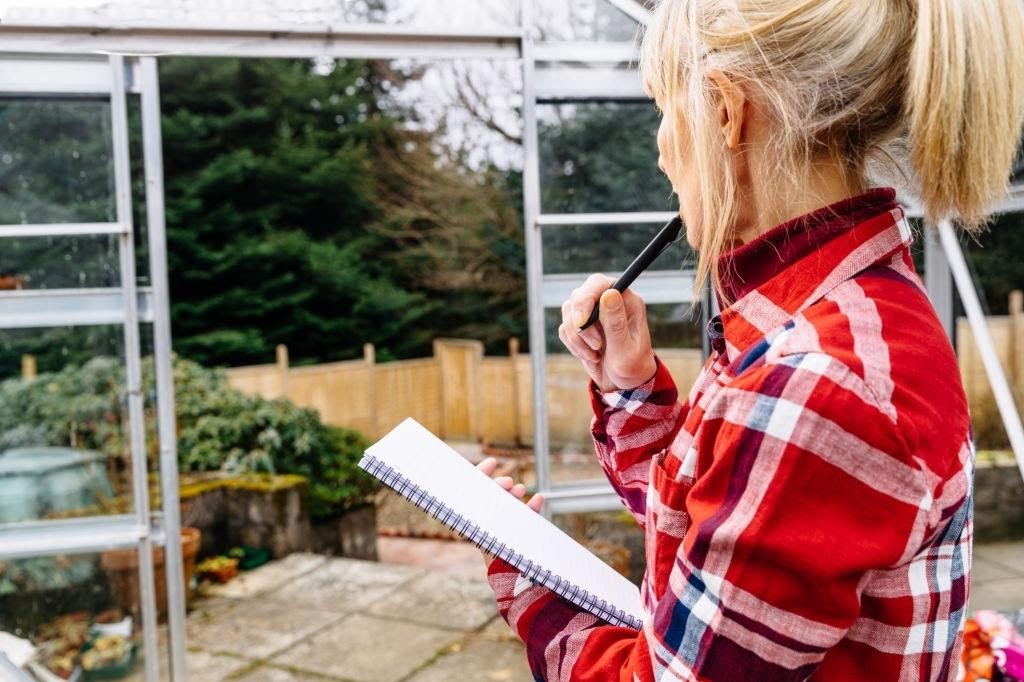
The place of the greenhouse has a significant impact on its stability. Gardening gets better quickly because as the greenhouse’s task is finished, you have it correctly. The first thing you will consider before performing the task is planning and sketching. Different structural characteristics in any greenhouse must be considered. They help to keep the layout of your greenhouse project intact.
For starters, the size of its greenhouse is by far the most significant consideration. It would be best if you did a lot to build a magnificent structure for growing plants in such a small room.

To avoid weather disruption, spinning, and inconsistent tension, any greenhouse will be glued down, how big or small. The greenhouse would not survive unless you don’t maintain it. It would be impossible to build it without a level foundation, leading to glass breakage mainly in the long run.
What types of foundations to use?
Greenhouse construction it’s really self-fulfilling to do things yourself. You have the opportunity to concentrate on the considerations that would go into bringing the greenhouse designs to life. A lengthy greenhouse starts with the components.
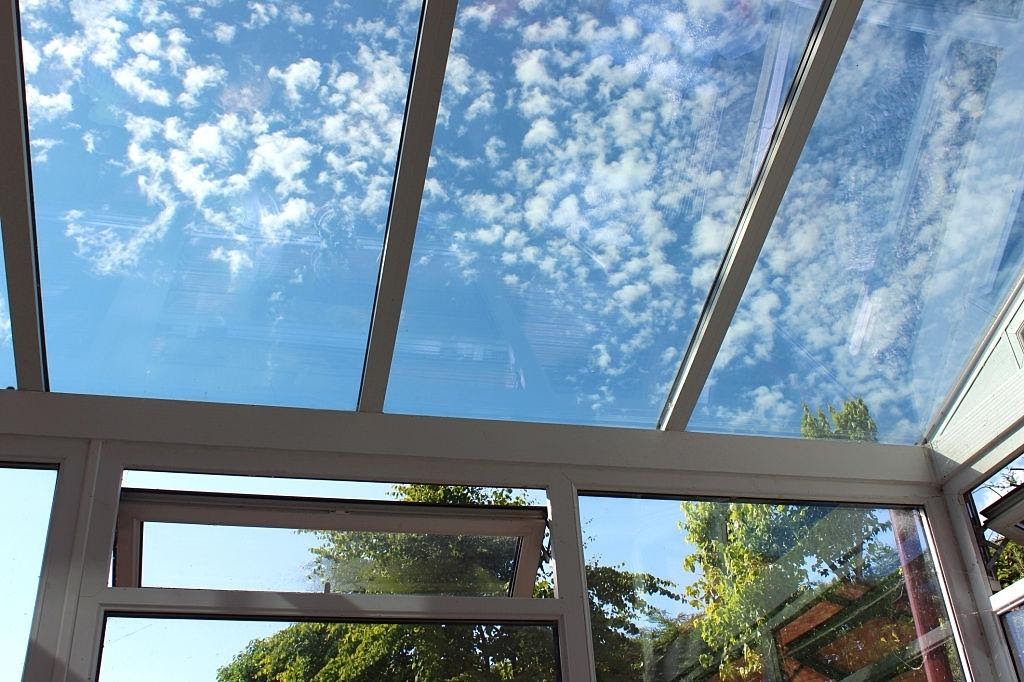
A self-supporting greenhouse system should be able to stand alone. A very well greenhouse ought not to be damaged by high winds or hailstones.

The 2 structural elements provide greenhouse ventilation but also essential for pest control as well as moisture control.

Plant life needs to have proper greenhouse ventilation. Photosynthesis requires carbon dioxide for plants to produce food.

Wood, including metal, remain 2 of the primary materials used by greenhouse designers. Each has its own set of advantages and disadvantages: wood is less expensive and simpler to deal with, but it is more resistant to damage but damage only in extreme conditions. On the other hand, metal is more costly initially but more stable over time.

Glass is a timeless and elegant glazing choice. Because of its visual appeal, glass is chosen by numerous gardeners as an ideal alternative. It has long been the standard greenhouse glazing stock. It allows the most intensity of daylight to pass in.
Polycarbonate glazing seems to be an excellent choice for farmers in various environmental conditions. It can survive extreme weather conditions. It’s indeed long-lasting but can withstand several attacks from a strike.
Planting is a beautiful way to give time in your greenhouse and get some exercise while doing so. Greenhouses, on the other hand, require regular upkeep. It’s crucial to keep an eye on the greenhouse on a daily basis to make sure it’s supplying the best environment for plants to thrive.
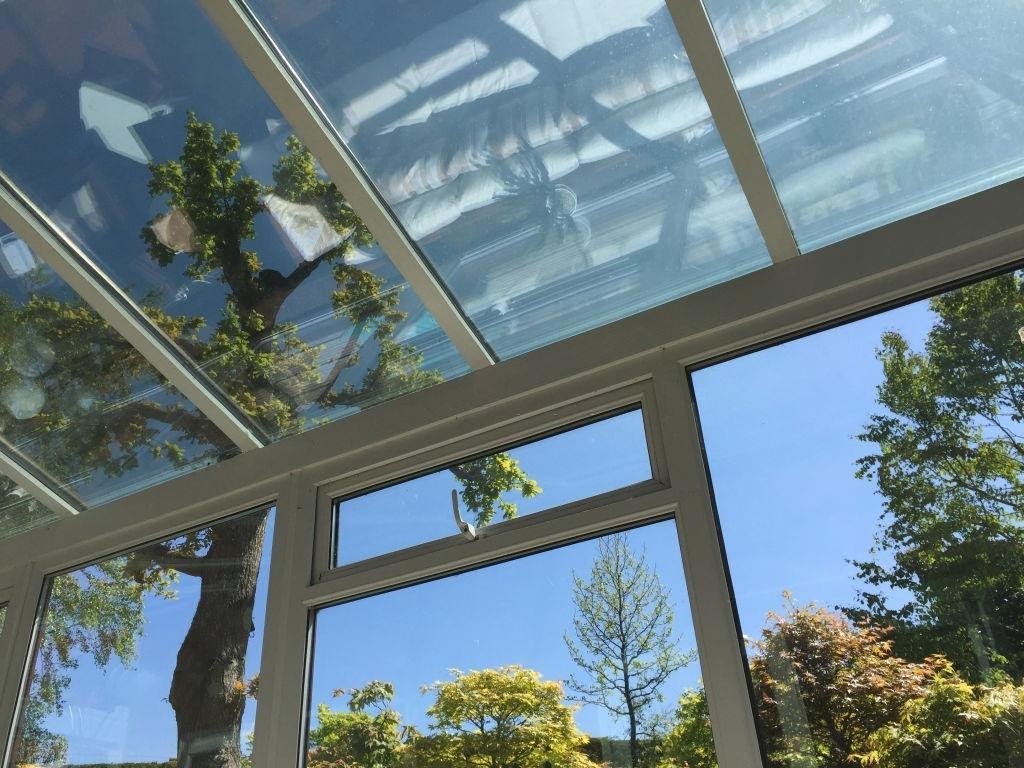

Plexiglass has been one of the better glass alternatives due to its longevity, stability, and sustainability. Here, look at the pros and cons:

Amongst the most common transparent plastics for greenhouses is polycarbonate. Something like a long time, glass was the only alternative for glazing, although plastic systems have taken over in recent times.

The easiest way to keep bugs out of a greenhouse should be to prevent them from entering during the first instance.
Apart from keeping the greenhouse tidy, you can disinfect and sterilize all or most of the materials daily. Some floors, including counters, will be cleaned with eco-sustainable warm soapy water.
Every day, keep an eye out for symptoms of pests. Look at Insect sounds, including cracks inside the plant leaf are two indicators.
A ventilation system will be tested on a regular basis to guarantee that something is non-malfunctioning.
An irrigation system’s associated lines, including hoses, should be tested over the next few months.
Whether you’re a seasoned gardener or a beginner, building a greenhouse with plexiglass or polycarbonate panels is a rewarding and approachable project. Both materials are strong, efficient, and accessible, making them ideal for various small greenhouse plans. Choose plexiglass for greenhouse projects that need more visibility, or go for polycarbonate greenhouse plans if insulation is your priority.
With the right tools, materials, and guidance, your DIY polycarbonate greenhouse or plexiglass greenhouse will be up and running in no time. Start growing smarter, longer, and greener today.
Absolutely. Plexiglass is durable, UV-resistant, and perfect for DIY builds.
Start small with a 6×8 ft structure or expand based on your garden’s needs.
Plexiglass offers clarity; polycarbonate provides better insulation. Choose based on your local climate.
Yes! From lean-to setups to mini tunnels, there are countless easy DIY greenhouse plans online.
Yes, use UV-treated sheets and secure them properly to avoid wind damage.
Explore all things glass—from stylish table tops and insulated options to tinted and frosted designs. Discover guides on glass railings, custom cut glass, shelves, and stunning backsplash ideas for a modern home or office upgrade.