
My Cart
You have no items in your shopping cart.

Glass office partitions have fundamentally redefined the modern commercial landscape. No longer simple dividers, these systems are integral architectural tools, critical for achieving the aesthetic, functional, and acoustic demands of today’s flexible workplaces. For the discerning interior designer or specifier in the USA market, partnering with experts like Fab Glass and Mirror ensures access to premium materials, precise fabrication, and installation expertise, making it easier to meet performance and design goals.
This comprehensive guide is crafted to provide the technical authority and design inspiration necessary to confidently specify the perfect office glass partitions for any project, ensuring superior performance and visual impact.
Table of Contents
The contemporary office is undergoing a profound transformation, moving away from rigid cubicles toward dynamic, open, and agile environments. This shift, accelerated by the rise of hybrid work models, emphasizes employee well-being, collaboration, and maximized access to natural light. Glass partition walls for offices are the direct response to this evolution.
The core challenge for designers today is balancing the need for transparency and collaboration with the absolute requirement for acoustic privacy and focused work zones. Using office partitions with glass allows designers to define space without sacrificing the flow of light or the visual connection between teams. When correctly specified, a glass partition for office installation can enhance a commercial property’s value, optimize space utilization, and significantly improve the employee experience, a critical return on investment (ROI) metric for clients.
To successfully specify glass partition office systems, the designer must first master the fundamental system types. Each category offers a distinct combination of structural stability, aesthetic profile, and performance capability.
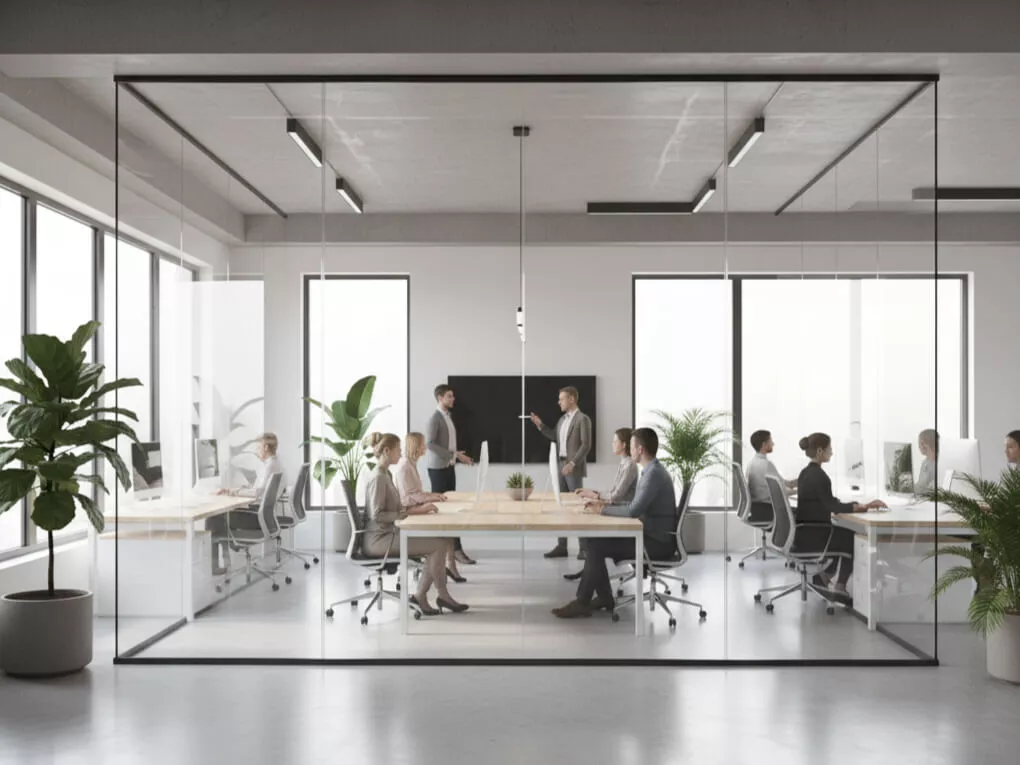
The epitome of modern minimalism, frameless glass office partitions prioritize maximum visual transparency. These systems utilize minimal head and base profiles, often recessed into the floor or ceiling, to create a virtually seamless glass expanse.
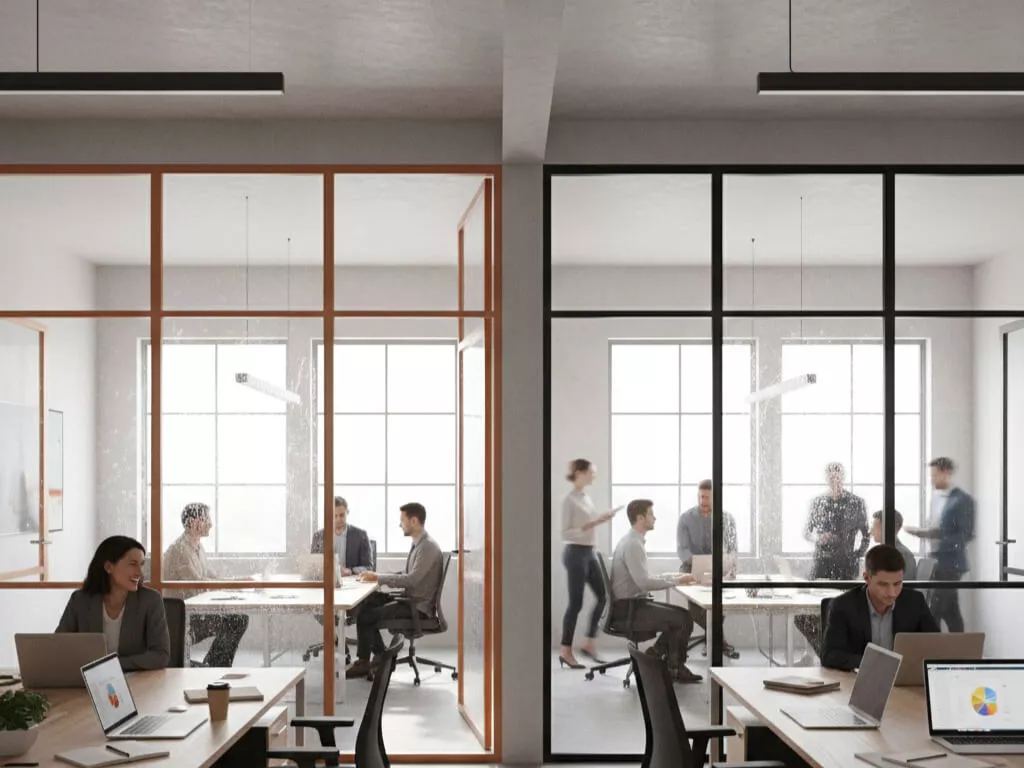
Framed glass office partition walls feature distinct aluminum profiles that secure the glass panels. These systems offer unparalleled versatility in design and performance.
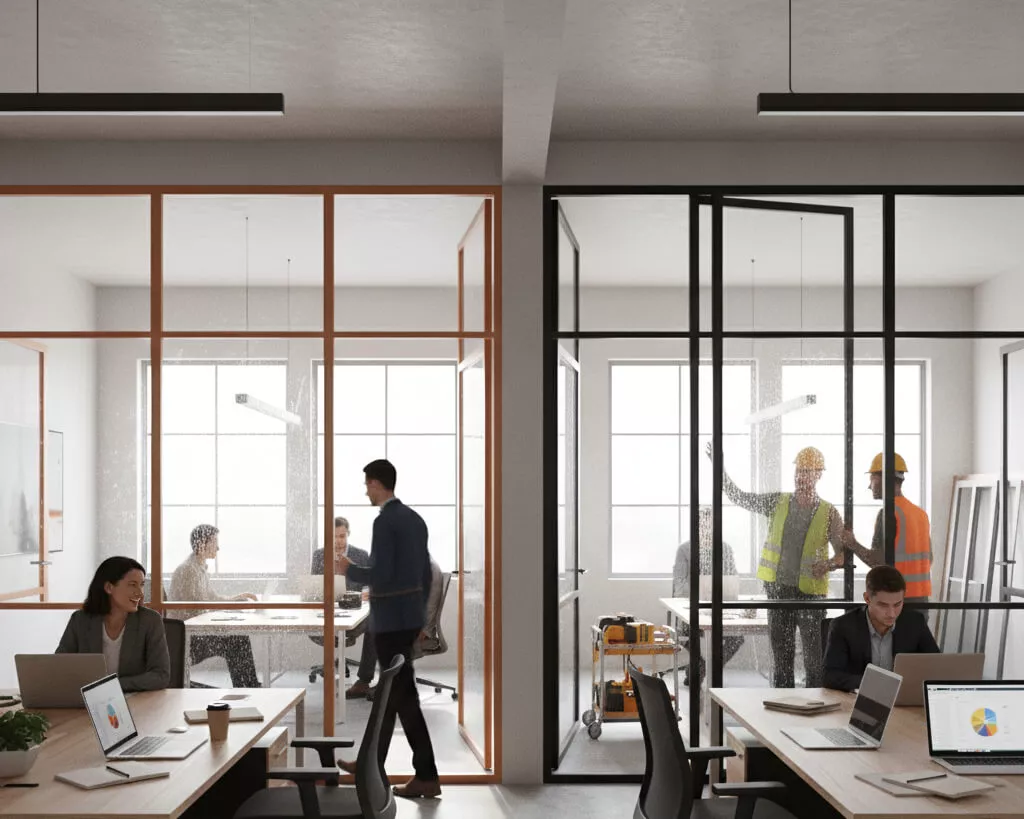
This is perhaps the single most important distinction for a commercial client’s financial and long-term planning.
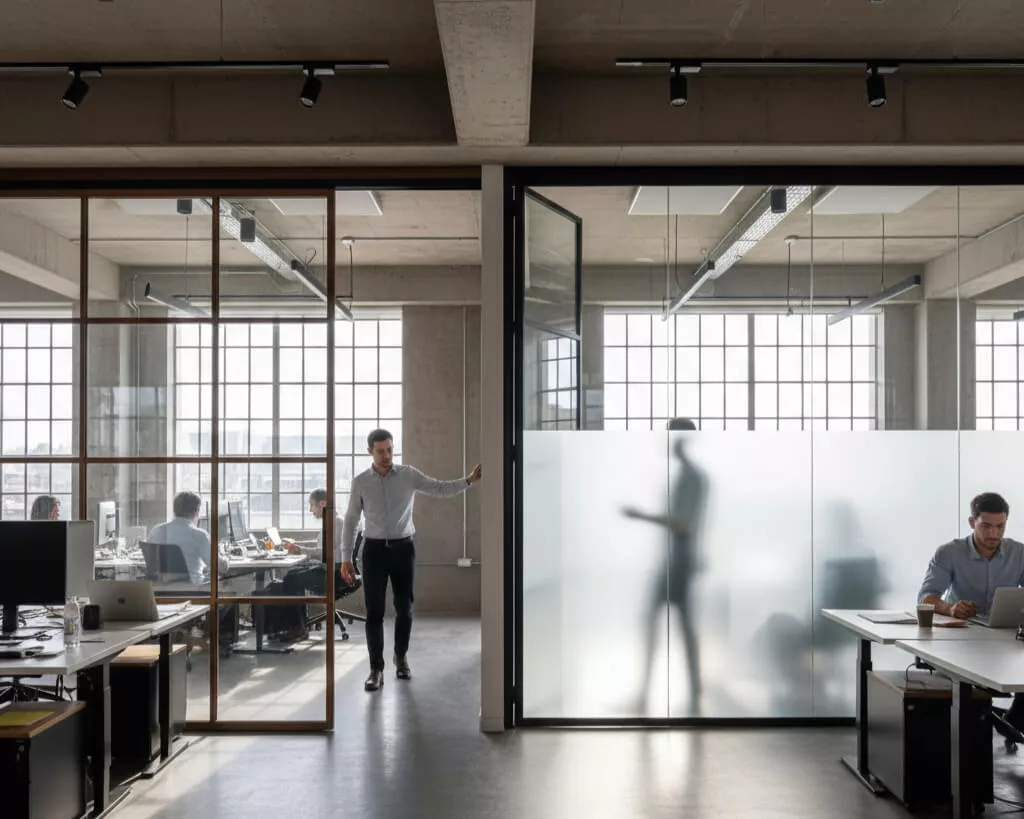
Modern workplaces demand dynamic adaptability. Sliding and folding glass partitions for office environments allow large spaces to be sectioned off instantly for privacy or opened up completely for large gatherings or town halls.
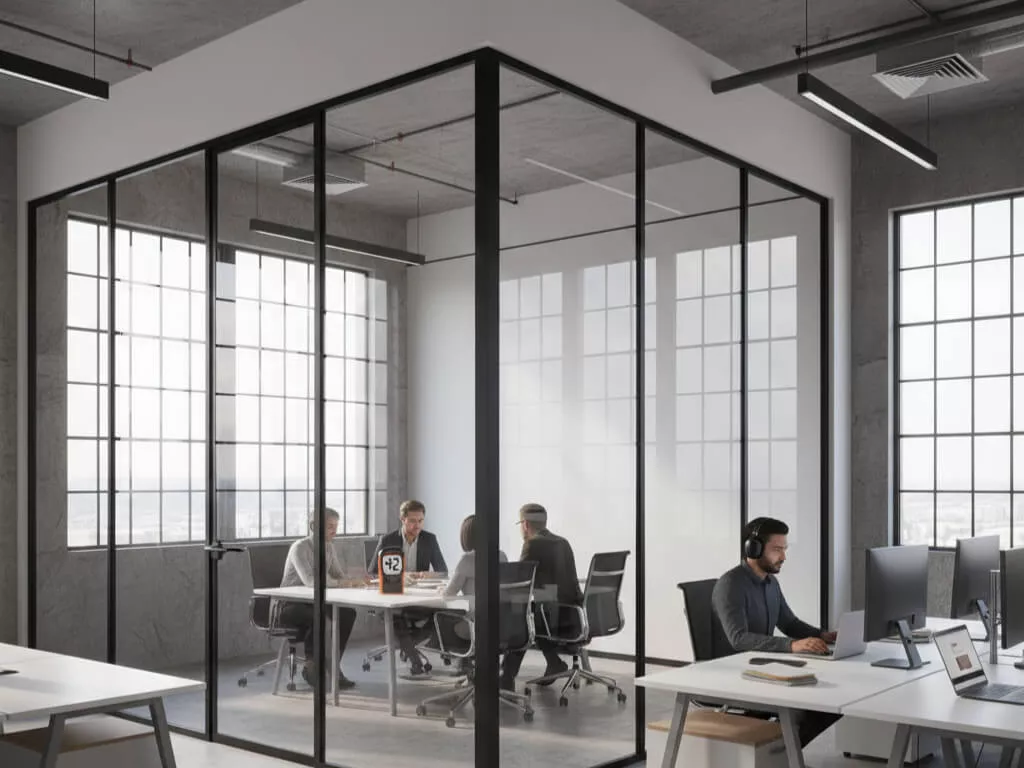
A successful specification requires a deep understanding of the technical properties of the materials. Office partition glass is a high-performance material, and its attributes must be measured against code requirements and client expectations.
Noise pollution is the single largest complaint in open-plan offices. The performance of glass partition walls for offices is measured by the Sound Transmission Class (STC) rating. The STC value represents the wall’s ability to reduce airborne sound.
| Target Space/Application | Recommended STC Range | System Requirement |
| Basic Enclosure (Visual Separation Only) | STC 25-30 | Single Glazing (Minimum Thickness) |
| Standard Meeting Room (Private Conversations) | STC 35-40 | Single Glazing (Gasketed/Seals), or basic double-glazing |
| Confidential/Executive (Sensitive Discussions) | STC 45-50 | Double-glazing with an air gap, often combined with laminated glass or varying glass thicknesses. |
| Recording/Quiet Rooms (Maximum attenuation) | STC 50+ | Specialized thick-gap double-glazing, fully sealed and structurally decoupled. |
Designers must ensure the entire system, including frames, seals, door types, and door closers, is rated for the target STC. A high-STC office glass partition is useless if sound is easily transmitted through an unsealed doorframe. Laminated glass is often superior to single-pane tempered glass for acoustic applications because the interlayer dampens vibrational sound waves more effectively.
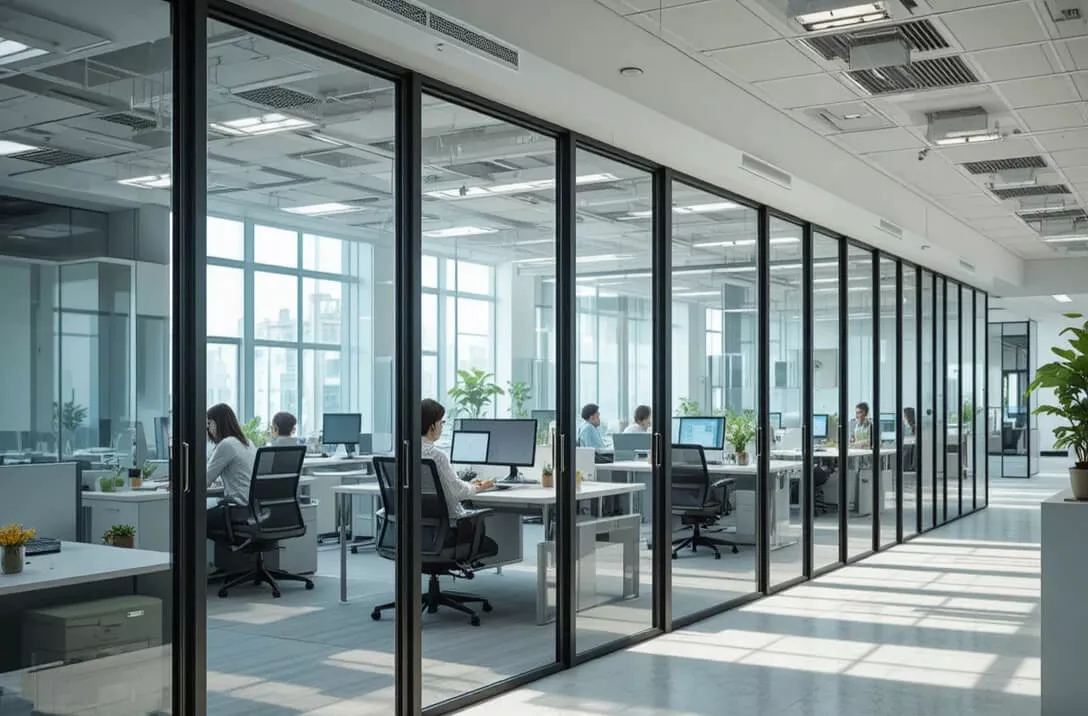
Safety glazing is a non-negotiable requirement under US building codes (e.g., CPSC 16 CFR 1201). Designers must choose between the three primary glass types based on safety, acoustics, and thermal needs.
Created by controlled thermal processing, it is four to five times stronger than standard glass. If it breaks, it shatters into small, relatively harmless fragments. It is the most common choice for single-glazed glass partition walls for offices.
Consists of two or more panes of glass bonded together by a clear plastic interlayer (PVB or SentryGlas). If broken, the fragments adhere to the interlayer, remaining in the frame. This makes it superior for security, safety, and, as noted above, acoustic performance. It is commonly specified for double-glazed systems or high-security areas.
Used primarily in exterior applications, an insulated glass consists of two or more panes separated by a hermetically sealed space filled with air or an inert gas. While rare for internal glass partition office systems, it is essential for partitions separating conditioned from unconditioned space (e.g., an indoor atrium wall).
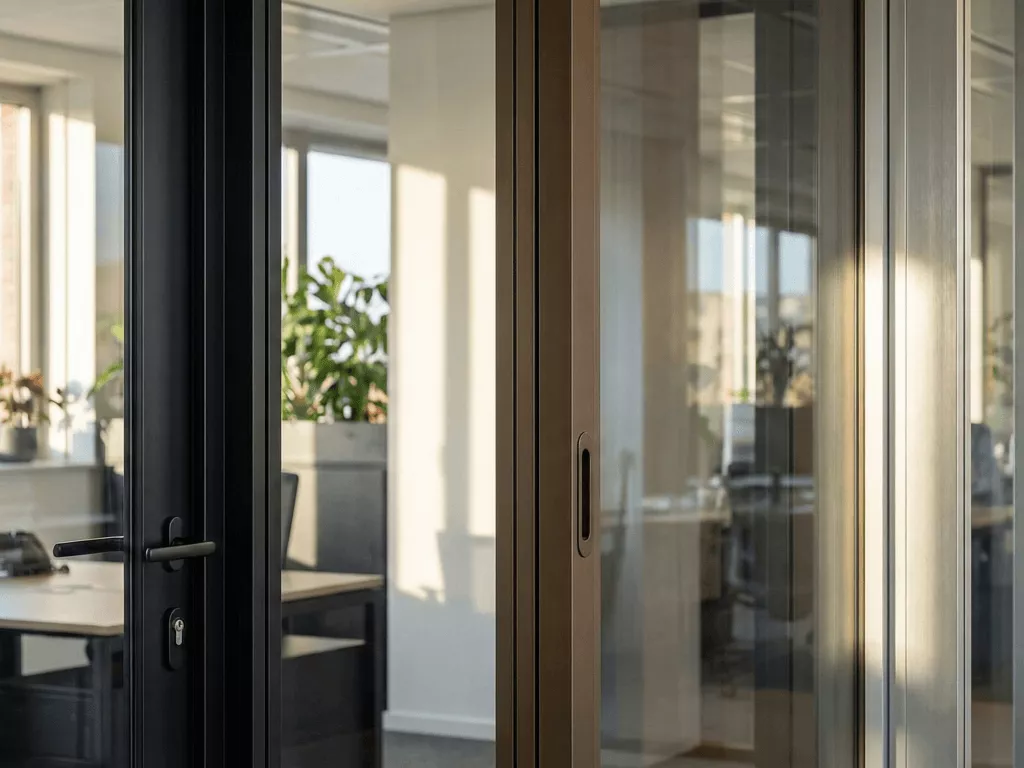
The aluminum or steel profiles holding the glass partition wall for office systems are the main aesthetic differentiators.
The design freedom afforded by glass partition walls for office spaces is immense. Designers can use various treatments to manage privacy, enhance branding, and create truly unique environments.
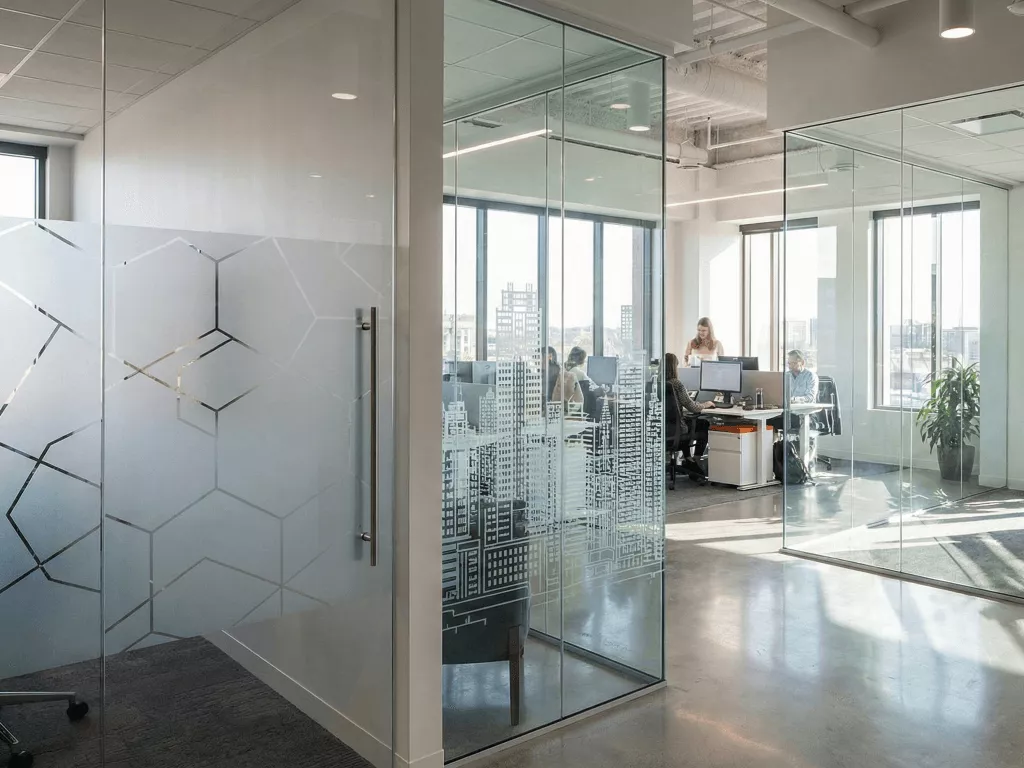
While transparency is a benefit, strategic privacy is essential.
Cost-effective and versatile. Films can mimic acid-etched or frosted glass, introduce geometric patterns, or display custom company logos and wayfinding graphics. A common application involves a “privacy band” at eye-level to screen sight lines.
Ceramic frit (a baked-on pattern) or actual glass etching provides a permanent, high-end, maintenance-free patterned treatment. This is preferred for its sophisticated, architectural feel over film.
Also known as crystal clear glass, this formulation removes the greenish tint inherent in standard glass (caused by iron content). Specifying low-iron glass for frameless glass office partitions is essential when true color clarity and maximum light transmission are desired.
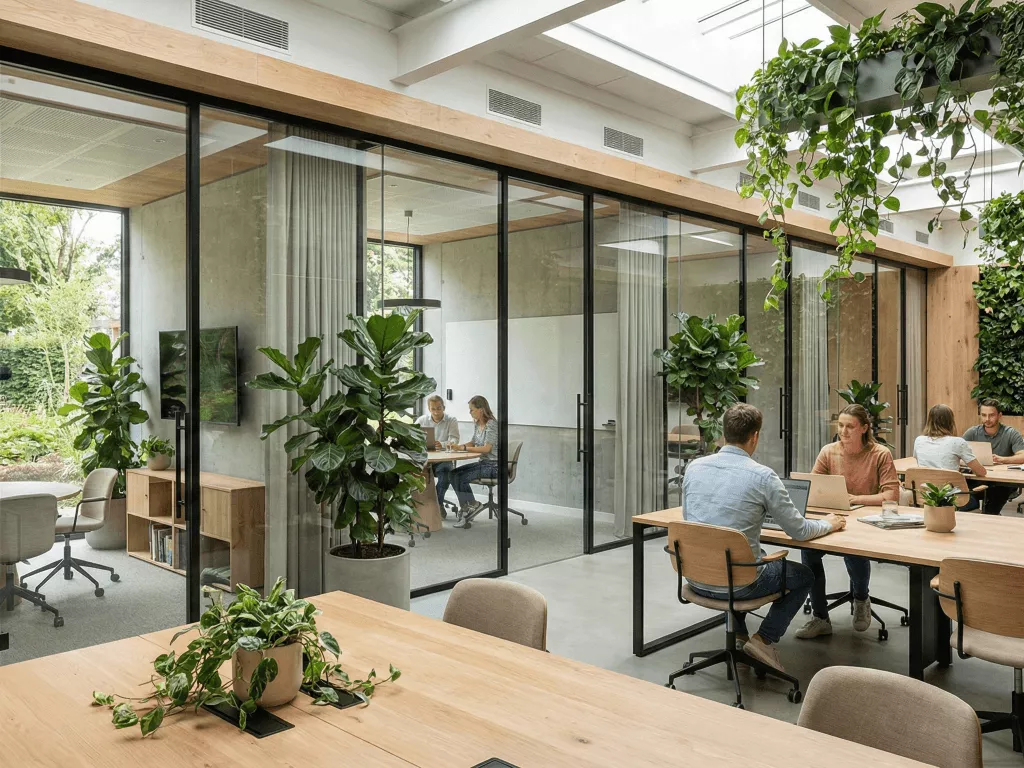
Biophilic design, which seeks to connect occupants with nature, is a dominant trend in US commercial interiors. Office glass partition walls are fundamental to this approach. By using clear office partitions with glass at the building core, natural light can penetrate deep into the floor plate, reducing the need for artificial lighting and fostering occupant well-being—a key component of the WELL Building Standard. The visual connection to outdoor elements (even if through another room) significantly boosts employee satisfaction.
Specifying glass partitions for office systems requires meticulous coordination with contractors, engineers, and suppliers. The following checklist ensures a smooth procurement and installation process in the US market.
Budgets are often provided on a CPLF basis. Designers must recognize that the cost variation between systems is vast: a basic single-glazed glass partition wall for office may cost half as much as a high-performance, double-glazed, STC 45 glass office partitioning system.
If budget cuts are necessary, prioritize STC performance in sensitive areas (meeting rooms) and consider downgrading aesthetic finishes (e.g., switching from etched glass to film) in less critical zones.
A critical failure point in installations is poor trade coordination.
Glass partition walls for home office use and large commercial applications are no longer a niche luxury; they are a professional necessity for designing spaces that promote light, flexibility, and high performance.
For the interior designer, mastering the specification of glass office partition walls, understanding the difference between tempered glass and laminated glass, confidently calling for specific STC ratings, and leveraging demountable systems for financial benefit, elevates their value to the client.
By utilizing the highest quality office glass partition walls, designers can deliver commercial interiors that are not just aesthetically impressive, but are also future-proof, adaptable, and conducive to a productive, modern workforce.
You should specify a minimum STC 40 rating for a private meeting room using glass office partitions to ensure acoustic privacy (speech is heard, but unintelligible).
Laminated glass offers superior acoustic performance (sound dampening) and enhanced safety (it holds together when broken) compared to standard single-pane tempered glass.
They often qualify for accelerated depreciation schedules (e.g., 7 years) as furniture, offering a significant tax advantage over conventional construction (39 years).
Low-iron glass eliminates the greenish tint visible in standard glass, ensuring maximum clarity and true color rendition for a visually seamless appearance.
All glazing in hazard locations must meet the CPSC 16 CFR 1201 standard for impact resistance, requiring the use of tempered glass or laminated glass.
Yes. Reputable manufacturers design frames and hardware to seamlessly accommodate electronic locks, key card readers, and other access control technology.
Double-glazed glass office partition walls use two panes of glass separated by an air gap, providing significantly higher STC ratings (superior noise reduction) than single-glazed systems.
For highly customized systems (e.g., specific powder coats or curved panels), anticipate a lead time of 10 to 16 weeks from shop drawing approval to site delivery.
They are anchored to the structure using dedicated structural channels at the head (ceiling), base (floor), and adjacent fixed walls.
It provides instant, on-demand privacy control and eliminates the long-term maintenance and hardware costs associated with traditional blinds or window treatments.
Explore all things glass—from stylish table tops and insulated options to tinted and frosted designs. Discover guides on glass railings, custom cut glass, shelves, and stunning backsplash ideas for a modern home or office upgrade.