
My Cart
You have no items in your shopping cart.

Glass stair railings have surged in popularity, blending modern aesthetics with functionality. Before investing in these elegant features, understanding the associated costs is crucial. This guide will walk you through the various aspects affecting glass stair railing costs and provide insights to help you make an informed decision. But before that a short introductory para is mandatory.
Glass railings are an excellent addition to any residential or commercial setting. They look great and also protect your property in multiple ways. These days, glass railings are a lot more than just staircase railings. There are various design options available for glass stair railings. Moreover, you can fully customize them.
Now, let’s get to the business!
Table of Contents

Glass stair railings are protective barriers made of glass, typically used in both residential and commercial spaces to enhance aesthetic appeal and ensure safety. They are often chosen for their sleek, modern look and the unobstructed view they provide.

There exist several glass types for railings but a few stand tall when it comes to quality and durability. Here are the glass types that you should consider when choosing for a railing project.
Tempered Glass: Known for its strength and safety, tempered glass staircase is the top choice for residential and commercial buildings. It is treated with heat to increase its durability. It’s a common choice for stair railings because it shatters into small, less dangerous pieces if broken.
Plexiglass: A lightweight and shatter-resistant alternative to traditional glass, plexiglass is also used in stair railings. However, it may scratch more easily than tempered glass.
Laminated Glass: Comprising two layers of glass with a plastic layer in between, laminated glass offers extra safety as it holds together even when shattered.
Frosted Glass: Frosted glass can be referred to as privacy glass. That’s because frosted glass panels have an opaque surface. This glass type doesn’t let anyone see through it. However, light can pass through it.
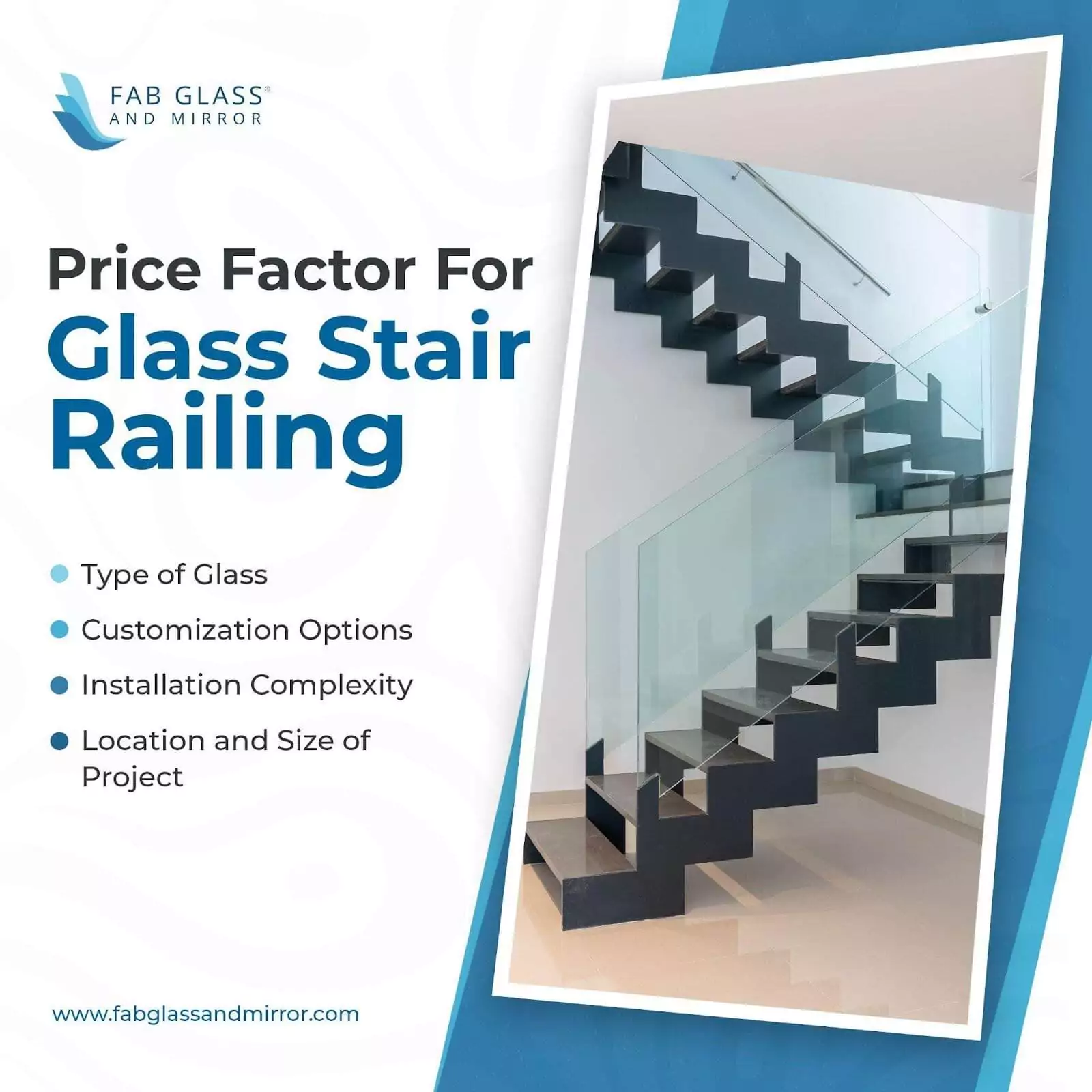
Type of Glass
Different types of glass come with varying price tags. Tempered glass, being more durable, is generally more expensive than plexiglass or standard glass. Choose a glass type carefully by keeping your requirements in mind.
Customization Options
Customized designs, such as etched patterns or tinted glass, can significantly increase costs. Custom railings tailored to specific architectural requirements also add to the expense.
Installation Complexity
The complexity of the installation process affects labor costs. Projects involving intricate designs or difficult-to-reach areas typically require more time and expertise, thus increasing the overall cost.
Location and Size of the Project
The geographical location of your project can influence labor rates and material availability, affecting costs. Additionally, larger projects naturally incur higher costs due to more extensive material and labor requirements.

Cost per foot
Glass stair railings are typically priced per linear foot. On average, the cost can range from $150 to $600 per linear foot, depending on the type of glass and the complexity of the design.
Total cost for a typical project
A standard glass stair railing project for a medium-sized staircase can range from $5,000 to $15,000, factoring in both materials and labor.
Comparison with other railing materials
Glass railings are generally more expensive than traditional materials like wood or metal. However, they offer a modern aesthetic and clear view that other materials cannot match, potentially adding more value to your property.
Here is the cost comparison of different types of glass used in railings.
Frameless vs. Framed Glass Railings

Frameless Glass Railings: These provide a sleek, uninterrupted view and a minimalist design but are more expensive due to the precision required for installation.
Framed Glass Railings: While offering a similar aesthetic, framed railings are typically less expensive and involve less complex installation.
Tempered vs. Laminated Glass
DIY vs. Professional Installation

Opting for DIY installation for glass railings offers several perks, including labor cost savings, and gives the inner satisfaction that comes after completing the project yourself. However, you must be skilled enough to complete the project, as even small errors can compromise the safety and aesthetics of the railings.
Moreover, there exist safety hazards in handling and installing glass, which if improperly handled can lead to accidents and injuries. Therefore, you must be careful with all such scenarios and pay attention to the details’ complexity.
When to Hire a Professional
Hiring a professional is recommended for complex installations or when using high-end materials. Professionals ensure the railing is secure, safe, and aesthetically pleasing.
While DIY installations can save on labor costs, mistakes can lead to higher expenses down the line for repairs or re-installation. Professional installation, though more expensive upfront, often provides better long-term value and peace of mind.

Opt for materials that balance cost and durability. For instance, clear tempered glass can be a cost-effective alternative to frosted or etched glass.
Research and compare quotes from multiple installers. Look for professionals with good reviews and proven experience in glass railing installations.
Regular cleaning with appropriate glass cleaners, avoiding harsh chemicals, and promptly addressing any damage can extend the life of your glass railings and prevent costly repairs.
Modern glass stair railings often include safety features such as rounded edges, anti-slip coatings, and robust fittings to ensure user safety.
Glass railings enhance the visual appeal of any space, offering a contemporary look and allowing for unobstructed views, which can make spaces feel larger and more open.
Choosing sustainably sourced materials and ensuring proper disposal or recycling of old materials can minimize the environmental impact of installing glass railings.
Glass stair railings are a stylish and contemporary choice for any home or commercial space. While they come with higher upfront costs compared to traditional materials, the aesthetic and functional benefits often outweigh these expenses. By understanding the various factors influencing costs and taking steps to mitigate them, you can enjoy the elegance and safety of glass stair railings without breaking the bank.
Yes, glass stair railings are generally more expensive than traditional materials like wood or metal due to the cost of materials and the precision required for installation.
The cost of a glass staircase can vary significantly based on the design and materials used. On average, you can expect to pay between $5,000 and $15,000 for a standard installation.
A glass stair, part of a larger staircase system, typically costs between $150 to $600 per linear foot.
Metal railings are generally cheaper than glass railings. However, glass railings offer unique aesthetic and functional benefits that may justify the higher cost.
Potential disadvantages include higher costs, susceptibility to scratches and fingerprints, and the need for regular cleaning and maintenance to keep them looking their best.
Yes, a well-installed glass staircase can add significant value to a property by enhancing its aesthetic appeal and creating a modern, upscale look.
Explore all things glass—from stylish table tops and insulated options to tinted and frosted designs. Discover guides on glass railings, custom cut glass, shelves, and stunning backsplash ideas for a modern home or office upgrade.