
My Cart
You have no items in your shopping cart.

Restaurant owners, café operators, and hospitality designers all face the same challenge: how to create a functional, stylish, easy-to-maintain dining environment that withstands constant use. Traditional wood surfaces scratch. Marble stains. Laminates peel. And when seating turnover is high, every material flaw becomes a brand liability.
This is exactly why the round glass table top has become one of the most in-demand options across the U.S. hospitality sector. Whether you are outfitting a high-traffic café, redesigning a boutique restaurant, or adding tables to a hotel lounge, glass tops for tables solve critical operational and aesthetic pain points.
This article breaks down everything a commercial buyer needs to know, from sizing, thickness, durability, compliance standards, and cost, to help you make the smartest long-term investment for your dining space.
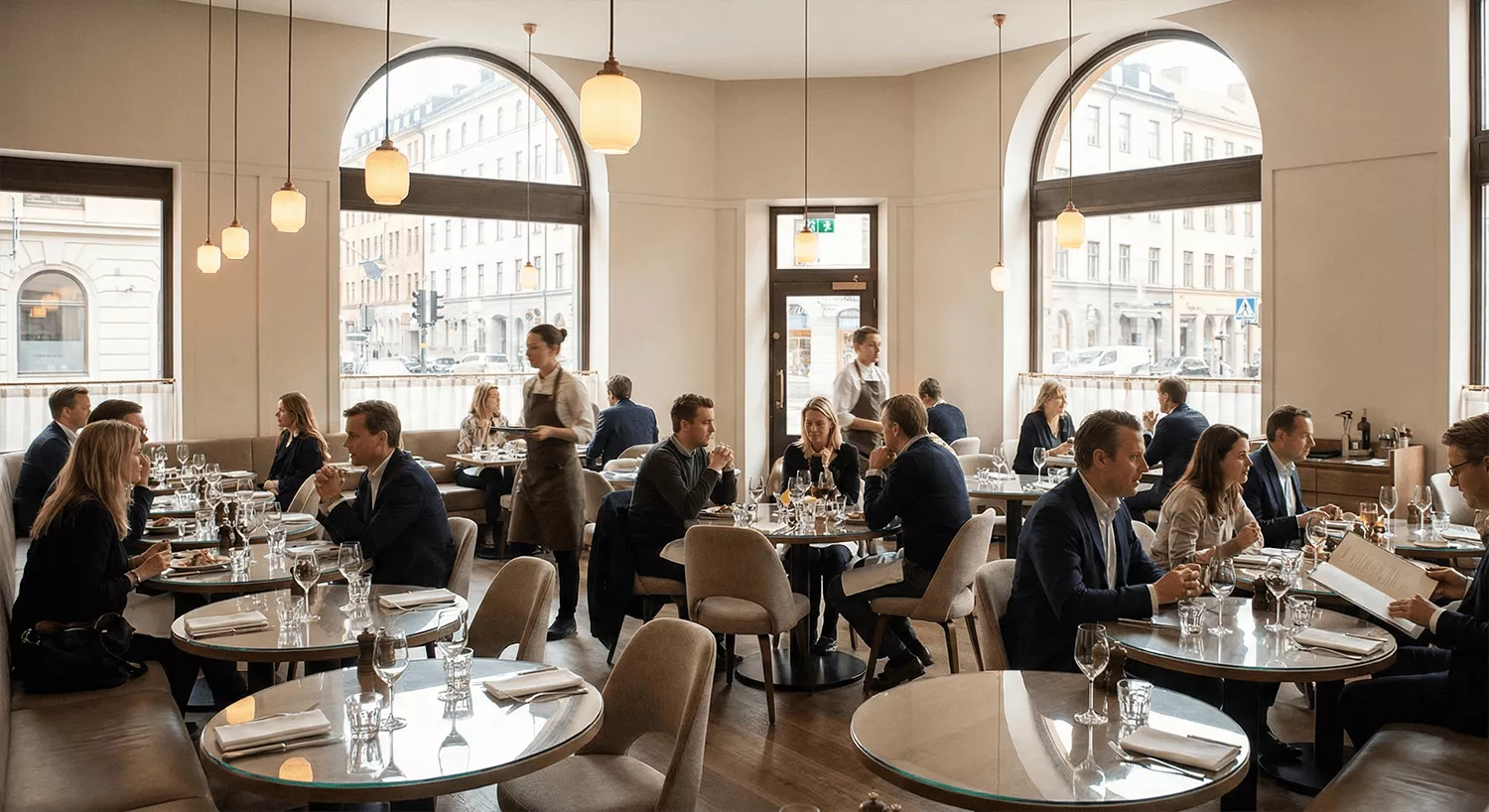
Table of Contents
Hospitality spaces make decisions differently from homeowners. Your tables aren’t decorative; they are tools. They influence customer flow, brand perception, sanitation speed, staffing efficiency, and even revenue per square foot.
Here is why the round glass top dining table is now outperforming wood, laminate, and marble in commercial environments:
Round shapes eliminate sharp corners, making it easier for staff and guests to move around a crowded dining room. Servers carrying trays avoid “collision points,” improving safety and workflow.
Round glass topped tables seat more people without requiring additional square footage. A single 36-inch round glass table top comfortably seats 2–3 people, while a 48-inch round glass table top seats 4–6 without cramping.
Modern diners expect immaculate surfaces. Glass cleans in seconds, doesn’t absorb odors, never stains, and resists moisture. During peak hours, this means:
For cafés with constant spill risks, a round glass top coffee table maintains a fresh look from morning latte rush to late-night service.
Commercial-grade tempered glass is 4–5x stronger than regular glass and engineered specifically for safety. That means:
A tempered round glass table top often lasts longer than wood in commercial settings.
Choosing the right table top isn’t about style, it is about ROI. Here is how the top materials compare:
| Feature | Round Glass Table Top | Wood | Marble |
| Durability | High (tempered) | Medium | High |
| Maintenance | Very Low | Medium to High | High |
| Aesthetic Longevity | High | Low–Medium | High |
| Cost | Moderate | Low–Moderate | High |
| Sanitation | Excellent | Variable | Poor |
| Water Resistance | Perfect | Poor | Moderate |
| Scratch Resistance | Good | Low | Medium |
Glass wins not because it’s pretty, but because it removes long-term maintenance headaches. In a commercial setting where thousands of hands touch each table each month, the material must survive abuse, spills, staff cleaning cycles, and regular repositioning. Wood eventually chips. Marble stains. Glass endures.

Choosing the wrong size or thickness is where restaurants most often waste money. Hospitality spaces must balance aesthetics, stability, and safety.
These sizes dominate the U.S. hospitality sector:
Never go below 3/8 inch for public spaces.
Thicker glass offers:
For specialty tables like a round cocktail table glass top, many hospitality designers prefer 1/2″ for a more solid, high-end feel.
Choosing the correct glass type ensures safety, longevity, and the right aesthetic fit for your brand.
This is non-negotiable for public spaces.
Benefits:
Any round glass top table used in a commercial space must be tempered to meet U.S. safety codes.
Ideal for hotel lobbies, lounges, and high-traffic public spaces.
Perfect for upscale restaurants or boutique cafés. Reduces green tint, enhances color accuracy for wood bases or branding.
Creates ambiance and soft lighting.
Perfect for:
Stylish, modern, and scratch-concealing.
Often used for:
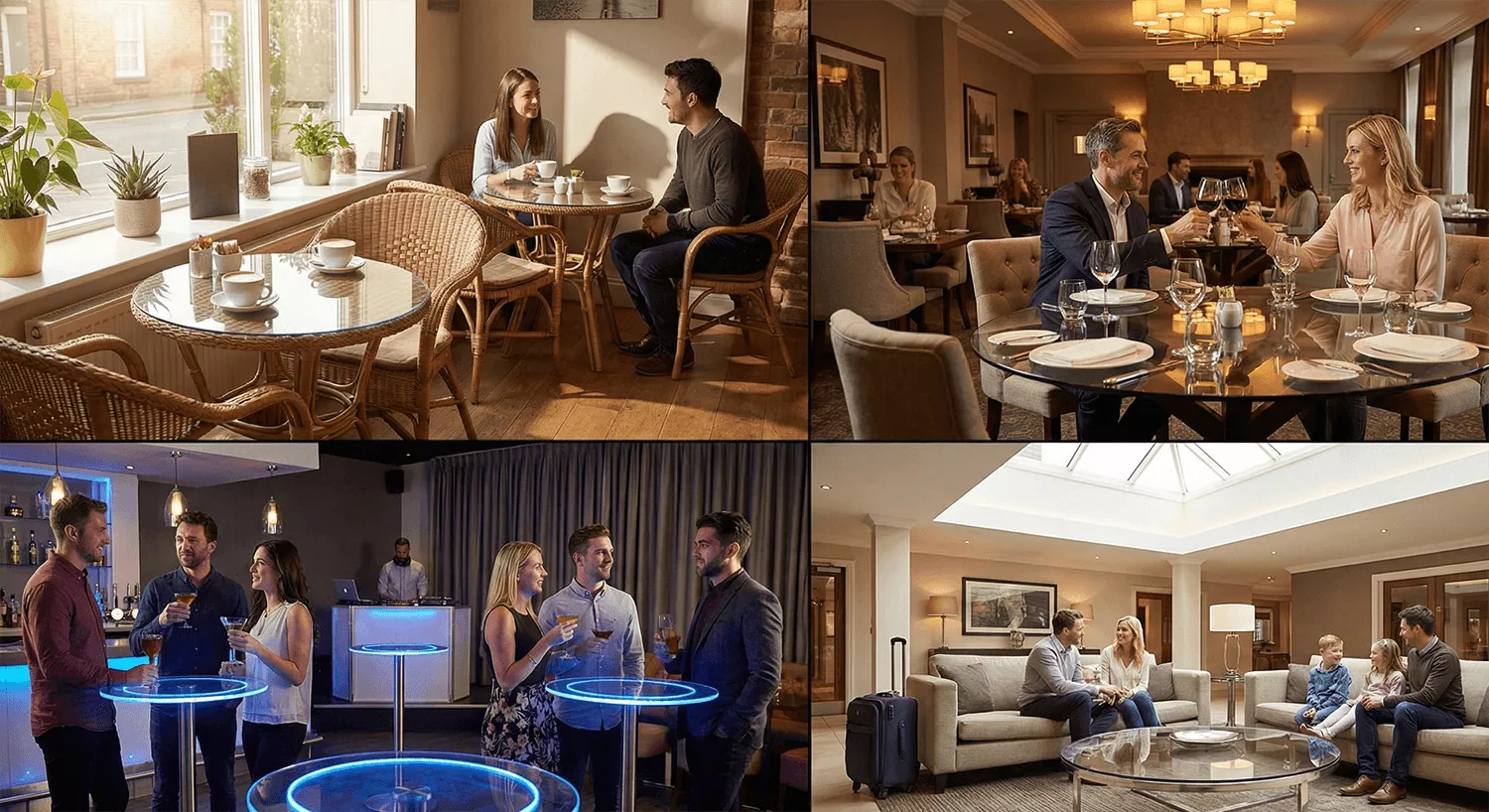
Every category of dining environment benefits differently. Here’s how.
Cafés need fast turnover and effortless aesthetics.
Glass tops offer:
A round glass top kitchen table style works perfectly for casual dining in compact spaces.
Restaurants rely on ambiance.
Glass allows:
Even a simple round glass top dining room table setup elevates the space immediately.
For lounges, durability meets ambiance. A round cocktail table glass top pairs beautifully with metal bases, LED lighting, and dark interiors. Glass enhances mood lighting and maintains clarity even under constant beverage use.
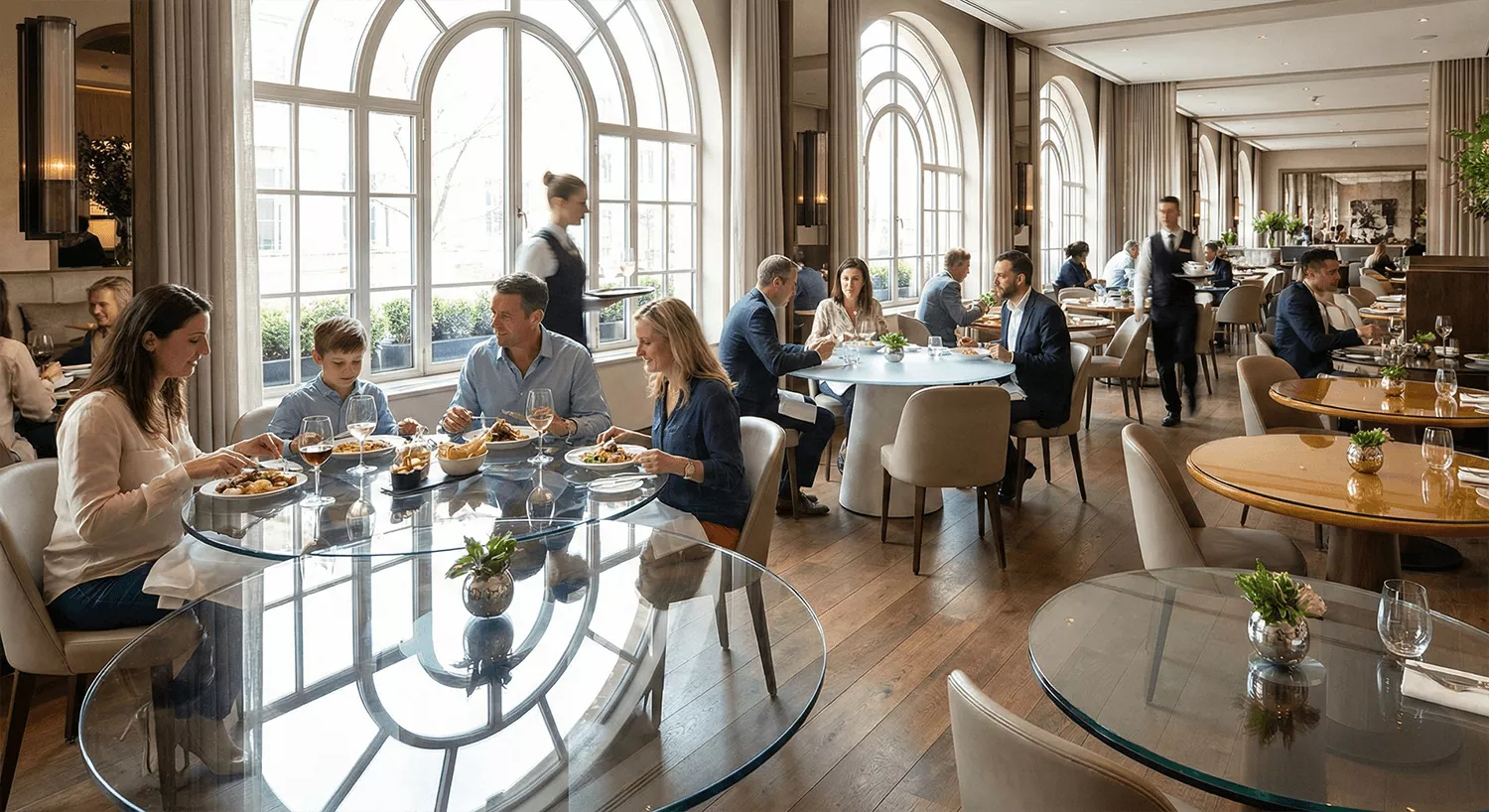
Hotels use glass tops everywhere:
Their versatility and durability make round glass topped tables the go-to solution for large-scale hospitality design.
To legally use glass in public commercial spaces, the surface must meet specific safety codes.
Why it matters:
Any company providing round glass table top replacement for commercial environments should certify compliance, or they risk putting you in violation. Fab Glass and Mirror products meet all U.S. commercial safety requirements.
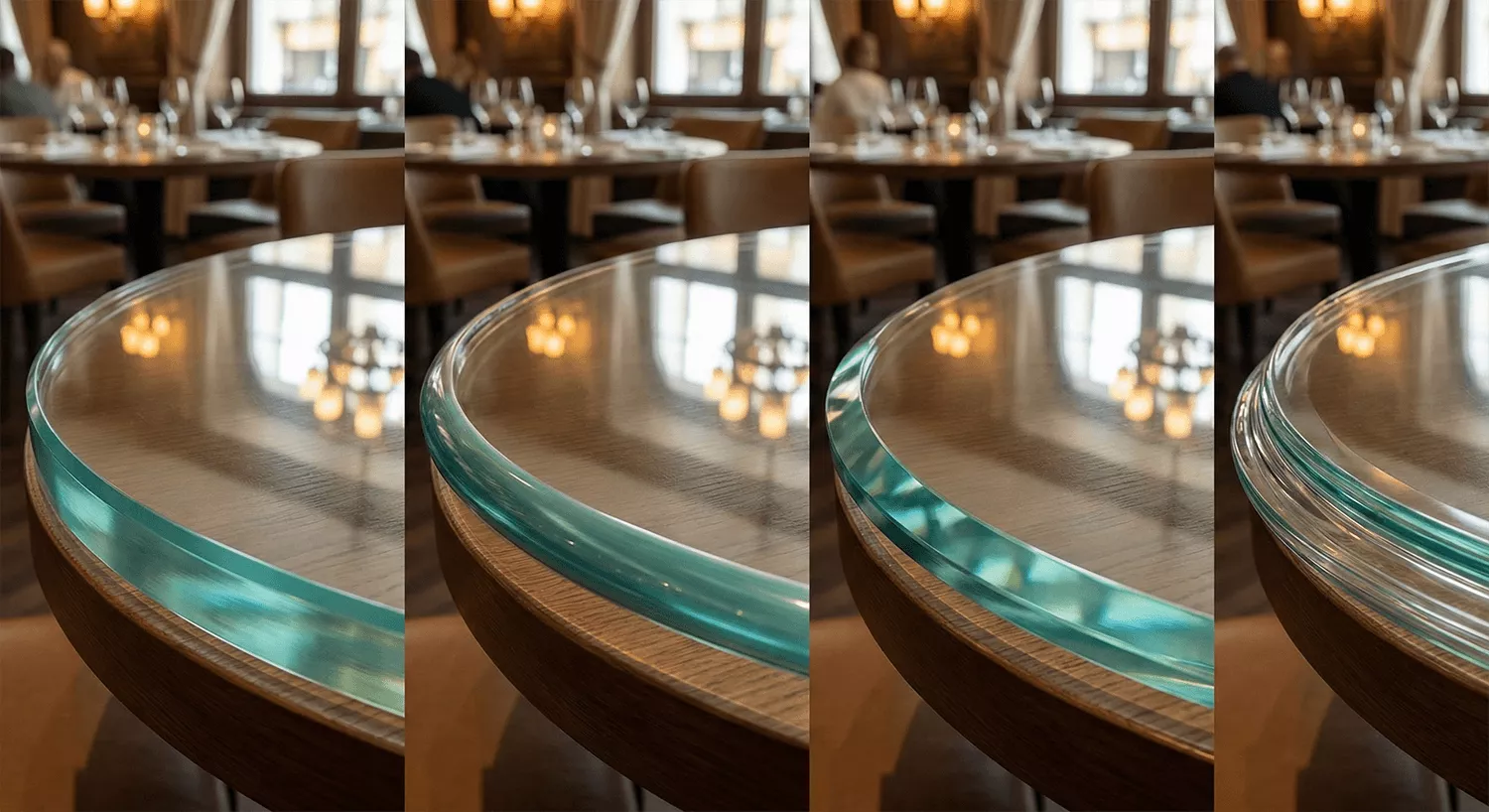
Edge profiles affect safety, aesthetic style, and cost.
Modern, clean, and most commonly used in restaurants.
Smooth, rounded, and safer for environments with constant movement.
Premium look, typically found in fine-dining establishments or boutique cafés.
Used for luxury hotel settings or specialty dining rooms. For most commercial installations, flat polish or pencil polish is ideal.
Both have merit — it depends on your operational priorities.
Best for:
Great when ordering multiples like 24–36-inch café tables.
Best for:
Custom is also ideal for round glass table top replacement in unique furniture environments.
Maintaining glass is simple, but doing it correctly ensures flawless longevity.
Compared to wood, marble, or laminate, glass requires almost zero long-term upkeep.
Cost varies based on size, thickness, glass type, tint, and edge finish. Below is a standard overview;
Typical Pricing Ranges:
| Size | Approx. Cost (Tempered, 3/8″) |
| 24″ Round | $55–$85 |
| 30″ Round | $80–$120 |
| 36″ Round | $110–$160 |
| 42″ Round | $140–$220 |
| 48″ Round | $180–$280 |
Add-ons that may impact price:
For large orders, commercial buyers typically receive bulk pricing discounts, especially when ordering 20+ pieces of round glass top dining tables or round glass topped tables.
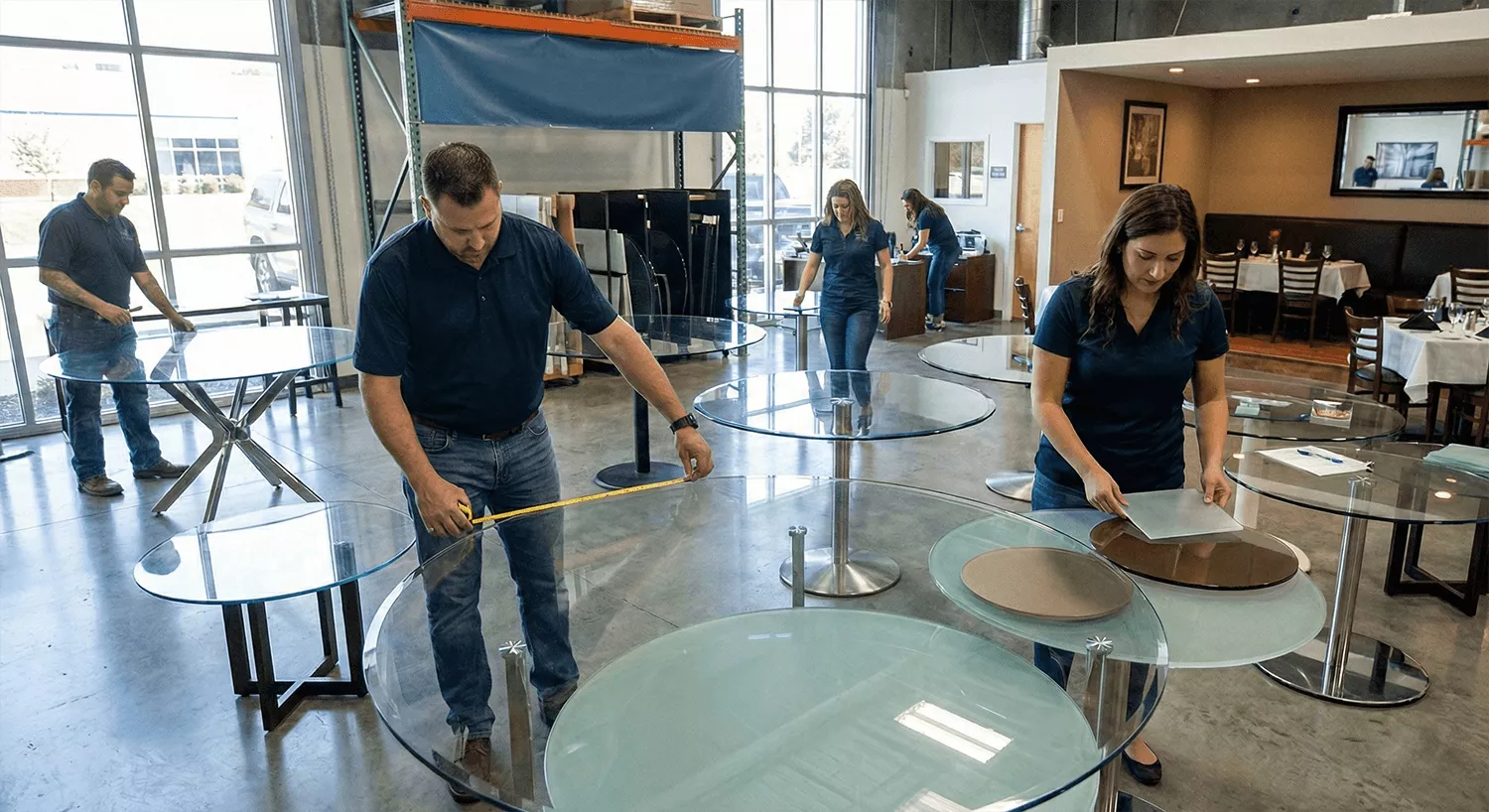
Hospitality buyers choose suppliers based on reliability, safety, customization ability, and shipping speed. Here is why Fab Glass and Mirror dominates the U.S. commercial market:
All products meet ANSI and CPSC safety standards and are manufactured with precision CNC cutting technology.
Choose:
We understand restaurant expansion, remodel cycles, and new construction demands. Our pricing reflects that.
Efficient lead times and secure packaging guarantee your order arrives intact and on schedule.
Whether you need a single round glass top end table replacement or 50 new café tabletops, we handle the process seamlessly.
Ready to upgrade your dining space with durable, stylish, and commercial-grade round glass table tops? Submit your measurements, glass type, and edge profile — and receive an instant quote tailored to your hospitality project. Your furniture sets the tone. Choose a surface that elevates your brand and lasts for years.
Yes. They’re durable, easy to clean, visually modern, and help maximize seating efficiency in tight dining spaces.
The most common sizes are 36-inch for two to three guests and 48-inch for four to six guests.
Use 3/8″ or 1/2″ tempered glass. Anything thinner is not suitable for hospitality environments.
Yes. U.S. safety standards (ANSI Z97.1 and CPSC 16 CFR 1201) require tempered or laminated glass for public use.
Tempered glass is highly scratch-resistant, especially compared to wood or marble, and ideal for high-traffic dining.
Use a microfiber cloth and a streak-free glass cleaner. Avoid abrasive pads and ammonia-based products.
Absolutely. Custom diameters, thicknesses, tints, edges, and logo-etching are available for restaurant and hotel use.
Yes. Tempered glass is 4–5x stronger than regular glass and breaks into small, dull pieces if damaged.
With proper care, a high-quality tempered glass table top can last many years, often far longer than wood or laminate.
Prices typically range from $55 to $280, depending on size, thickness, and customization.
Explore all things glass—from stylish table tops and insulated options to tinted and frosted designs. Discover guides on glass railings, custom cut glass, shelves, and stunning backsplash ideas for a modern home or office upgrade.