
My Cart
You have no items in your shopping cart.


On average, the cost ranges from $150 to $600 per mirror for DIY installations and $500 to $1,500+ when hiring professionals, depending on mirror type, size, installation complexity, and location. Choosing between DIY and professional installation involves more than just numbers; it includes safety, aesthetics, and long-term durability. In this article, we will walk you through every cost factor, option, and best practice to help you make an informed decision, whether you are buying from a trusted Glass and Mirror Shop for your home gym wall or setting up a full-length solution for a commercial space.
Table of Contents
Before breaking down the costs, it’s important to understand why gym mirrors are a staple in both home and commercial workout spaces. From enhancing form to boosting motivation, mirrors play a key role in creating an effective and inspiring gym environment.
Gym mirrors are more than decorative additions—they’re functional tools for:
Whether you’re setting up a garage gym, a mirror for a gym room, or a mirror for a dance studio, the right mirror setup elevates the space.
Here’s a breakdown of common mirror types and what you can expect to pay.
| Type | Average Price (per sq. ft.) | Best For |
| Standard Glass Mirrors | $5 – $10 | Basic home setups |
| Tempered Glass Mirrors | $10 – $20 | Commercial gym mirrors, safety |
| Shatterproof Acrylic Mirrors | $15 – $25 | Garage gym mirrors, kids’ areas |
| Custom-Cut Frameless Mirrors | $25 – $50+ | High-end studios |
Prices vary by supplier, glass type, thickness, and location, so treat these as reliable starting ranges rather than firm quotes.
| Mirror Size (inches) | Typical Use Case | Approximate Price Per Panel |
| 24 × 48 | Narrow wall columns, small garage corner | $150 – $300 |
| 36 × 60 | Personal trainer room, apartment gym | $300 – $500 |
| 48 × 72 | Full-body view for most home gyms and studios | $450 – $700 |
| 48 × 84+ | Dance studios, full gym walls, rack rows | $700 – $1,000+ |
| Custom cuts | Odd walls, angled ceilings, seamless installs | $600 – $1,200+ |
For most home gym builders, a pair of 48 × 72-inch panels side by side delivers eight feet of continuous coverage, often for less than the cost of a single oversized slab. See our dedicated guide on ideal gym mirror sizes for small, medium, and large home gyms for a room-by-room breakdown.
Several variables determine the final price. Some are obvious; others hide in the fine print. Understanding these cost drivers helps you prioritize and avoid spending money where it does not matter.
This is the single biggest driver. Larger panels use more material, require additional handling during cutting, and are heavier to ship. For full-body feedback on squats, deadlifts, or overhead movements, most facilities land on 48 × 72 inches. In tight rooms, a 36 × 60-inch mirror positioned at the correct height delivers similar value at a lower price point.
According to Architectural Digest, mirrors are one of the most effective interior design tools for making a space feel larger, an especially useful property in compact home gyms. A simple painter’s tape test on the wall before ordering helps you visualize coverage and decide whether one large panel or two smaller ones makes more sense for your space.
Standard clear glass is the most common and affordable option. It carries a faint green tint from iron content in the glass composition, which is barely noticeable in most gym settings.
Low-Iron Glass: Removes that tint entirely, producing a truer, more neutral reflection. This matters most when you film training content or run a boutique studio where aesthetics is part of the brand. Expect a modest price premium of 15–25% over standard glass.
Tempered Glass: These are heat-treated to be significantly stronger than annealed glass and, if it does break, shatters into small blunt pieces rather than sharp shards. As noted by ScienceDirect’s coverage of safety glazing, laminated and tempered glass are the standard choice in commercial applications where public safety is a priority.
Glassless Mirrors: use a reflective film over a rigid polymer core. They are lighter, shatter-resistant, and easier to hang solo, but they produce slightly less optical clarity than glass and are more susceptible to surface scratching over time. A quality 4 × 6-foot acrylic panel typically runs $250–$350.
Not sure which type suits your space? Our comparison of gym mirrors vs regular mirrors covers the full tradeoff in detail.
Most gym-grade mirrors come in 5mm or 6mm thickness. Thicker glass resists flex and warping better, which matters when the mirror is adhesive-mounted over an imperfect wall surface. The difference in price between 5mm and 6mm is usually modest, often under $30 per panel, and the added rigidity is worth it for permanent installations.
Safety backing is a clear polyester film bonded to the rear of the mirror. If a panel cracks, the backing holds the fragments together rather than letting them fall. The International Building Code (IBC), maintained by the International Code Council, requires safety glazing in specific locations in commercial facilities. Even in a private home gym, safety backing is a low-cost upgrade (usually $20–$40 per panel) that carries disproportionate value in protecting people and floors.
Polished edges are beveled smooth, reducing chip risk during installation and handling. They are the standard finish for frameless gym mirrors and are worth the nominal added cost on any permanent installation.
Frameless panels are the preferred aesthetic in gyms and studios. They mount flush and create a minimal joint line when panels are placed side by side. A framed mirror adds visible structure, sometimes useful for a home gym with a defined look, but typically avoided in commercial settings.
Ordering three or more panels at once almost always reduces the per-panel price. Many suppliers structure tiered pricing for bulk orders. Shipping and delivery fees are also often bundled at a flat rate for multi-panel orders, which lowers the effective cost per mirror significantly. If you are outfitting a full wall, always request a multi-panel quote rather than pricing panels individually.
Stock sizes, 48 × 72 being the most popular, are manufactured in volume, which keeps prices competitive. A grid of matching panels with a consistent 1/8-inch joint creates a clean, professional look in almost any gym. Standard panels are also easier to replace years later because the sizes remain in production.
Standard mirrors are the smart choice for:
If you want to keep costs low without sacrificing results, our budget guide to gym mirrors for beginners offers practical sourcing strategies for every price point.
Custom mirrors are cut to your exact dimensions and specifications. They solve problems standard panels cannot: angled walls, columns, built-in shelving, cutouts around outlets or TV mounts, and near-seamless mirror walls with minimal joint lines.
Custom panels typically run $600–$1,200 per panel depending on size, glass type, edge treatment, and complexity. You can specify low-iron glass, thickness, bevel profiles, and notch dimensions.
Custom mirrors are worth the investment when:
If you can accept a visible 1/8-inch joint between standard panels, you will almost always save several hundred dollars compared to going custom.
DIY installation can significantly cut down your mirror installation cost—if you know what you’re doing.
| Item | Estimated Cost |
| Mirror Panel (36″x60″) | $100 – $200 |
| Mirror Adhesive (Tube) | $5 – $10 |
| Mounting Clips/Brackets | $10 – $30 |
| Safety Backing Film | $15 – $25 |
| Stud Finder & Level Tools | $20 – $50 (one-time) |
Total (per mirror): $150 – $300
Use these three scenarios as starting templates. Adjust prices to reflect supplier quotes in your region.
| Item | Cost |
| Two 48 × 72 panels at ~$550 each | $1,100 |
| J-channel (8 ft) and mirror clips | $80 |
| Mirror-safe adhesive and cleaner | $40 |
| Optional pro installation ($60/panel) | $120 |
| DIY Total | $1,220 |
| With Pro Install | $1,340 |
Planning a garage conversion? Our guide on transforming a half-garage into a functional gym covers layout strategies that maximize your mirror placement.
| Item | Cost |
| One 36 × 60 panel at ~$420 | $420 |
| J-channel and clips | $60 |
| Safety backing upgrade | $35 |
| DIY installation (self) | $0 |
| Total | $515 |
| Item | Cost |
| Four 48 × 84 panels at ~$875 each | $3,500 |
| Full-length J-channel, clips, corner guards | $280 |
| Pro installation ($70/panel) | $280 |
| Low-iron glass upgrade (included above) | — |
| Cleaning and maintenance kit | $35 |
| Total | $4,095 |
Accessories are minor budget items that prevent major headaches down the road.
The horizontal channel runs along the base of the mirror and carries the panel’s dead weight. It creates a perfectly straight baseline that simplifies leveling the entire installation. Order aluminum or stainless channel in lengths that match your wall run. Cost: $15–$40 per 8-foot section.
Low-profile clips at the top and sides provide secondary retention independent of the adhesive. Critical for panels over 36 × 60 inches. Estimated cost: $5–$15 for a pack of four.
If your mirrors are not factory-backed, aftermarket safety film can be applied to the rear face. Especially recommended near heavy bag areas, free weight zones, or any space used by children. Cost: $20–$40 per panel depending on size.
Clear or colored guards protect the most vulnerable edges of frameless panels in high-traffic zones. Cost: under $10 for a set.
Avoid ammonia-based cleaners, they degrade the reflective silver coating on the back of the mirror over time. Use a pH-neutral cleaner and a lint-free microfiber cloth. A routine weekly wipe in commercial settings and after-chalk-day cleanups in home gyms keeps panels looking new for years.
Thoughtful planning can reduce the number of panels you need without sacrificing coverage.
If plates, dumbbells, or plyometric boxes live against the wall. That buffer zone protects the glass from equipment contact and eliminates the need for a costly floor-level kick plate.
Studs provide hard anchoring points that reduce adhesive load and add long-term security, particularly important in humid garage gyms where adhesive bonds can weaken seasonally.
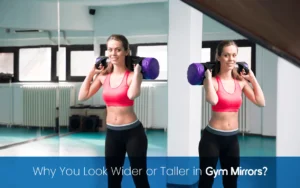
Some walls appear flat but have a bow of 1/4 inch or more across an 8-foot span. A bowed wall means the mirror panel will flex slightly at the center, which can cause optical distortion (making you appear wider or taller than you are). Read more about why that happens in our explainer on why you look wider or taller in gym mirrors.
Even, front-facing overhead lighting eliminates glare and gives the truest reflection. Strong backlighting, a window directly opposite the mirror, washes out the image and makes form feedback difficult. Test with your phone’s camera before drilling.
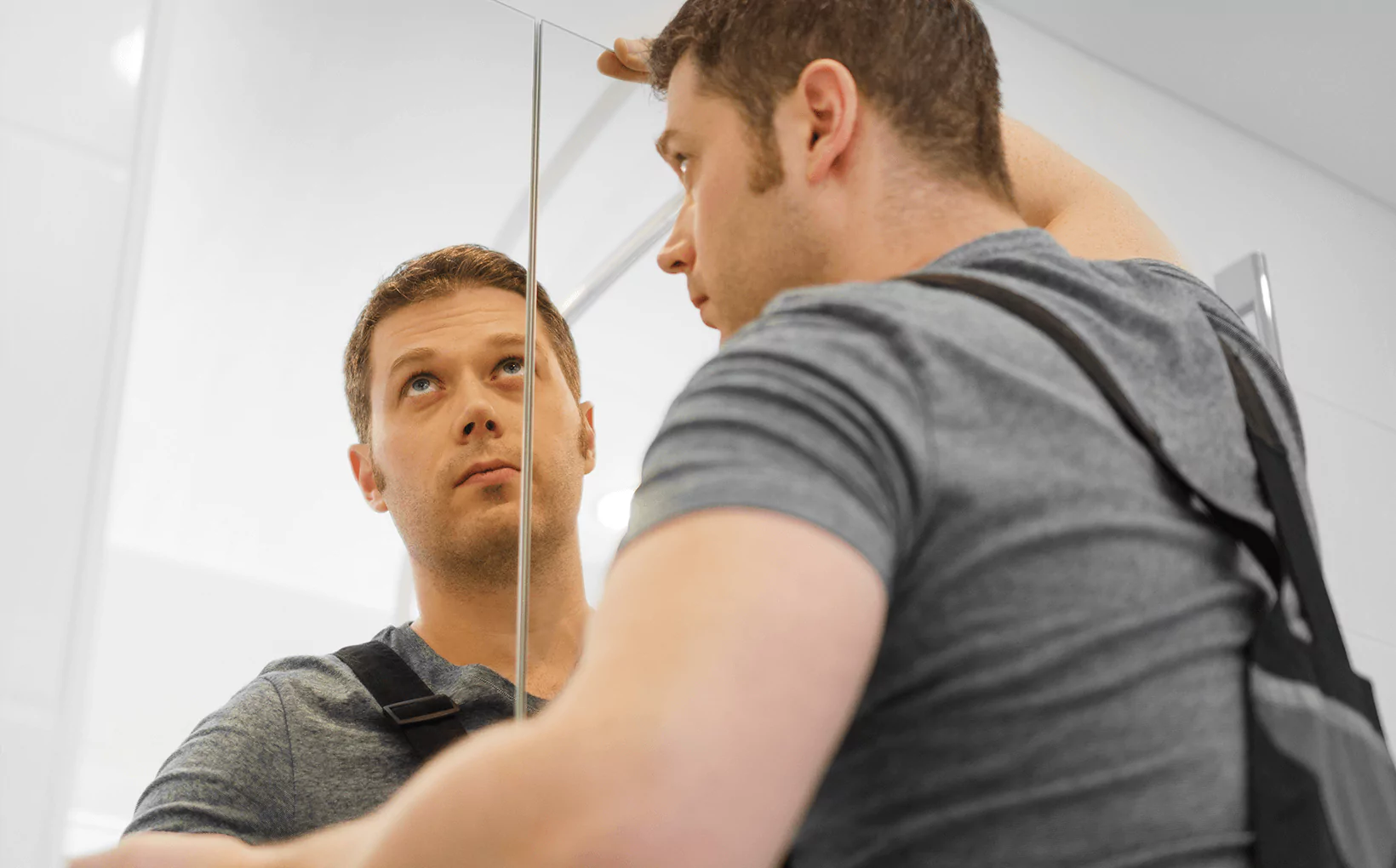
Here’s how to install mirrors for home gym wall safely and accurately.
According to the American Council on Exercise (ACE), proper mirror placement is directly tied to safe training. mirrors that are not level or are mounted at the wrong height can actually distort posture feedback and increase injury risk. Getting the installation right matters beyond just aesthetics. Hiring professional gym mirror installers ensures top-tier safety and aesthetics—especially for large or multiple mirrors.
| Type of Installation | Cost (Per Hour or Project) |
| Residential Home Gym | $300 – $600 |
| Commercial Gym Facility | $800 – $1,500+ |
| Custom Mirror Install | $1,000 – $2,000 |
| Type of Installation | Cost (Per Hour or Project) |
| Residential Home Gym | $300 – $600 |
| Commercial Gym Facility | $800 – $1,500+ |
| Custom Mirror Install | $1,000 – $2,000 |
| Factor | DIY | Professional |
| Cost | $150 – $300 per mirror | $500 – $1,500+ per mirror |
| Labor | Your time | Skilled technician |
| Risk | High (breakage, injury) | Low (insured and trained) |
| Tools Needed | Yes | No |
| Aesthetic Finish | Moderate to Variable | High-end, polished |
| Time Investment | 2–4 hours per mirror | 1–2 hours with team |
If you’re outfitting a small mirror wall for home gym and have the tools, DIY is a cost-effective solution. However, for full wall installations, commercial spaces, and high-end home gyms, it is best to go professional. The added cost often translates to a safer and longer-lasting result.
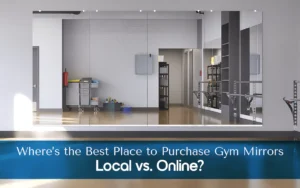
Pricing varies significantly between channels. Hardware store mirrors often provide custom cuts and professional installation bundled together, which can simplify the project at a competitive total cost. Online suppliers typically offer better pricing on standard sizes with home delivery. Check out our guide on Hardware Store Mirrors vs. Commercial Gym Mirrors Reflection Quality, Safety, and Performance ComparedOur full comparison of the best places to buy gym mirrors — local vs. online walks through the tradeoffs in detail, including what questions to ask each supplier before committing.
Mirrors are a one-time purchase for most spaces. The math on quality is straightforward.
A standard-quality 48 × 72 mirror at $400 that requires replacement in 7–10 years due to silvering failure, edge chips, or backing degradation costs more over 20 years than a premium-quality panel at $600 that lasts the life of the facility.
Durability factors that extend lifespan:
Safety And Liability Reduction: A properly mounted, safety-backed panel that is bumped by a plate during a clumsy rack return stays on the wall. An adhesive-only panel that fails in a busy facility is a workers’ compensation and liability issue.
Brand Value in Commercial Settings: In boutique studios and professional training facilities, the quality of the mirror environment directly affects member perception and content creation. Low-iron glass and crisp, even coverage signal professionalism. Members notice, and that perception supports your pricing.
Before placing any order, work through this list:
Understanding the gym mirror and installation cost is critical when deciding between a DIY approach and professional service. The right choice depends on your space, budget, skill level, and desired outcome. Whether you’re setting up a single mirror for gym at home or covering an entire wall mirror for home gym, this guide gives you the clarity to move forward confidently.
Anywhere from $5–$25 per sq. ft. depending on size, quality, and finish.
A 48 × 72-inch panel provides head-to-toe visibility for most adults and covers enough wall space to be useful during compound movements. In smaller rooms, a 36 × 60-inch panel positioned at the right height works well. See our ideal gym mirror size guide for room-specific recommendations.
6mm is recommended for permanent installations, panels larger than 36 × 60 inches, and any wall with minor surface irregularities that require the glass to flex slightly.
Yes, for any installation near equipment, people, or high-traffic areas. Safety backing is the single most effective risk-reduction feature in gym mirror installations.
Yes—if you’re comfortable with tools and measurements. However, safety risks are higher for larger installations.
Yes. They often use tempered or shatterproof glass, come with a warranty, and must meet safety codes.
You can purchase from local glass shops, online retailers, specialty fitness and dance suppliers. Read on to learn more on where to buy gym mirrors.
Frameless mirrors offer a sleek, modern look and are preferred for studios, while framed options suit traditional or small home gyms.

Explore all things glass—from stylish table tops and insulated options to tinted and frosted designs. Discover guides on glass railings, custom cut glass, shelves, and stunning backsplash ideas for a modern home or office upgrade.