
My Cart
You have no items in your shopping cart.

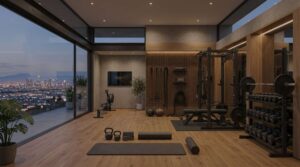
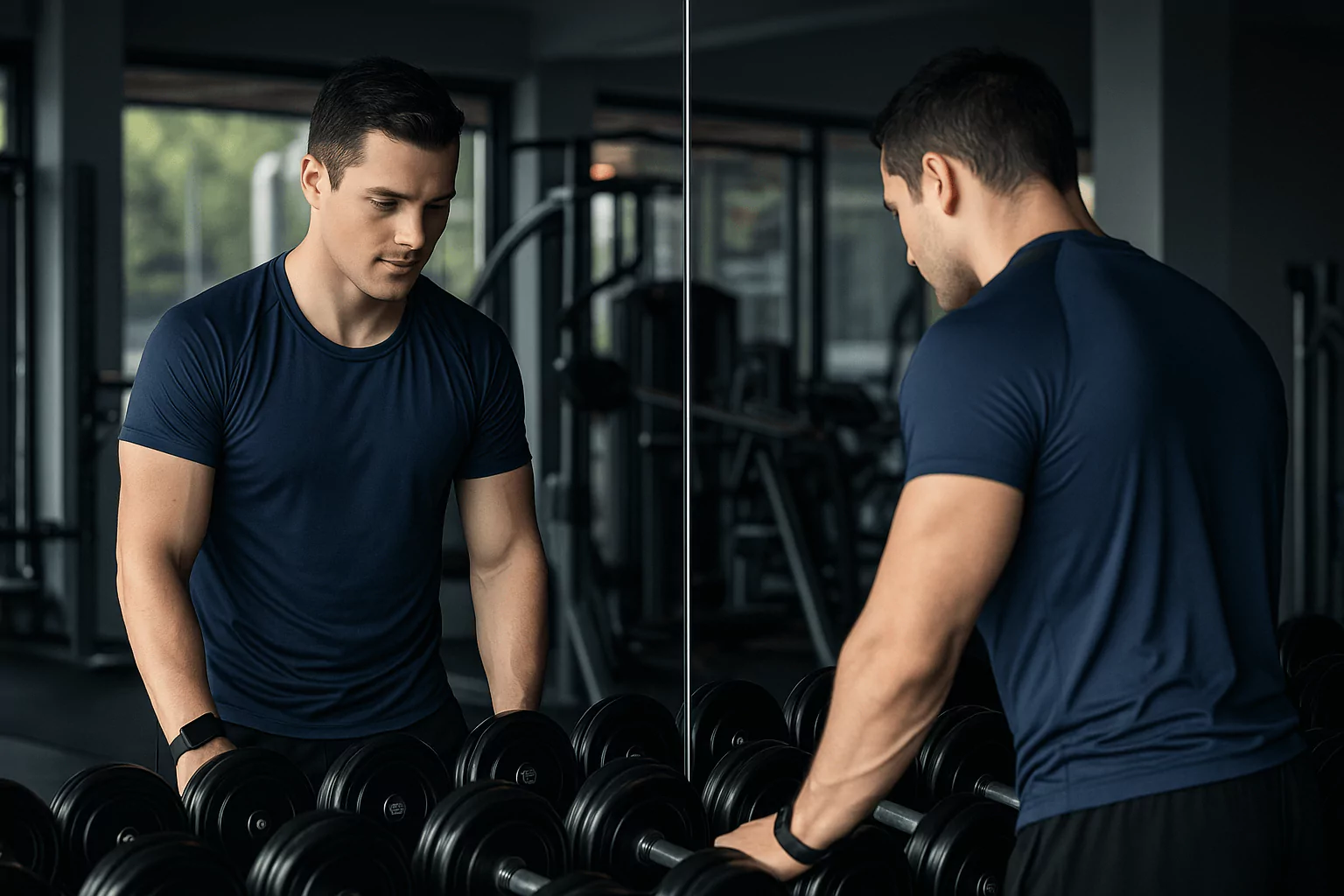
Ever stepped into a gym, checked yourself out in the gym mirrors, and thought, “Why do I look wider or taller in gym mirrors?” You’re not alone. This optical phenomenon is common and surprisingly complex, blending science, perception, and even interior design. In this article, we’ll break down the mirror illusion in gyms, from the role of mirror thickness and lighting to deliberate design choices gyms make to enhance your appearance. Whether you’re dealing with mirror distortion in a gym or looking for the best home gym mirrors, we’ll unpack everything you need to know.
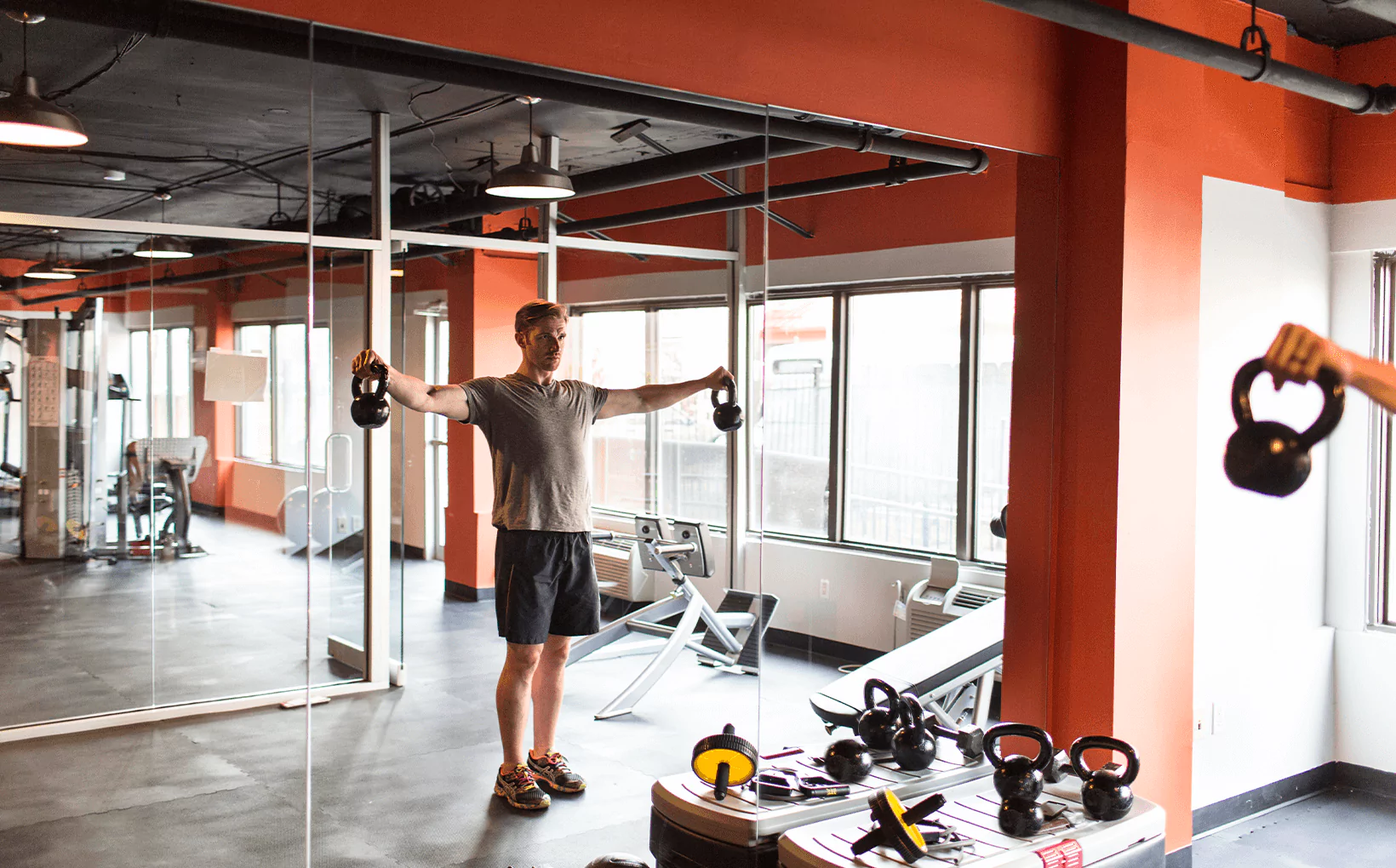
Table of Contents
Before we dive deeper into gym-specific mirrors, it’s important to understand how reflections work and how our brains interpret them. This section explores the basic science behind mirrors and why what you see isn’t always what you get.
Mirrors function based on basic physics: light reflects off your body and bounces back into your eyes at the same angle. In theory, wall mirrors for gym environments should reflect you exactly as you are. But that’s not always what happens.
Most mirrors for gym walls are not truly flat. Even a minor curvature or tilt can produce noticeable differences in how wide or tall you appear. A slightly convex mirror can stretch your height, while a concave one can compress or widen you—thus fueling the viral question, “do gym mirrors lie?”
Lighting plays a crucial role. Fitness mirrors positioned under downlights cast shadows that enhance muscle definition. Overhead lighting can deepen abs and widen shoulders visually, which is often intentional.
On top of that, human perception isn’t perfect. The brain interprets reflections based on expectations and focal points. When you focus on specific features—like flexed arms or abs—your perception warps to exaggerate them.
Not all gym mirrors are created equal. The type of mirror installed can significantly affect how your body appears during workouts. Here’s a quick look at the most common types used in gyms and how they influence your reflection.
These are technically the most accurate type and ideal for a mirror for exercise room or home gym wall mirrors. However, they’re rare in commercial spaces.
Used deliberately or accidentally, convex mirrors create the illusion of added height. This is where the common phrase “why do gym mirrors distort your body image?” stems from.
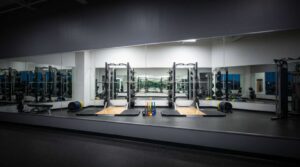
Large gym mirrors or floor to ceiling mirrors for gym visually expand the room while also distorting body proportions due to their sheer size and mounting surface.
Mirror placement plays a crucial role in how your body appears during workouts. Even slight adjustments in angle or height can significantly alter your reflection—making you look taller, wider, or more defined than you actually are.
One of the most significant factors is the mirror angle effect in gyms. Even a 5-degree tilt forward can make your upper body look wider and your waist smaller—a flattering illusion that gyms often exploit.
The closer you are, the more your reflection is magnified. At arm’s length, you might seem bulkier compared to when you’re 10 feet away. This perception shift fuels the search term: why do I look bigger in gym mirrors?
While visual distortions in gym mirrors often seem like tricks of the eye, they can also stem from physical factors. The quality of glass and how it’s installed play a crucial role in how accurately your reflection appears.
Thicker glass tends to be more optically stable. Low-quality, thin mirrors may warp slightly over time or due to temperature changes. The mirror thickness impact is often underestimated in both commercial gym mirrors and home gym mirror installations.
A mirror installed on an uneven wall, especially in older gyms, can create slight curves. This can bend reflections vertically or horizontally. This is a key reason why frameless gym mirrors often deliver better visual accuracy, as they minimize structural interference.
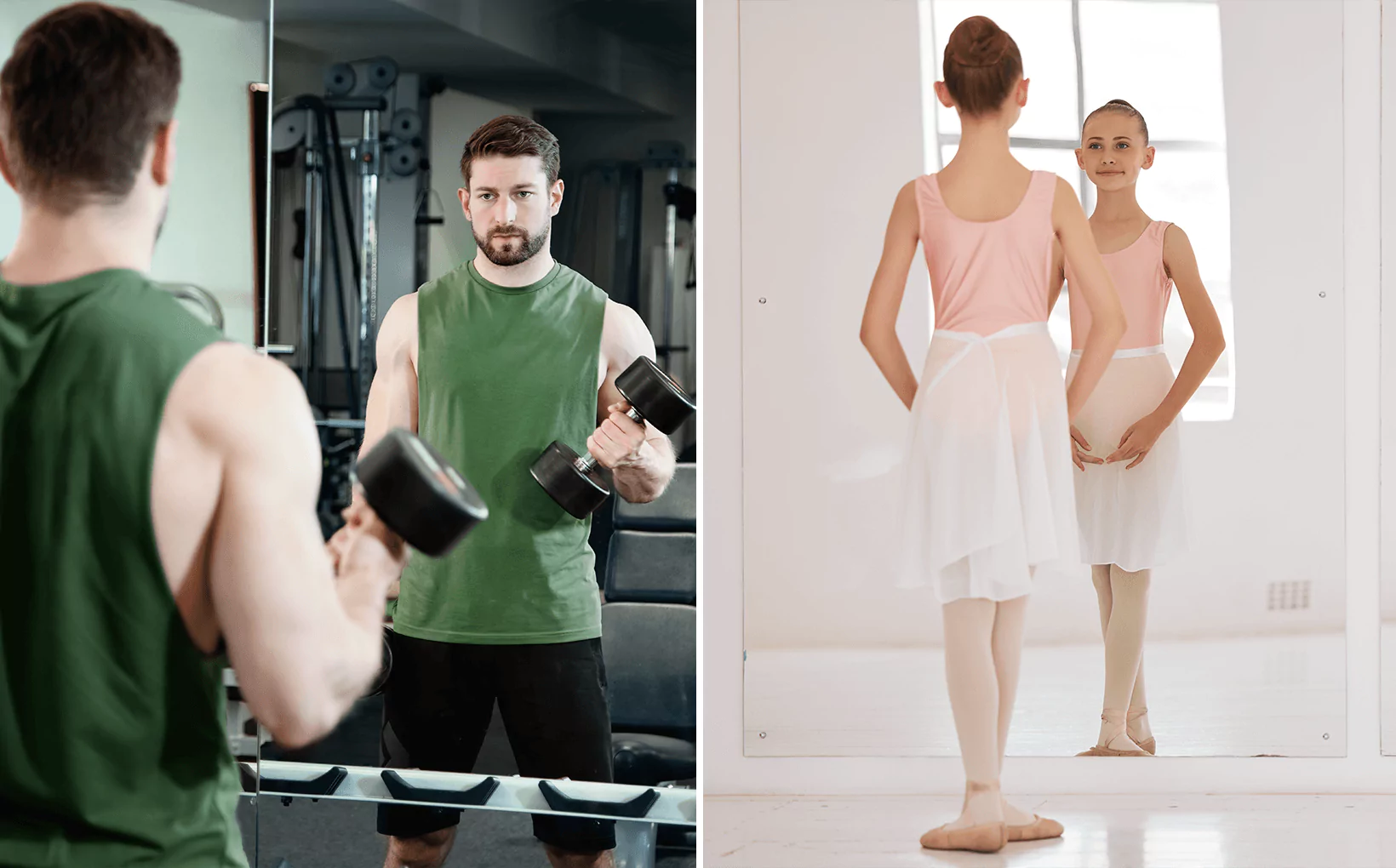
Before diving into the technical factors, it’s important to explore how your mind interprets what you see. The psychology behind mirror illusions reveals that what you think you see in the mirror is often shaped by perception, emotion, and expectation—far beyond simple reflection.
People rely on gym wall mirrors to track progress. Seeing a “better-looking” reflection acts as positive reinforcement, motivating continued effort. That’s why mirror for gym wall design is as much about psychology as it is about utility.
Many gym-goers become obsessed with their mirror image, leading to distorted self-image. Some may feel deflated when they realize they don’t look the same at home or in photos.
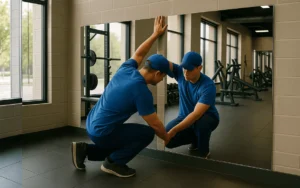
Thanks to social media, selfies in mirror gyms have become a form of validation. Yet, the same mirror distortion in gyms can mislead users about their real physique.
Not all gym mirrors are purely functional. In fact, some are carefully chosen or even intentionally altered to create a specific visual effect. Here’s why some gyms use distorting mirrors on purpose.
Yes, some gyms intentionally install mirror illusion gym setups. These flattering reflections improve user satisfaction and promote “visible results,” making memberships feel more worthwhile.
Interior designers use gym mirror wall arrangements to enhance aesthetics. A well-placed mirror can make a small room appear massive and visually impressive.
Gym mirrors are available both online and in store. Both mediums have their own range of benefits. If you want to know the real difference between them, please read on to learn more about Where’s the Best Place to Purchase Gym Mirrors – Local vs. Online? If you’re building a home gym mirror setup, consider the following:
When building your own space, whether it’s with mirrors for home gym wall or a mirror for workout room, understanding these principles will help you make smarter choices—both for your progress tracking and mental well-being. Buy mirrors from our online glass store now!
So, next time you wonder, “why do I look wider or taller in gym mirrors?” remember: it’s a mix of mirror thickness, angle, lighting, and even design strategy. While some distortion is unintentional, many gyms actually use this to your motivational advantage.
When building your own space, whether it’s with mirrors for home gym wall or a mirror for workout room, understanding these principles will help you make smarter choices—both for your progress tracking and mental well-being.
Because of mirror curvature, tilt, lighting, and proximity. It’s often intentional in commercial gyms to boost morale and aesthetics.
Some are, but many aren’t. Slight distortions are common, especially in large setups.
A full length gym mirror is ideal. Floor-to-ceiling designs work best for posture and full-body visibility.
Standard panels are 36″ x 60″ or 48″ x 84″, but it varies based on space and function.
Basic panels start at the expected cost of $100–$300. Mirrors for home gym wall setups can range from $500–$2000 depending on quality, size, and installation.
Explore all things glass—from stylish table tops and insulated options to tinted and frosted designs. Discover guides on glass railings, custom cut glass, shelves, and stunning backsplash ideas for a modern home or office upgrade.