
My Cart
You have no items in your shopping cart.
Poor mirror placement leads to blinding light glare, warped reflections, and dangerous blind spots. Strategic mirror placement, however, maximizes your floor plan, keeps your lifting zones safe, and ensures perfect visual feedback.
To help you get the most out of your investment, Fab Glass and Mirror breaks down the essential positioning rules for height, lighting, and equipment mapping.
Table of Contents
| Workout Zone | Mirror Height From Floor | Best Wall Positioning | Lighting Rule |
| Weightlifting / Squat Racks | 12 to 18 inches | Directly in front of the rack | Side or ambient lighting (No direct bulbs) |
| Yoga, Pilates, & Calisthenics | 0 inches (Floor level) | Parallel to the primary workout mat area | Soft, diffused lighting |
| Cardio (Treadmills/Cycles) | 24 inches | To the side of the machine (Profile view) | Avoid placing mirrors facing outdoor windows |
| Functional / Cross-Training | 6 to 12 inches | Main focal wall | Overhead lighting positioned 2 feet back from glass |
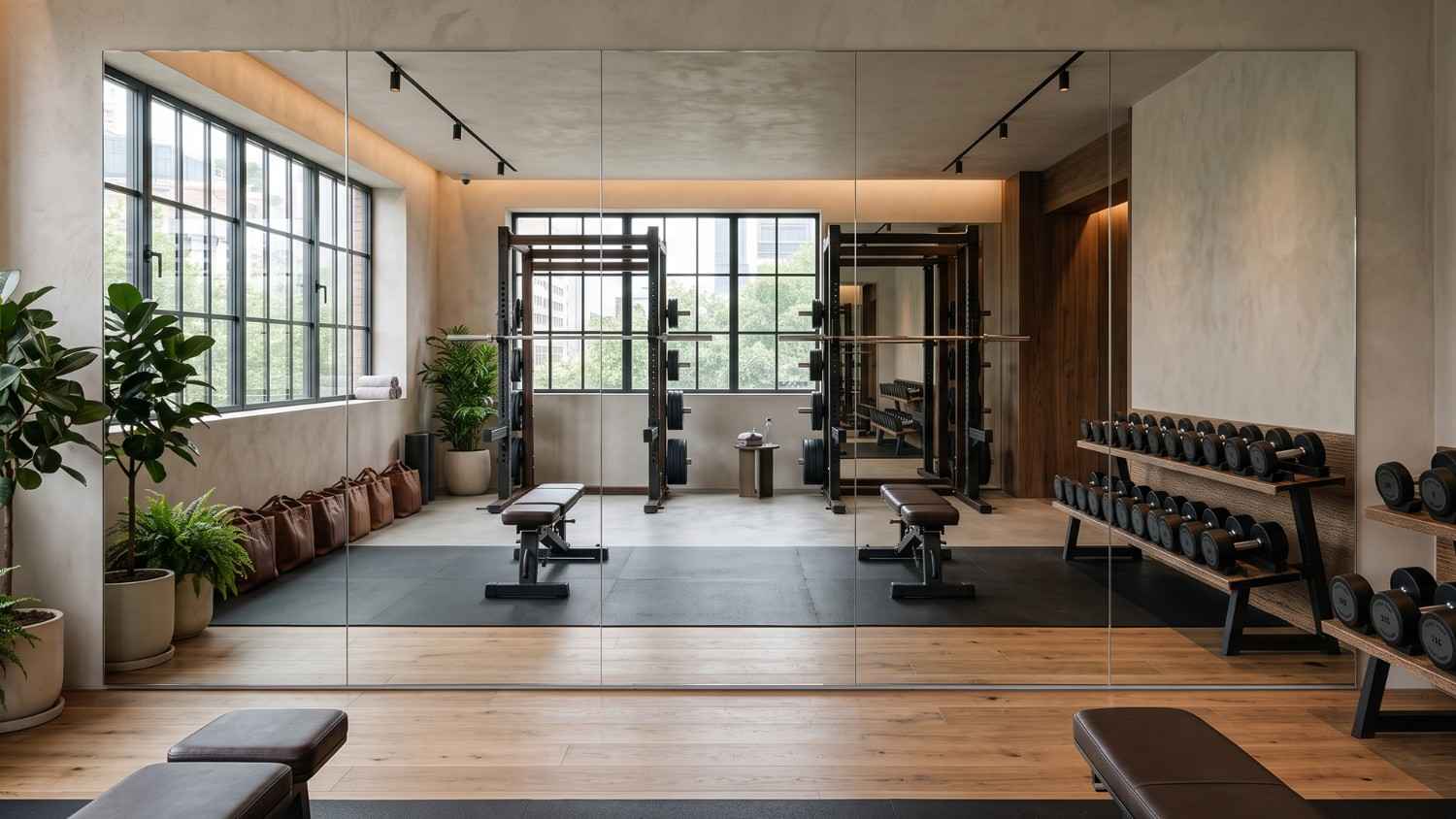
The most common placement mistake is resting a heavy glass mirror directly on the floor in a lifting environment, or conversely, hanging it so high that you cut off your lower body reflection.
For traditional weightlifting, functional fitness, and garage gyms, mirrors should be mounted 12 to 18 inches above the floor.
This elevation protects the bottom edge of your gym mirror from stray weights, rolling dumbbells, or kicking feet. Because your body is upright or slightly elevated on benches during lifts, you will still be able to see your feet and lower-body alignment perfectly.
If you are setting up a space dedicated to yoga, Pilates, or floor physical therapy, the workout mirrors must sit flush with the floor (0 inches) so you can track horizontal alignment.
Different types of exercise require different angles of visual feedback. Map your walls based on the equipment you use:
An activity mirror is only as good as the light hitting it. If you place it in the wrong spot relative to your light sources, you will create a blinding environment.
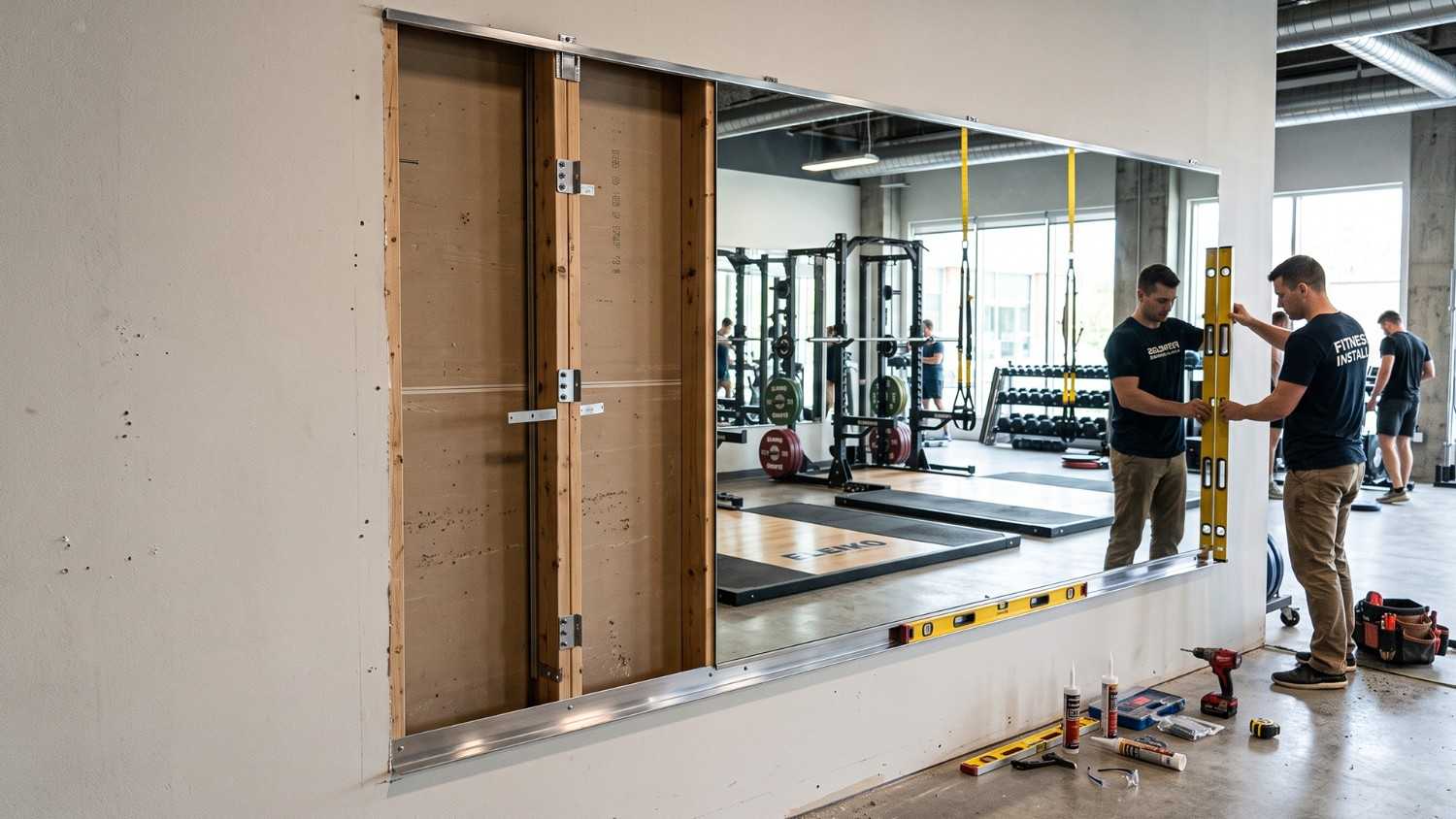
Before drilling any holes, you must audit the physical wall itself to prevent structural failure or warped glass.
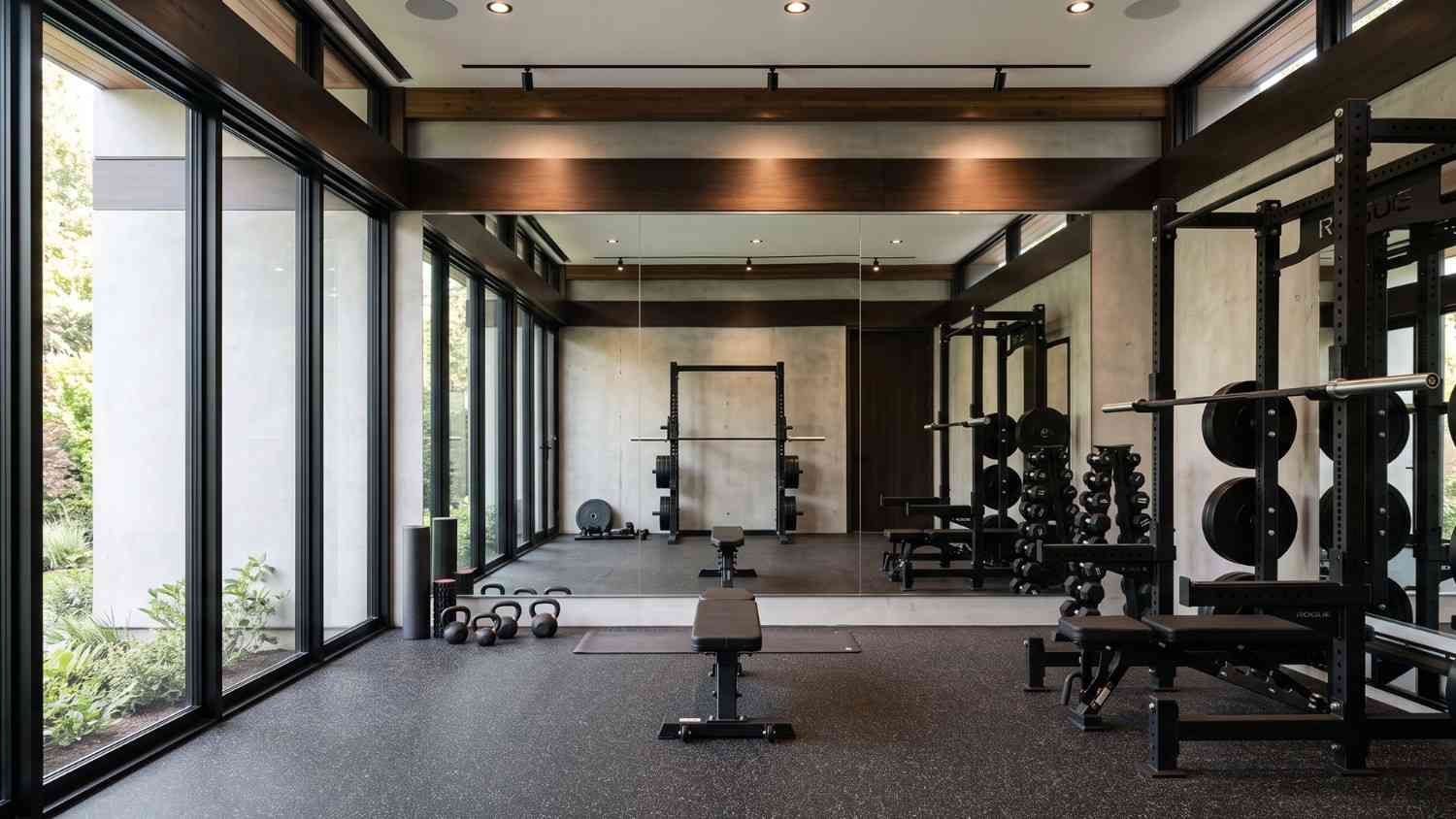
Once you have strategically mapped out exactly where your mirrors will go, you can accurately measure your walls and finalize your budget.
If you are dealing with unique architectural layouts, take a look at our specific design blueprints for basement home gym ideas or check out how to map out vertical space in our guide on how to transform your half-garage into a functional gym.
Ready to buy and install? Ensure you pick the right dimensions by browsing our ideal gym mirror size guide, and figure out your budget by reading our breakdown of gym mirror installation costs to see if a DIY install is right for your chosen wall.
For standard lifting zones and garage gyms, mount mirrors 12 to 18 inches above the floor to protect the bottom edge from stray weights. For yoga, Pilates, or floor physical therapy, mirrors should sit flush with the floor (0 inches) to track horizontal alignment.
No. Commercial gym mirrors are far too heavy for standard drywall anchors. They must always be anchored directly into wood or metal wall studs using secure mounting clips or J-channels to prevent them from falling.
Place the mirror perpendicular (to the side) of cardio machines rather than directly in front of them. Staring straight at yourself while running can cause motion sickness or mess with your stride, whereas a side view lets you safely check your spinal alignment.
If a mirror is screwed tightly against an uneven or bowed wall (common in basements and garages), the glass flexes and creates a “funhouse” distortion. To fix this, place plastic shims behind the mounting hardware to keep the mirror perfectly flat.
Always place your mirrors perpendicular to windows rather than directly opposite them. Additionally, make sure overhead light fixtures are offset 2 to 3 feet away from the mirror wall so the light casts downward onto you instead of bouncing directly off the glass into your eyes.

Explore all things glass—from stylish table tops and insulated options to tinted and frosted designs. Discover guides on glass railings, custom cut glass, shelves, and stunning backsplash ideas for a modern home or office upgrade.