

My Cart
You have no items in your shopping cart.
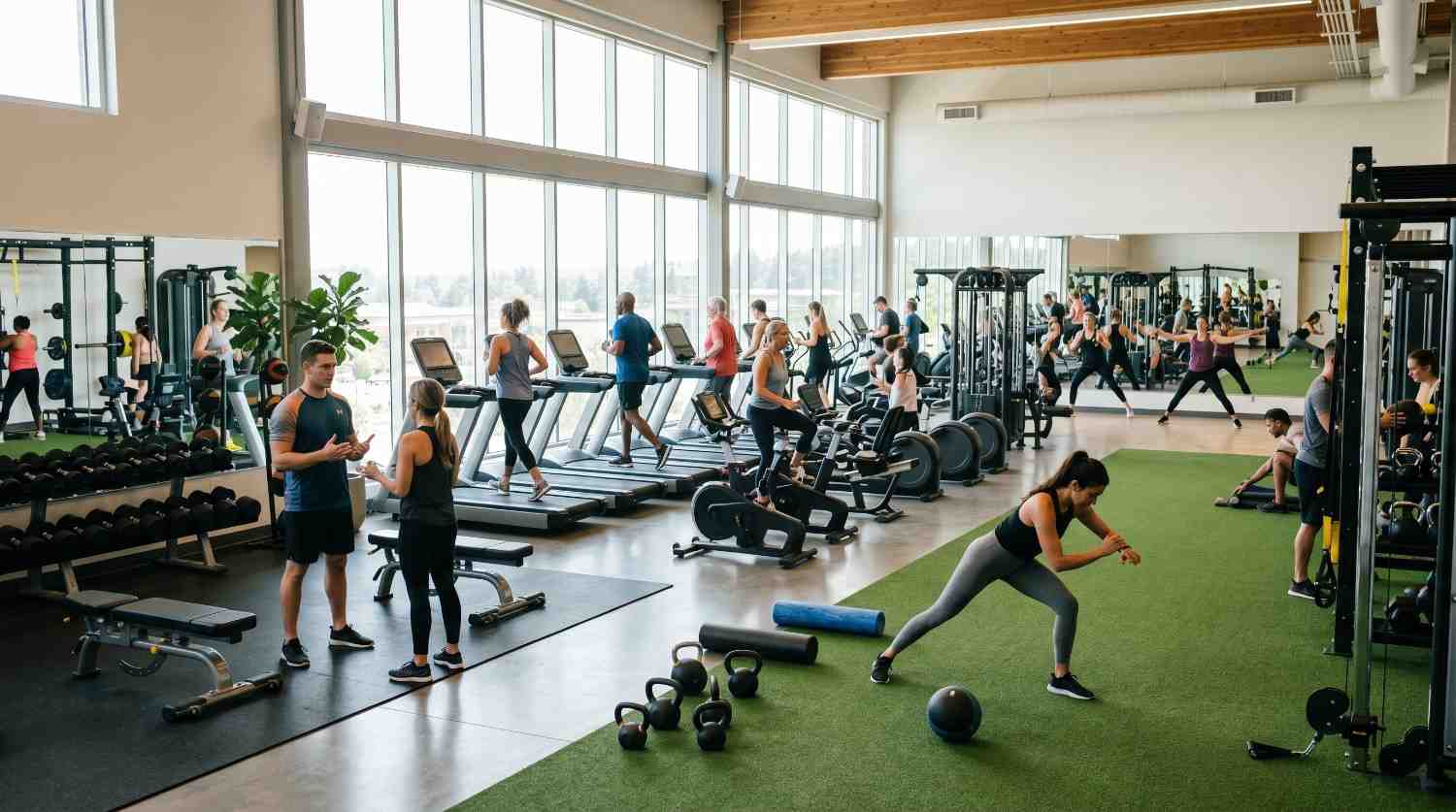
Understanding gym membership demographics is not just an academic exercise; it is the strategic edge that separates thriving fitness businesses from struggling ones. Whether you are a gym owner, a fitness marketer, or a wellness entrepreneur, knowing who walks through your doors (and why they leave) empowers smarter decisions about equipment, programming, and facility design.
The global fitness and wellness economy surpassed $300 billion heading into 2026, driven by a massive post-pandemic focus on longevity and preventative health. This growth has reshaped who joins gyms, how often they visit, and what they expect from a modern fitness facility. From the dominance of Millennials and Gen Z to a near-equal gender split, gym member statistics tell a rich story about changing health behaviors and consumer priorities.
Table of Contents
Age is the single most powerful predictor of gym membership behavior. Current gym membership trends show a clear concentration among younger adults, but growing opportunity in the 35–54 and 55+ brackets that smart operators are beginning to capture.
To help fitness operators visualize this landscape, the core metrics across these primary age brackets are structured below:
| Age Bracket | Market Share | Average Monthly Spend | Primary Fitness Motivators | Retention Risk Profile |
| 18–34 (Gen Z & Millennials) | 31% | $100–$150 | Aesthetics, Community, Social Content | High (First 6 Months) |
| 35–54 (Gen X & Older Millennials) | 29% | $150–$200 | Stress Relief, Injury Prevention, ROI | Low (Highly Consistent) |
| 55+ (Boomers & Active Seniors) | 25% | $120–$160 | Longevity, Mobility, Physician Referral | Lowest (High Lifetime Value) |
Young adults remain the backbone of the fitness industry, accounting for approximately 31% of all U.S. gym memberships, driven by social media influence, body image culture, and a deep integration of fitness into lifestyle identity.
While smaller in raw numbers, this group punches above its weight in revenue. Members aged 35–54 have higher disposable incomes, stay enrolled longer, and are more likely to purchase personal training or premium tiers.
Driven by longevity goals and physician recommendations, older adults are joining gyms at unprecedented rates, and represent one of the highest lifetime-value segments in fitness demographics.
While commercial gym sign-ups are climbing, a significant portion of this demographic simultaneously invests in residential fitness. For operators looking to consult clients on remote training, understanding how to build a home gym provides a value-added service that bridges the gap between commercial and residential wellness.
A gym that visually caters to multiple age groups outperforms one-size-fits-all competitors. For younger members, large floor-to-ceiling gym mirrors are form-check essentials and content creation tools. For older adults, well-lit mirror walls in low-impact zones signal professionalism and safety. The custom-cut gym mirrors from Fab Glass and Mirror can be configured for any zone, from high-energy weight rooms to calm stretching areas.
The old image of gyms as male-dominated spaces has been thoroughly rewritten by data. One of the most significant shifts in gym membership demographics over the past decade is the near-equalization of gender participation.
The Current Split
Activity preferences by gender
With female membership at an all-time high, gyms that create welcoming, well-designed spaces for women will win long-term loyalty. Full-length mirror walls are especially valued in yoga, Pilates, and dance studio areas where form feedback is paramount. A well-mirrored women’s fitness zone signals genuine investment in member experience.
Gym membership is not equally distributed across income brackets. Understanding this dynamic helps fitness businesses position their offerings and pricing with precision.
The fitness industry has bifurcated into a barbell model: ultra-low-cost gyms on one end and premium boutique studios on the other, with mid-market facilities facing the most competitive pressure. Premium gyms compete on environment, equipment quality, and aesthetics, areas where facility investment delivers measurable returns.
For facility managers, choosing the right source for materials is a key part of budget management; understanding the pros and cons of the best place to buy gym mirrors: local vs online can save thousands in procurement costs.
Higher-income, college-educated members are exceptionally attuned to quality signals. Scratched, foggy, or sparsely placed mirrors communicate under-investment. High-clarity, seamlessly installed mirrors from Fab Glass and Mirror send exactly the opposite message, and gym mirrors cost a fraction of a full renovation.
Members can tell the difference between Hardware Store Mirrors vs. Commercial Gym Mirrors. It’s important to understand the technical differences in a gym mirror vs. regular mirror comparison to ensure your facility doesn’t look under-equipped.

Understanding member motivations is as important as knowing who joins. This data reveals what programming to offer, how to market memberships, and how to reduce churn by delivering on the promises that brought members in.
Members motivated by form, aesthetics, and performance all share one thing: they want to see themselves work. Gym mirrors directly serve the top three motivations, health improvement, body composition, and strength training, by providing real-time visual feedback, improving form safety, and creating a professional environment that keeps members engaged.
Visual feedback is vital for those tracking body composition changes, though members often wonder why they look wider or taller in gym mirrors depending on the glass quality and installation angle.
Behavioral patterns are where the real business intelligence lives. Gym membership trends reveal predictable cycles operators can prepare for and exploit.
The January surge is your highest-visibility window of the year. New members form first impressions that determine whether they stay or leave. A visually impressive, well-maintained facility, including clean, expansive mirror installations, creates the “this is a serious gym” impression that converts casual January sign-ups into loyal long-term members.
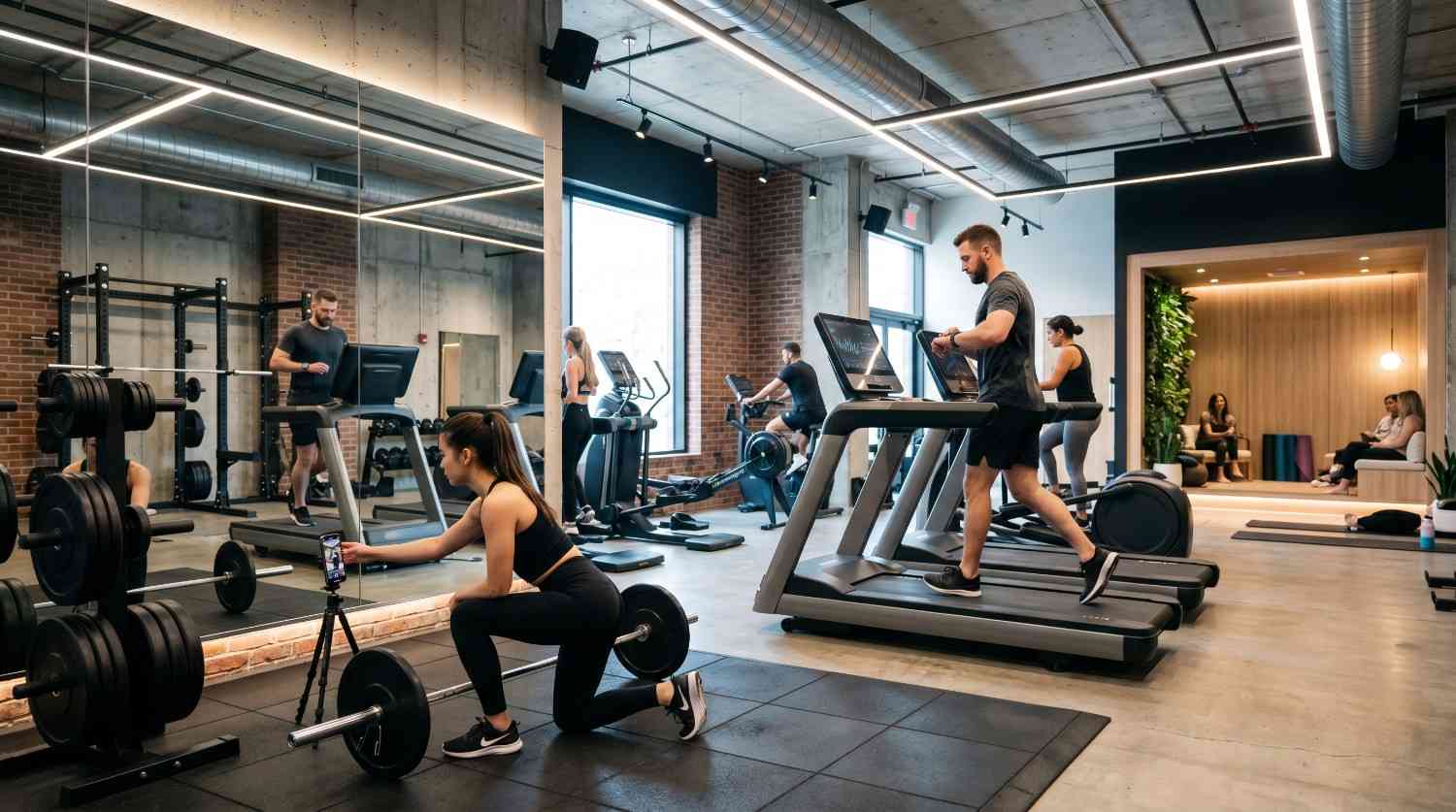
The 2026 fitness industry insights show that this is in one of its most dynamic periods of transformation. Several macro-trends are reshaping who gyms serve and how they must adapt to stay relevant.
These two generations now collectively represent the majority of gym members and will define the industry for the next two decades.
The pandemic permanently altered member expectations. Hybrid fitness combining in-person gym attendance with digital workouts is now the dominant model.
The boundaries between gym and wellness center are blurring. Members increasingly expect recovery services, mental wellness programming, and nutritional guidance alongside traditional fitness offerings. Facilities that integrate these services report significantly higher retention and premium tier uptake.
In an aesthetics-driven, social-first fitness culture, the physical environment has never mattered more. Gen Z and Millennial members document their workouts every deadlift, every yoga flow, every personal record. A gym with high-quality, well-positioned mirror walls becomes part of the content they create and share. Workout mirrors from Fab Glass and Mirror are distortion-free and designed for fitness environments, delivering clarity that looks as good on camera as it does in person.
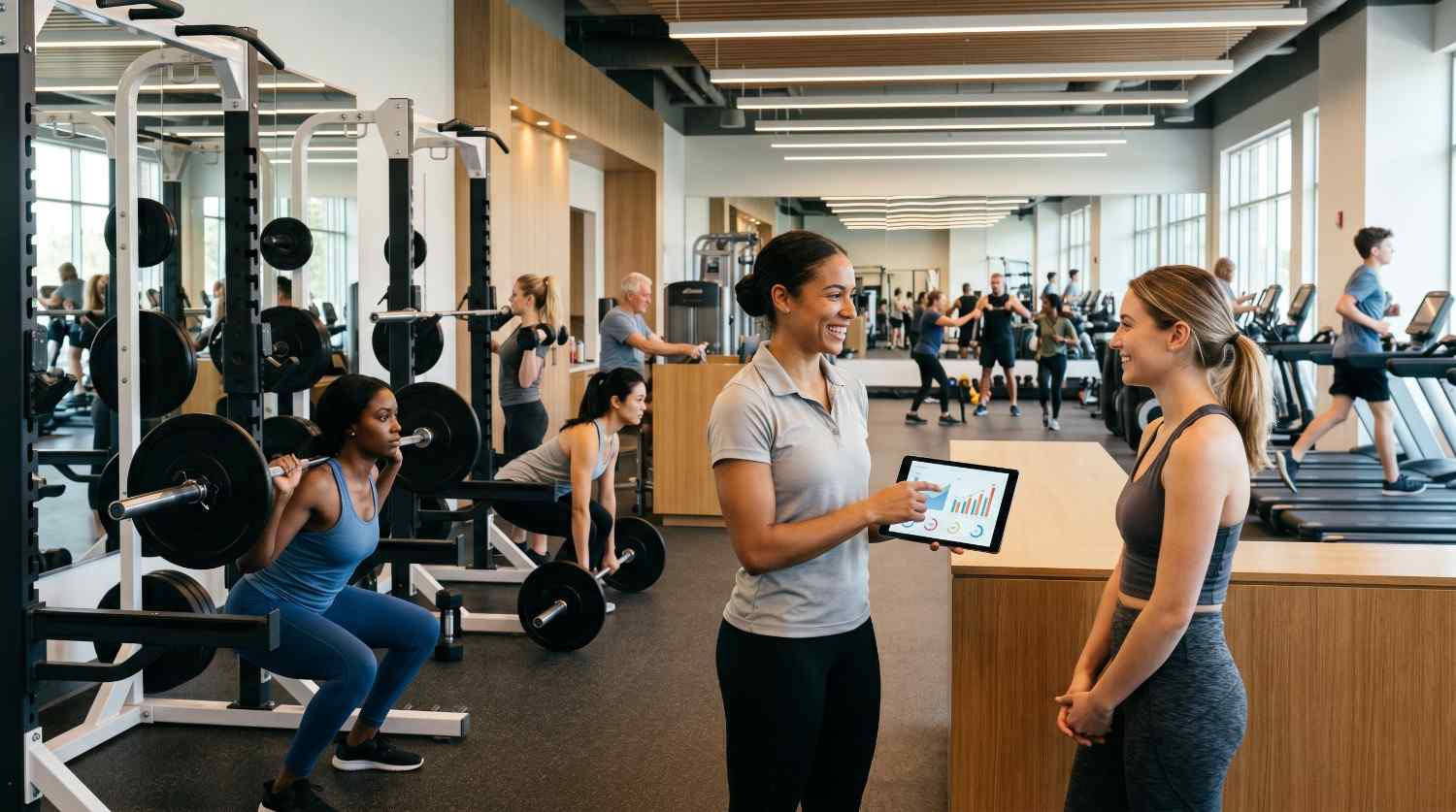
Design distinct program tracks for 18–34, 35–54, and 55+ members. High-energy classes, personal training packages, and low-impact recovery programs each serve different segments. Communicating these clearly in marketing attracts the right members and reduces early dropout.
With women now comprising the majority of gym members, dedicated spaces for strength training, group fitness, and functional movement that feel welcoming and professional are essential. Mirror placement, lighting, and layout all contribute to how included or excluded female members feel.
The January surge is your annual conversion opportunity. Invest in onboarding programs, facility upgrades, and a guided first-week experience. Members who feel welcomed and supported in their first 10 days are dramatically more likely to stay beyond six months.
Use member check-in data, app engagement, and surveys to understand individual goals and attendance patterns. Personalized outreach, a message on a missed week, a milestone celebration at 50 visits, demonstrably improves retention. The gym member statistics on dropout rates make this a high-ROI investment.
Across every demographic, the physical environment is a key driver of perceived value and member satisfaction. Clean, spacious, well-lit facilities with high-quality equipment and mirror coverage retain members longer and attract new ones through word of mouth and social sharing. Strategic upgrades to high-visibility areas deliver outsized returns without a full renovation. Even on a tight budget, upgrades are possible. Consult our cheapest gym mirrors budget guide for beginners to maximize your visual impact without overspending.
Gym membership demographics are not just numbers on a spreadsheet; they are a blueprint for building a fitness business that genuinely serves its community. From the dominance of young adults and the rise of female members, to the revenue potential of the 55+ segment and the behavioral patterns that predict dropout, every data point represents an opportunity to do better.
Gym membership trends in 2026 point toward a member who values aesthetics, community, personalization, and professional-grade facilities more than ever before. The fitness businesses that win will be those that understand their members deeply and invest accordingly in the spaces where those members show up every day.
From custom floor-to-ceiling mirror walls for weight rooms and group fitness studios to precision installations in yoga and functional training zones, our gym mirrors are built for performance and designed for the modern fitness member. Distortion-free, custom-cut, and built to last — explore our gym mirror solutions today.
The most dominant trends in 2026 include the integration of wearable technology (now the #1 fitness trend), the rise of active aging programs for adults 55+, and a major shift toward strength training driven by the popularity of GLP-1 weight-loss medications which require muscle preservation.
Adults aged 18–34 (Gen Z and Millennials) remain the largest demographic, representing approximately 31% of total memberships. However, the 55+ segment is the fastest-growing group as longevity and functional health become primary consumer goals.
Statistics consistently show that roughly 50% of new gym members quit within their first six months. To combat this, facilities in 2026 are focusing on onboarding milestones, as members who visit at least twice a week in their first 10 days are 20% more likely to stay long-term.
As of 2026, the split is nearly equal but slightly favors women at 52% female to 48% male. This is largely due to the massive surge in women’s participation in strength training and boutique Pilates/yoga studios.
The average fitness consumer spends approximately $155 per month, which includes gym dues, boutique class packs, fitness apps, and wearable tech subscriptions.

Explore all things glass—from stylish table tops and insulated options to tinted and frosted designs. Discover guides on glass railings, custom cut glass, shelves, and stunning backsplash ideas for a modern home or office upgrade.