
My Cart
You have no items in your shopping cart.
But that durability has a catch: once tempered, it can’t be cut, drilled, or reshaped without shattering into thousands of tiny pieces.
So, what can you actually do if you need a different size or shape? Can modern tools like lasers or waterjets solve the problem? And how do professionals achieve those perfect custom cuts before tempering?
In this updated guide, our glass experts at Fab Glass and Mirror explain:
Table of Contents
Don’t risk cutting tempered glass at home — instead, order a custom-cut tempered glass panel made to your exact specifications. Our experts will handle the cutting and tempering for you.
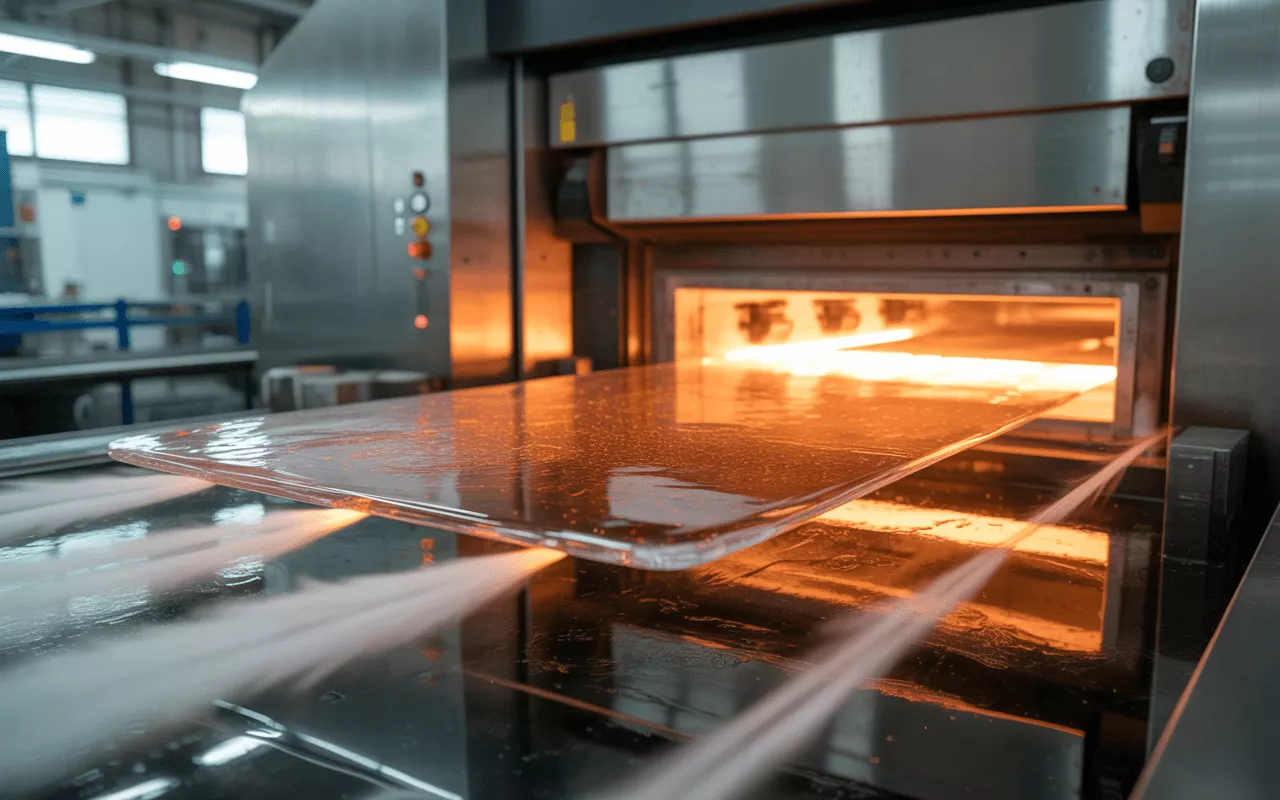
Tempered glass, also known as toughened glass, is created by heating ordinary glass to around 620 °C (1,148 °F) and then cooling it rapidly using high-pressure air jets.
This sudden temperature drop forces the outer surfaces of the glass to cool and contract faster than the inner core. The result? A unique internal tension balance:
This tension system is what gives tempered glass its strength, but it also makes it impossible to cut. When comparing ceramic glass vs tempered glass, tempered glass stands out for its suitability in applications like table tops, glass doors, windows, and display cabinets. These internal tensions make it 4–5 times stronger than regular glass, Commonly used in applications such as aquarium glass, this type of glass is prepared by the process of tempering, in which normal glass is subsequently heated and cooled.
When you attempt to cut, drill, or grind tempered glass, the internal stress equilibrium collapses. The compressive outer layer releases energy instantly, causing the glass to explode into hundreds of blunt granules. This shattering mechanism is designed for safety, no sharp shards, but it means modification is out of the question.
Imagine the glass as a compressed spring. Cutting it is like slicing through that spring while it’s under load, the stored energy releases violently. That is why even a micro-crack or chip can trigger a full-panel failure.
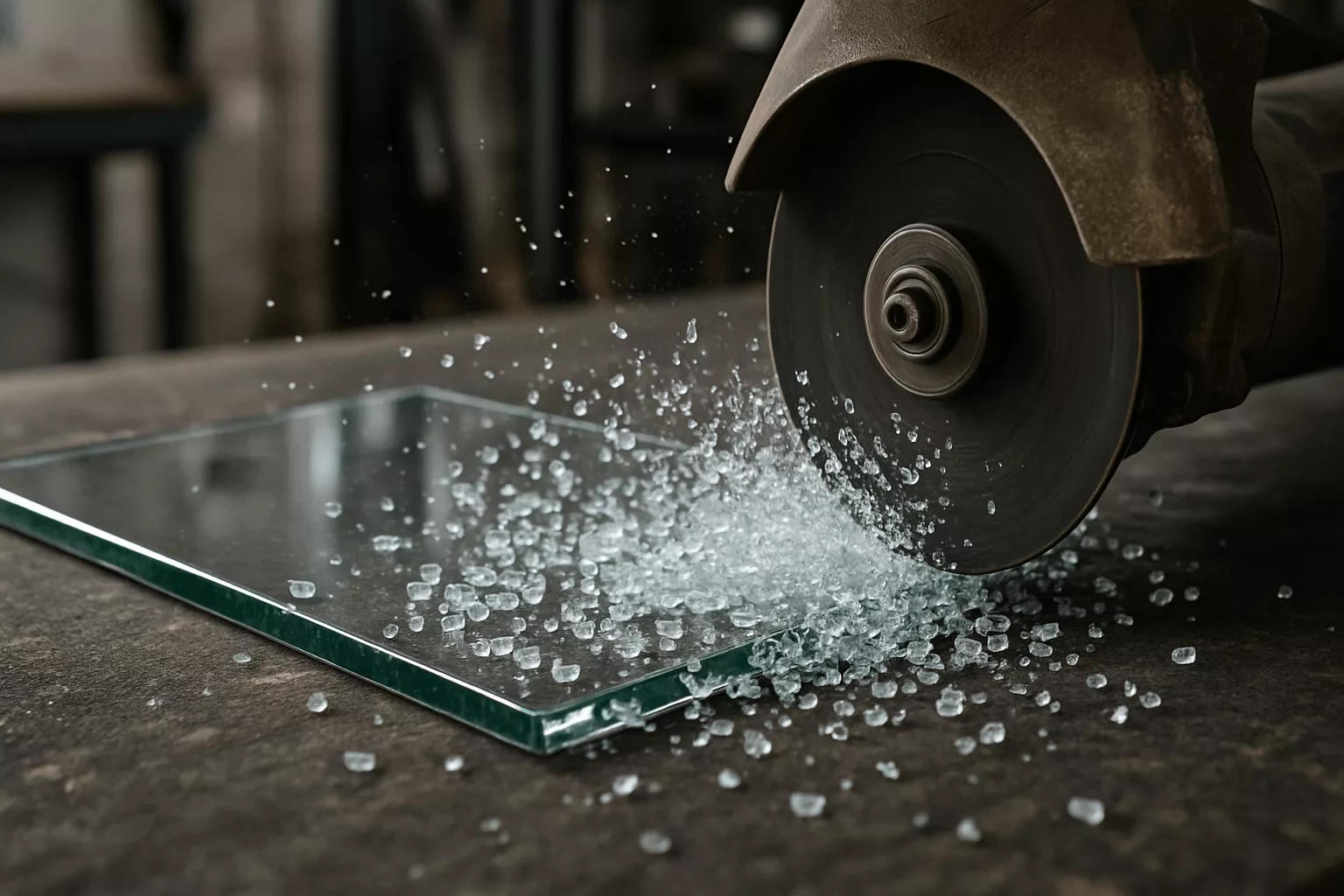
Let’s be clear: trying to “cut” tempered glass is not just ineffective. It is dangerous.
When a glasscutter’s wheel or a diamond blade touches the surface:
This reaction is unpredictable. Even slight pressure or vibration can trigger full breakage.
Professionals never cut or drill tempered glass directly. Instead, they shape the glass first, then temper it.
Here’s how the proper workflow looks:
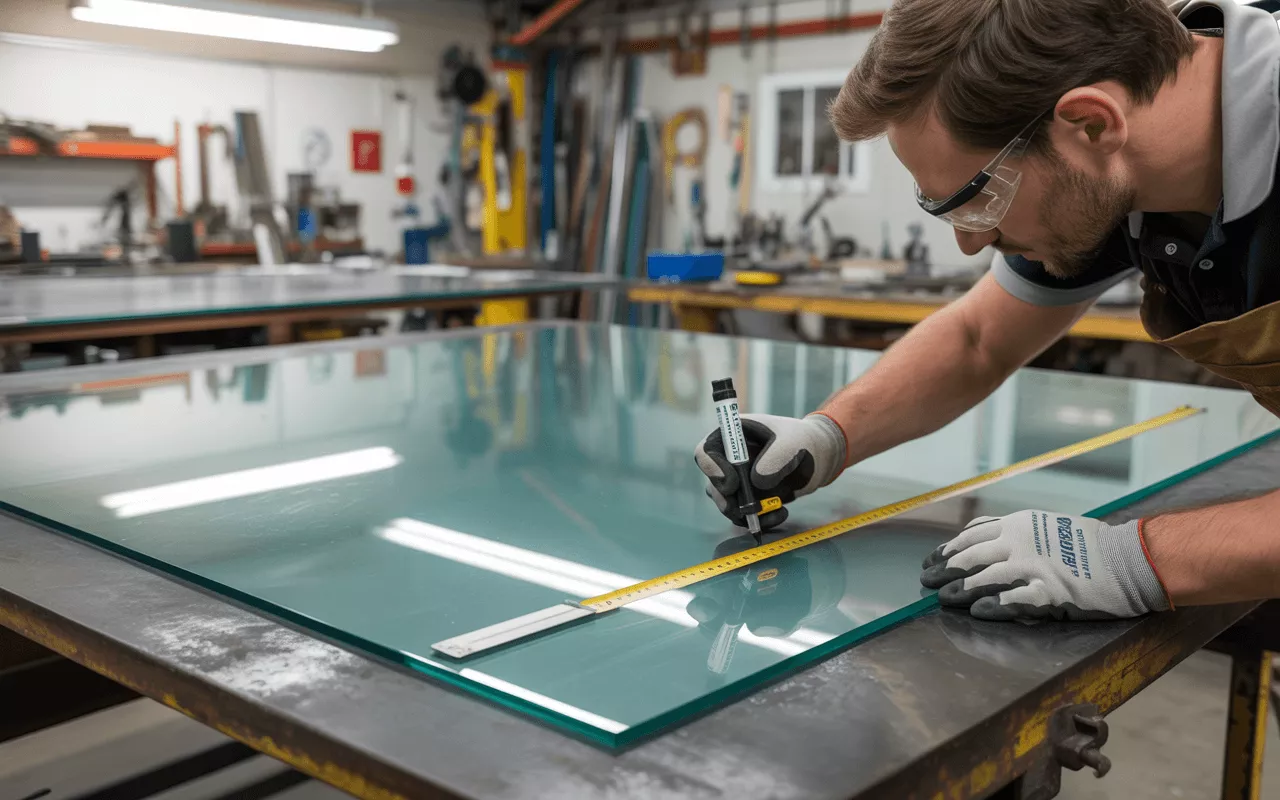
The glass sheet (usually annealed float glass) is measured and marked to the exact dimensions required for the final product, allowing for tolerances during the tempering process (slight shrinkage may occur).

Using a diamond or carbide wheel cutter, technicians score a shallow line across the surface. The glass is then snapped cleanly along that line using controlled pressure.
For curves or complex shapes, CNC machines or waterjets are used, but only before tempering.
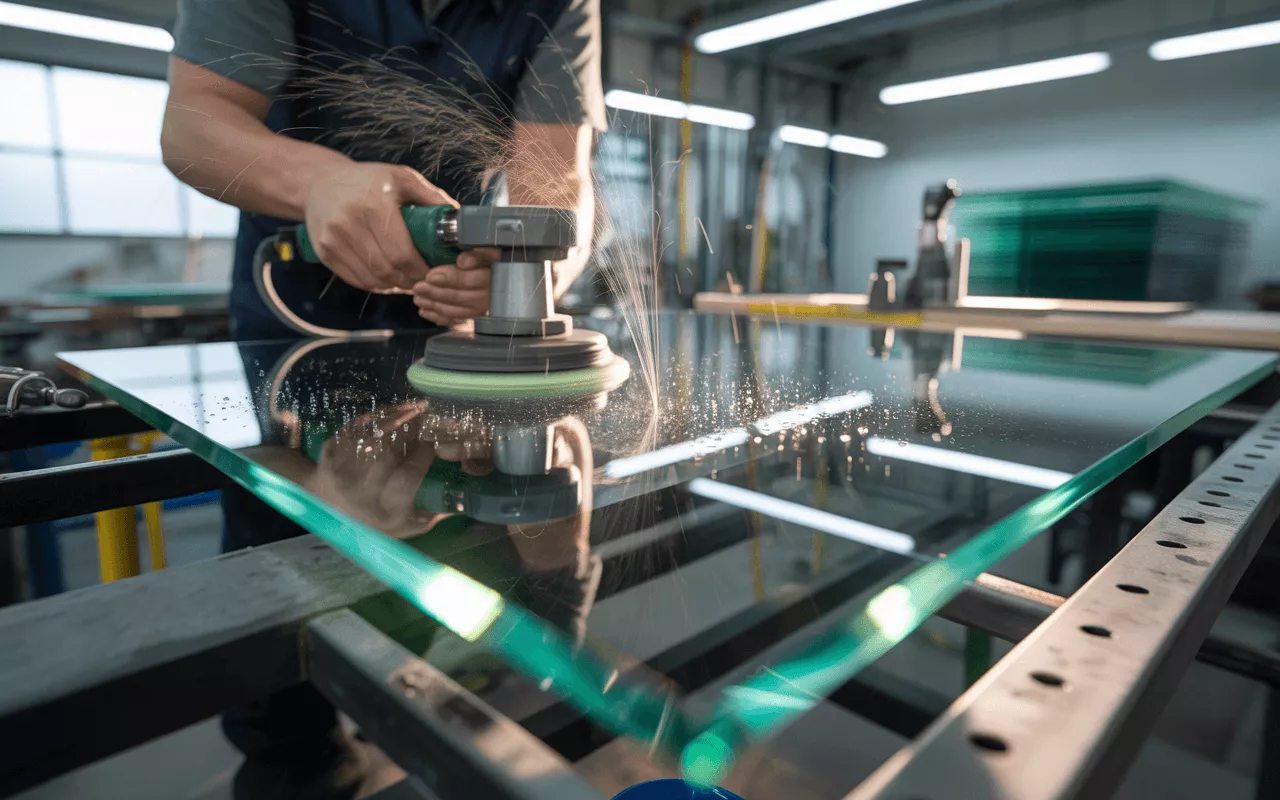
Edges are smoothed with a wet belt grinder or polishing machine to remove micro-cracks. This step is critical: even tiny surface flaws could cause spontaneous breakage during the tempering phase.
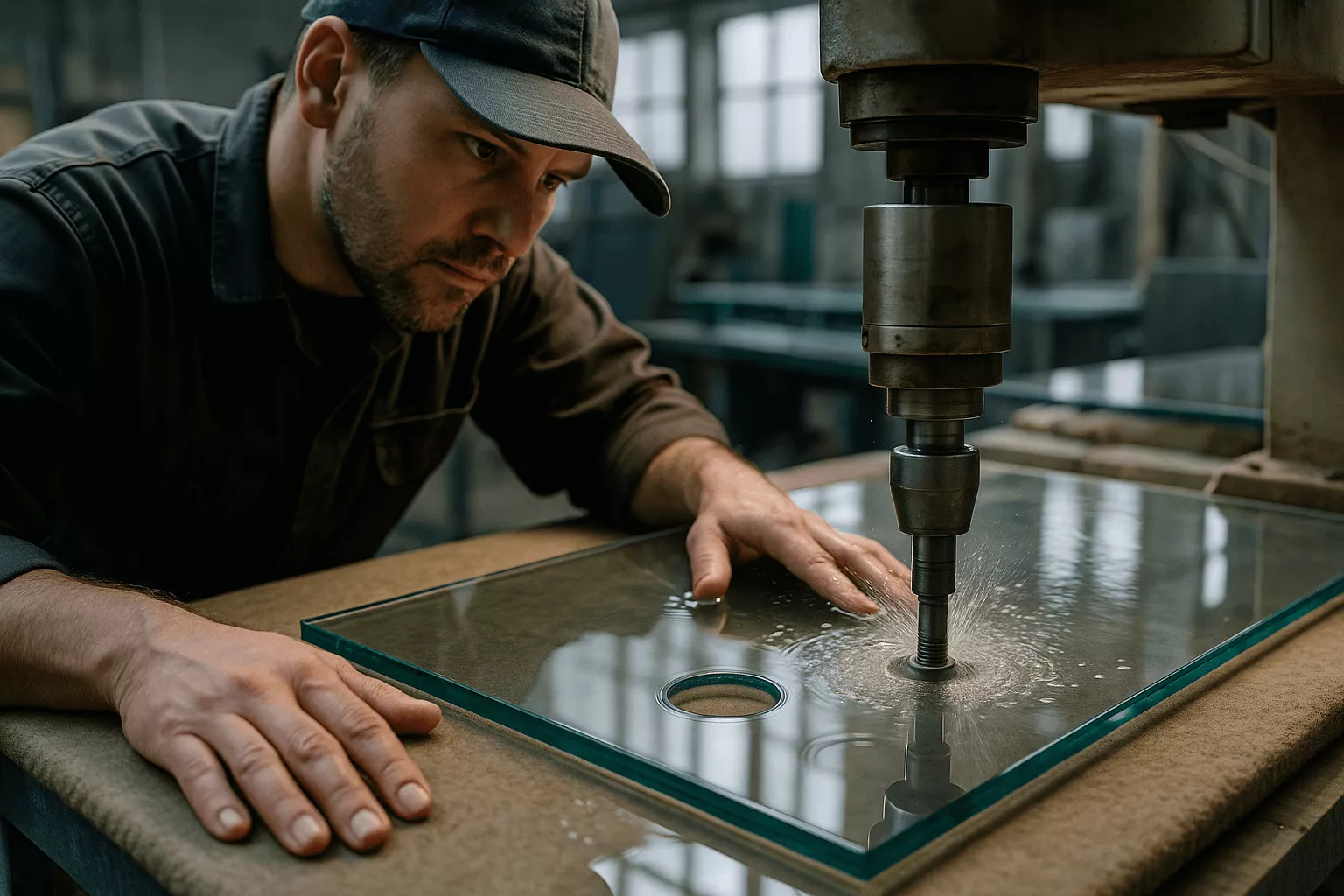
Any holes (for hardware, handles, or screws) are drilled at this stage. Once tempered, no additional holes can be made.
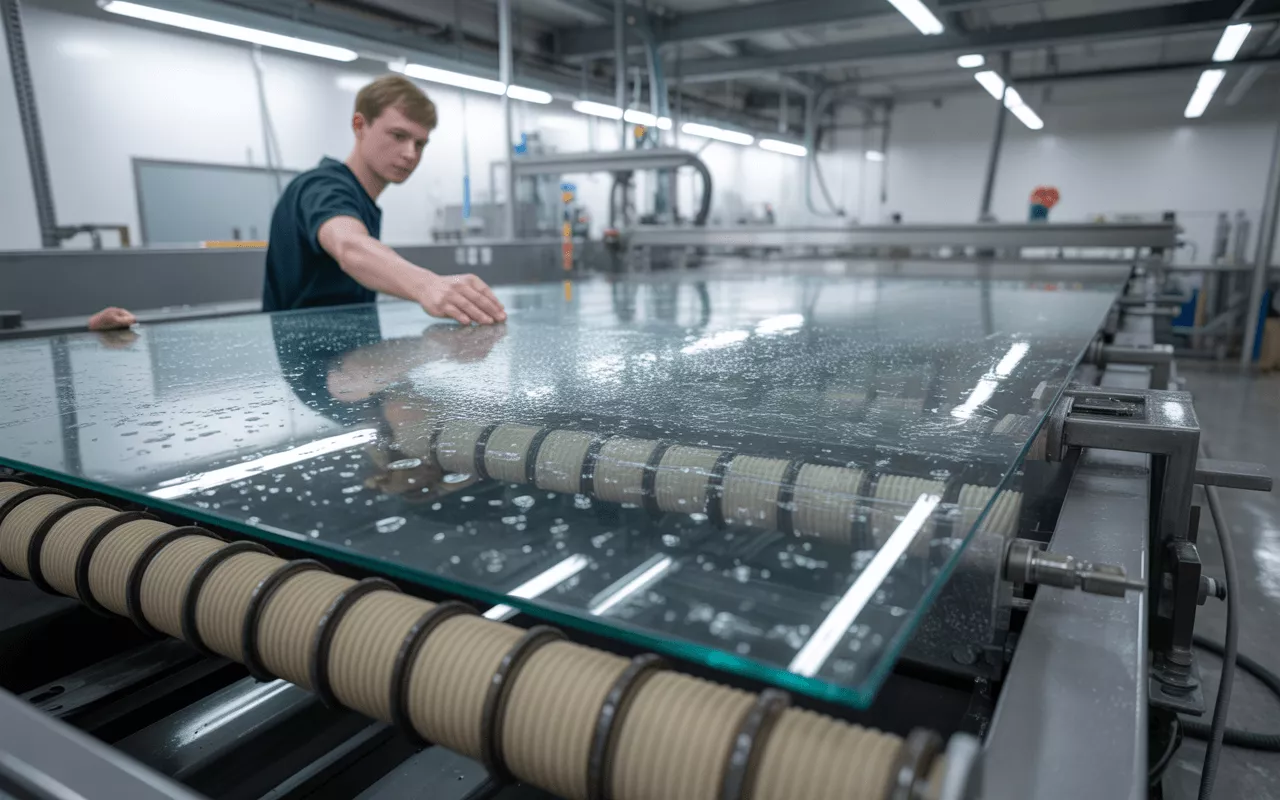
The glass is washed to remove dust or oils that could create weak spots. Imperfections are flagged for remaking.
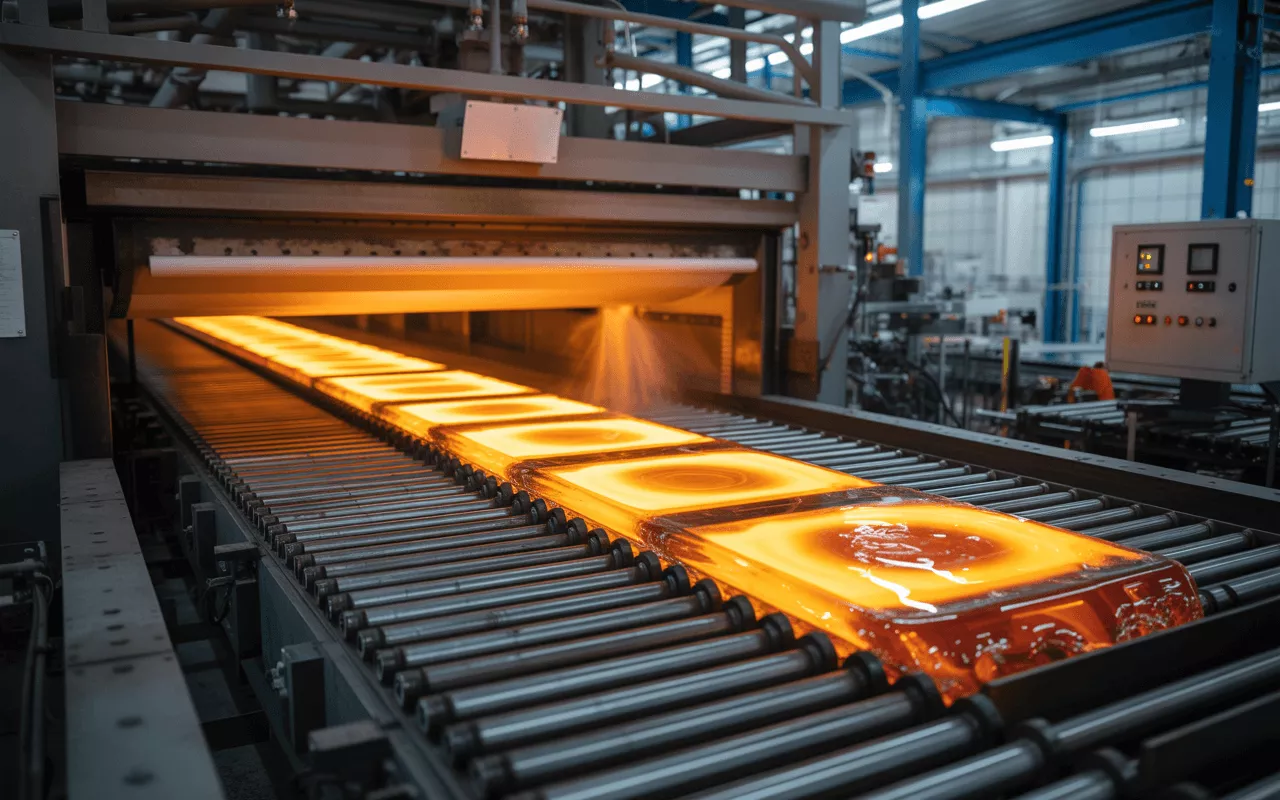
The glass is heated in a tempering furnace to 620 °C, then rapidly cooled with high-velocity air. This creates the compressive/tensile stress pattern, locking the shape permanently. Additionally, understanding various applications of glass, such as in the types of bay windows, can provide insight into why tempered glass is often preferred in specific settings.Result: After tempering, the glass is 4–5 × stronger than normal and can withstand temperatures up to 250 °C, but it’s no longer modifiable.
You will find online claims about cutting tempered glass with a laser, waterjet, or heat-and-cool method. Let’s address them one by one:
| Method | Can it work? | Why or why not |
| Diamond or carbide wheel | No | The outer layer resists scoring; tension causes shattering. |
| Laser cutter | Partially (only on small, non-tempered zones) | Can weaken local stress, but risks catastrophic failure; not viable industrially. |
| Waterjet cutter | Technically yes, but only for non-tempered glass | High pressure waterjets can cut raw glass, not tempered sheets. |
| Sandblasting / etching | For surface decoration only | Does not penetrate or cut; safe for design, unsafe for resizing. |
So even the most advanced tools cannot truly cut through tempered glass safely or economically. Professional glass fabricators always start with non-tempered glass, then cut, shape, drill, and polish, only then is it tempered for strength.

If you already own a tempered glass piece that doesn’t fit your needs, explore the other glass option which can be cut again, but it’s not safe when compared Tempered Glass vs Annealed Glass. Here are your realistic options:
This is the most practical and safe option. Fab Glass and Mirror offer custom-cut glass panels in every thickness, shape, and edge finish. You specify exact dimensions; we fabricate and temper it professionally.
In very rare cases, trained professionals can grind 1–3 mm off edges of tempered glass using a diamond belt grinder submerged in coolant.
However:
If resizing isn’t possible, repurpose the glass as a tabletop, shelf, or decorative panel. Broken tempered glass is recyclable, most local glass recyclers accept safety glass fragments.
Tempered glass breaks safely into small cubes, but handling those cubes incorrectly can still cause injury. Cutting tempered glass at home, such as for an attic window, by turning it into annealed glass is truly not worth the time and effort. Always observe the following:
If you need a specific size for the applications like interior wall finish, consult a glass professional or order a pre-cut tempered panel — never attempt cutting it at home. If you are designing a shower door, tabletop, or window installation:
At Fab Glass and Mirror, our production line uses CNC precision cutting, edge finishing, and tempering furnaces certified to ASTM C1048 standards. That ensures every custom piece meets safety regulations and dimensional accuracy.
If safety really matters to you, understanding the difference between annealed vs tempered glass is essential. A tempered glass, with its various applications at home, will work best for you. There are several areas where you can apply or install tempered glass, including windows, skylights, sliding doors, or balcony doors. You can also design your bathtub and shower doors with this kind of glass. In fact, this glass is perfect when there is potential contact with broken glass. Never compromise your safety at home; you can always take advantage of tempered glass.
One of the tricky things about tempered glass is that you are not recommended to cut it by yourself, as it’s almost impossible to do. Even after learning all the steps for cutting tempered glass, you still can’t be sure about the success of your glass cutting project. Instead, you can consider purchasing pre-cut tempered glass from a glass and mirror online shop, ensuring precision and safety for your project.
No. Drilling will instantly shatter it. Holes must be made before tempering during fabrication.
Look for an etched logo near a corner, view stress patterns through polarized light, or gently tap, tempered glass produces a higher-pitched “ring.”
No. Any mechanical attempt (cutting, sawing, grinding deeply) will destroy it.
Yes, but only if you start with non-tempered glass. Once glass has been tempered, the structure is permanent, it cannot be “re-tempered” or softened again.
Tempered glass is a single sheet heat-treated for strength; shatters into small cubes. On the other hand, laminated glass is a two or more sheet bonded with a plastic interlayer; cracks but stays intact, commonly used in windshields.

Explore all things glass—from stylish table tops and insulated options to tinted and frosted designs. Discover guides on glass railings, custom cut glass, shelves, and stunning backsplash ideas for a modern home or office upgrade.