
My Cart
You have no items in your shopping cart.


Custom tempered glass offers not just visual appeal but also functionality, durability, and improved safety. In case you are outfitting a modern office, renovating your home, or designing furniture, the shape of the glass plays a crucial role. With the ability to choose from dozens of unique shapes and sizes, buyers can customize each piece to fit their exact design and architectural needs. This article explores every major shape available in the custom tempered glass industry, their best use cases, and ideal sizes, helping buyers make informed decisions.
Custom tempered glass refers to glass that is not only strengthened, but also personalized in terms of shape, size, edge finish, and thickness to meet specific requirements. Complex cuts can sometimes hide the traditional safety logo; if you can’t find the ‘bug,’ there are other ways how to tell if glass is tempered using polarized light or edge inspection. It is commonly used in:
Table of Contents
Tempered glass is not only strong and stylish; it must also meet strict safety standards to ensure it performs under real-world conditions. Intricate shapes often look best when paired with specialized tempered glass types, such as bronze tinted or acid-etched finishes for a modern look. At Fab Glass and Mirror, we ensure that high-end design never compromises protection. All custom-cut tempered glass—regardless of its shape or finish—is manufactured in strict compliance with U.S. industry safety benchmarks:
The American National Standard for Safety Glazing Materials used in buildings and architectural installations. This standard ensures tempered glass can safely withstand human impact without shattering dangerously.
A federal safety regulation required for glazing in tempered glass shower doors, and hazardous locations. It defines how tempered safety glass should perform in case of breakage.
The standard specification from ASTM International for heat-treated glass, including fully tempered and heat-strengthened products. It ensures quality consistency in glass thickness, cutting, surface compression, and optical distortion.
Choosing glass that complies with these certifications means better protection, higher durability, and peace of mind, particularly in high-traffic areas or installations where safety is critical.
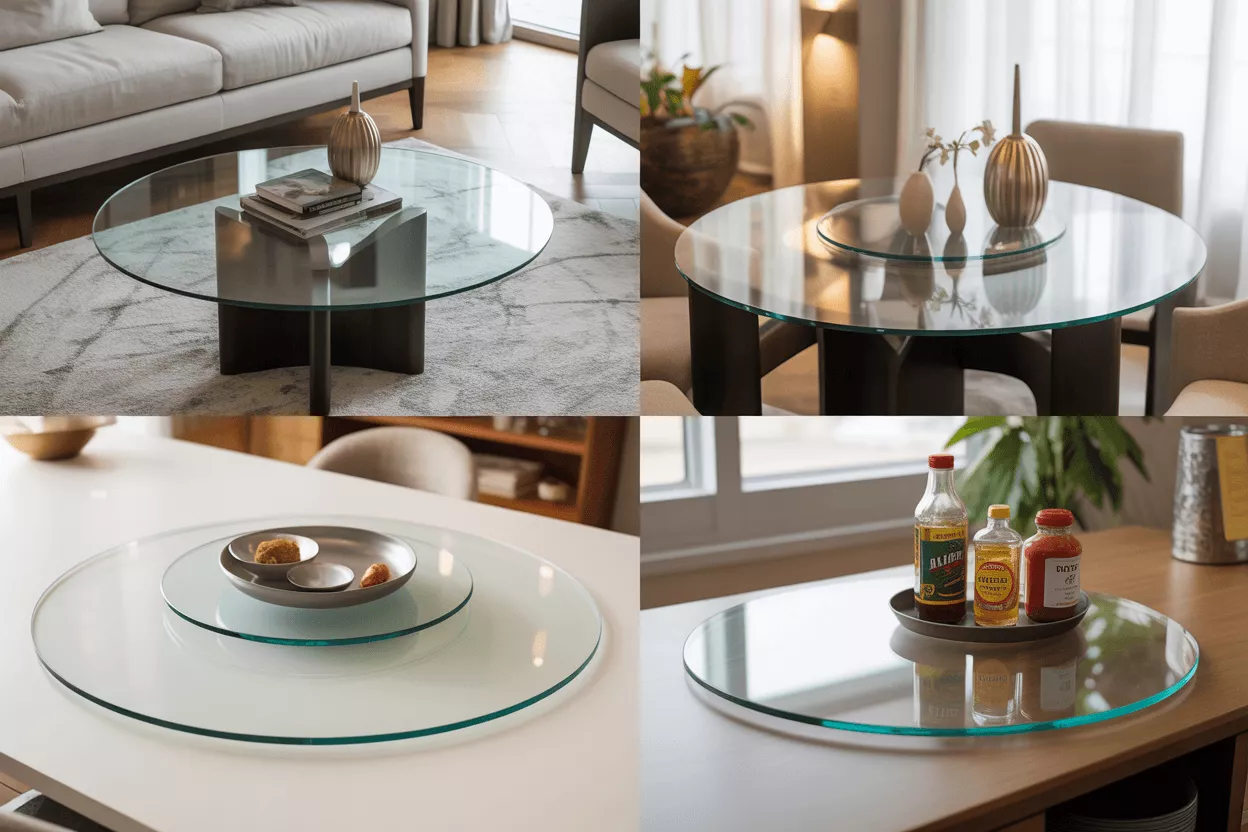
Round tempered glass offers an elegant, soft appearance that complements both traditional and contemporary spaces. This shape is especially popular because of its lack of corners, making it a safer and more inviting option for high-traffic areas like kitchens and family rooms. Its symmetrical form creates visual balance and can serve as the focal point in minimalist or luxurious interior settings.
18″, 24″, 30″, 36″, 42″, 48″
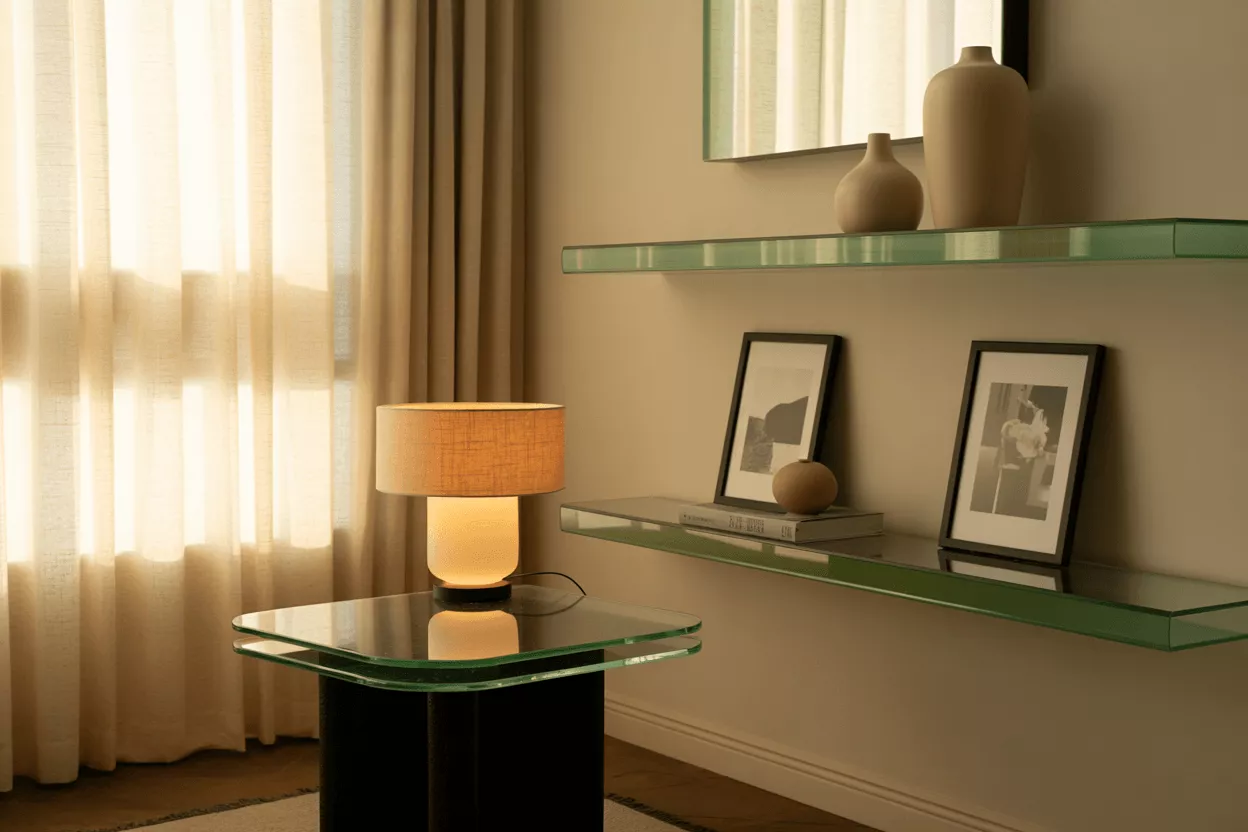
Square glass panels offer clean lines and symmetry, making them a favorite for modern interior layouts. They work beautifully for standalone furniture or built-in shelving and are often used to create uniform design patterns. Square tempered glass is also excellent in confined spaces where you want structure and form without visual clutter.
12×12, 18×18, 24×24, 30×30
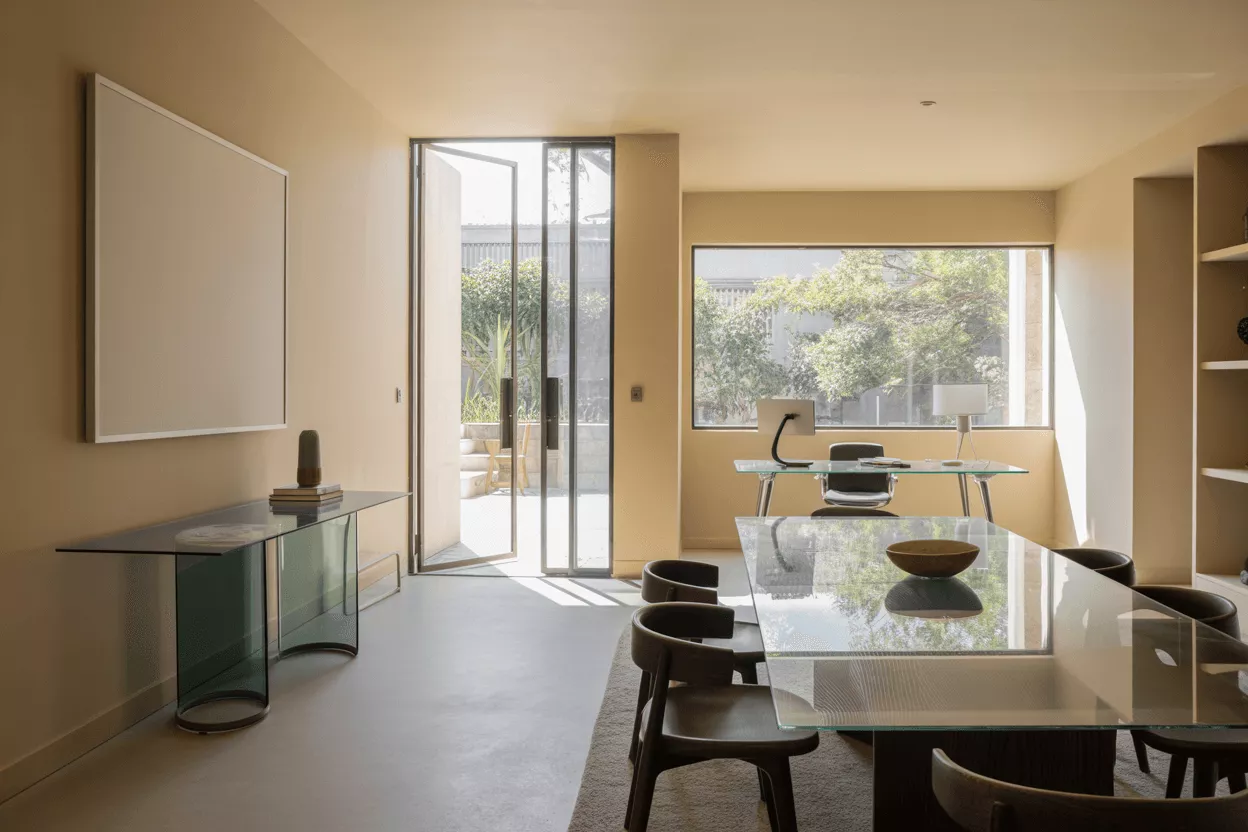
Rectangular shapes are the most commonly used glass forms due to their adaptability across home, office, and commercial applications. This shape provides a formal, structured appearance and works well in both horizontal and vertical installations. Whether it is used on desks, conference tables, custom glass table tops or doors, rectangular tempered glass ensures functionality with style.
24×36, 30×60, 48×72
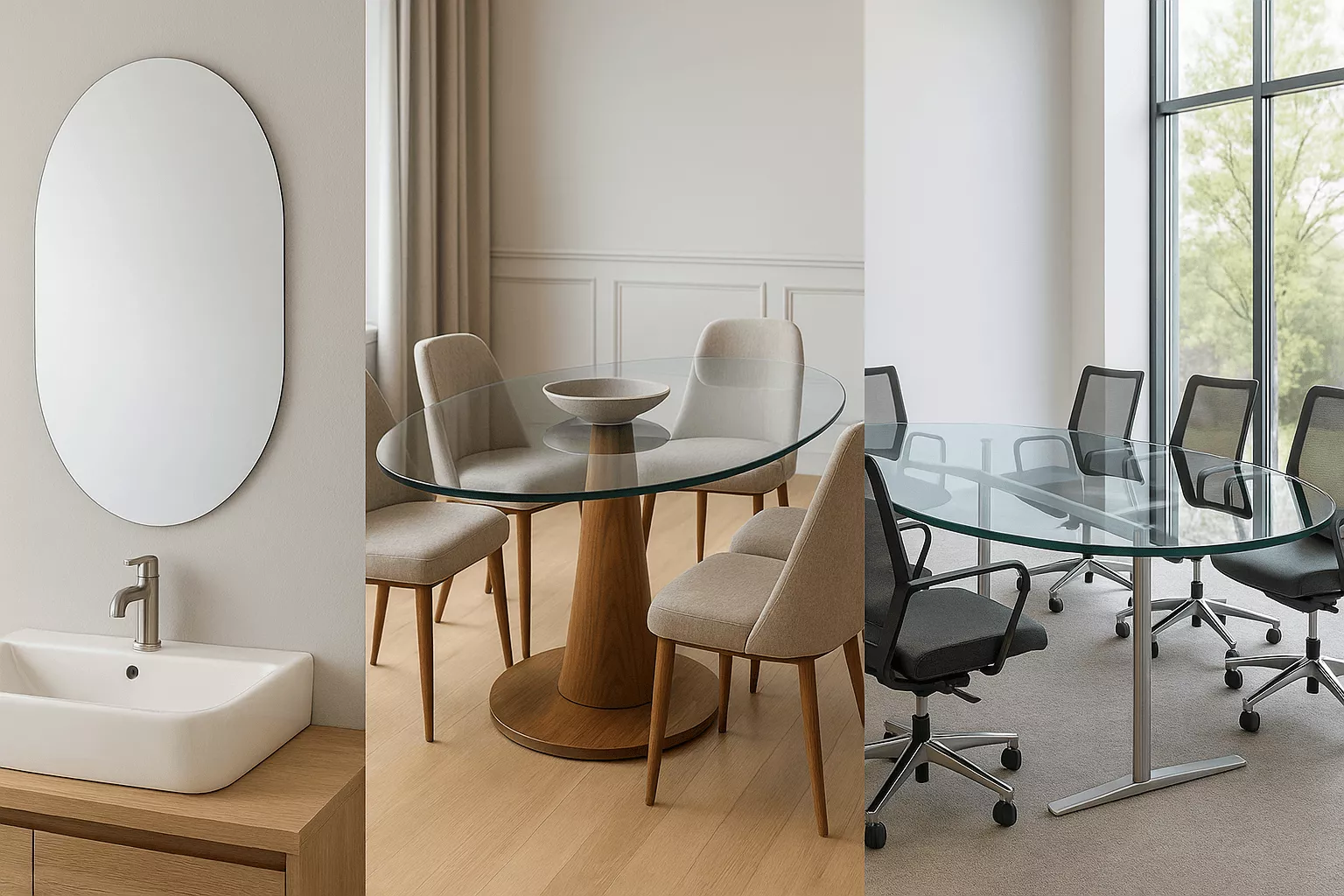
With gentle curves and extended length, oval or ellipse tempered glass adds elegance and a sense of movement to any setting. It is ideal for breaking up boxy designs and offering a softer focal point. Elliptical shapes are well-suited for high-end design spaces aiming for fluidity and grace.
30×48, 36×60, 40×72
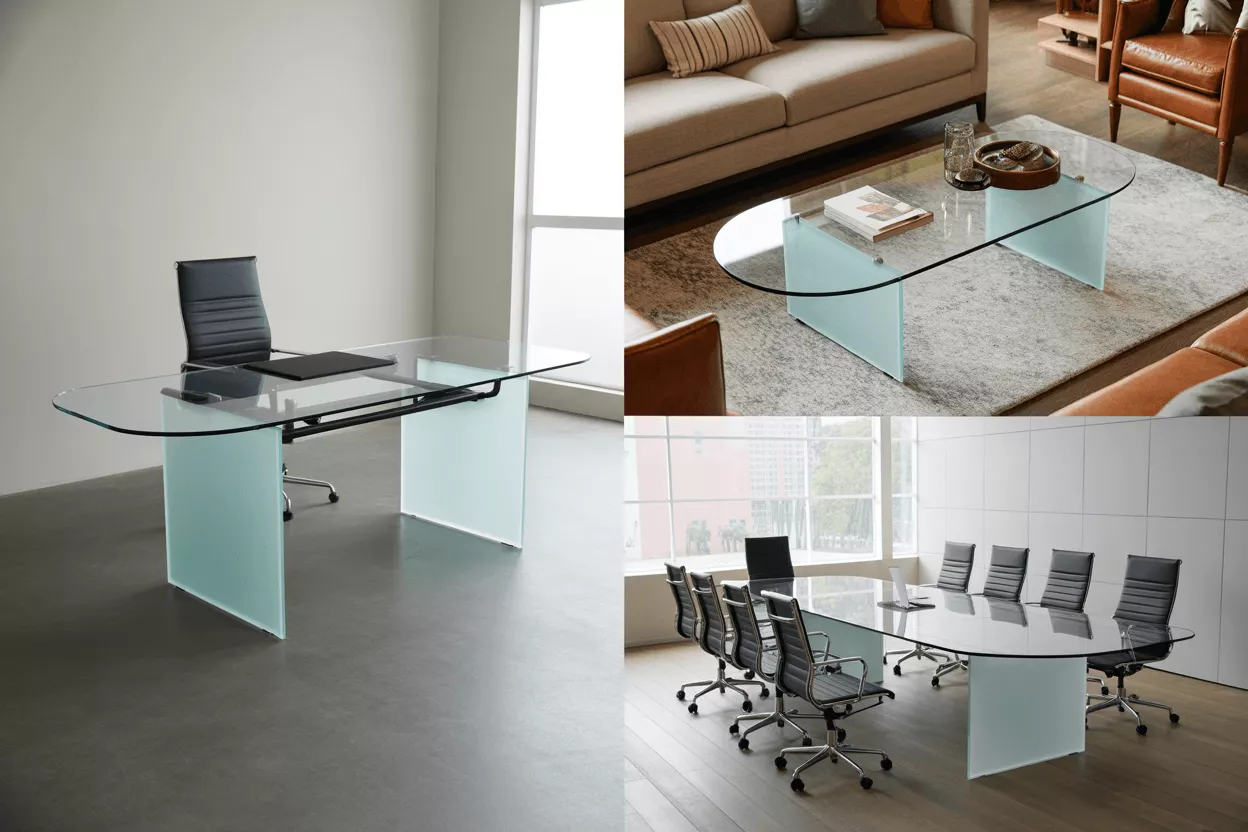
A race track oval has the same lengthwise curve as an ellipse, but features straighter sides, creating a modern, structured feel. It is perfect for contemporary interiors where clean lines meet gentle curves. The shape is easy to position within rectangular or open-plan areas.
24×48, 30×60, 36×72
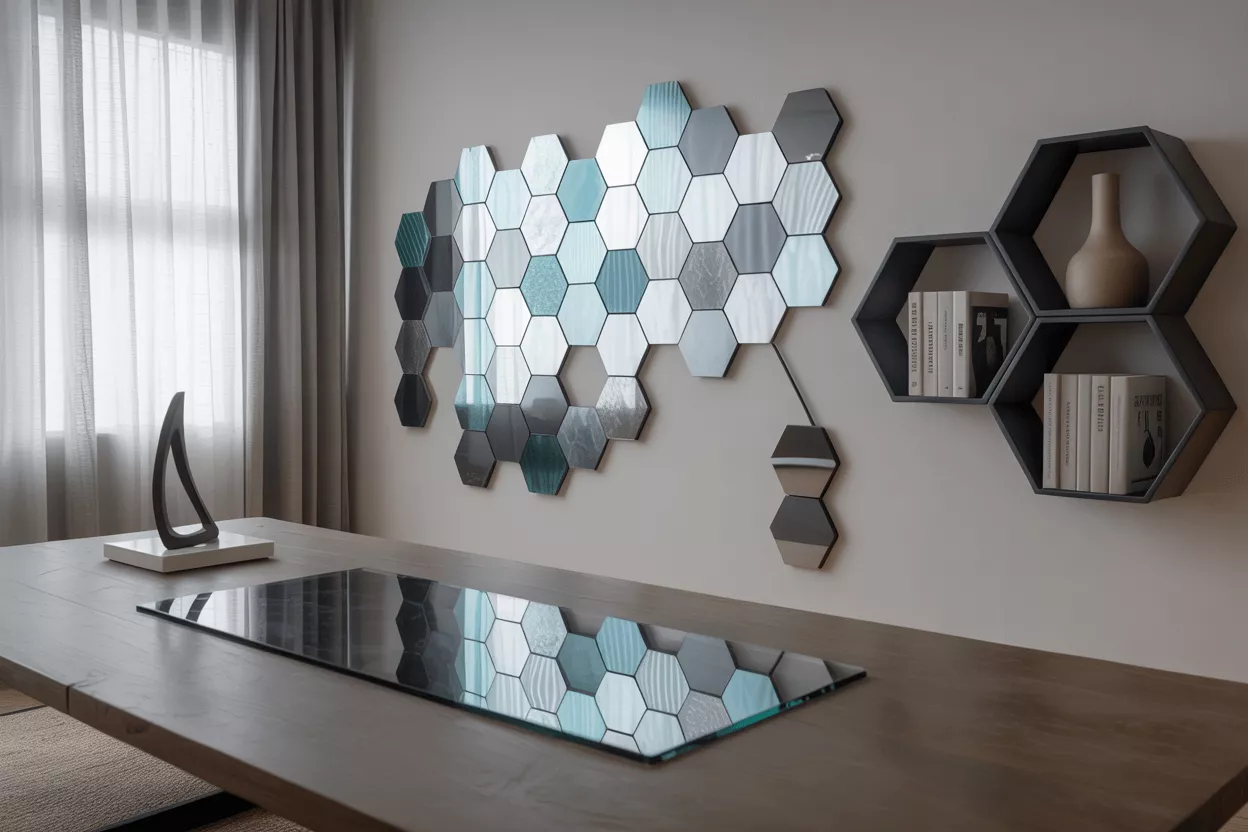
Hexagonal tempered glass creates a geometric impact and is ideal for artistic arrangements or modular configurations. Its six equal sides make it a strong visual anchor for wall installations and decorative displays. It is often used in interior design to break symmetry while maintaining cohesion.
18″, 24″, 30″, 36″
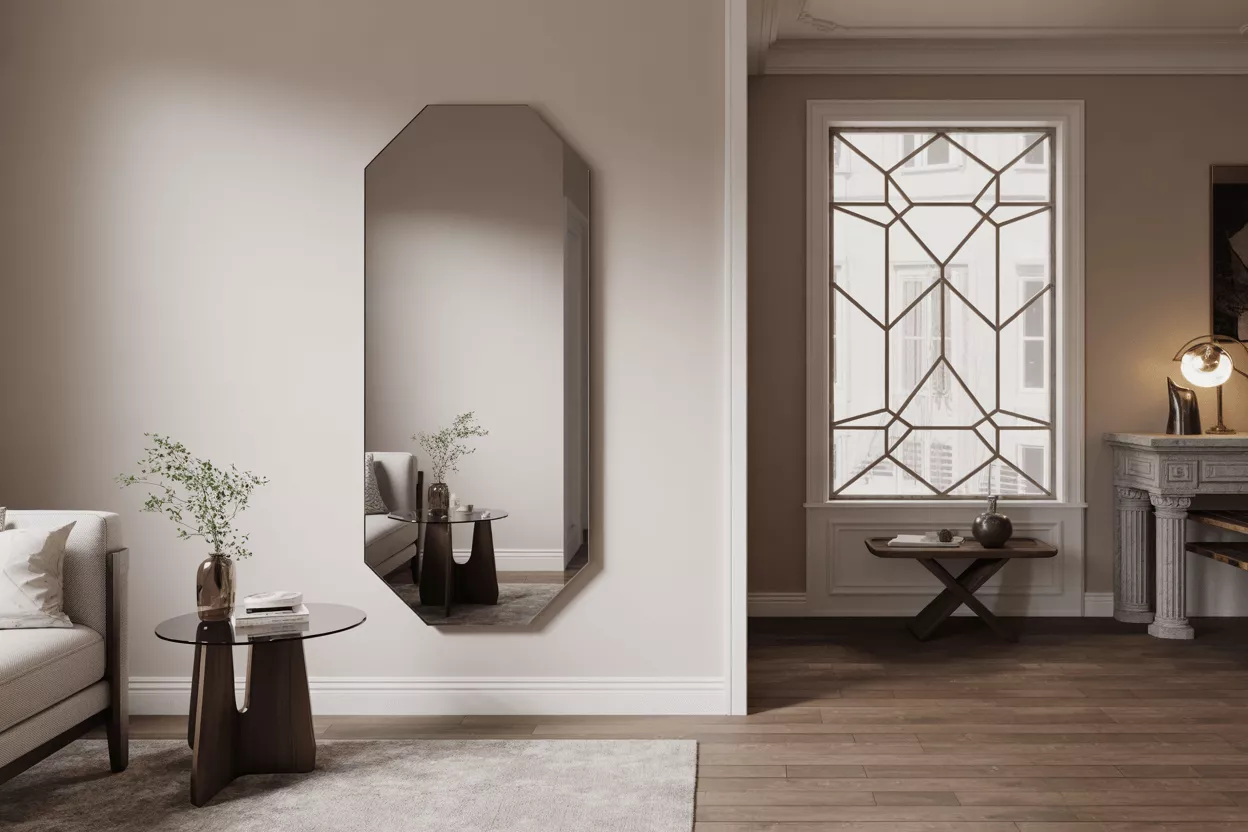
The octagon is a balanced, eye-catching shape that brings classical architecture into modern design. Its eight sides offer more complexity than a square or circle while still maintaining symmetry. This shape is a favorite for luxurious applications where form is as important as function.
30″, 36″, 48″

Right triangle glass fits perfectly into corners or angled architecture. It is an excellent space-saver and is used when you need to make the most out of narrow or irregular spaces. The shape also finds use in custom installations that play with angular symmetry.
12″, 18″, 24″
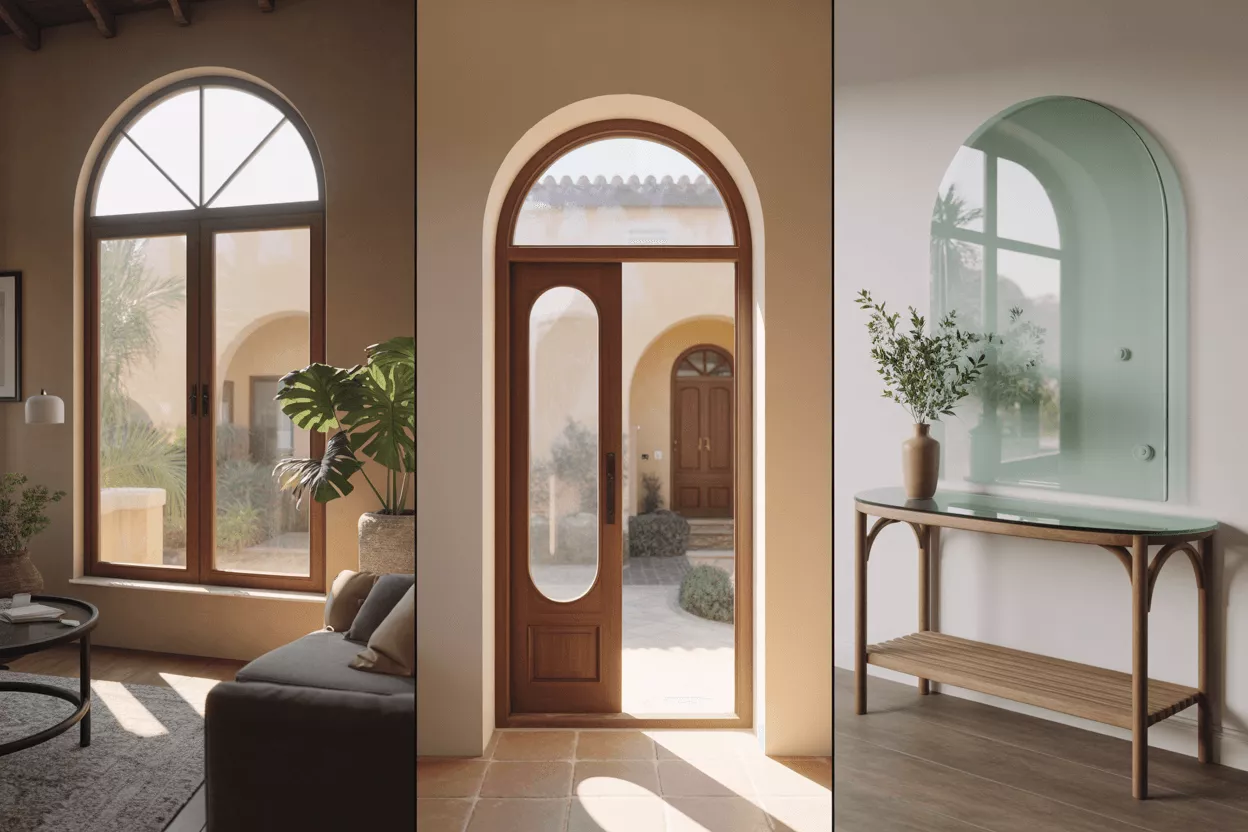
This half-moon shape lends itself to creative installations where a gentle arc is preferred. It is often seen in window transoms or curved console tables and can also serve as the top or bottom portion of a larger archway. Semi-circle tempered glass is a staple in Mediterranean and classical interior styles.
24″, 36″, 48″
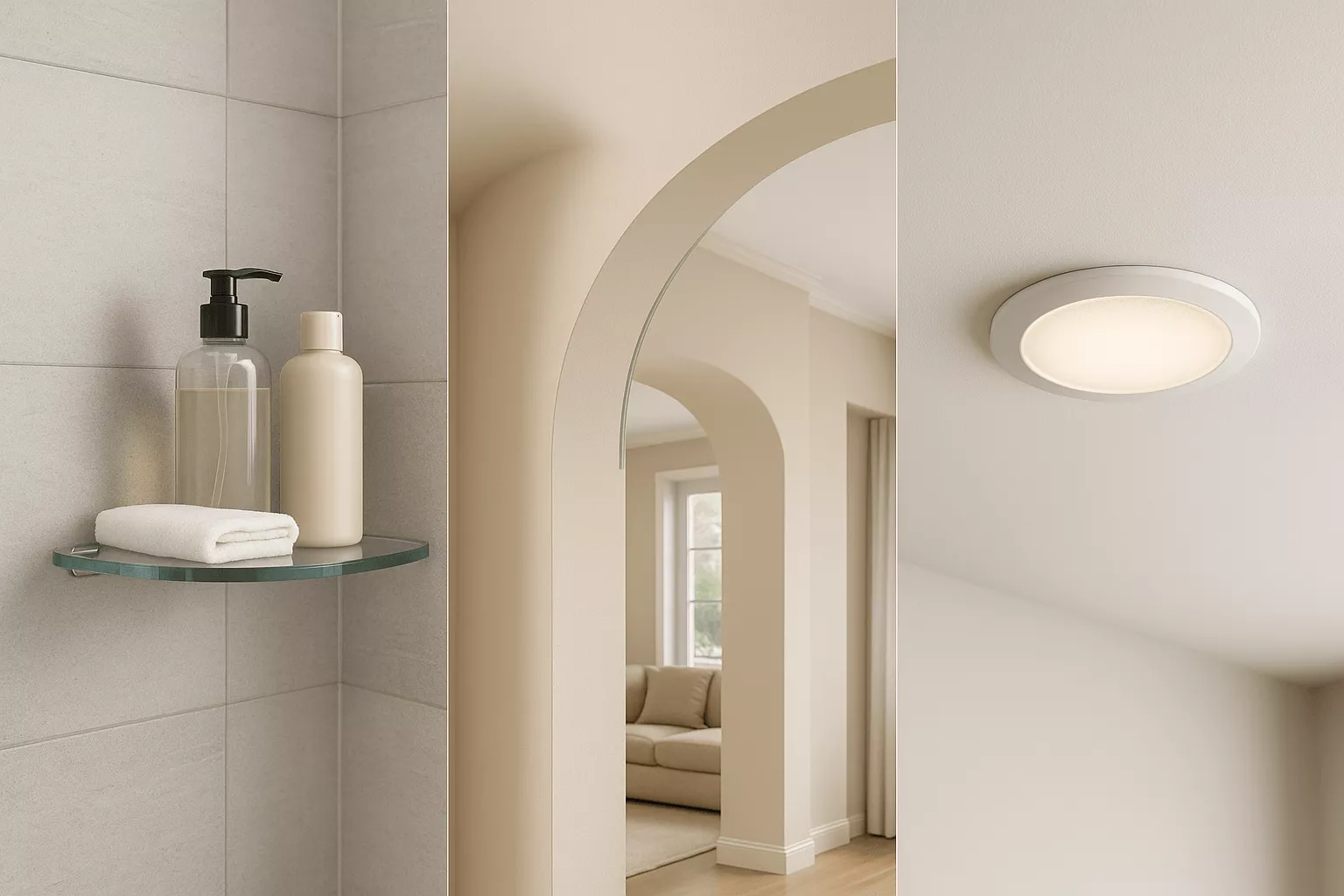
Quarter round glass, or quarter circles, are typically used for corners where full glass panels won’t fit. They are perfect for softening edges and creating a cohesive flow in interior designs. They can also serve as glass shelves custom cut or inserts.
12″, 18″, 24″
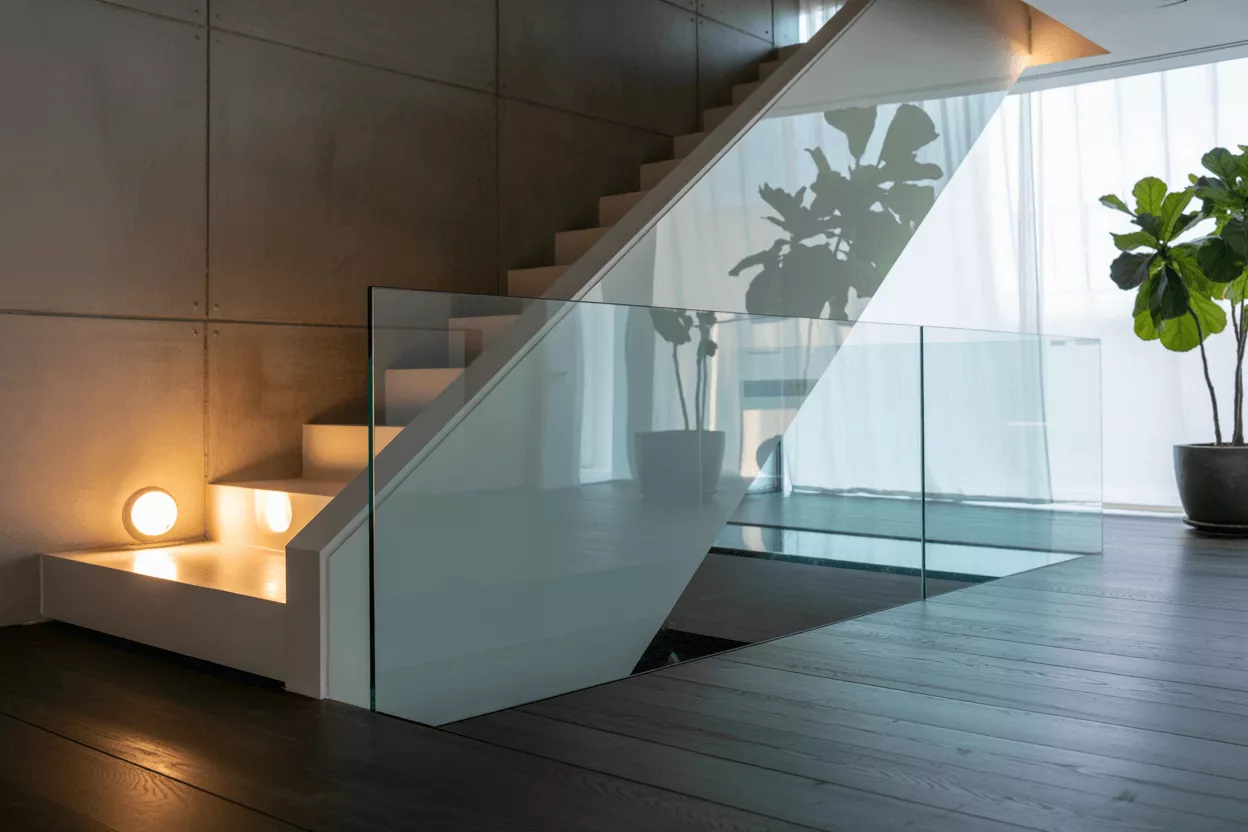
The right slope rectangle is a specialized shape featuring a slanted top or side, creating an angled trapezoidal profile. It is commonly used where the standard rectangle wouldn’t fit, such as under staircases, attic spaces, or custom cabinetry.
The sloped edge adds visual motion and a custom-fit function to uniquely shaped rooms. It is ideal for achieving continuity in angular interiors or asymmetrical layouts. Right slope tempered glass can also improve safety by aligning tightly against irregular walls or sloped ceilings, ensuring no gaps or sharp corners remain.
Custom-only based on slope angle and length (e.g., 24”x36” with a 15° slope)
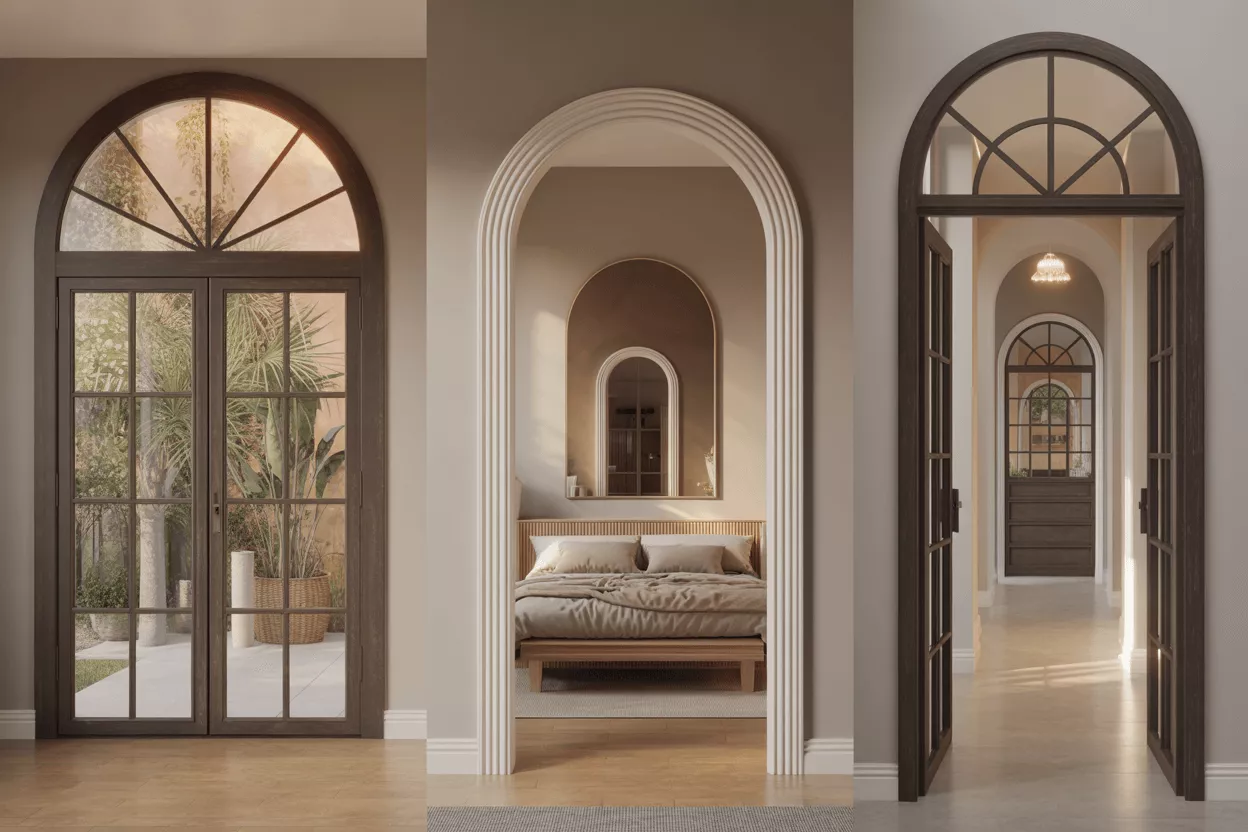
Arch-shaped tempered glass has a timeless appeal and is often used to add elegance and classical charm to interiors. The shape mimics architectural archways, giving a soft and flowing finish that contrasts beautifully with linear elements. Whether used as a transom window or a feature custom shape mirror glass, arch glass introduces sophistication and vertical depth.
It can be crafted as a gentle curve or a more dramatic arc, depending on the design intent. The arch shape is also associated with traditional and Mediterranean-inspired architecture and is frequently used in custom doors.
24”x60”, 30”x72”, 36”x84” (width x total height)
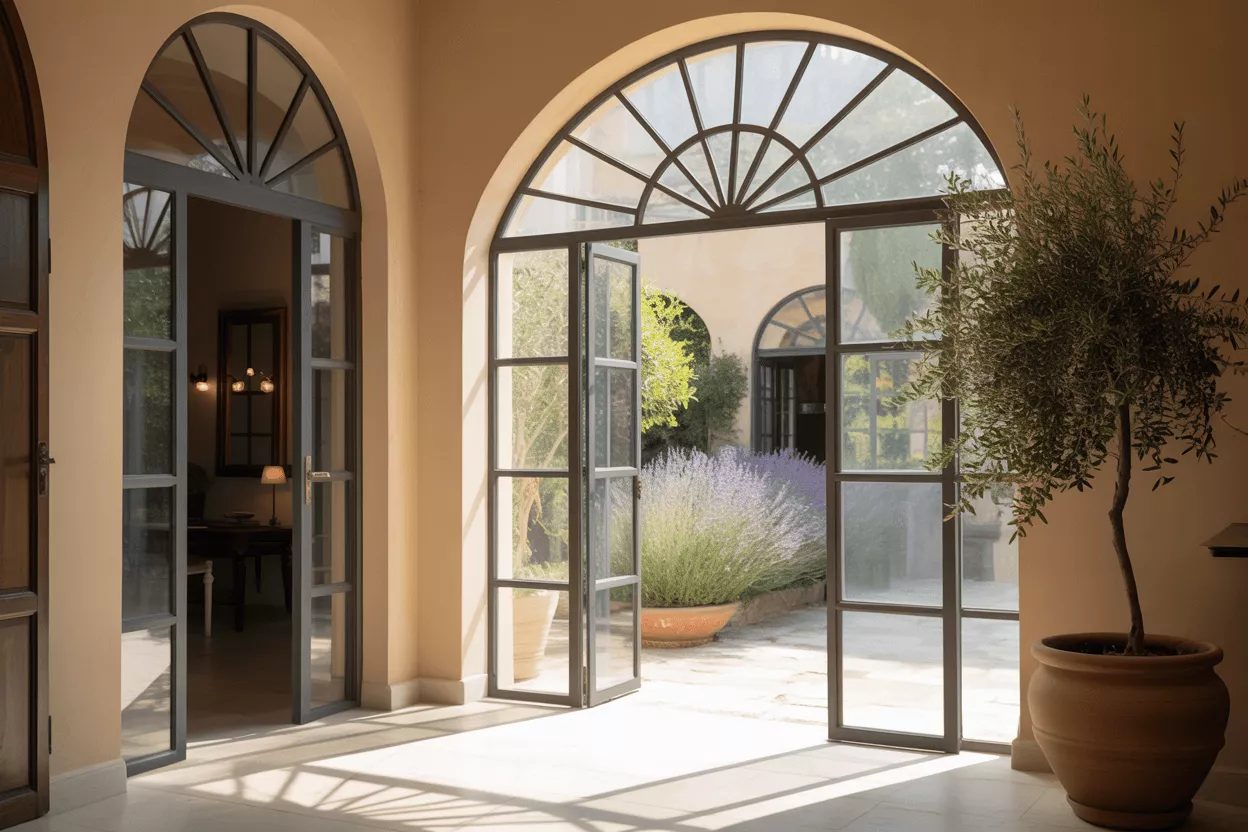
Trapezoid tempered glass, with one pair of parallel sides and one pair of non-parallel sides, creates an edgy and abstract shape that’s perfect for modern or architectural layouts. It is commonly used in sloped ceiling windows, custom table designs, and angular wall panels.
This shape introduces asymmetry and dynamism into spaces, breaking free from conventional symmetry. Trapezoid glass is often found in A-frame homes, lofts, or anywhere you need custom-fit glazing in an angled opening.
Designers appreciate this form for its bold look and practicality in complex spaces.
Custom-only (e.g., top: 36”, base: 30”, height: 24”)
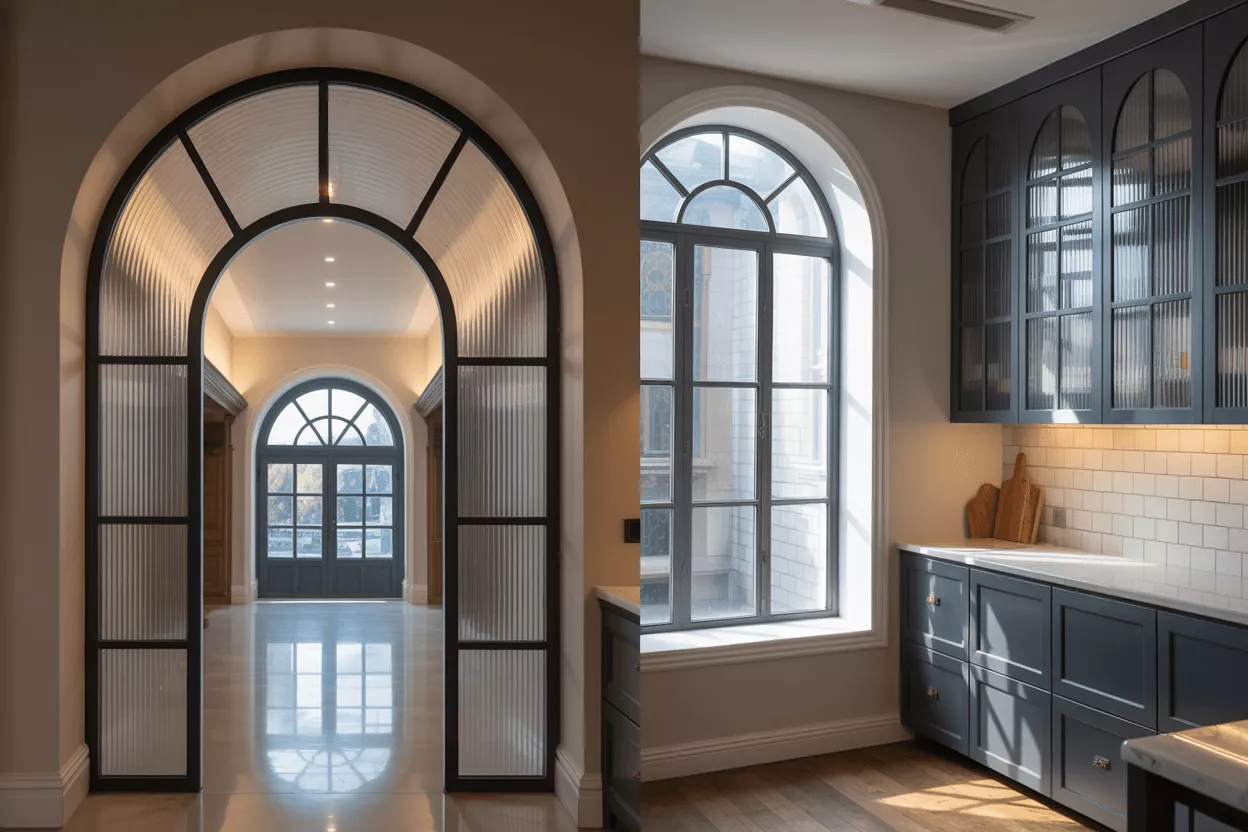
Arch side glass is typically used in combination with a central arch piece, acting as the flanking components of an arched window or door design. It features one straight edge and one curved side, allowing for seamless integration into symmetrical layouts. This shape balances artistic design with spatial harmony, creating an elegant entryway or interior focal point.
Arch shaped tempered glass is often found in luxury homes, churches, or traditional structures with intricate fenestration. It is also a preferred choice in cabinetry that mimics architectural shapes.
Custom (height usually matches center arch—e.g., 24”x60”)
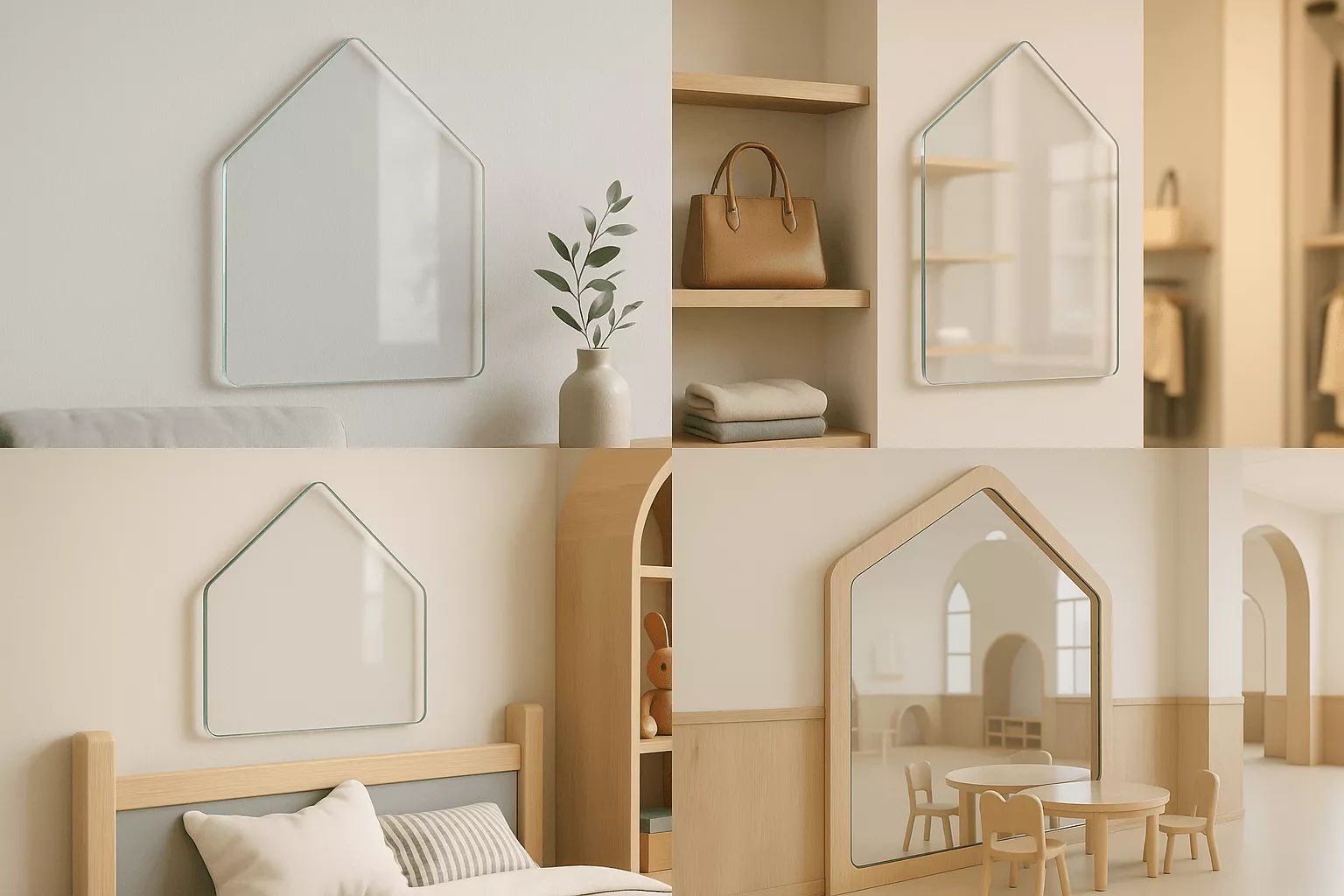
The house shape is an imaginative and stylized silhouette resembling the outline of a gabled-roof house. This playful and architectural form is especially popular in retail displays, children’s rooms, and thematic interior design.
It combines two sloped sides meeting at a peak, along with vertical walls and a base. House-shaped tempered glass brings character and visual storytelling into spaces.
Designers often use it to spark nostalgia or create brand storytelling in commercial spaces. Though often decorative, it can also serve as functional signage or shelving.
Custom (e.g., base: 24”, height to peak: 36”)
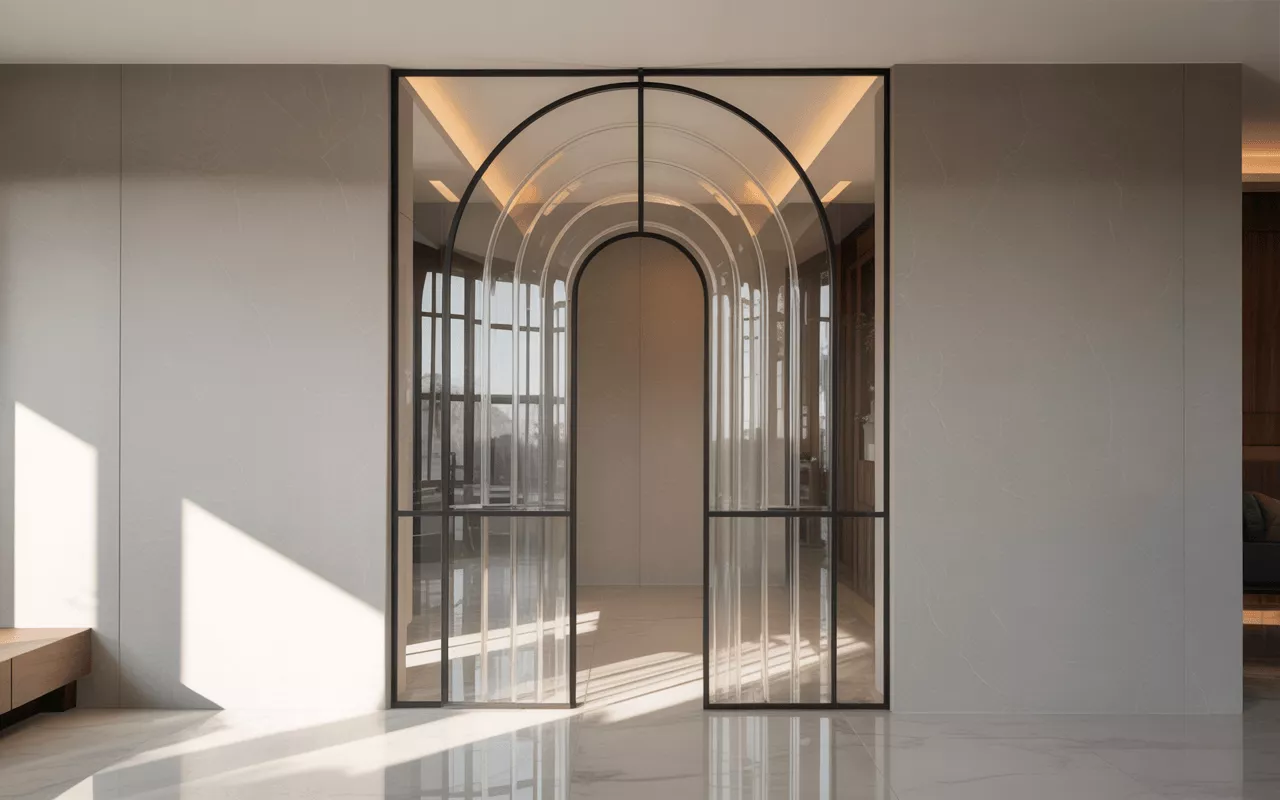
The arch top and bottom tempered glass shape features curves on both the upper and lower edges, creating a flowing hourglass-like silhouette. This design is highly ornamental and often used to add elegance to luxury interiors. The dual-arched curves introduce balance, making the piece symmetrical and dynamic at the same time.
This shape is favored in artistic installations, decorative partitions, and custom-designed doors. It can be crafted in subtle curves for minimalist appeal or deeper arches for dramatic effect, offering designers flexibility in form and visual storytelling.
Custom-only (e.g., 36”x72” with 6” arches at top and bottom)
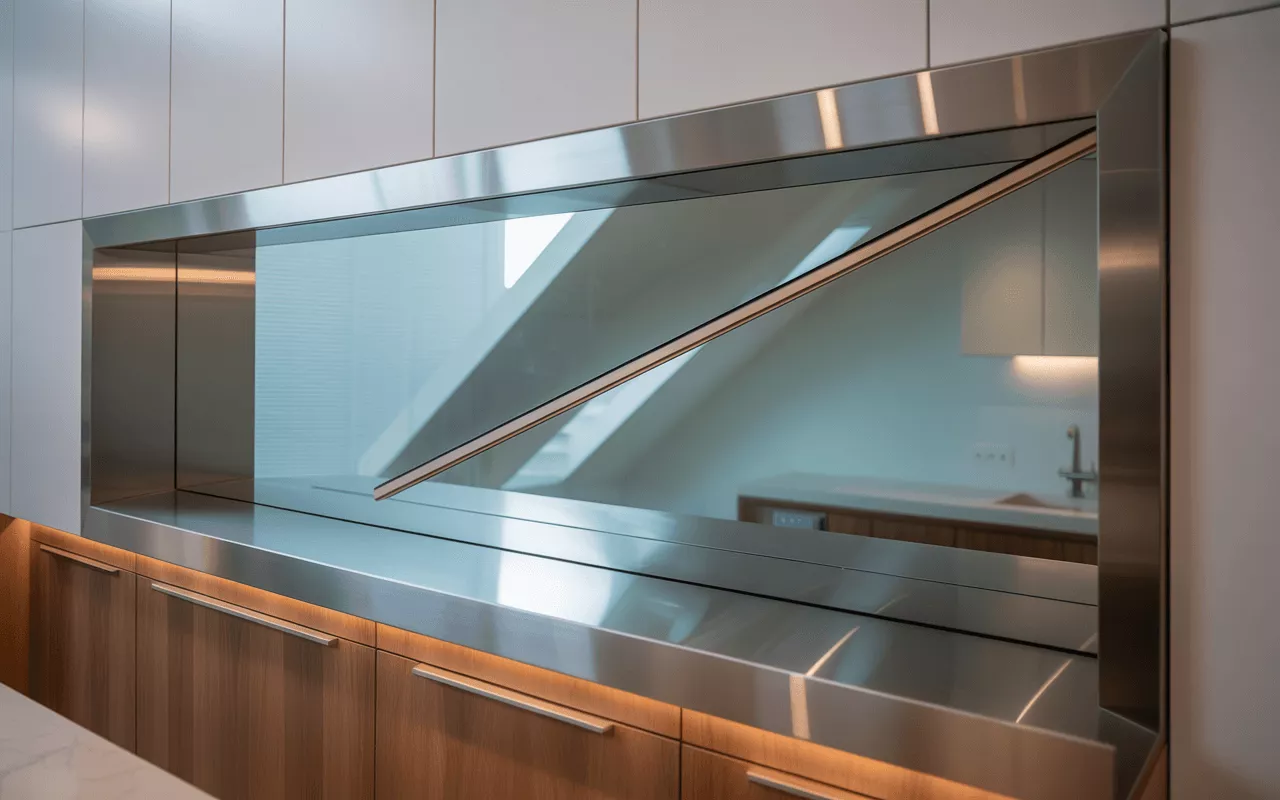
The left slope rectangle is the mirror image of the right slope rectangle and is equally useful in irregular architectural layouts. It is primarily used where left-angled slants exist, under staircases, roof eaves, or custom furniture. The clean diagonal cut on the left side accommodates angled structural features without compromising fit.
When installed properly, it creates a sleek, built-in look that increases spatial efficiency. This shape allows for clever design solutions in otherwise awkward spaces and is often paired with its right-sloped counterpart in symmetrical installations.
Custom only (e.g., 30” base x 36” height with 15° left slope)
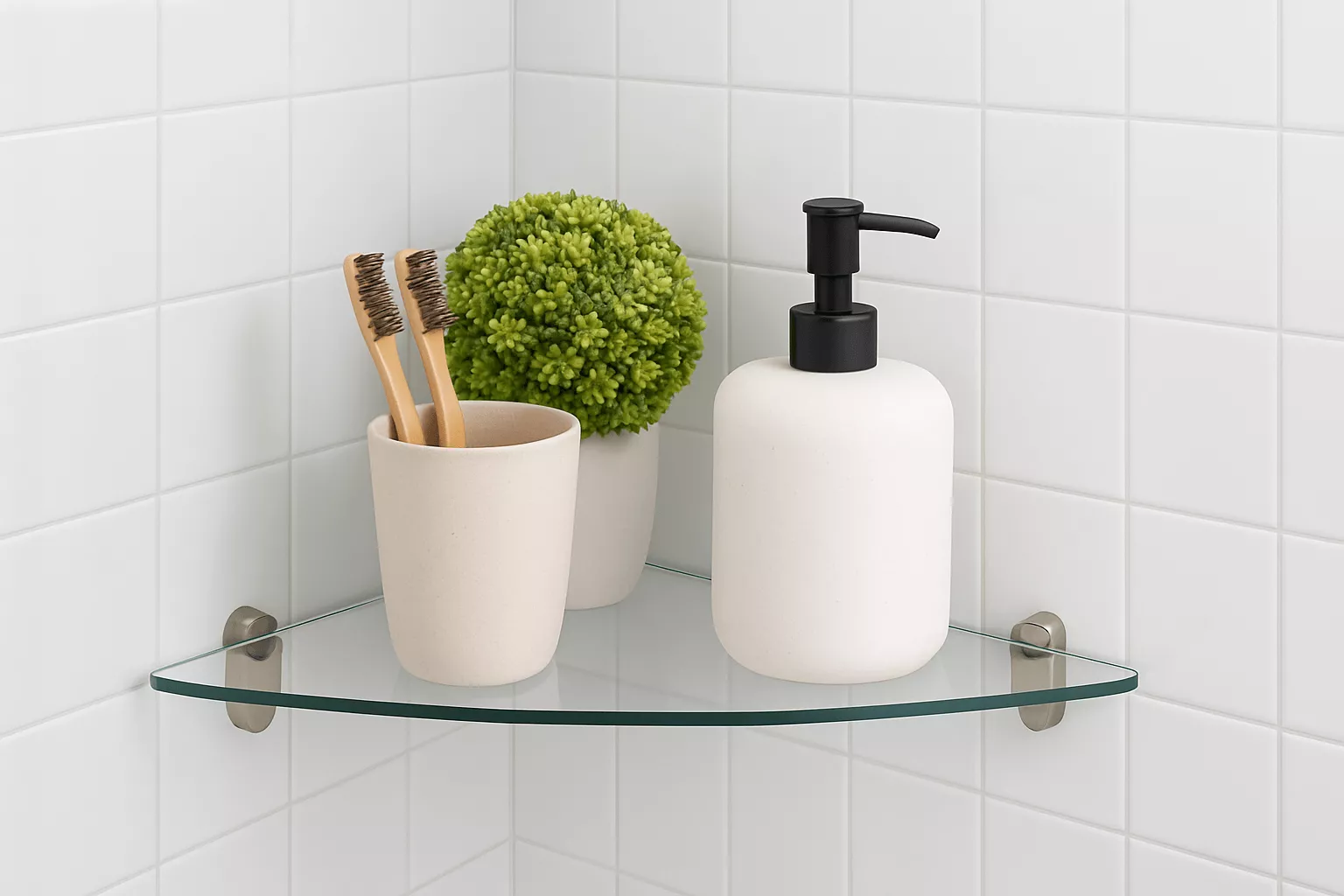
A triangle-shaped tempered glass panel can be equilateral, isosceles, or scalene, each variant offering a distinct geometric impact. This shape is admired for its architectural sharpness and ability to bring visual tension to a room.
Triangles are often used in decorative features, shelving, and wall art installations. When used in furniture, they add a modern and edgy appeal. They also work well in high-pitched roof structures or to fill in gable window openings.
Designers appreciate this shape for its minimal surface area and angular, bold lines.
12”, 18”, 24”, 30” (side lengths depending on triangle type)
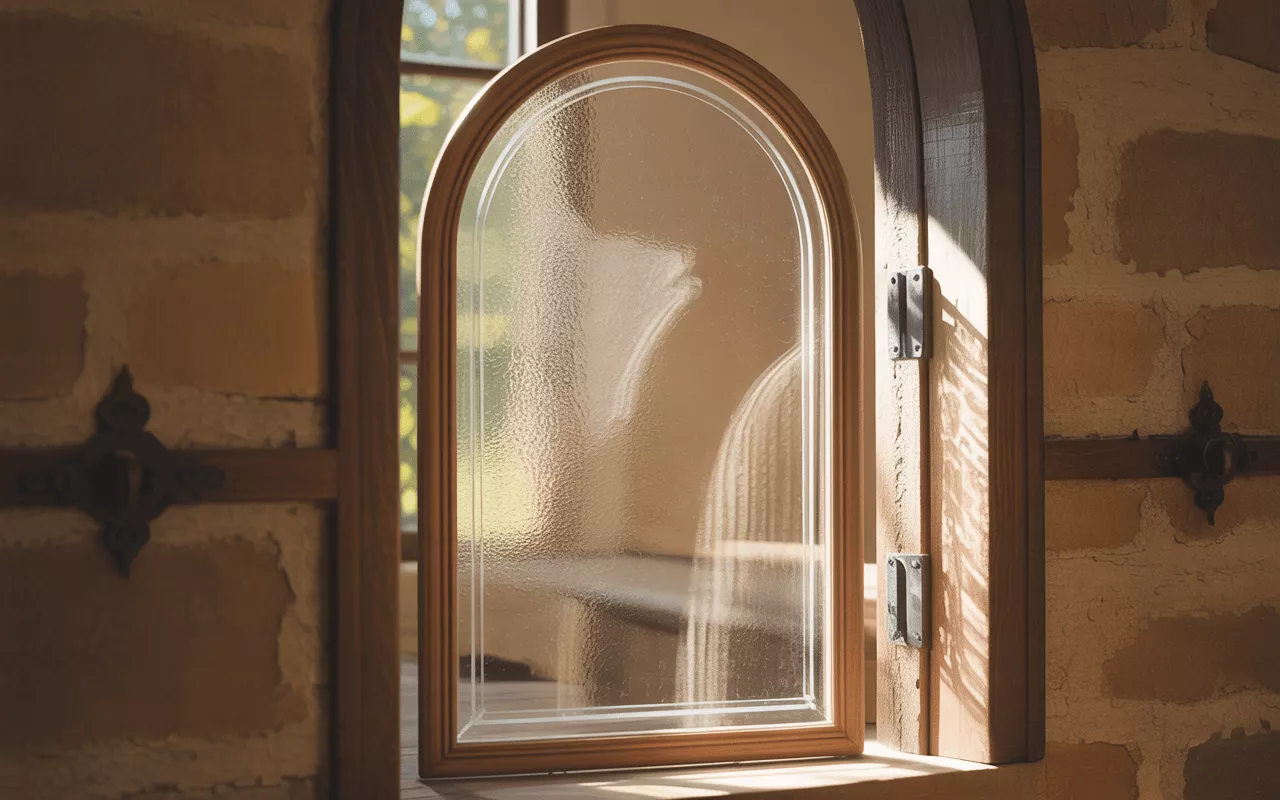
The arch top glass shape is a semi-arched rectangle with a curved top and flat bottom. It brings an architectural and romantic element to interior spaces. Arch tops are often used in vintage or traditional settings, particularly in doors, transom windows, and classic mirror designs.
The curved edge draws the eye upward, creating a sense of height and openness. It works beautifully when aiming for a soft yet structured form. This shape adds historical charm and is commonly paired with natural materials like wood or wrought iron.
24”x60”, 30”x72”, 36”x84” (flat width x total height)
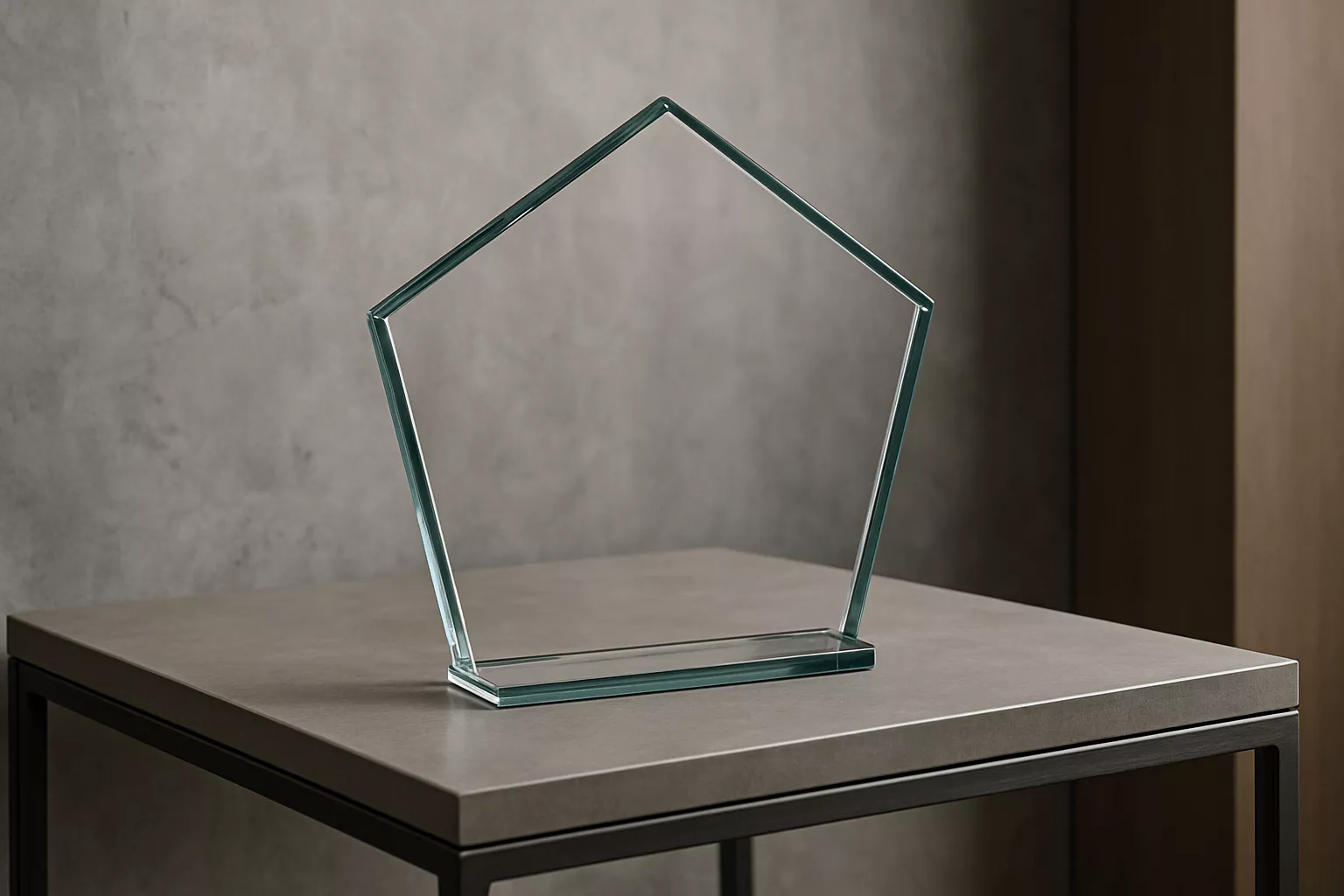
Pentagon tempered glass has five sides and is often cut with a flat base and upward angled sides meeting at a peak. Its uncommon geometry makes it ideal for adding uniqueness and visual intrigue.
The shape offers a mixture of symmetry and angularity, suitable for standout wall art, window inserts, or designer furniture. Because it is not commonly seen in everyday applications, it immediately draws attention and makes a statement.
Interior designers and architects often leverage this shape for boutique projects where personalization and creativity take center stage.
Custom only (e.g., base: 30”, peak height: 36”, side slopes: 20”)
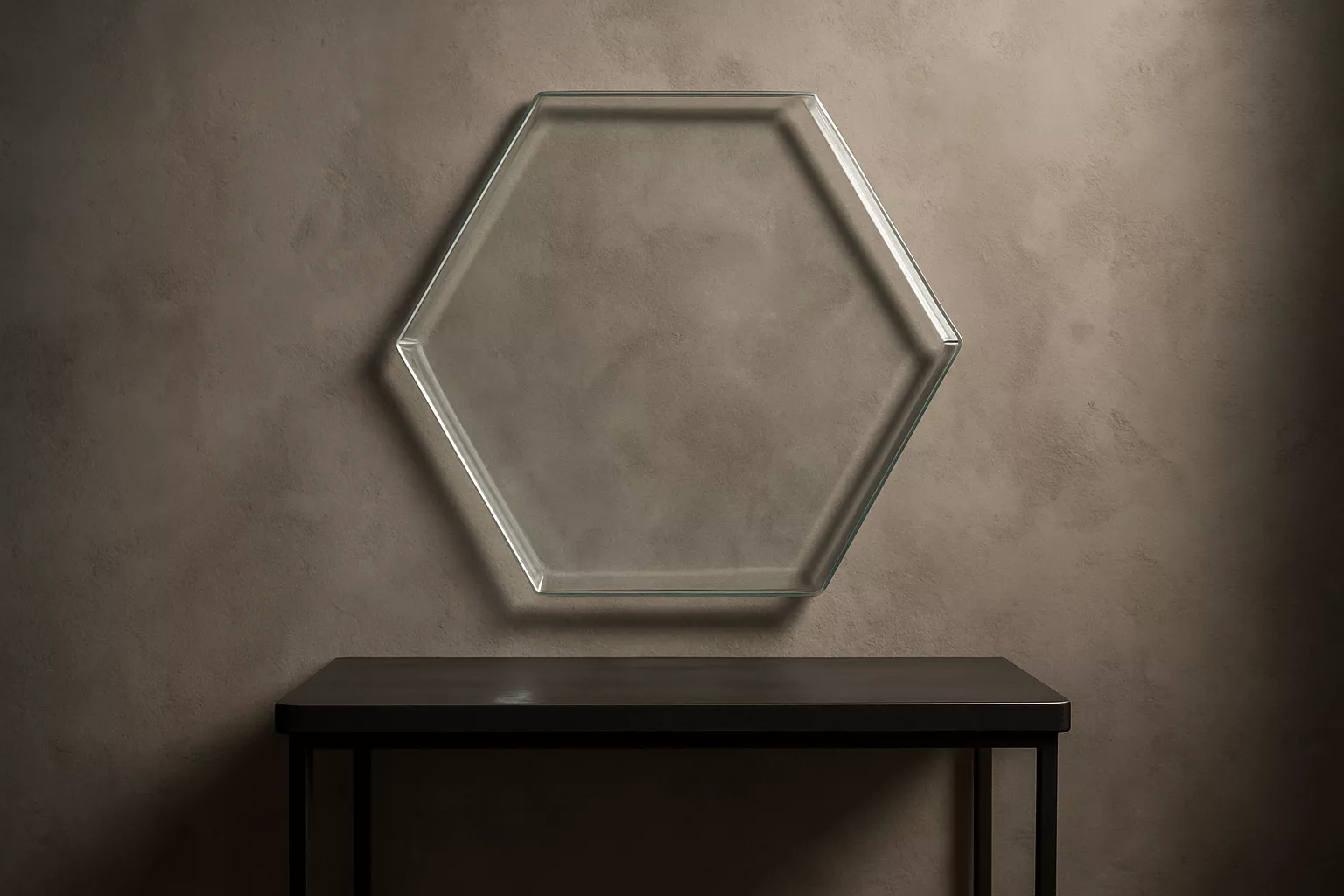
Unlike the regular hexagon with all sides equal, an irregular hexagon features varying side lengths and angles, creating a more organic and customized appearance. This shape is typically used when a design requires uniqueness or asymmetry, such as in high-end interior architecture, creative displays, or functional pieces like designer mirrors.
It is especially useful in spaces where symmetry isn’t practical or when working with unconventional layouts. The irregular hexagon offers a balance between geometric structure and freeform creativity, making it a favorite among modern designers aiming for a customized, sophisticated aesthetic.
Custom-only; dimensions vary by layout, often provided via sketch or CAD
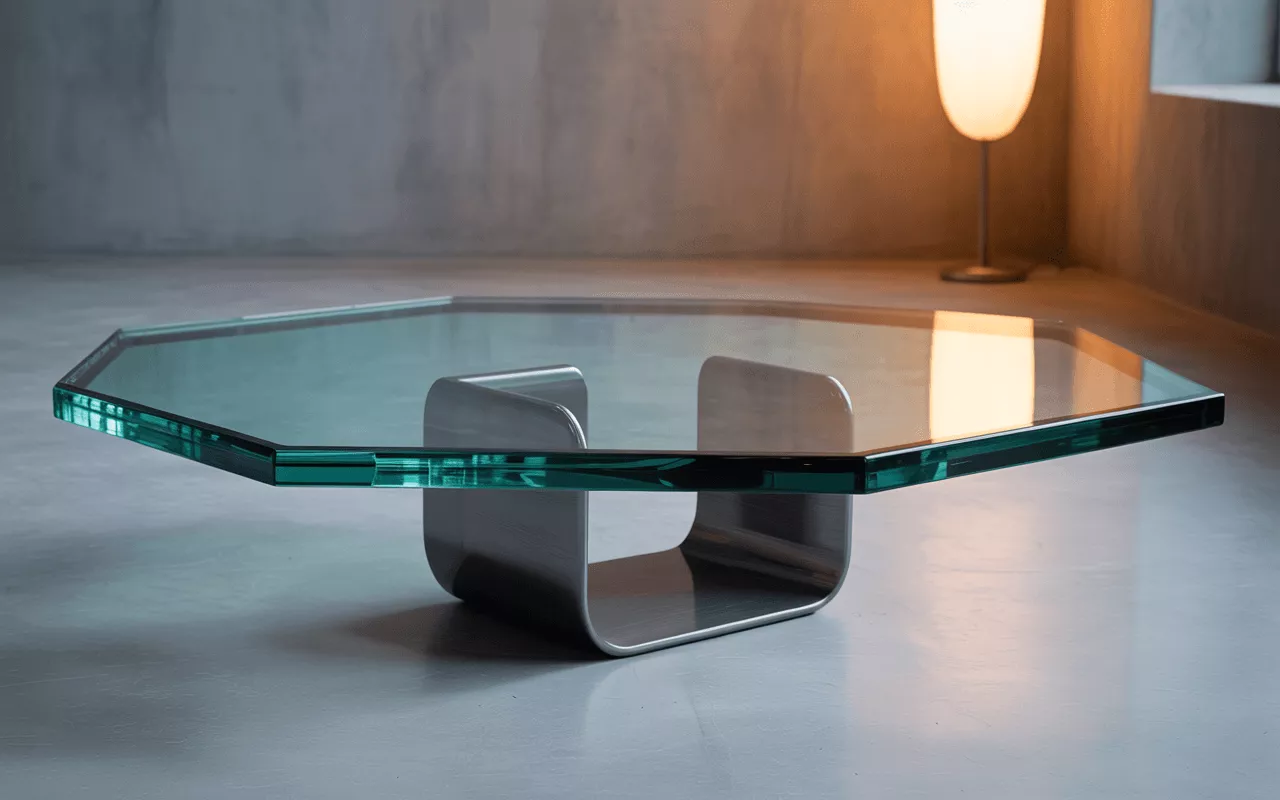
The irregular octagon shape features eight sides of different lengths or angles, allowing for bold and unexpected visual compositions. This shape offers a highly customized option for decorators and builders who want to move away from symmetry while still maintaining a cohesive polygonal feel. Irregular octagon tempered glass can be used as a dynamic centerpiece in both modern and traditional environments. It works particularly well in luxury design contexts, such as boutique lobbies, museums, or upscale retail environments where form and uniqueness are paramount.
Custom only (typically specified through detailed design templates)
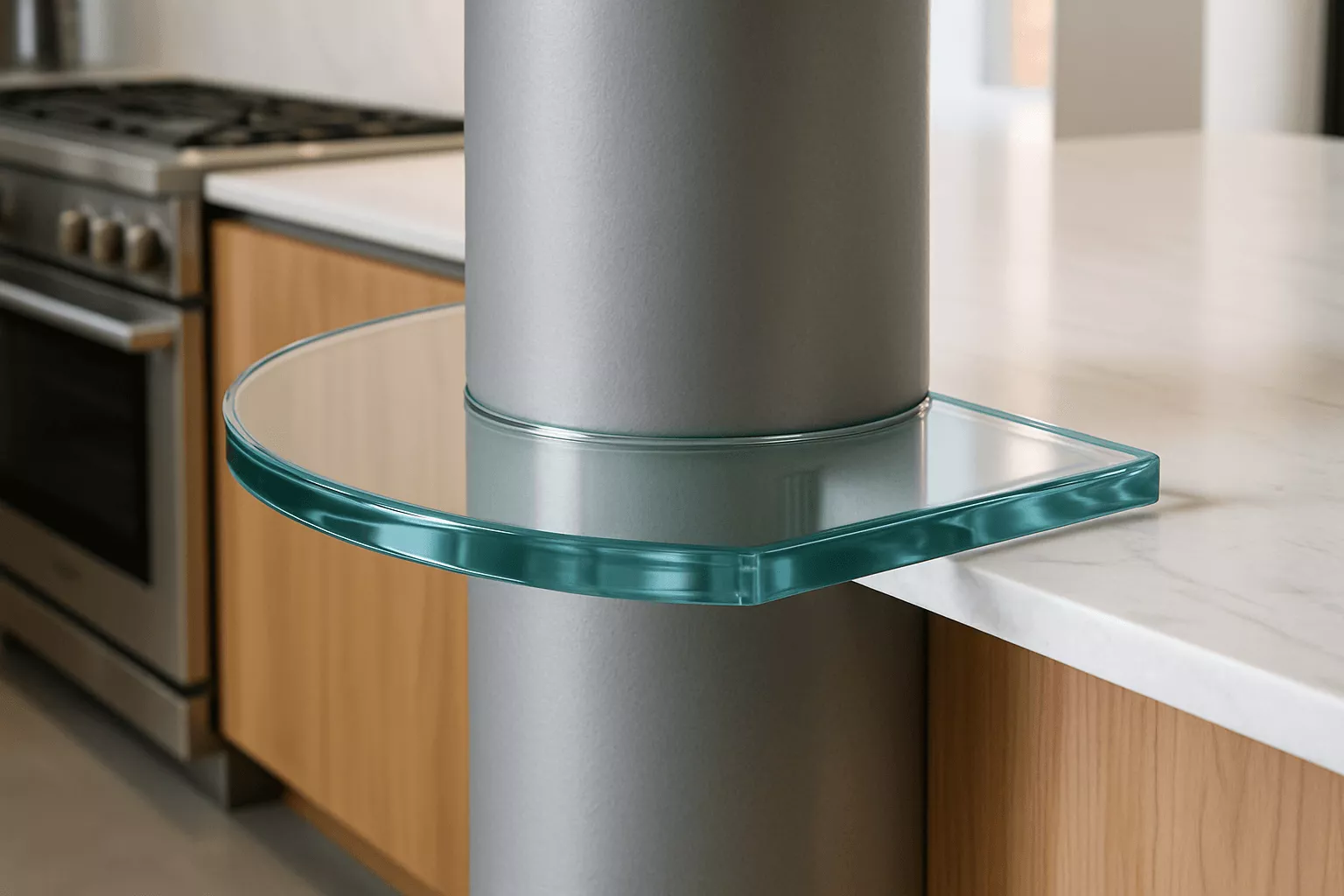
The quarter round notch shape is a quarter-circle with a cutout or notch in one of its edges, typically designed to accommodate architectural obstacles such as posts, sinks, or other in-built fixtures. This makes it incredibly useful in both residential and commercial spaces where glass needs to wrap around or avoid structural elements.
It combines the curve of the quarter round with a purposeful recess, allowing perfect integration without sacrificing style or safety. This shape is most often used in customized kitchens, bathrooms, or custom countertops.
Custom-only; determined by radius and notch placement
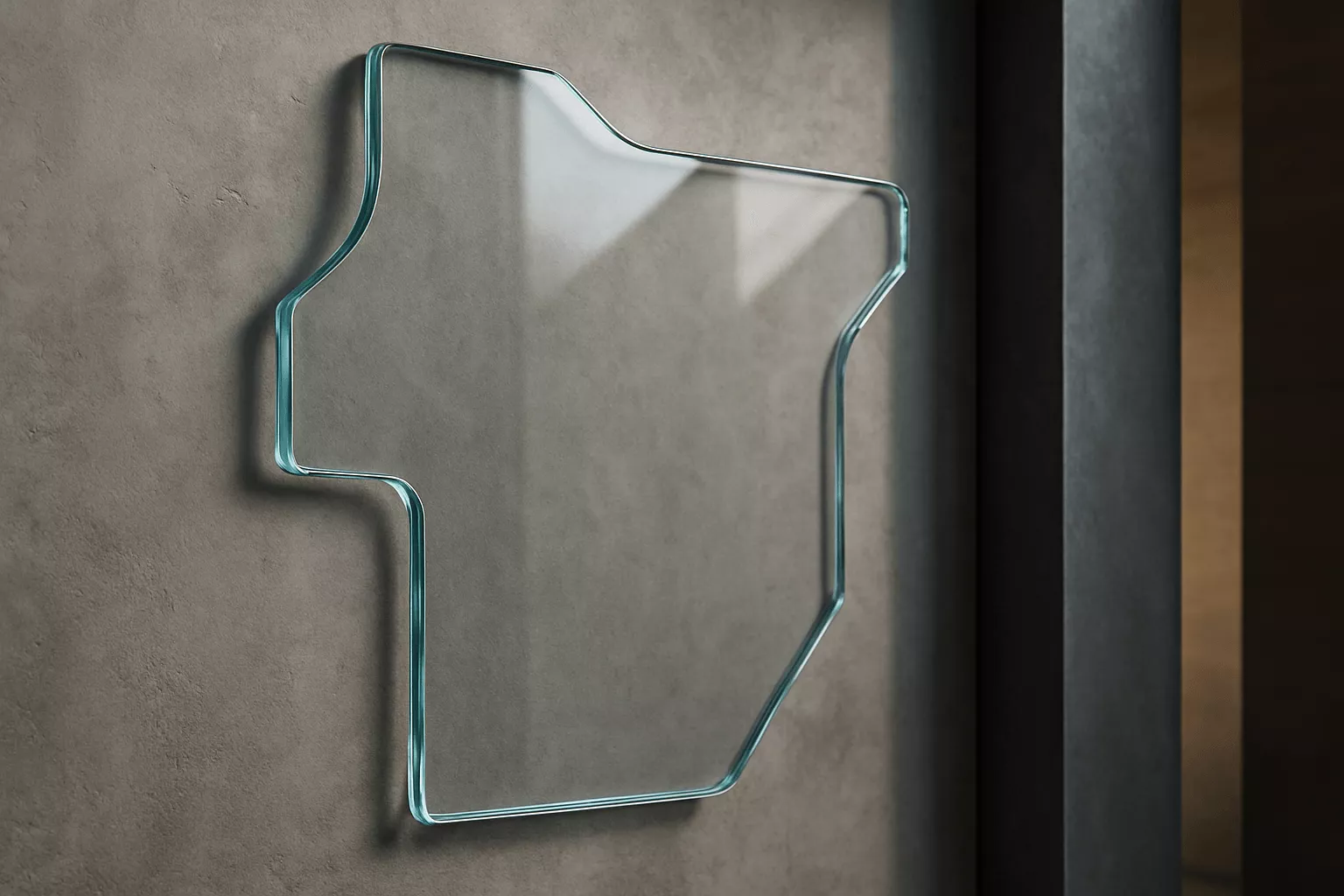
Irregular shaped tempered glass panels are one-of-a-kind pieces tailored to specific design visions or architectural requirements. These shapes are defined entirely by the customer’s drawing, sketch, or CAD file. They may include combinations of curves, angles, notches, and slopes.
Irregular shapes are especially valuable in modern architecture, artistic installations, or situations where no standard shape fits the application.
Designers, artists, and builders often choose irregular glass when visual impact and precision are both essential. Each piece becomes a fully custom solution that can’t be achieved with off-the-shelf glass.
Fully custom, must be defined by a sketch, template, or CAD drawing
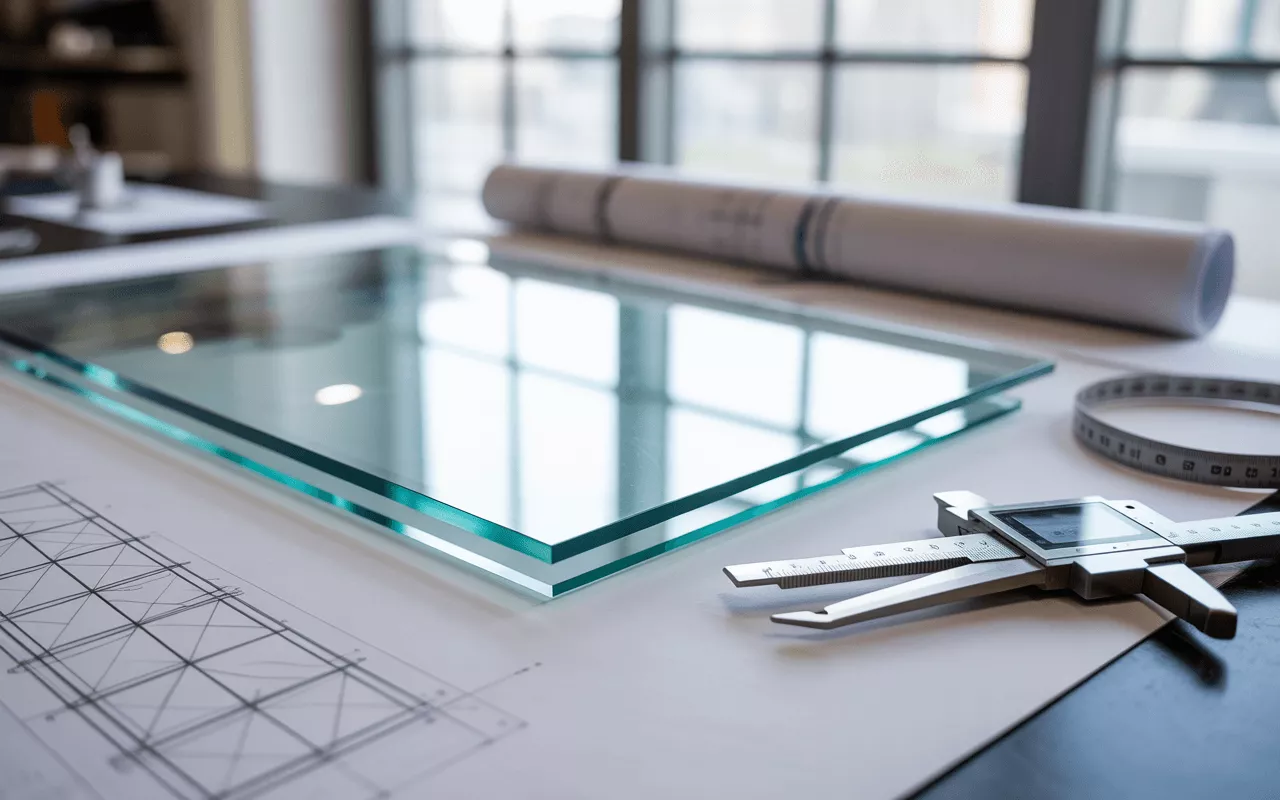
If your desired glass shape is not standard, Fab Glass and Mirror allows you to upload a drawing or CAD sketch for custom fabrication. These sketches help ensure your glass is cut with precision.
However, before finalizing an irregular design, you must determine the appropriate how thick is tempered glass required for that specific geometry to avoid fragile corners or edge stress. To ensure the final product meets your expectations, many buyers also buy tempered glass panel samples to examine clarity, thickness, and edge styles before committing to full orders.
Ordering online tempered glass is easy:
While standard tempered glass sheets are quicker to ship and cost less, custom sizes ensure a perfect fit and design harmony. Choose custom glass when:
Before placing your order, double-check:
Choosing the right custom tempered glass shape improves both design and utility. Whether you are aiming for aesthetic appeal, safety compliance, or a perfect architectural fit, there is a shape that meets your needs. With dozens of configurations, from basic rectangles to intricate irregulars, you can transform your vision into reality with custom cut tempered glass. Regardless of the complexity, ordering custom cut tempered glass from a professional fabricator ensures that even the most intricate shapes meet safety standards.
Order from Fab Glass and Mirror, your trusted online source, upload your custom glass sketch, and enjoy the safety, clarity, and durability of custom tempered glass panels.
Custom tempered glass is used for furniture tops, mirrors, windows, shelves, and decorative panels. It’s cut to exact dimensions and shapes for safety, durability, and a perfect fit in residential and commercial spaces.
Yes, you can order tempered glass in irregular shapes by submitting a sketch, CAD file, or full-scale template. Most online suppliers offer custom fabrication for any shape you can design.
Popular custom glass shapes include round, rectangle, square, oval, arch, and race track oval. More complex options like trapezoid, hexagon, and irregular forms are also widely used in modern designs.
Typical thicknesses for custom tempered glass range from 1/4” to 1/2”, depending on the application. For table tops, 3/8” or 1/2” is ideal, while shelves or cabinet doors may use 1/4”.
Yes. Ordering a sample helps confirm clarity, tint, thickness, and edge finish. It ensures your final custom tempered glass order matches your expectations in quality and appearance.

Explore all things glass—from stylish table tops and insulated options to tinted and frosted designs. Discover guides on glass railings, custom cut glass, shelves, and stunning backsplash ideas for a modern home or office upgrade.