Need Help Call us +1 888-474-2221
Get the perfect glass or mirror with our weight calculator! Accurately determine the weight of glass and mirror based on material, size, and thickness. Essential for shipping, installation, and structural planning. At Fab Glass and Mirror, we make it simple to calculate the weight of tempered glass, custom mirrors and glass tabletops. Make informed decisions and ensure a stress-free purchase. For added confidence and precision, use our tempered glass load calculator to plan your project with accuracy.
Our Glass Weight Calculator helps you quickly estimate the weight of your glass, wall mirror, or acrylic sheet. This is useful for shipping, installation, and ensuring structural support. Simply follow these steps to get an accurate weight measurement.
Choose the type of material you are calculating weight for Glass, Mirror, or Plexiglass/Acrylic Glass. Each material has different densities, so selecting the correct type ensures precision.
Pick the shape that matches your glass, such as Circle, Oval, Rectangle, or Square. The shape determines the calculation method, making it essential for accuracy.
Input the required dimensions. For Circles and Ovals, enter the Diameter (D), while for Rectangles and Squares, provide the Width and Length. Exact measurements ensure the best results. It’s essential to enter precise measurements, as even small errors can affect the weight calculation. When measuring, fractions like 1/8", 1/4", 3/8", 1/2", etc. are commonly used in glass cutting.
Select from standard thicknesses, including 1/8", 3/16", 1/4", 3/8", 1/2", 3/4", and 1". The thickness directly affects the final weight, so picking the correct option is crucial.
After entering all details. The estimated weight will be displayed instantly, helping with project planning, shipping, and safe handling.
Estimating the weight of glass or mirrors is essential for safe handling, accurate shipping, and proper installation. It helps in choosing the right support structures, preventing unexpected costs, and ensuring durability in various applications.
Knowing the exact weight helps in avoiding unexpected shipping costs and ensures the right packaging for safe delivery.
Accurate weight estimation allows for better cost calculations, material selection, and structural design in construction and interior projects.
Understanding the weight helps in selecting appropriate support structures, ensuring safety in wall-mounted mirrors, glass furniture, and partitions.
Glass and mirrors can be heavy and fragile; knowing the weight in advance ensures proper lifting, transport, and installation precautions.
This calculator simplifies glass weight estimation, making it easier to plan and execute projects efficiently.
Did You Know?
The weight of a glass or mirror piece is determined using a standard density value, which represents how much mass the material has per unit volume. For both glass and mirrors, this density is approximately 2.5 g/cm³. The reflective backing on mirrors is so thin that it has little to no impact on the overall weight.
Our calculator applies this standard density to give you an accurate weight estimate based on your specified dimensions. If you’re curious about the technical side, the weight is calculated using this simple formula:
Weight = Length × Width × Thickness × Density
By using this method, you can quickly determine the exact weight of your glass or mirror, whether you're planning a shipment, estimating material costs, or ensuring a safe installation. With precise calculations, you can make better decisions and avoid unexpected surprises in your projects!
Commonly Asked
Questions. Find the answer to all your queries at a glance.
Need Expert Opinion Contact Us Anytime!
Mirror weight is calculated based on its dimensions (length, width), thickness, and the density of the glass used. Multiply these factors together, considering consistent units, to determine the weight. Our calculator simplifies this process by handling the calculations for you.
A mirror's weight depends on its size and thickness. Larger and thicker mirrors will naturally weigh more. Our calculator can provide an accurate estimate based on your specific mirror dimensions and thickness.
The weight of glass per square foot varies depending on its thickness. Thicker glass will weigh more per square foot. Our calculator accounts for thickness to give you a precise weight estimate.
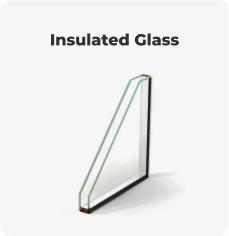
Double glass, also known as insulated glass, consists of two panes of glass separated by a spacer. To calculate the weight, determine the weight of each pane individually (based on dimensions and thickness) and add them together. Our calculator can assist with this.
Calculating mirror weight is the same as calculating glass weight. You'll need the dimensions (length, width) and thickness of the mirror. Multiply these values, along with the glass density, to find the weight. Our calculator automates this calculation.
Glass weight per square foot depends directly on its thickness. Common thicknesses and their corresponding weights are readily available online or through glass suppliers. Our calculator simplifies this by factoring in thickness for you.
The weight a piece of glass can support depends on several factors, including its thickness, type (tempered, annealed), support structure, and how the weight is distributed. Consult with a glass professional for specific load-bearing requirements.
The weight limit for a glass shelf depends on its thickness, size, type of glass (tempered is stronger), and how it's supported. For safety, it's crucial to consult with a glass expert or the shelf manufacturer for recommended weight limits. Never overload a glass shelf.