
My Cart
You have no items in your shopping cart.
Every January, a new revolutionary fitness trend floods your feed. Wall Pilates. 12-3-30. Tarzan movement. Some stick. Most don’t. And if you have ever felt exhausted just trying to figure out what to do before you even break a sweat, you are not alone, that’s trend fatigue, and it is real.
This article cuts through it. What follows is a no-fluff, evidence-backed look at the 10 fitness trends genuinely dominating 2026 and the five that are quietly dying, plus who each trend is actually right for, how to start, and what mistake to avoid. Whether you are building a home gym, training at a boutique studio, or just trying to move more consistently, you will finish this knowing exactly where to put your energy.
Table of Contents

What it is: AI fitness coaching goes beyond counting steps. Today’s platforms analyze your heart rate variability, sleep quality, past performance, and stated goals to build and continuously adjust a workout plan specific to you. Think of it as a personal trainer that is available at 11pm and never forgets what you did last Tuesday.
Why it’s growing: The AI fitness app market is projected to reach $26.67 billion by 2035, growing at a 22.55% CAGR (Vantage Market Research), and adoption is accelerating as platforms become meaningfully smarter. Apps like Whoop, Tempo, and Fitbod have moved well beyond “here’s a random workout” into genuine adaptive programming. Studies show users who receive real-time feedback are up to 70% more likely to stay consistent with their goals. For full fitness industry insights, read our article on 2026 Fitness Industry Insights.
Best for: Anyone who’s ever felt lost following a generic program, especially beginners and intermediate trainees who don’t have a coach.
How to start today: Download one adaptive app (Fitbod, Hevy, or WHOOP are solid starts) and commit to logging every session for two weeks. The AI needs data to personalize; the more consistent your input, the smarter it gets.Common mistake: Jumping between apps every few weeks. AI coaching compounds over time. Give it at least 60 days before evaluating.
2. Hybrid Training (Online + In-Person)

What it is: Hybrid training blends remote coaching with occasional in-person check-ins or classes. You might train solo at home four days a week guided by an app or online coach, then attend a studio class or in-person PT session once a week for hands-on correction and accountability.
Why it’s growing: The pandemic permanently shifted expectations. People now want flexibility and connection, not one or the other. The online fitness market is growing at roughly 33% annually, projected to reach $59 billion by 2027 (Wellness Creative Co.), but gym membership is also recovering, suggesting people aren’t choosing between home and studio, they are doing both. Studios that offer hybrid models are seeing the strongest retention numbers in the industry.
Best for: Busy professionals, parents, frequent travelers, and anyone who wants professional guidance without a rigid schedule.
How to start today: If you already have a gym membership, ask your trainer about adding remote check-ins between sessions. If you train solo, look for online coaches who offer monthly form-check calls.
Common mistake: Treating the online portion as “less real.” Your home sessions need the same structure and logging as in-person work, or the hybrid model falls apart.

What it is: Functional strength training focuses on movements that mirror real-life demands, squats, hinges, carries, pushes, pulls, and rotations. Instead of isolating a single muscle on a machine, you are training movement patterns that make you better at lifting groceries, playing with your kids, and avoiding back pain at 55.
Why it’s growing: Chronic back pain affects roughly 619 million people globally (The Lancet Rheumatology, 2023 Global Burden of Disease Study), and sedentary desk work is a major driver. Functional training directly addresses the postural imbalances and movement deficiencies that desk life creates. Additionally, the fitness equipment market is projected to reach $24.9 billion by 2030 (Grand View Research), kettlebells, suspension trainers, and resistance bands, the tools of functional training, are now standard in home gyms.
Best for: All levels, but especially office workers, adults over 40, and anyone with a history of lower back or joint issues.
How to start today: Replace one isolation exercise in your current routine with a compound movement. Swap leg extensions for goblet squats. Swap lat pulldowns for single-arm rows. Small substitutions add up fast.Common mistake: Neglecting the hip hinge. The Romanian deadlift and kettlebell swing are two of the most valuable movements you can learn, most beginners skip them entirely.
4. Zone 2 / Low-Intensity Steady-State (LISS) Cardio

What it is: Zone 2 training means keeping your heart rate in a moderate, conversational range, roughly 60–70% of your max, for extended periods. You should be able to hold a conversation, but not sing. Activities include brisk walking, easy cycling, light jogging, rowing, or swimming. Low-Intensity Steady-State (LISS) is the broader category; Zone 2 is its most scientifically defined form.
Why it’s growing: Longevity researchers, most prominently Dr. Peter Attia and Dr. Iñigo San Millán have brought Zone 2 into mainstream conversation. The science is compelling: consistent Zone 2 work improves mitochondrial density, metabolic efficiency, and cardiovascular health with minimal injury risk or recovery cost. Studies show 150–180 minutes per week of Zone 2 cardio produces a 15–20% improvement in cardiovascular efficiency.
Best for: Beginners, adults over 40, anyone recovering from injury, and high-intensity athletes who need aerobic base work.
How to start today: Go for a 30-minute walk at a pace where you can speak in full sentences but feel slightly warm. That’s Zone 2. Do it three times this week.Common mistake: Going too hard. Most people instinctively push past Zone 2 without realizing it. Use a heart rate monitor, the numbers don’t lie.
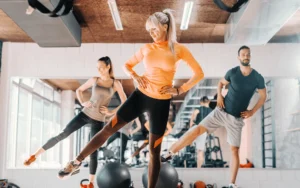
What it is: Fitness is increasingly social, whether that is an outdoor running club, a CrossFit box, a Peloton leaderboard, or a private WhatsApp group tracking daily steps. The workout itself almost becomes secondary to the belonging and accountability that comes with it.
Why it’s growing: Research published in the Science Direct found that people exercising in groups work out 200% longer and harder than solo exercisers. Post-pandemic loneliness has also pushed people toward intentional community, and fitness communities fill that gap effectively. Platforms like Strava, Peloton, and Hyrox have built entire identities around social competition.
Best for: Anyone struggling with consistency. If motivation is your biggest barrier, community is the fix more than any program or app.
How to start today: Join one group activity this week, a local parkrun, a gym class, or even an online challenge with friends. Commitment to others is more powerful than commitment to yourself.
Common mistake: Letting social pressure push you beyond your recovery capacity. Community energy is motivating, but overtraining is real. Listen to your body even when the group is pushing harder.
What it is: Recovery is no longer an afterthought, it is a scheduled, tracked part of training. Sleep optimization (using devices like WHOOP or Oura), cold water immersion, HRV (heart rate variability) monitoring, breathwork, and structured deload weeks are now standard practice for serious athletes and increasingly common among everyday gym-goers.
Why it’s growing: The sports science community has made the case clearly: adaptation happens during recovery, not training. As wearables give everyday people access to metrics once reserved for elite athletes, HRV, sleep stages, recovery scores, more people are realizing how much their results depend on what happens outside the gym. Global wearable device shipments reached 611.5 million units in 2025, growing 9.1% year-over-year (IDC), putting real-time recovery data in hundreds of millions of hands.
Best for: Intermediate to advanced trainees, high-stress professionals, athletes over 35.
How to start today: Prioritize sleep before any other recovery tool. No ice bath compensates for six hours of poor sleep. Aim for 7–9 hours, consistent bedtime, and a dark, cool room.
Common mistake: Over-relying on gadgets. A recovery score from a wearable is a useful signal, not a command. Learn to read your body alongside the data.

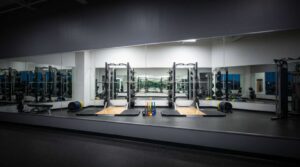
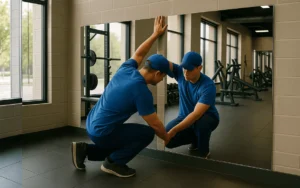
What it is: The home gym has evolved from a dusty corner with a treadmill into a dedicated, well-designed training space. Gym mirrors, featuring large wall mirrors that create the illusion of space while allowing form checks, are now a defining feature of high-quality home setups, alongside rubber flooring, adjustable dumbbells, a pull-up station, and a cable machine or functional trainer. (Ever wondered why you look different in gym mirrors versus at home? There’s actual science behind it.)
Why it’s growing: Post pandemic, home gym investment exploded and hasn’t stopped. The global fitness equipment market is projected to reach $24.9 billion by 2030 at a 5.3% CAGR (Grand View Research). People who built home gyms during lockdown discovered something: no commute, no waiting for equipment, no judgment, and the ability to train on your own schedule. The ROI of a quality home gym versus years of gym membership is compelling and it doesn’t have to cost a fortune to mirror up properly.
Best for: Anyone with dedicated space at home, parents of young children, shift workers with irregular schedules, and anyone who hates the social friction of commercial gyms.
How to start today: Before buying equipment, measure your space and decide on your primary training style. A functional trainer + mirrors + rubber flooring covers 80% of most people’s training needs in a small footprint, whether that’s a basement conversion or a half garage setup. When it comes to mirrors specifically, knowing whether to buy local or online can save you both money and hassle.
Common mistake: Buying equipment impulsively or from a local hardware store, check out our guide on Hardware Store Mirrors vs. Commercial Gym Mirrors Reflection Quality, Safety, and Performance Compared. A barbell you never use is clutter. Build around your actual training style, not what looks impressive.
What it is: Longevity fitness frames training around long-term health metrics rather than short-term aesthetics. Key targets include VO2 max (your body’s oxygen efficiency, one of the strongest predictors of all-cause mortality), grip strength, muscle mass preservation, balance, and mobility. The goal isn’t to look good at 35; it’s to be physically capable at 75.
Why it’s growing: Books like Outlive by Dr. Peter Attia have brought longevity science into mainstream fitness culture. A landmark study of 122,007 patients found that individuals in the highest VO2 max quartile had a mortality rate nearly 4–5x lower than those in the lowest quartile, making cardiorespiratory fitness a stronger predictor of survival than smoking (Jama Network). Muscle mass after 50 directly correlates with independence, fall prevention, and metabolic health. People are starting to train for the long game.
Best for: Anyone over 35, but the earlier you start, the better. The fitness habits you build in your 30s compound into your 60s.
How to start today: Get a VO2 max estimate (most modern smartwatches estimate it) and establish your baseline. Then add two strength sessions and two Zone 2 sessions per week that combination is the longevity prescription most researchers agree on.
Common mistake: Chasing aesthetics at the expense of capacity. Six-pack abs at 40 are impressive, being able to hike, carry, and move freely at 70 is actually valuable.
What it is: Fitness is increasingly being framed not just as a tool for physical health, but as one of the most effective interventions for mental well-being. From yoga and breathwork to resistance training and running, the mental health benefits of exercise are now front and center in how people choose and stick to their routines.
Why it’s growing: A landmark 2023 meta-analysis in the British Journal of Sports Medicine, analyzing 97 reviews, 1,039 trials and over 128,000 participants, concluded that exercise was 1.5x more effective than counseling or medication alone for treating depression and anxiety. That finding sent shockwaves through both the mental health and fitness communities. People are no longer just exercising for biceps; they are exercising to feel better.
Best for: Everyone, but especially adults managing stress, anxiety, or low mood. Also increasingly incorporated into corporate wellness programs.
How to start today: Reframe your next workout. Instead of “I need to burn calories,” try “I’m doing this to manage my stress levels.” That mental shift changes how you approach consistency.
Common mistake: Using intense exercise as a stress response without also building in lower-intensity recovery movement. Hammering your body when you are already cortisol-spiked can compound stress rather than relieve it.
What it is: Virtual reality fitness turns exercise into gameplay, boxing opponents in Beat Saber, climbing virtual mountains, competing in multiplayer challenges. Gamified workouts more broadly include apps that assign XP points, unlock achievements, and create narrative around your progress. The point is to make movement intrinsically fun, not a chore.
Why it’s growing: The global virtual fitness market was valued at $16.4 billion in 2022 and is expanding at a 26.72% CAGR through 2030, projected to reach $106.4 billion (Grand View Research). Headsets like the Meta Quest 3 have brought the cost down to accessible levels. Studies show 78% of participants feel more motivated with VR compared to conventional workouts.
Best for: People who hate traditional workouts, gamers who want to move more, families looking for active screen time, and anyone whose biggest barrier is boredom.
How to start today: If you have a Meta Quest, download Supernatural or Les Mills Bodycombat and try one session. If you don’t own a headset, gamified apps like Zombies, Run! bring the same psychology to outdoor running for free.
Common mistake: Treating VR workouts as a complete replacement for structured training. They are excellent for cardio and consistency, but they won’t build meaningful strength without supplementary resistance work.
Why it blew up: Wall Pilates challenges, typically 28-day programs using nothing but a wall for support, were perfectly engineered for TikTok. Low barrier to entry, photogenic, and just structured enough to feel like a program. For beginners who’d never tried Pilates, they were a genuinely useful introduction.
Why it’s declining: Interest has dropped roughly 55% year-over-year. The 28-day format creates a natural endpoint with no progression path. After completing a challenge, most people plateau quickly because the difficulty ceiling is low and there’s no personalization.
Do this instead: Take your interest in Pilates and invest it in a proper reformer class or a structured mat Pilates program with progressive difficulty. The principles of Pilates, core control, breathing, movement precision, are genuinely valuable. The TikTok challenge format just doesn’t do them justice.
Why it blew up: Walk at 12% incline, 3 mph, for 30 minutes. Simple, repeatable, requires no skill. For sedentary beginners, it genuinely worked as a low-impact cardio entry point.
Why it’s declining: Down roughly 55% in search interest. It’s a single, static workout with no progression. Once you adapt, usually within 4–6 weeks, you plateau unless you change the variables. The fitness community has also rightfully pointed out that the steep incline at slow speed puts unusual stress on the lower back for some users.
Do this instead: Zone 2 cardio gives you all the same benefits, accessible, low-impact, long-duration cardio, with far more flexibility. Walk, cycle, row, swim, whatever you enjoy, at a moderate conversational effort. Vary it. Progress it.
Why it blew up: Keto-specific workouts, intermittent fasting exercise windows, and carnivore-aligned training programs all promised to supercharge results by syncing your exercise with your diet protocol. The idea of a perfectly optimized, system-level approach to fat loss was compelling.
Why it’s declining: Interest in these programs has dropped roughly 48%. Most people find that rigid diet-exercise pairing is unsustainable, and the fitness community increasingly recognizes that no single dietary protocol is optimal for all individuals. The evidence base for highly specific fad diet-workout combos is also thin.
Do this instead: Focus on a training program you can sustain and a diet pattern that supports your energy levels and performance. Consistency beats optimization every time.
Why it blew up: Animal-flow, primal movement, and Tarzan-inspired fitness tapped into something real, the idea that modern humans have become disconnected from natural, full-body movement. The creativity and novelty made for great content.
Why it’s declining: Roughly 56% drop in interest. As a primary training modality, primal movement lacks the progressive overload necessary to build meaningful strength or fitness over time. Most people who try it find it fun for a few weeks before returning to more structured programming.
Do this instead: If you are drawn to movement quality and creativity, explore functional training or gymnastics-based work (calisthenics, ring work). You get the movement richness without sacrificing structure.
Why it blew up: Classic aerobics was the dominant fitness format for decades. High-energy classes, coordinated choreography, social atmosphere, it was genuinely effective and genuinely fun for many people.
Why it’s declining: Participation has dropped roughly 34% over five years. Increased awareness of joint health, combined with an aging gym-going population, has shifted preferences toward lower-impact alternatives. Yoga, Pilates, cycling, and swimming deliver cardiovascular and strength benefits with significantly less wear on knees, hips, and ankles.
Do this instead: Low-impact doesn’t mean low-effort. A Zone 2 cycling session, a power yoga class, or swimming laps can be just as demanding cardiovascularly, with a fraction of the joint stress.
| Trends | Status | Best For | Effort Level |
| AI-Powered Fitness Coaching | Hot | All levels | Low–High |
| Hybrid Training | Hot | Busy adults | Flexible |
| Functional Strength Training | Hot | All levels, esp. 35+ | Moderate |
| Zone 2 / LISS Cardio | Hot | All levels | Low–Moderate |
| Community-Driven Training | Hot | Consistency-seekers | Moderate |
| Recovery as a Discipline | Hot | Intermediate–Advanced | Low |
| Home Gym Culture | Hot | Home trainers | Flexible |
| Longevity-Focused Fitness | Hot | Adults 35+ | Moderate |
| Mental Health & Movement | Hot | Everyone | Any |
| VR & Gamified Workouts | Hot | Beginners, gamers | Low–Moderate |
| Wall Pilates Challenges | Fading | Beginners (briefly) | Low |
| 12-3-30 Treadmill | Fading | Beginners (briefly) | Low |
| Fad Diet-Linked Workouts | Fading | — | Variable |
| Tarzan Movement | Fading | Novelty seekers | Moderate |
| High-Impact Aerobics | Fading | — | High |
The pattern across every trend in this list is consistent: what’s growing is sustainable, personalized, and evidence-backed. What’s fading is novelty-driven, rigid, and built for virality rather than results.
The best fitness plan in 2026 isn’t the newest one, it’s the one that combines strength training, aerobic base work, recovery, and community in a format you’ll actually stick to. The technology and tools available now make that easier than ever. You don’t need to chase trends. You need a system.
If you train at home, the foundation of that system starts with your environment. A well-designed home gym, with the right flooring, equipment, and mirrors, removes friction and keeps you accountable every single session.
Ready to build a home gym that actually works?
Explore our full range of gym mirrors. Perfect for any home setup, from compact spare rooms to dedicated training spaces.
Functional strength training and Zone 2 cardio are the top science-backed recommendations. Hybrid classes and community running clubs are also leading the market as the industry shifts toward sustainable, multi-benefit programming.
Yes, but it is now used strategically rather than daily. Current evidence suggests 1–2 sessions per week is the sweet spot when paired with Zone 2 cardio to prevent burnout and overtraining.
Social media challenges (like Wall Pilates or 12-3-30) and high-impact aerobics are declining. Enthusiasts are now prioritizing evidence-based progression over viral, short-term fads.
A versatile setup includes adjustable dumbbells, a pull-up bar, resistance bands, and rubber flooring. The most impactful addition is a wall-to-wall mirror, which improves form, increases the perception of space, and creates a professional atmosphere.
They serve different purposes: Zone 2 builds your aerobic base and longevity, while HIIT improves peak power. Experts recommend an 80/20 split, with Zone 2 making up the majority of your cardio volume.
Master the six fundamental patterns: squat, hinge, push, pull, carry, and rotation. You can start with just bodyweight or a kettlebell, focusing on basics like the goblet squat and Romanian deadlift before increasing weight.

Explore all things glass—from stylish table tops and insulated options to tinted and frosted designs. Discover guides on glass railings, custom cut glass, shelves, and stunning backsplash ideas for a modern home or office upgrade.