
My Cart
You have no items in your shopping cart.

Modern commercial and residential construction is no longer defined solely by square footage, it is defined by flexibility, daylight optimization, and long-term value. This is exactly why Glass Partition Walls have become a strategic solution for developers and contractors across the United States. With precision manufacturing and high-quality materials available through trusted suppliers like Fab Glass and Mirror, these systems support fast-paced buildouts, reduce long-term renovation costs, and enhance the user experience in ways traditional drywall simply cannot.
Whether you are managing corporate TI projects, designing mixed-use developments, or constructing high-end residential spaces, glass partition systems offer an adaptable, profitable, and future-proof alternative.
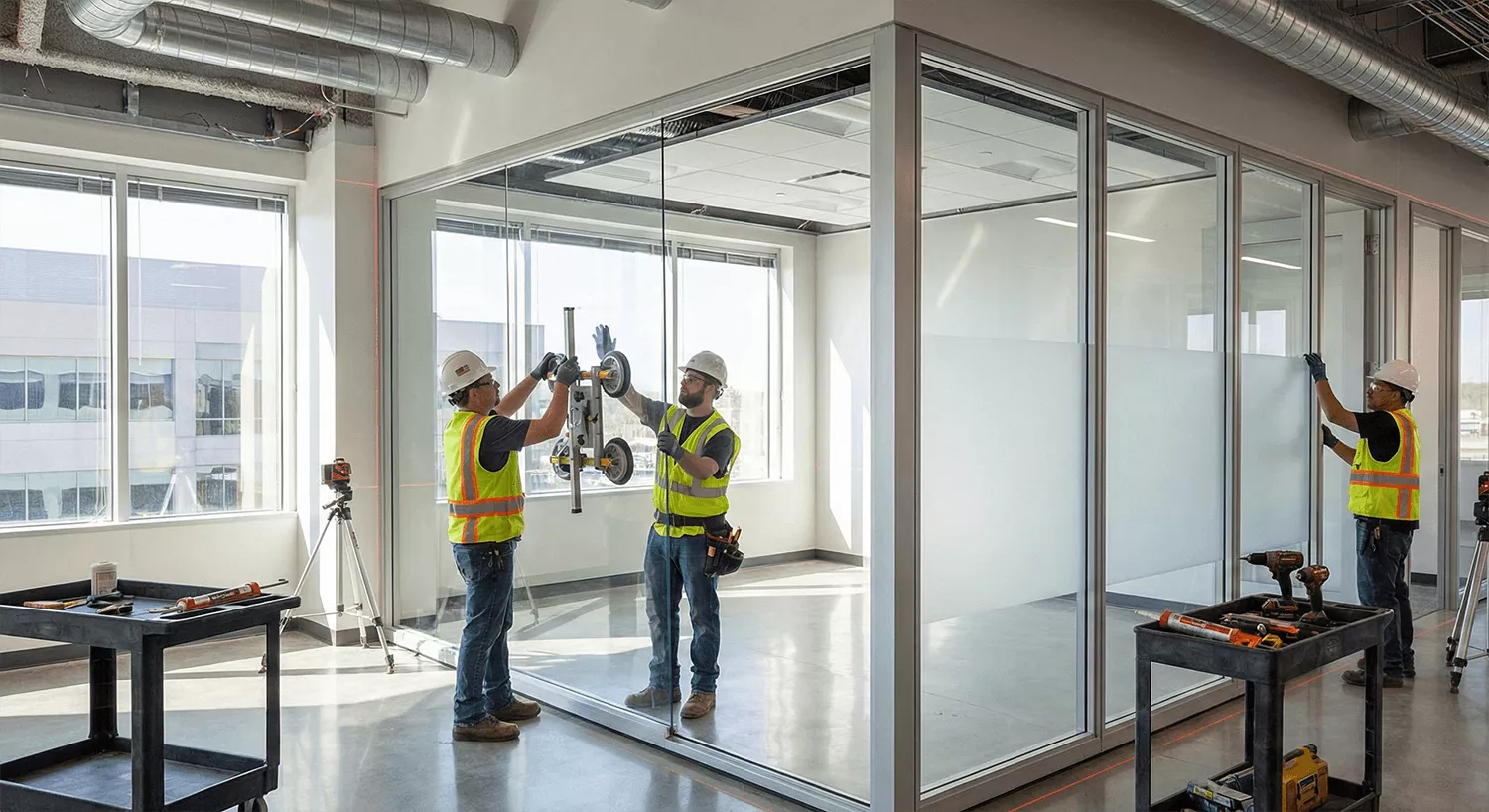
Table of Contents
The demand for transparency, natural lighting, flexible layouts, and modern aesthetics has driven a nationwide boom in glass partition walls. But beyond aesthetics, this shift is fueled by practical construction advantages:
Glass partitioning installs significantly faster than steel framing and drywall — reducing timelines on tenant improvements, office expansions, and commercial remodels.
Demountable systems allow developers to reconfigure layouts with minimal disruption.
Tenants benefit from brighter interiors, better sightlines, and more modern workspaces.
Projects with premium finishes like office glass partitions and custom glass partitions command higher lease rates and stronger resale appeal. For builders and developers, this isn’t a design trend, it’s a competitive edge.
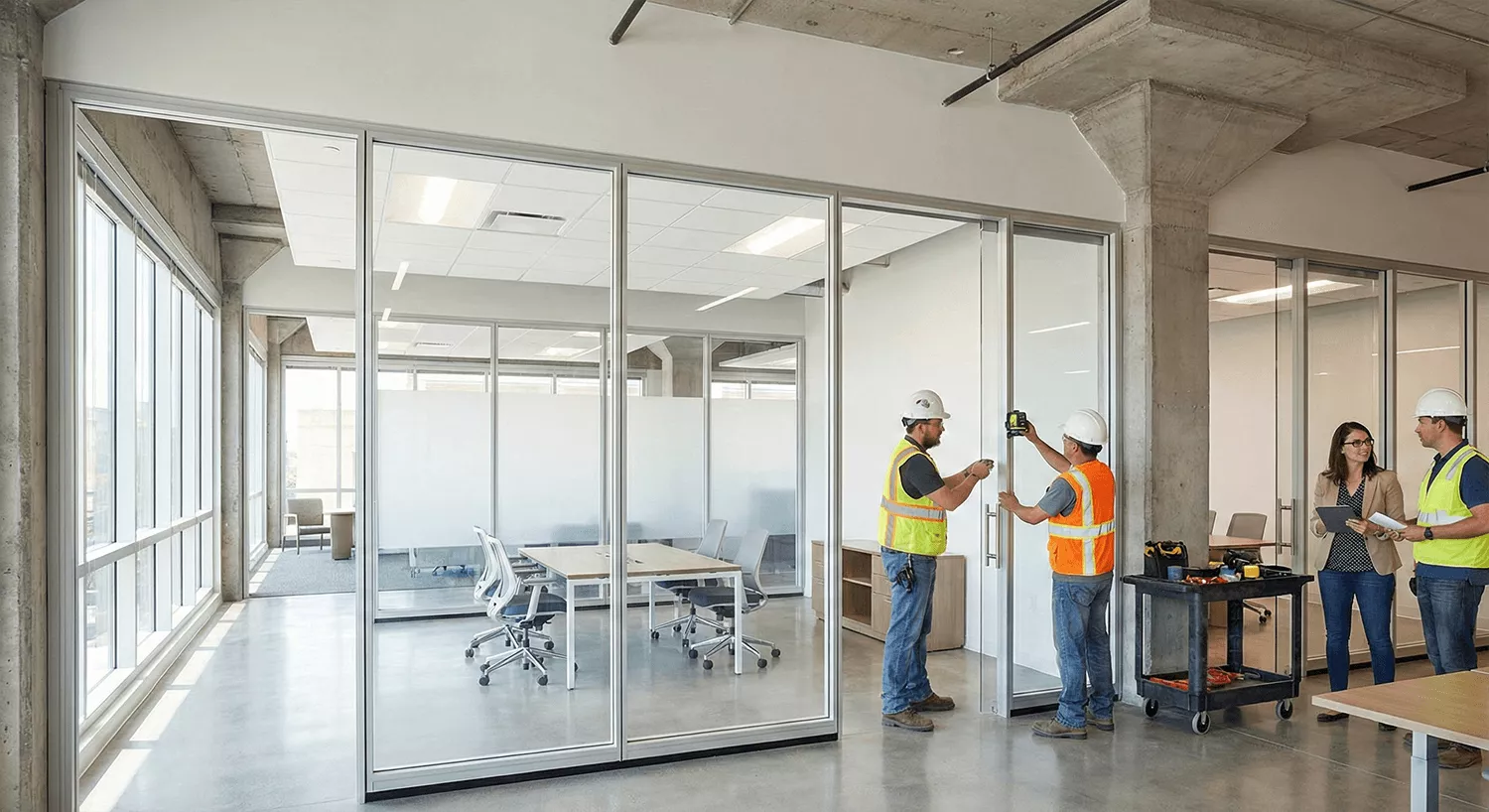
Developers and contractors face consistent challenges across office, mixed-use, and residential projects. A tempered glass panel solves them efficiently.
Most commercial buildings struggle to bring daylight deeper into the floor plate.
Glass wall partitions eliminate light barriers completely.
Drywall layout changes = demolition + framing + electrical reroutes + painting.
Demountable glass partitions = reconfiguration without dust, downtime, or permitting headaches.
Modern tenants demand dynamic layouts. Office partitions with glass systems offer future-proof adaptability.
Glass reduces labor hours, minimizes waste, and accelerates occupancy.
Developers selling luxury units or leasing premium spaces can’t rely on outdated interiors.
Residential glass partition walls create upscale, visually striking spaces.
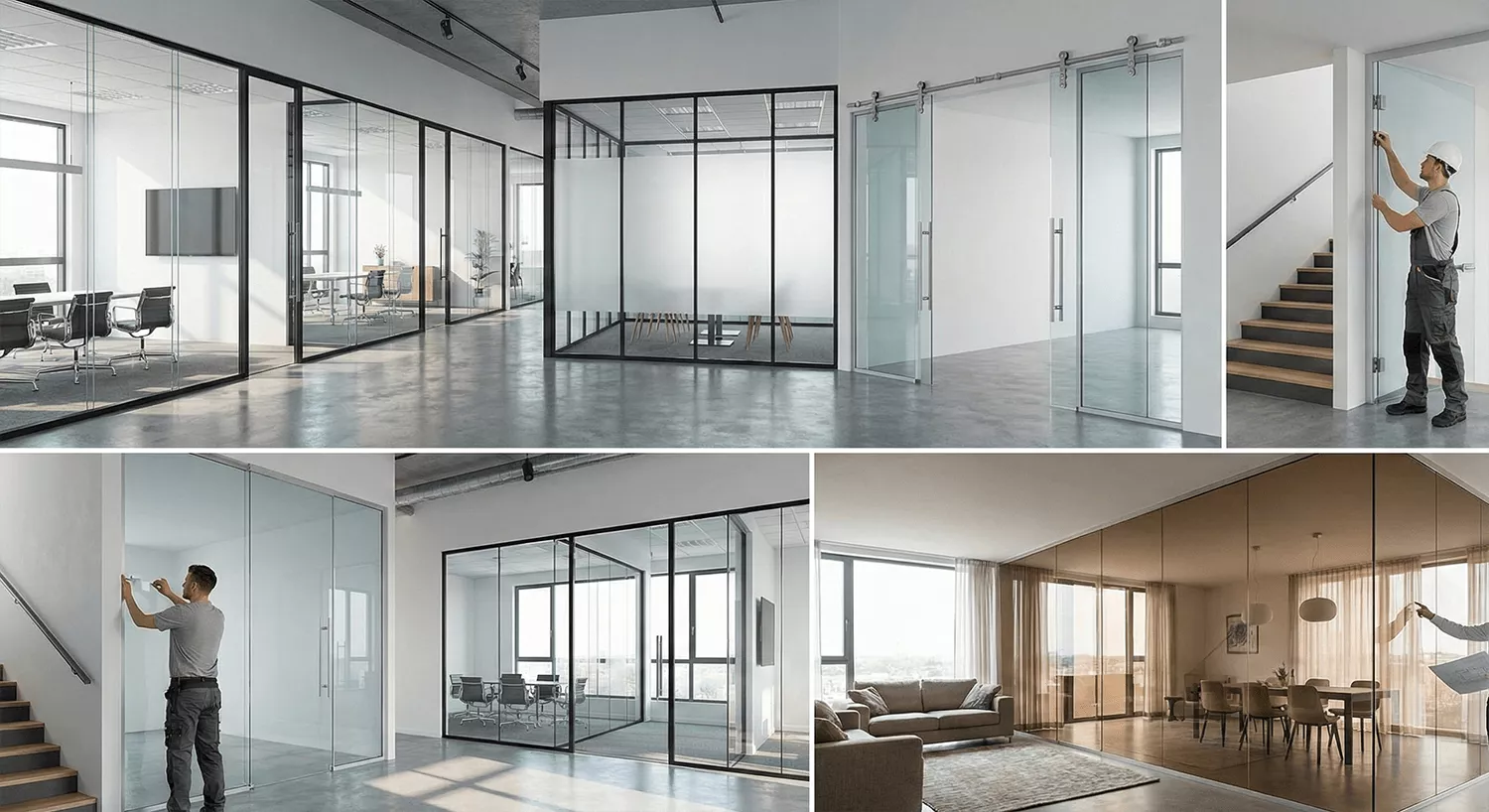
Types of Glass Partition Walls for Commercial & Residential Builds
Every project requires a tailored approach. Here is what decision-makers need to know.
Ideal for corporate environments, coworking spaces, and leased offices where transparency, acoustics, and flexibility matter.
Includes options such as:
The go-to system for developers prioritizing long-term adaptability.
These systems are a major value-add in competitive commercial markets.
Architectural projects often require custom sizing, tinting, finishes, and hardware.
Developers utilize custom glass partitions to create premium, differentiated spaces.
Options include:
The residential market is shifting toward open yet defined interiors.
Applications:
Certain projects require compliance with fire-safety codes.
For contractors, this is critical when installing fire rated glass partition systems in commercial corridors or elevator lobbies.
Popular in retail, classrooms, and industrial offices, combining privacy with visibility.
Used for offices, meeting rooms, and private workspaces, delivering function without sacrificing transparency.
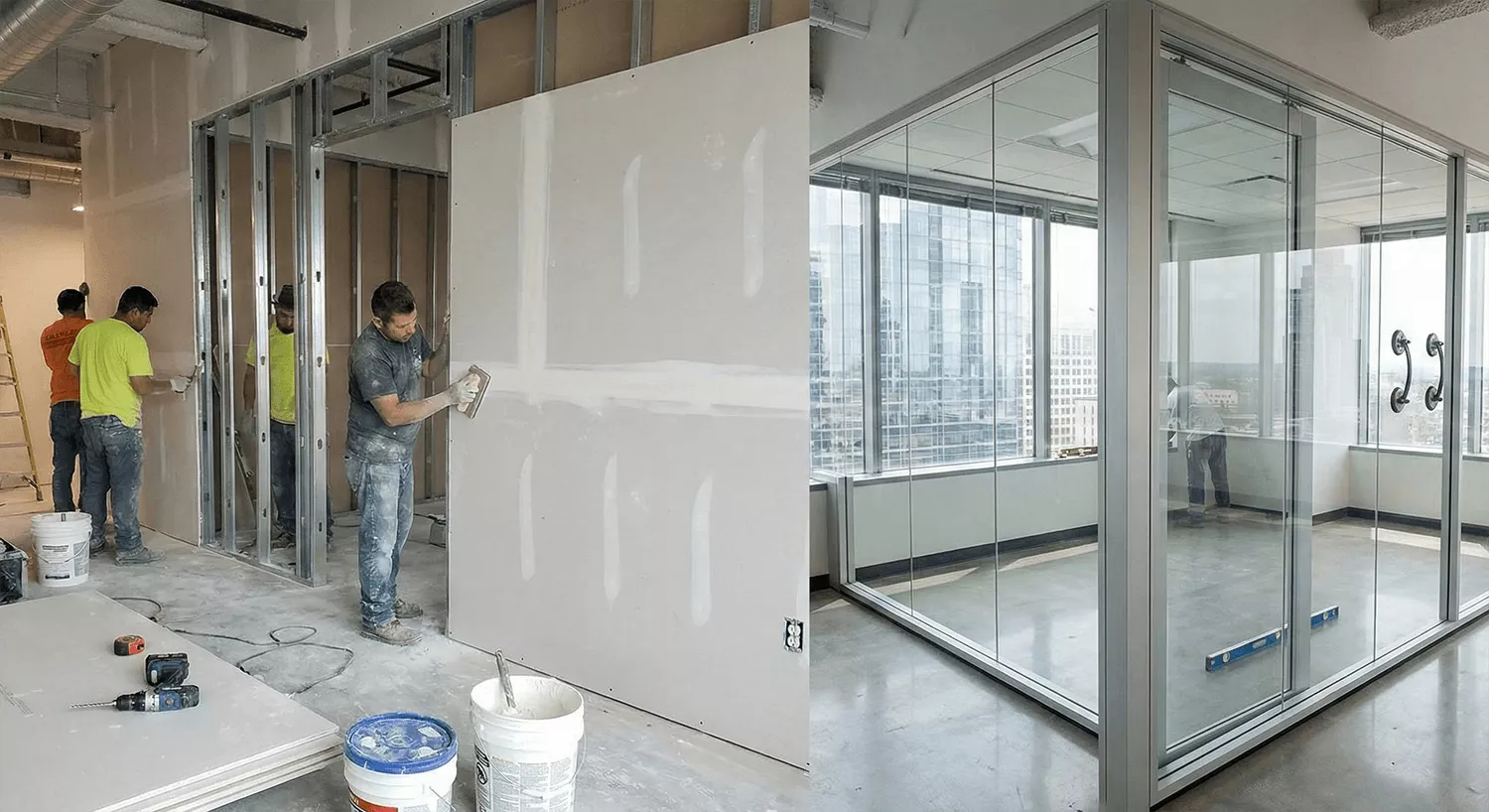
Drywall is familiar, but it’s no longer the smartest option for modern building. Here is the comparison that contractors need to present to clients.
No comparison — glass wins every time.
Glass is often cheaper in the long run because:
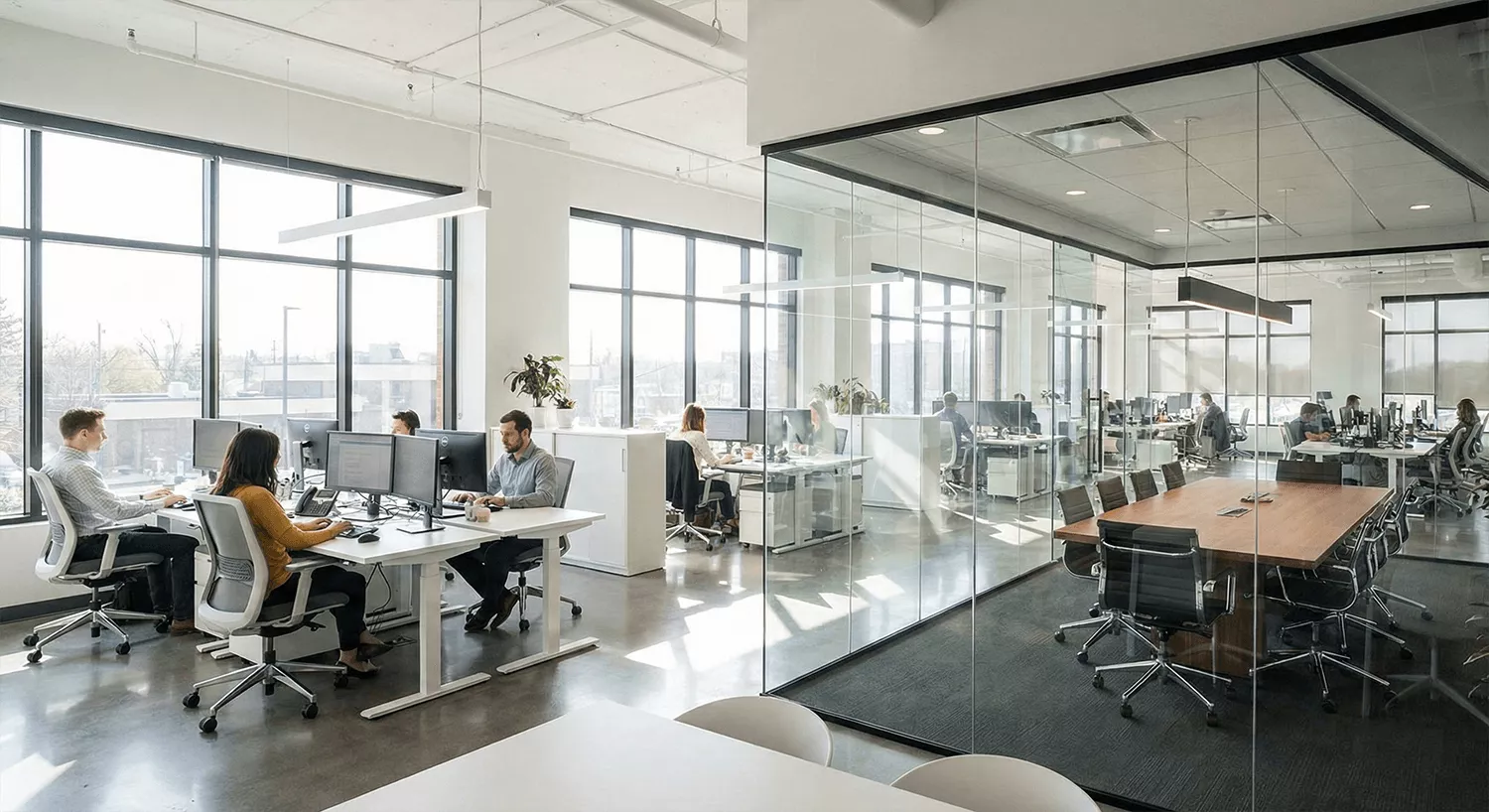
Developers and property owners care about ROI. Glass delivers it.
Bright, open, modern workspaces outperform traditional layouts.
Glass reduces build-out timelines — and every day saved boosts revenue.
More natural light = reduced dependence on interior lighting.
Open-concept aesthetics are now the norm for:
A building offering glass office partitions simply competes better.
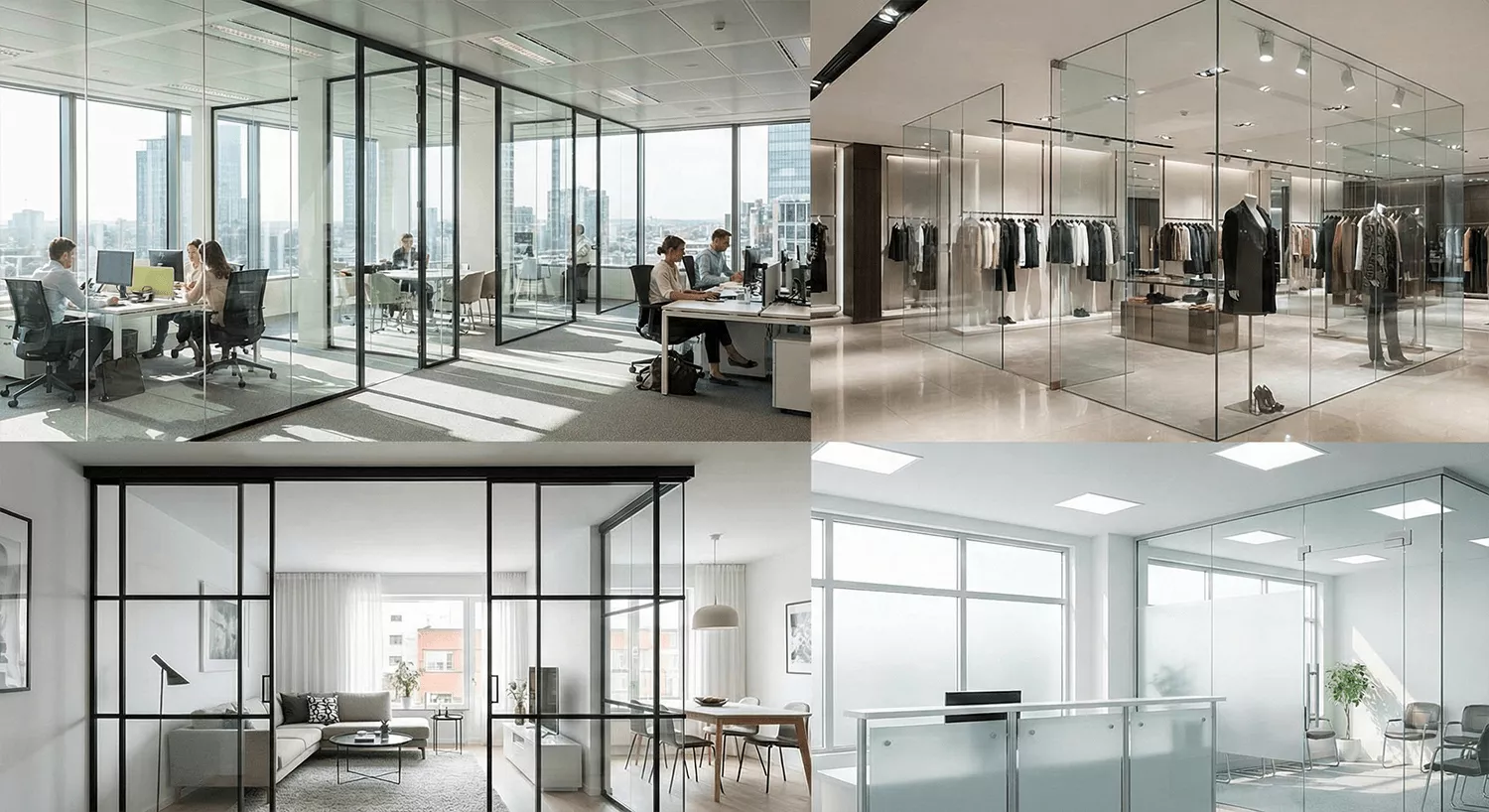
Allows merchandise visibility while defining traffic flow.
Glass enhances cleanliness, visibility, and patient comfort.
Demountable systems help adapt evolving tenant needs.
High-end homeowners increasingly request:
They offer privacy without sacrificing openness.
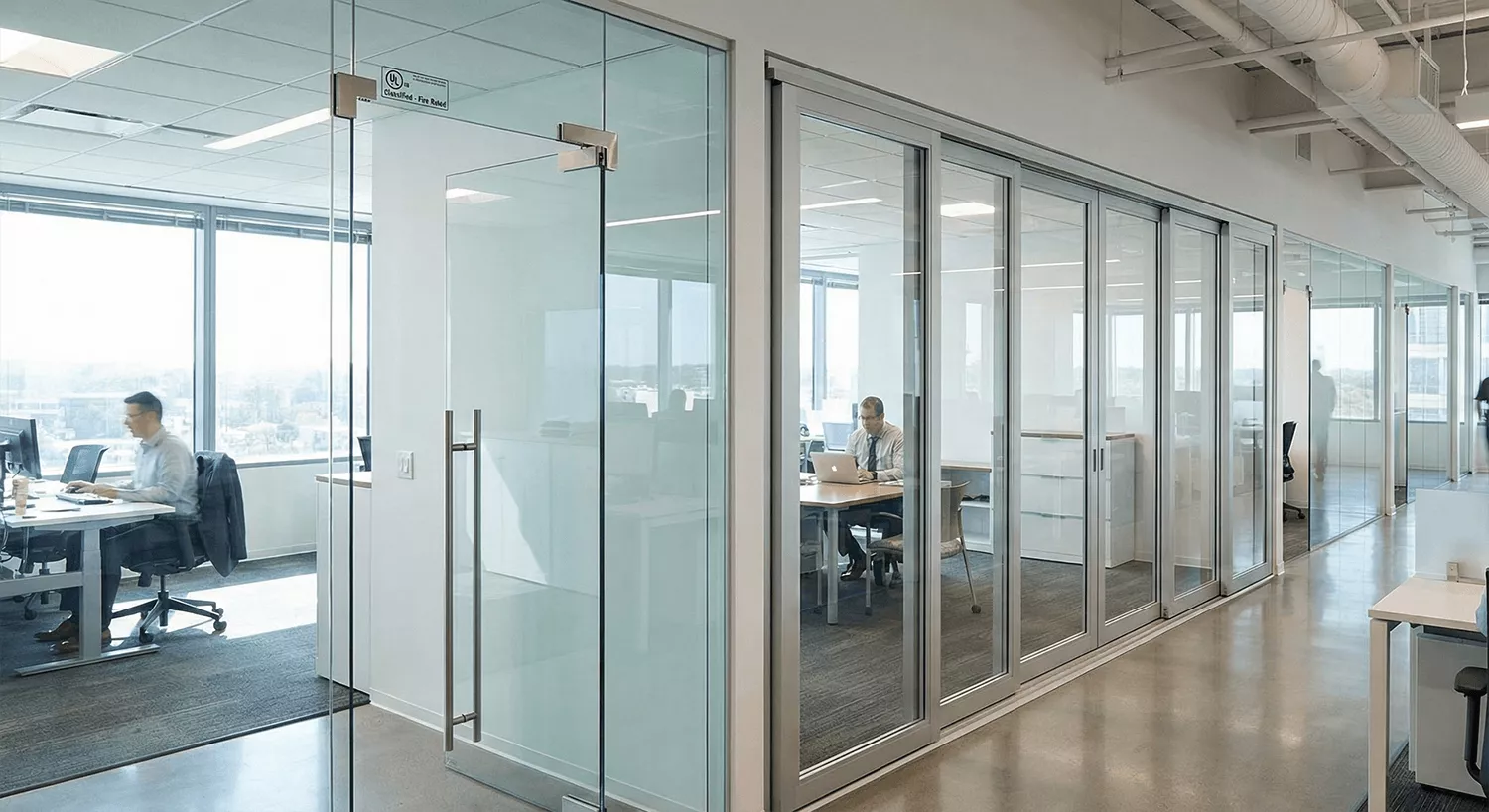
Before selecting a system, contractors must evaluate structural and compliance requirements.
Typically, 3/8″, 1/2″, or 3/4″ depending on height and acoustic needs.
Options include:
Laminated glass and sealed frames deliver premium sound isolation.
Projects may require fire rated glass partition systems, especially in commercial corridors.
For long-term ROI, demountable glass partitions outperform fixed systems significantly.
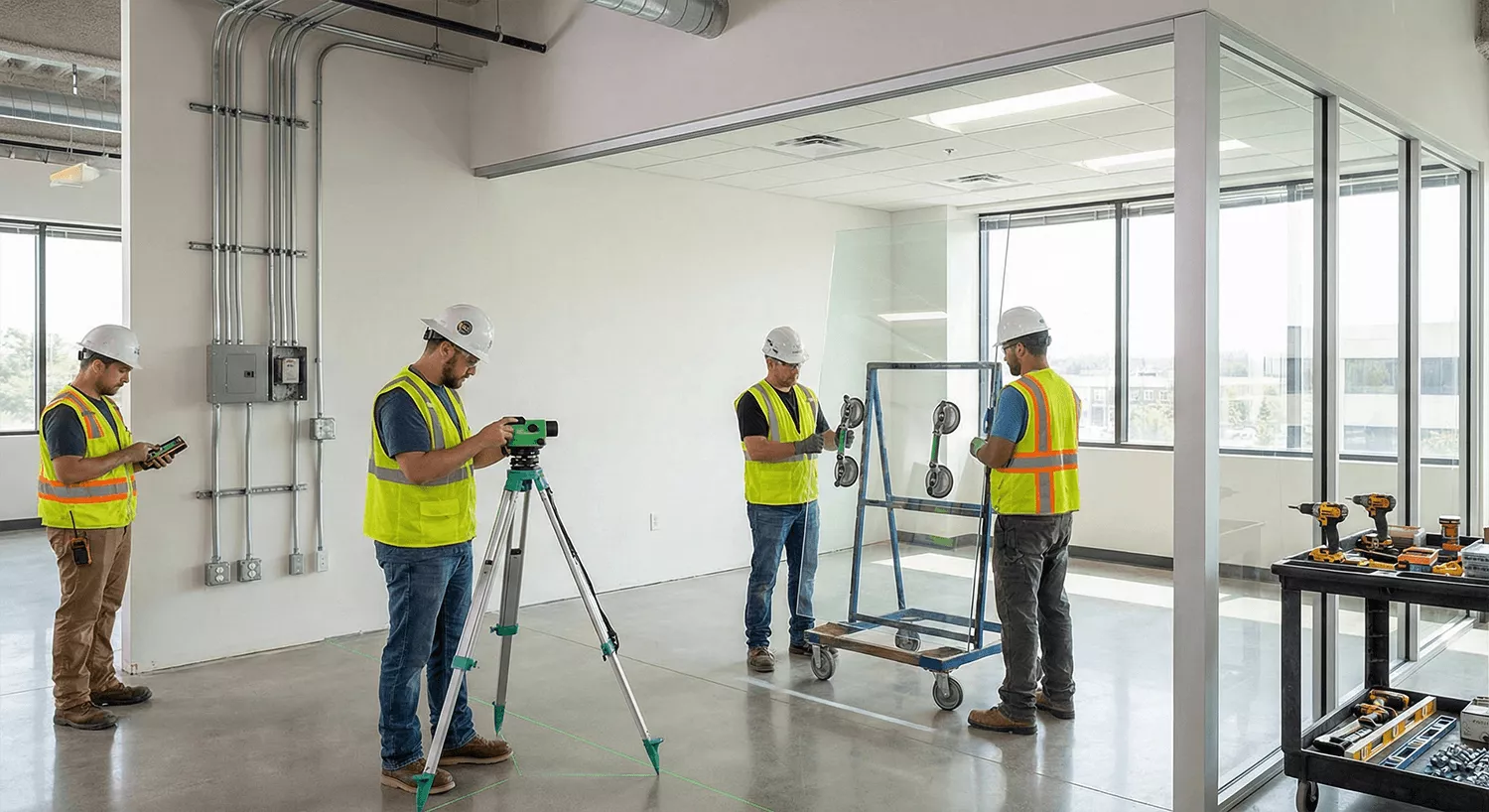
Developers value speed. Here is how glass accelerates it:
Precision manufacturing reduces onsite guesswork.
Unlike drywall, there is:
With surface-mounted solutions and intelligent planning, lighting and outlets remain accessible.
Precision engineering means fewer change orders — a contractor’s dream.
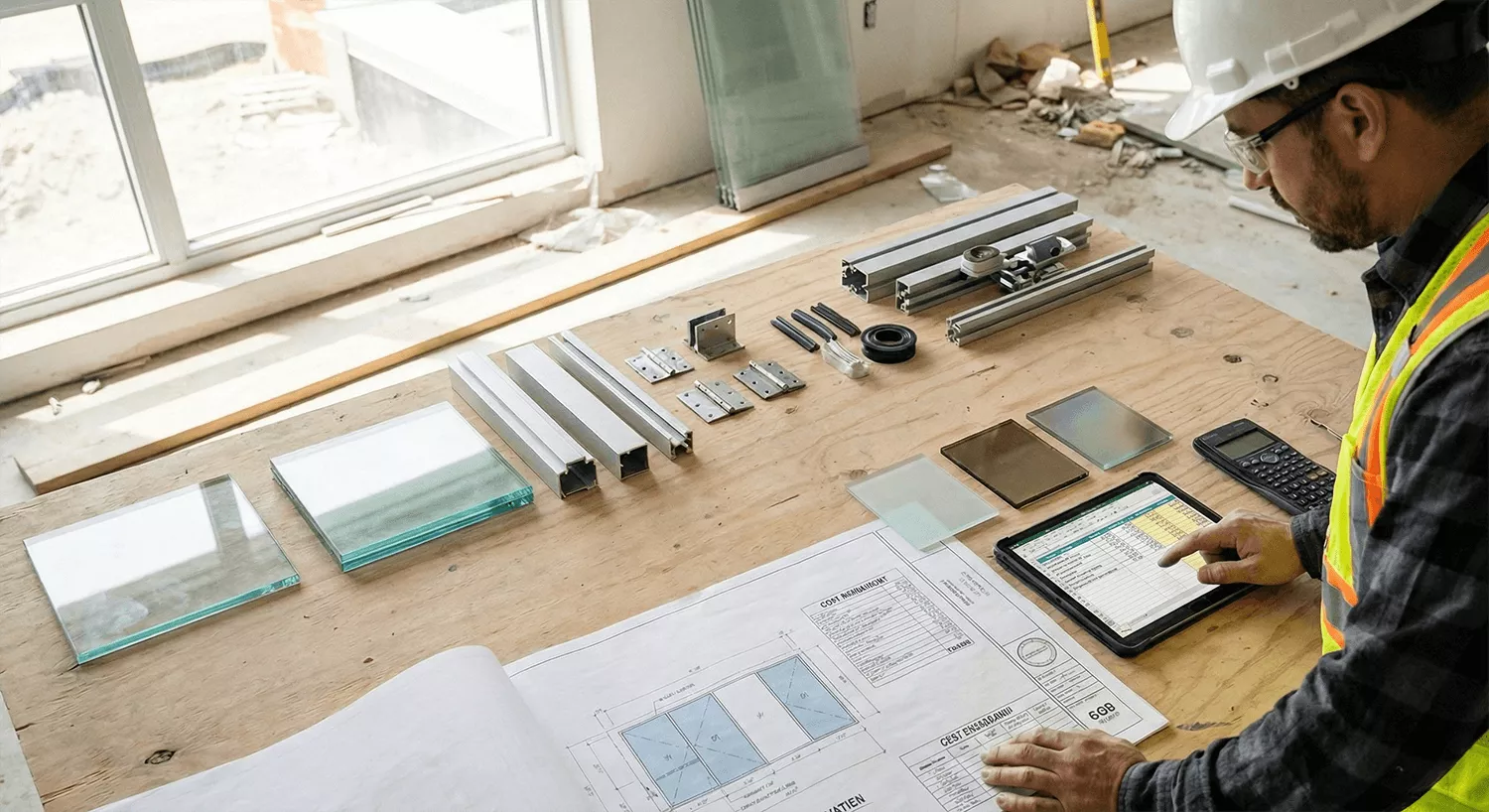
Pricing varies by system, but here is a breakdown developers can use for budgeting.
Custom cuts, tinting, frosting, or smart glass costs more than standard clear glass.
Glass installs faster, reducing the largest cost line item — labor hours.
Premium finishes increase property value and tenant demand. When compared over the lifecycle, glass often beats traditional construction.
A commercial developer installing glass partitions reduced build-out time by 30% and cut future renovation costs by 50%.
Using residential glass partition walls helped units sell faster due to enhanced aesthetics, natural light, and open-concept appeal.
A building using glass partitioning adapted tenant space within two days instead of two weeks, minimizing downtime. These results directly impact profitability.
Whether you are planning a corporate office, luxury residential build, or commercial space upgrade, Glass Partition Walls deliver flexibility, aesthetics, and long-term value far beyond traditional construction methods.
Developers and contractors across the USA are adopting these systems to stay competitive — and the ones who don’t will quickly fall behind.
If you want a custom quote, design consultation, or specification guidance tailored to your project, your next step is simple: start with a professional glass partner who understands the real construction challenges developers face.
They speed up build-outs, improve natural lighting, reduce long-term renovation costs, and create modern, high-value spaces that attract tenants faster.
Yes. Tempered and laminated glass used in glass partitions is impact-resistant, safety-rated, and designed for heavy daily use in offices, retail, and mixed-use buildings.
They can be reconfigured without demolition, reducing labor, waste, and downtime — ideal for tenant improvements and evolving layouts.
Properly engineered acoustic laminated glass and sealed framing systems deliver STC ratings comparable to (or better than) drywall.
Absolutely. Residential glass partition walls work well for living rooms, home offices, bedrooms, and open-concept designs without blocking natural light.
Yes. Fire rated glass partition systems are available and meet required UL and building code standards for commercial applications.
Glass installs significantly faster — no mudding, sanding, or painting. Many projects complete installation in a fraction of typical drywall timelines.
Yes. Systems can integrate swinging or sliding glass partitions with door options, creating enclosed rooms while maintaining transparency.
Developers can choose frosted, fluted, tinted, laminated, or smart glass, along with custom hardware and framing finishes.
Yes. They increase property value, reduce future renovation costs, accelerate tenant turnover, and improve energy efficiency through better daylight distribution.
Explore all things glass—from stylish table tops and insulated options to tinted and frosted designs. Discover guides on glass railings, custom cut glass, shelves, and stunning backsplash ideas for a modern home or office upgrade.