
My Cart
You have no items in your shopping cart.

Laminated glass is a high-performance safety glass made by bonding two or more layers of glass with a strong, flexible interlayer such as PVB (Polyvinyl Butyral), EVA (Ethylene Vinyl Acetate), or SGP (SentryGlas Plus). When broken, the glass remains adhered to the interlayer, preventing dangerous shards and enhancing safety. At Fab Glass and Mirror, we manufacture premium laminated glass solutions designed for residential, commercial, automotive, and architectural use, prioritizing durability, security, and aesthetic value.
Table of Contents
| Feature | Annealed Glass | Laminated Glass |
| Safety Upon Impact | Shatters into shards | Holds together with interlayer |
| UV Protection | Low | Up to 99% UV blocked |
| Noise Reduction | Minimal | Excellent sound insulation |
| Security Resistance | Easy to break | Resists forced entry |
| Application Scope | Basic glazing only | Versatile – architecture, autos, security |
Experience Tip: In high-risk or high-traffic areas, always opt for laminated over annealed glass for peace of mind and long-term value.
Laminated glass has become an indispensable component of modern architecture, automotive design, and security systems, offering a unique combination of safety, security, and aesthetic versatility. Unlike ordinary annealed glass, which shatters into dangerous shards upon impact, laminated glass holds together, minimizing the risk of injuries and property damage. This comprehensive guide explores the intricacies of laminated glass, from its composition and manufacturing process to its diverse applications and benefits.
To understand the superiority of laminated glass, it’s essential to compare it with standard annealed glass, which is commonly used in windows and other applications where safety is not a primary concern.
In contrast, laminated glass is designed to hold together upon breakage. The interlayer absorbs the impact energy and prevents the glass from disintegrating into dangerous fragments—an advantage that sets it apart from both annealed and tempered options. Curious about how laminated glass stacks up against tempered glass? The differences in strength and breakage behavior make each suited to unique scenarios.

The production of laminated glass involves a meticulous multi-step process that ensures a strong and durable bond between the glass layers and the interlayer. Here’s a detailed overview of the manufacturing process:
The process begins with selecting high-quality float glass sheets, which are then cut to the desired dimensions based on the specific application. Precision cutting is crucial to ensure accurate sizing and minimize wastage.
Thorough cleaning is essential to remove any dust, debris, or contaminants that could compromise the bonding process. The glass surfaces are meticulously washed and dried to achieve optimal adhesion between the glass and the interlayer.
The chosen interlayer (PVB, EVA, or SGP) is carefully applied to one of the glass sheets. The interlayer is typically cut slightly larger than the glass to allow for trimming after lamination.
The glass sheets and interlayer are carefully aligned and stacked together to form a “sandwich” structure. This step requires precision to ensure that the edges are flush and the interlayer completely covers the glass surface.
The assembled layers are then passed through a roller press, which applies moderate pressure to remove any air pockets trapped between the layers. This process, known as nipping, ensures a uniform and bubble-free bond.
The final and most critical stage is autoclaving. The laminated assembly is placed in a high-pressure autoclave chamber, where it is subjected to controlled heat and pressure. This process activates the interlayer, causing it to flow and bond permanently with the glass surfaces, creating a strong and durable laminated glass panel.
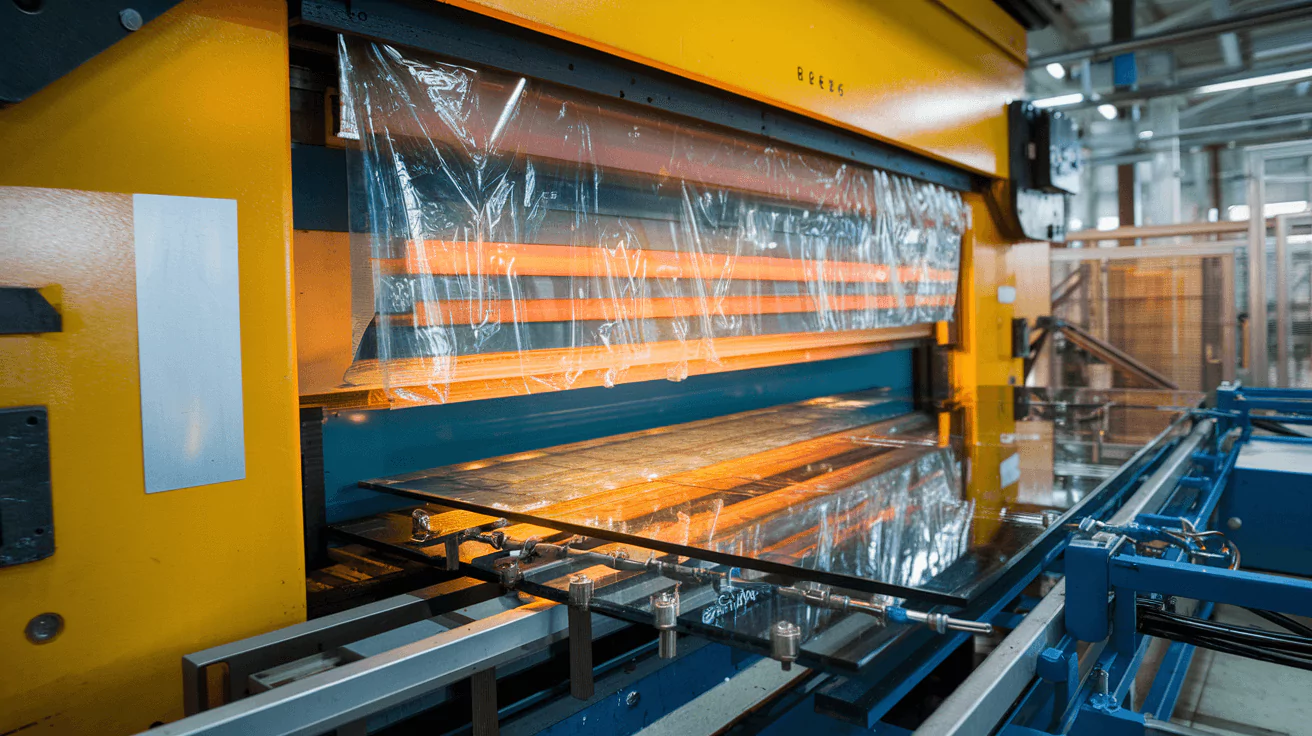
The interlayer is the heart of laminated glass, determining its key performance characteristics. Here’s a closer look at the different types of interlayers and their unique properties:
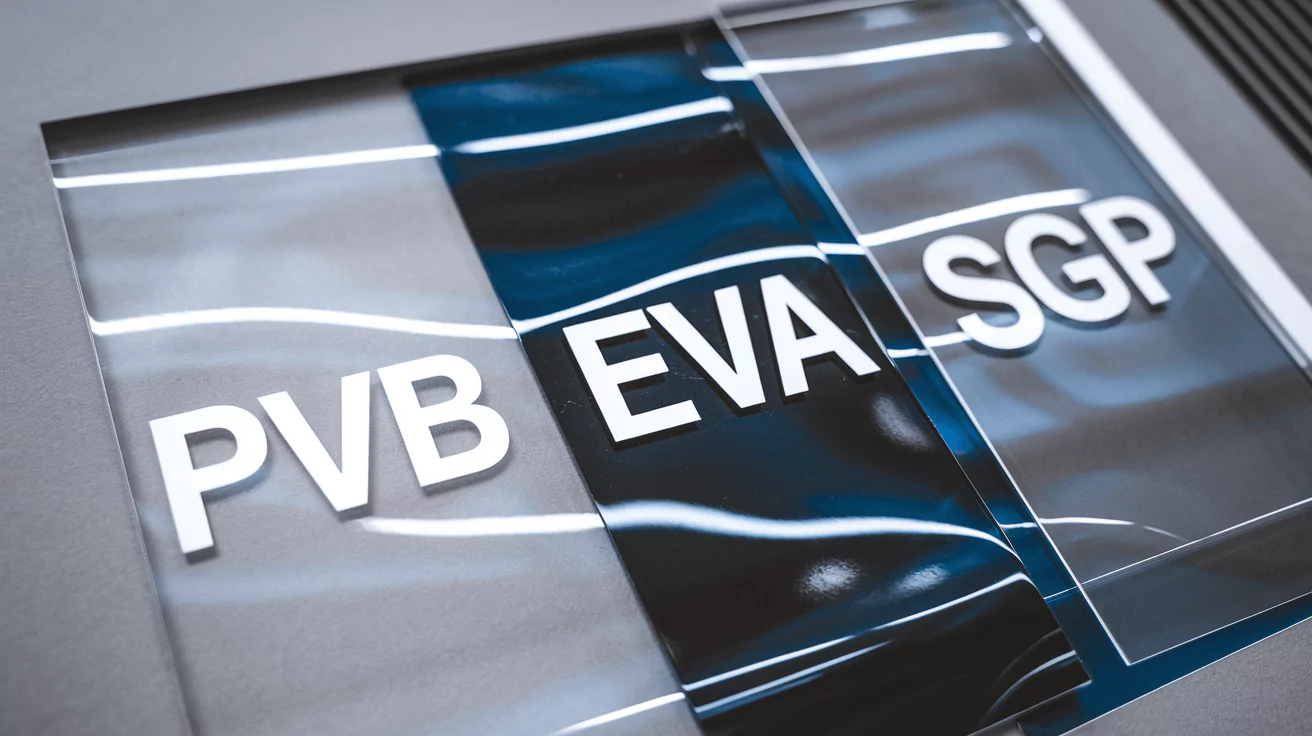
The most widely used interlayer, PVB offers a balanced combination of safety, clarity, adhesion, and sound insulation. It’s the standard choice for most architectural and automotive applications due to its versatility and cost-effectiveness.
EVA is an advanced interlayer known for its superior moisture resistance, UV resistance, and compatibility with decorative inserts—qualities that make it a top pick for outdoor or humid settings. For a deeper dive into different kinds of laminated glass, you can explore how these interlayers tailor performance to specific needs.
SGP is a high-performance interlayer that offers exceptional strength, stiffness, and post-breakage performance. It’s significantly stronger and more rigid than PVB, making it ideal for demanding applications like structural glazing, hurricane-resistant windows, and high-security areas.
| Interlayer | Best For | Key Benefits |
| PVB | Standard safety glass | Clarity, cost-effective, good adhesion |
| EVA | Outdoor/decorative glass | UV/moisture resistance, decorative uses |
| SGP | Structural/high-security needs | 5x stronger than PVB, high stiffness |
Fire-Rated Interlayers: Expands under heat for flame resistance
Laminated glass finds applications in a wide range of industries due to its versatility and performance benefits:
From windows and doors to skylights and glass floors, where laminated glass enhances buildings improve safety, security, and energy efficiency while transforming architectural designs like facades, curtain walls, staircases, and balustrades.

Laminated glass is a crucial safety component in vehicles, primarily used for windshields and increasingly for side windows. It protects occupants from injuries during accidents, reduces noise levels, and blocks harmful UV radiation.

Laminated glass plays a vital role in security applications, offering protection against ballistic threats, forced entry, and explosions. It’s used in banks, government buildings, embassies, armored vehicles, and other high-security areas.

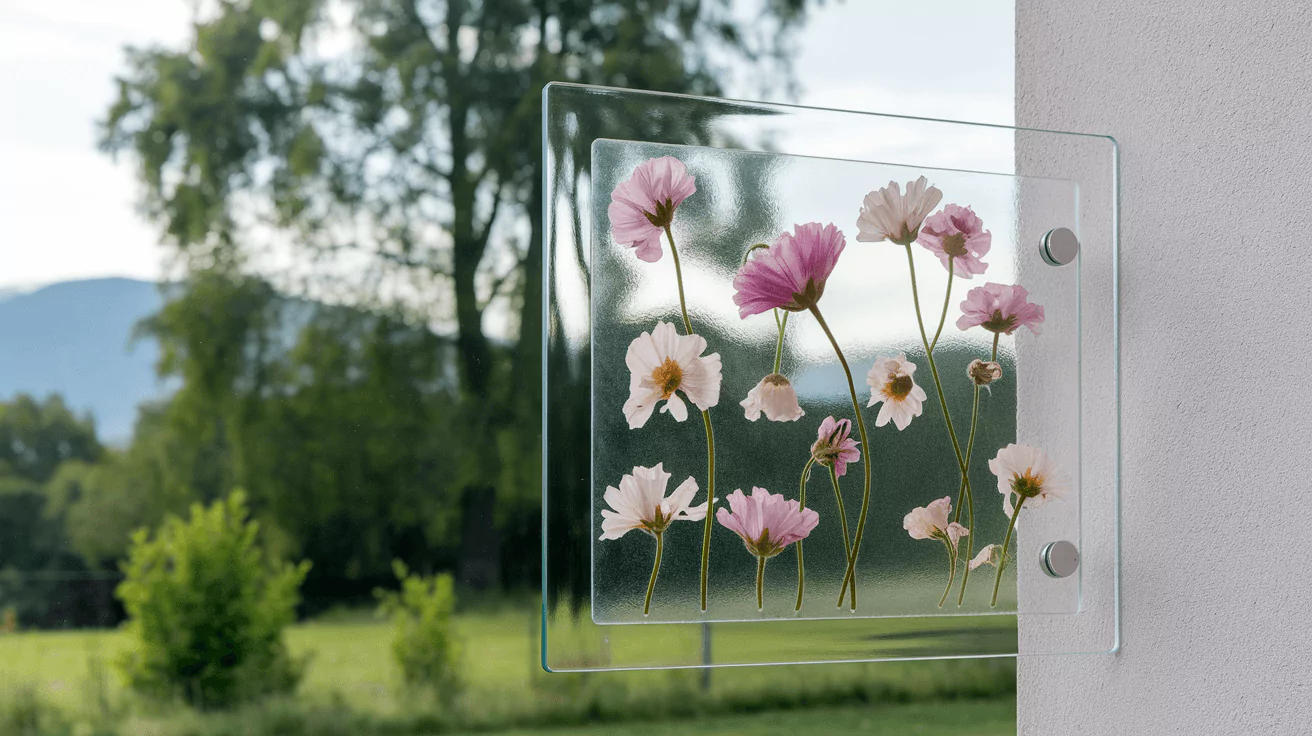
Laminated glass can be used to create stunning decorative elements, incorporating colored interlayers, patterned glass, or embedded objects. It’s used in interior design, art installations, and architectural features to enhance aesthetic appeal.
Laminated glass offers a multitude of benefits that make it a superior choice over traditional glass:
Expert Recommendations
“In storm-prone or high-rise environments, laminated glass is no longer optional, it’s essential for structural safety and occupant well-being.”
Tehmas Baig, Fab Glass and Mirror
Laminated glass is a versatile and high-performance safety glass that offers a wide range of benefits for various applications. Its unique construction, with a strong interlayer bonding multiple glass layers, provides exceptional safety, security, sound insulation, UV protection, and energy efficiency. By understanding the different types of laminated glass and their properties, you can make informed decisions to enhance safety, comfort, and aesthetic appeal in your projects. Laminated glass isn’t just a trend, it’s a smarter, safer, and more sustainable choice for homes, offices, vehicles, and public spaces. Whether you’re an architect, contractor, or homeowner, Fab Glass and Mirror offers custom laminated glass tailored to your project.
FAQs
Laminated glass is ideal for safety, security, and sound reduction. It’s commonly used in automotive windshields, glass doors, skylights, and storefronts because it holds together when shattered, reducing the risk of injury. Additionally, laminated glass provides UV protection and helps block external noise, making it perfect for both residential and commercial applications.
The main disadvantage of laminated glass is its higher cost compared to regular or tempered glass. It is also heavier due to the multiple layers of glass and interlayer material, which can make installation more challenging. Over time, exposure to moisture or improper sealing may cause delamination, affecting its appearance and performance.
Yes, laminated glass is breakable, but it is designed to be much safer than regular glass. When broken, the glass fragments stay bonded to the interlayer, preventing sharp shards from scattering. This makes laminated glass highly effective for impact resistance and added security, as it remains intact even after cracking.
Both tempered glass and laminated glass serve different purposes. Tempered glass is stronger than regular glass and shatters into small, blunt pieces upon impact, making it ideal for areas needing heat resistance and durability. Laminated glass, however, offers better security, soundproofing, and UV protection due to its layered construction. For applications requiring safety and sound control, laminated glass is better. For strength and heat resistance, tempered glass is the superior choice.
Explore all things glass—from stylish table tops and insulated options to tinted and frosted designs. Discover guides on glass railings, custom cut glass, shelves, and stunning backsplash ideas for a modern home or office upgrade.