
My Cart
You have no items in your shopping cart.
Tempered Glass meaning refers to a type of safety glass, also known as toughened glass, that has been heat-treated to make it four to five times stronger than regular glass. Unlike standard glass, tempered glass shatters into small, blunt fragments instead of sharp, dangerous shards, making it a much safer option in the event of breakage.
Thanks to its exceptional strength, safety, and crystal-clear appearance, tempered glass is widely used in both residential and commercial spaces. In homes, it’s a popular choice for windows, shower doors, table tops, glass shelves, and kitchen backsplashes, offering durability and a sleek modern look. In commercial settings, such as offices, retail storefronts, restaurants, and public buildings, tempered glass is often used for entry doors, partitions, display cases, and safety glazing, where high traffic and safety codes demand reliable performance.
“The introduction of heat-strengthened tempered glass to be used as balcony railings instead of steel or wood. Not only is it invisible, it’s also economical. It’s truly an elegant method of keeping your guests from tumbling face-first into the garden. “
In this guide, you’ll discover how tempered glass is made, where and why it’s used, its main benefits and drawbacks, and how it compares to other common glass types.

Table of Contents
Tempered glass starts out as regular annealed glass, but it becomes much stronger through a special heat treatment process called tempering. This process involves three key steps:
Safety is only guaranteed if the material is processed correctly; learning how to tell if glass is tempered involves looking for a permanent “bug” or stamp on the corner. If you’re not sure whether your glass is tempered, you can identify tempered glass by checking for specific signs like etched markings, break patterns, and edge quality, or you can also read our tempered glass glossary for better understanding
Watch our short video demonstration to understand how tempered glass is made and how controlled heating and rapid cooling transform ordinary glass into a high-strength safety glass.
This controlled heating and cooling creates internal stress patterns that give tempered glass its unique strength. It becomes four to five times stronger than standard glass and far more resistant to heat and impact.
💡 Important: Once glass is tempered, it can’t be cut, drilled, or reshaped. All sizing and edge work must be done beforehand.
Yes, tempered glass is clear and offers excellent visual clarity, making it a preferred choice for both residential and commercial spaces. It allows natural light to pass through while maintaining a clean, modern appearance.
For most standard applications, regular clear tempered glass works well. However, if you’re someone who’s particular about aesthetics or working on a design-sensitive project, you may want to consider low-iron tempered glass, especially if you’re comparing it with standard clear options.
Unlike regular clear glass, which has a slight greenish tint due to its natural iron content, low-iron glass is manufactured with reduced iron. This gives it an ultra-clear, color-neutral look that’s free from distortion or color shift, especially noticeable in thicker panels or when viewed against white or light-colored surfaces.
Imagine installing a tempered glass table top on a dining table placed at white marble. With standard clear glass, the green tint may slightly dull the look of the marble beneath. But with low-iron tempered glass, the view stays true to life, the marble appears crisp and vibrant, just as it should be. Whether it’s used in a frameless shower door, storefront window, or luxury partition, the appearance remains clean, consistent, and undistorted.

In short, low-iron tempered glass is the perfect solution for:
Tempered glass is a staple in modern construction and design, but to truly understand its value, one must look at where is tempered glass used across a wide variety of residential and commercial applications. Thanks to its unique combination of strength, safety, clarity, and modern aesthetics, it has become the go-to material for high-traffic and high-risk areas.
Whether you’re outfitting a home or designing a commercial space, tempered glass provides a reliable solution that meets both functional needs and stringent building safety codes. Choosing the right safety level requires an understanding of the various types of tempered glass, including tinted, frosted, and low-iron options.

Tempered glass is frequently used in residential windows, patio doors, sliding glass doors, and entryways, especially in areas where breakage risk is higher, such as bathrooms, stairwells, and children’s play areas.
In commercial environments, it’s widely seen in storefront windows, office entrances, automatic doors, and interior doors for showrooms and conference rooms. It delivers clear visibility while complying with safety standards.
Tempered glass is the material of choice for frameless shower enclosures, tub doors, and privacy partitions in both homes and commercial spaces like gyms, hotels, and spas. It’s heat-resistant, easy to clean, and adds a sleek, upscale touch to any bathroom.
Durable and easy to maintain, tempered glass is ideal for dining tables, desks, coffee tables, and console tables in both residential and professional settings. In commercial use, it’s popular in hotel lobbies, office boardrooms, and restaurant tables, where durability and cleanliness are key. Explore our ultimate guide to glass table tops to learn about types, sizing, and installation tips.
Tempered glass shelving combines a minimalist look with impressive strength. It’s widely used in kitchens, bathrooms, and living areas to hold books, toiletries, or décor. In commercial settings like retail stores, galleries, and showrooms, it’s used for display shelves, product stands, and exhibition panels.
Tempered glass backsplashes are gaining popularity for their seamless, reflective surfaces that are both hygienic and stylish. They’re great in residential kitchens and in breakrooms or food service areas in offices, restaurants, and cafes.

For open staircases, balconies, and terraces, tempered glass railings are a safe and stylish alternative to wood or metal. Glass Railing Systems in modern homes, residential buildings, office complexes, malls, and hotels, providing unobstructed views and a clean architectural finish.
Tempered glass is often used for office partitions, creating a sense of openness while reducing noise and maintaining privacy. In open-concept homes, glass dividers are also used to separate spaces without blocking light.For design inspiration and ideas, you can explore how glass room dividers enhance modern interiors while maintaining a clean and sophisticated look.
Tempered glass is valued not just for safety, but for its versatility, low maintenance, and ability to elevate any space. Whether used in a home renovation or a large-scale commercial build, its applications are as practical as they are stylish.
Tempered glass is not only used in architectural and interior design, it’s also commonly used in phone screen protectors. These ultra-thin sheets help shield smartphones from scratches, cracks, and minor drops.
However, this type of tempered glass differs significantly from the glass used in structural applications like windows, table tops, and shower enclosures. It is much thinner, manufactured at a different scale, and tailored for electronic devices.
📌 Note: While phone screen protectors are a popular consumer product, this guide focuses on the uses of tempered glass in residential and commercial construction, décor, and interior design, where thickness, strength, and custom fabrication are key.
Tempered glass is a trusted material in residential and commercial construction due to its exceptional strength, safety features, and clean appearance. Whether it’s protecting a home or supporting a business environment, tempered glass delivers reliable performance that meets both aesthetic and regulatory demands. Tempered glass has its own range of advantages and disadvantages of tempered glass. here are some of them
Tempered glass has a safer breakage pattern. It breaks into small, rounded granules rather than sharp shards, drastically lowering the risk of serious injury. To keep this protective layer intact, understanding tempered glass care and safety tips—such as avoiding significant impacts to the edges and using non-abrasive cleaners—is essential. This makes it ideal for households with children or elderly family members, and for public areas in commercial spaces like lobbies, stores, or restaurants, where occupant safety is a top priority.
When considering how durable is tempered glass, it is important to note that it offers 4–5 times the strength of standard annealed glass thanks to its heat-treated composition. In homes, it holds up to daily wear in high-use spots like tabletops, shelves, shower panels, and railings—perfect for busy families or active lifestyles.
In commercial settings, it handles constant stress from doors, partitions, and display cases, ensuring long-lasting performance without losing its polished look. This durability makes it a practical choice for spaces that see nonstop action.
When considering ceramic vs tempered glass for high-heat environments, tempered glass is often the go-to for residential and commercial durability. Whether it’s the heat of a kitchen cooktop, sun-exposed windows, or humid bathrooms, tempered glass performs reliably under thermal stress. It’s also frequently used in commercial entryways and curtain walls that endure both indoor and outdoor temperature fluctuations.
Tempered glass blends beautifully into modern designs for both homes and businesses. Its minimalist and transparent look supports natural lighting, making spaces feel larger and more open. It’s commonly used in interior partitions, floating shelves, wall cladding, and glass railings across residential and commercial interiors.
While tempered glass offers many benefits, it’s important to be aware of its limitations, especially when choosing materials for specific residential or commercial applications. Understanding these drawbacks helps in making the right decision for safety, performance, and cost.
Once tempered, the glass becomes very rigid. It cannot be cut, drilled, or reshaped—doing so would cause it to shatter instantly. Learn more about why tempered glass can’t be cut after fabrication. This means all customizations must be finalized before the glass undergoes the tempering process.
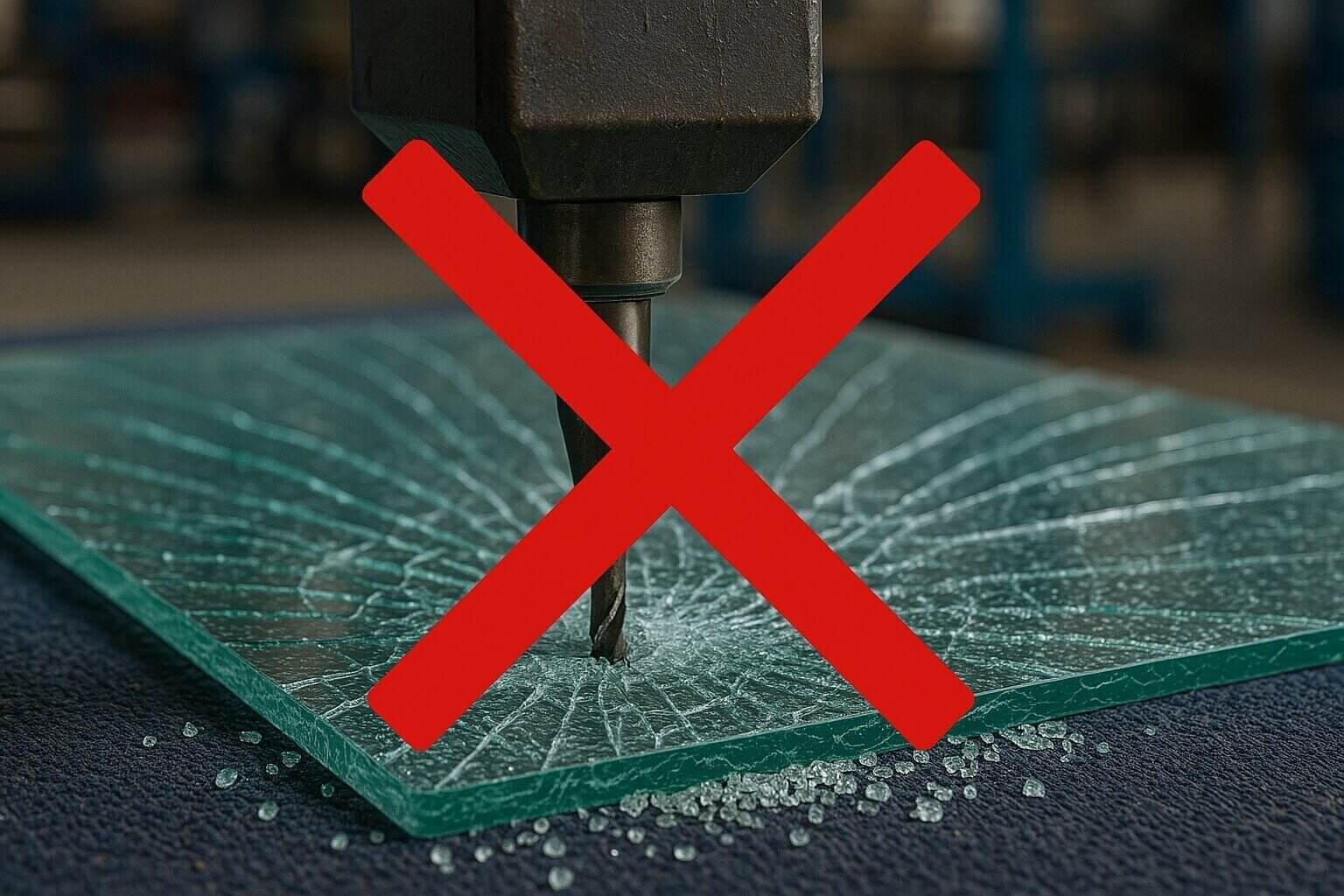
Precise measurements are essential. Whether you’re ordering a table top, partition panel, or glass shelf, get the size, edge finishes, and hole placements right the first time.
Tempered glass is strong, but it’s not unbreakable. A sharp impact, especially along the edges or corners, can still cause it to fail. While it breaks safely into small fragments, it’s still a break that may require replacement.
In commercial storefronts or high-traffic entrances, additional reinforcement may be needed. Because of specific laminated glass properties (e.g its ability to remain intact when shattered—it is often the preferred choice for pairing with other safety materials in security-sensitive areas, or alongside protective barriers and specialized framing.)
Compared to regular annealed glass, tempered glass is more expensive due to the heat-treatment process and fabrication precision required. However, it’s still generally more affordable than laminated glass, which offers additional security or soundproofing.
For projects with large quantities of glass (like office partitions or residential window upgrades), tempered glass may increase upfront costs, but the investment pays off in safety, longevity, and compliance.
Tempered glass is often required by law in areas where breakage could lead to injury. According to widely adopted standards like the International Residential Code (IRC R308.4) and the International Building Code (IBC Section 2406), safety glazing (typically tempered glass) must be used in the following scenarios:
These codes are enforced to reduce injury risk in both homes and public buildings. Using tempered glass in these areas ensures compliance, minimizes liability, and prioritizes occupant safety.
🛠️ Curious about safety codes? Always consult your local building authority or licensed contractor to confirm the exact requirements for your state or municipality, as local amendments may apply.Checkout International Code Council for the latest on tempered glass regulations in your area.
The cost of tempered glass depends on several factors, including size, thickness, shape, edge finish, and any custom fabrication required. In the U.S., pricing typically falls within the following general ranges:
| Tempered Glass Application | Estimated Price Range (USD) |
| Small custom cut panels (per sq. ft.) | $10 – $25 |
| Glass table tops | $100 – $400+ depending on shape & size |
| Frameless shower enclosures | $200 – $800+ per unit |
| Floating glass shelves | $40 – $100+ per shelf |
| Entry doors or large storefront panes | $300 – $1,000+ depending on dimension |
For homeowners, it’s important to measure accurately before ordering, since tempered glass can’t be cut after production. In commercial projects, consult with your contractor or architect to ensure compliance with code and performance standards, especially for entry systems and safety glazing.
Need help estimating your glass requirements? Reach out to our glass planning experts at +1 888-474-2221 to confirm measurements, select finishes, and discuss installation details before placing your order.
Tempered glass is a durable and safe material—but due to its permanent nature after fabrication, it’s important to plan carefully before placing your order. Strength is not just about the tempering process; selecting the correct tempered glass thickness for your table or shelf is essential for structural integrity. Here are a few key things to keep in mind to ensure the right fit and a smooth installation:
Tempered glass can’t be cut, drilled, or resized after tempering. Any modifications attempted after the fact will cause the glass to shatter. That’s why all dimensions, holes, and edge finishes must be finalized beforehand.
Tempered glass can be customized in various ways:
Make sure the finish you select matches both function and style—especially if it will be installed in visible areas like kitchens, entryways, or retail storefronts.
Tempered glass is scratch-resistant, but not scratch-proof. Avoid abrasive pads or harsh chemicals. For regular cleaning:
Tempered glass can be installed DIY in many cases (like table tops or wall panels), but for larger panels, structural applications, or commercial spaces, professional installation is recommended. Always use proper supports, spacers, or mounting hardware.
When evaluating tempered glass vs regular glass, it is clear that tempering offers more than just a strength upgrade—it is a safer, smarter, and more versatile solution for modern design. From frameless shower enclosures and floating shelves to storefront windows and office partitions, choosing the right material is essential for both style and structural integrity.
Whether you’re renovating a home or managing a commercial build, understanding how tempered glass performs, where it’s required by code, and what factors affect pricing helps you make better decisions. And while it’s not unbreakable, tempered glass delivers long-term durability, peace of mind, and visual appeal when chosen and installed correctly. By planning ahead and working with accurate measurements and quality materials, you can take full advantage of what tempered glass has to offer—enhancing safety and elevating the look of any space with a glass and mirror shop. Regardless of the complexity, ordering custom cut tempered glass from a professional fabricator ensures that even the most intricate shapes meet safety standards.
No. Tempered glass is much stronger than regular glass, but it’s not unbreakable. It can still shatter under extreme impact, especially if struck at the edges or corners. However, when it breaks, it does so safely—into small, blunt pieces.
Tempered glass is designed to provide increased safety, strength, and thermal resistance. Its main purpose is to reduce injury risk in case of breakage while withstanding the daily demands of use in windows, shower doors, furniture, railings, and more.
Pros:
Cons:
Tempered glass is heat-treated to be 4–5 times stronger than regular (annealed) glass. When broken, it shatters into small granules, while regular glass breaks into sharp shards. Read more about the key differences in our annealed vs tempered glass comparison. Tempered glass also resists thermal stress better and is often required in safety-critical areas.
Tempered glass can break if struck with sharp, focused impact, especially along the edges, which are more vulnerable. Tools, hard metal objects, or incorrect installation can also cause breakage.
With proper installation and care, tempered glass can last 20 to 30 years or more. It’s resistant to corrosion, weather, and normal wear in both indoor and outdoor environments.
Yes. Tempered glass is weather-resistant and suitable for outdoor use. It’s commonly used in balcony railings, patio doors, outdoor furniture, and exterior glazing—as long as it’s properly supported and protected at the edges.
No, it does not crack easily under normal use. However, concentrated pressure or edge damage can lead to sudden failure. It’s impact-resistant, but not immune to improper handling or installation issues.
Tempered glass is more expensive than standard glass due to the additional processing, but it’s generally affordable for most projects. It offers long-term value thanks to its safety features, durability, and compliance with building codes.

Explore all things glass—from stylish table tops and insulated options to tinted and frosted designs. Discover guides on glass railings, custom cut glass, shelves, and stunning backsplash ideas for a modern home or office upgrade.