
My Cart
You have no items in your shopping cart.
What looks obvious to us can be surprisingly difficult for a dog to detect, especially when the surface is transparent and reflects light from the surrounding room.
If you are considering a Glass Dog Gate for your home, understanding how dogs perceive glass is one of the most important safety considerations. Clear architectural glass can create an almost invisible barrier, while etched or frosted patterns provide visual markers that help dogs recognize the obstruction before they make contact.
This article explains the science behind canine vision, why dogs run into glass barriers, and how etched tempered glass from Fab Glass and Mirror can improve safety without sacrificing a modern interior design.
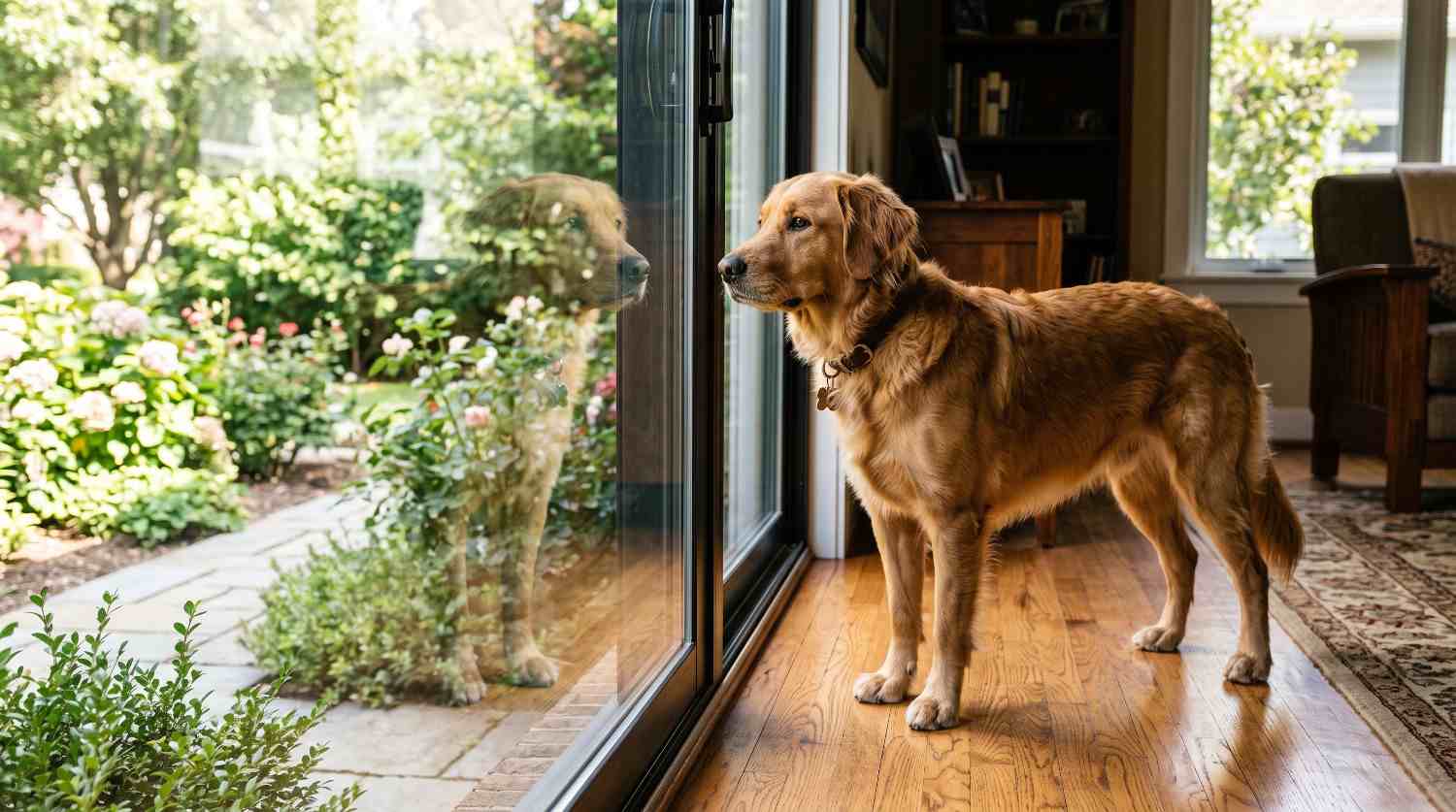
The short answer is yes, dogs can see glass under some conditions, but they often do not perceive it the same way humans do.
Dogs have evolved to detect movement more effectively than fine detail. Their visual system is optimized for spotting motion, especially in low light, rather than identifying perfectly transparent surfaces.
| Vision factor | Dogs | Humans |
| Motion detection | Excellent | Good |
| Fine detail | Moderate | Excellent |
| Color perception | Limited | Broad |
| Contrast sensitivity | Good | Very good |
| Depth perception | Less precise | More precise |
Humans rely heavily on visual cues such as reflections, edge highlights, and prior experience to recognize glass. Dogs may not interpret those cues consistently. A perfectly clear glass panel can appear like open space, particularly when it reveals a familiar room, hallway, or outdoor area behind it.
Glass does not only transmit light. It also reflects it. A dog may see:
This can create conflicting visual information, making it harder for the dog to understand that a solid barrier exists.
| Did You Know? Dogs often notice the frame or hardware of a glass barrier more easily than the clear center panel. That is why frameless panels can be more visually challenging for some pets. |
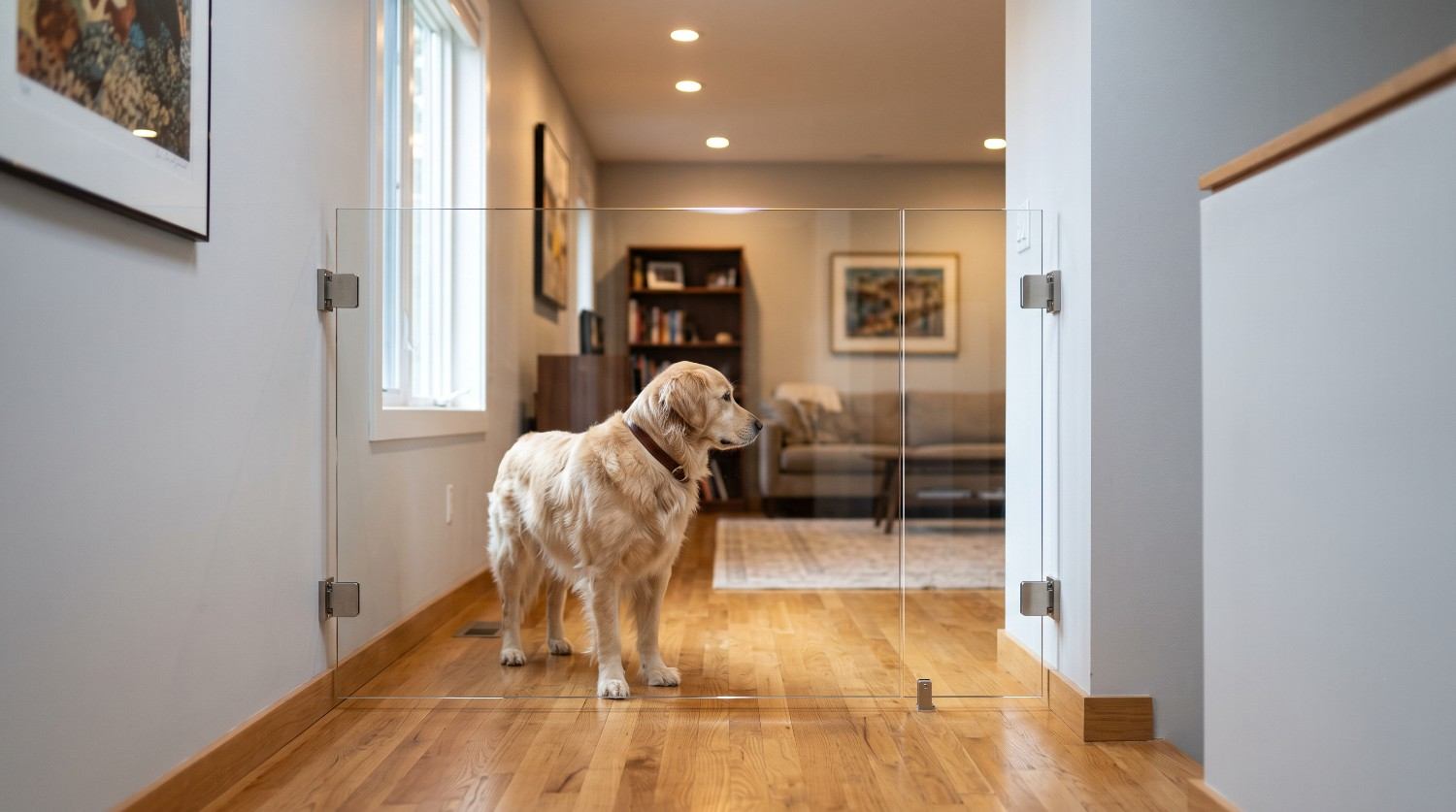
Collisions with glass are usually not caused by poor eyesight alone. They are often the result of behavior, excitement, and environmental conditions.
A clear glass pet gate may separate two spaces that the dog has previously moved through freely. If the gate is newly installed, the dog may continue running along its usual path.
Sunlight can turn glass into a mirror. Dogs may focus on birds, squirrels, or people reflected in the surface rather than the barrier itself.
At night, bright interior lighting combined with darker adjacent spaces can reduce the visibility of the glass panel.
Dogs are especially likely to collide with glass when they are:
Some dogs charge toward windows or gates when they see activity outside. In that moment, their attention is directed beyond the glass, not at the glass.
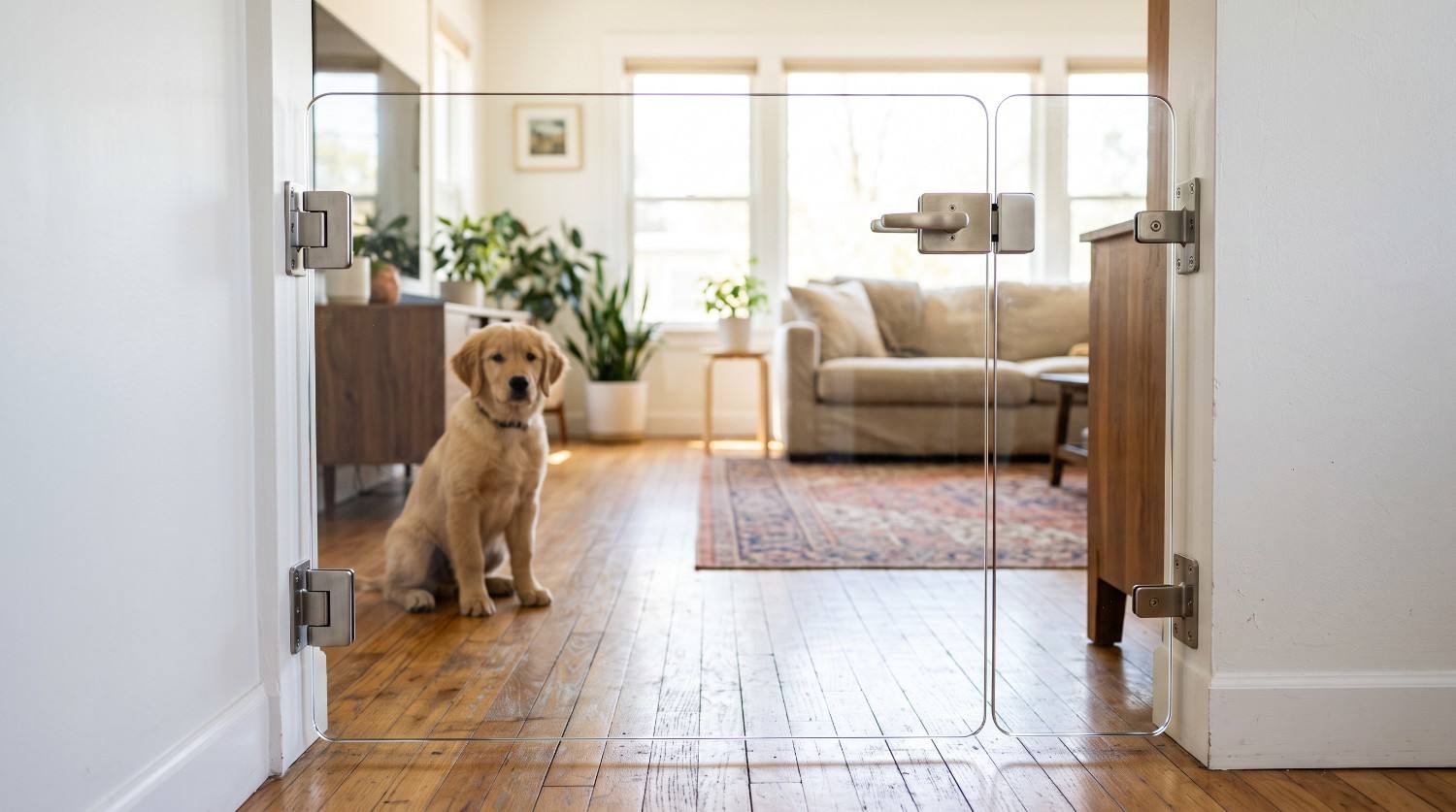
A properly designed and professionally installed glass gate can be very safe for residential use. The key is using the correct type of safety glazing.
Tempered glass is heat treated to increase strength. If it breaks, it is designed to crumble into small, less hazardous pieces rather than large sharp shards. This is the standard safety approach used in many residential glass applications.
In some custom installations, laminated glass may be used. It consists of two layers of glass bonded with an interlayer that helps hold the panel together if damaged.
Look for these features in any glass gate for dogs:
For many interior glass partitions and gates, thicker tempered glass provides greater rigidity and durability. The exact thickness should be determined by the manufacturer or installer based on the panel dimensions and mounting method.
Professionally manufactured tempered glass gates are designed for normal household use. They can withstand routine contact, cleaning, and the activity of most family pets when installed correctly.
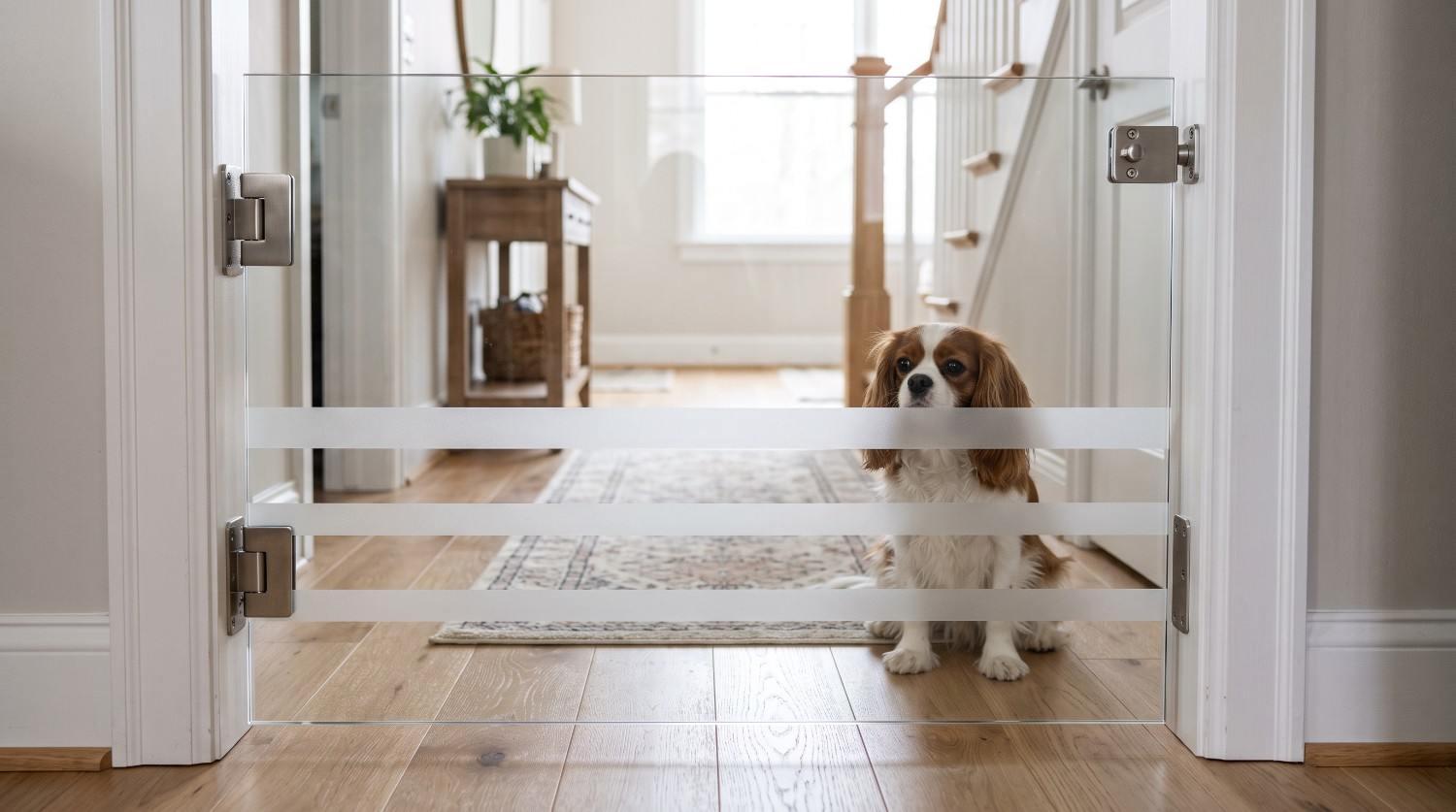
Etched glass is one of the most effective ways to make a transparent barrier easier for dogs to recognize.
The etched areas create contrast. Instead of seeing a completely clear opening, the dog sees a pattern, band, or frosted section that interrupts the transparency.
Only selected areas are frosted, leaving some clear viewing space.
The entire panel has a frosted appearance.
Horizontal or vertical frosted stripes act as strong visibility markers.
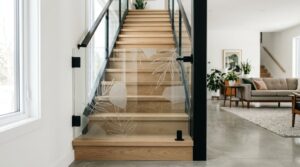
Geometric, botanical, or artistic designs provide both decoration and safety.
Frosted surfaces scatter light instead of transmitting it perfectly. This reduces the illusion of open space and makes the barrier more apparent from different angles.
Etched glass can also:
Not all patterns are equally effective. The goal is to create clear visual contrast at the dog’s eye level.
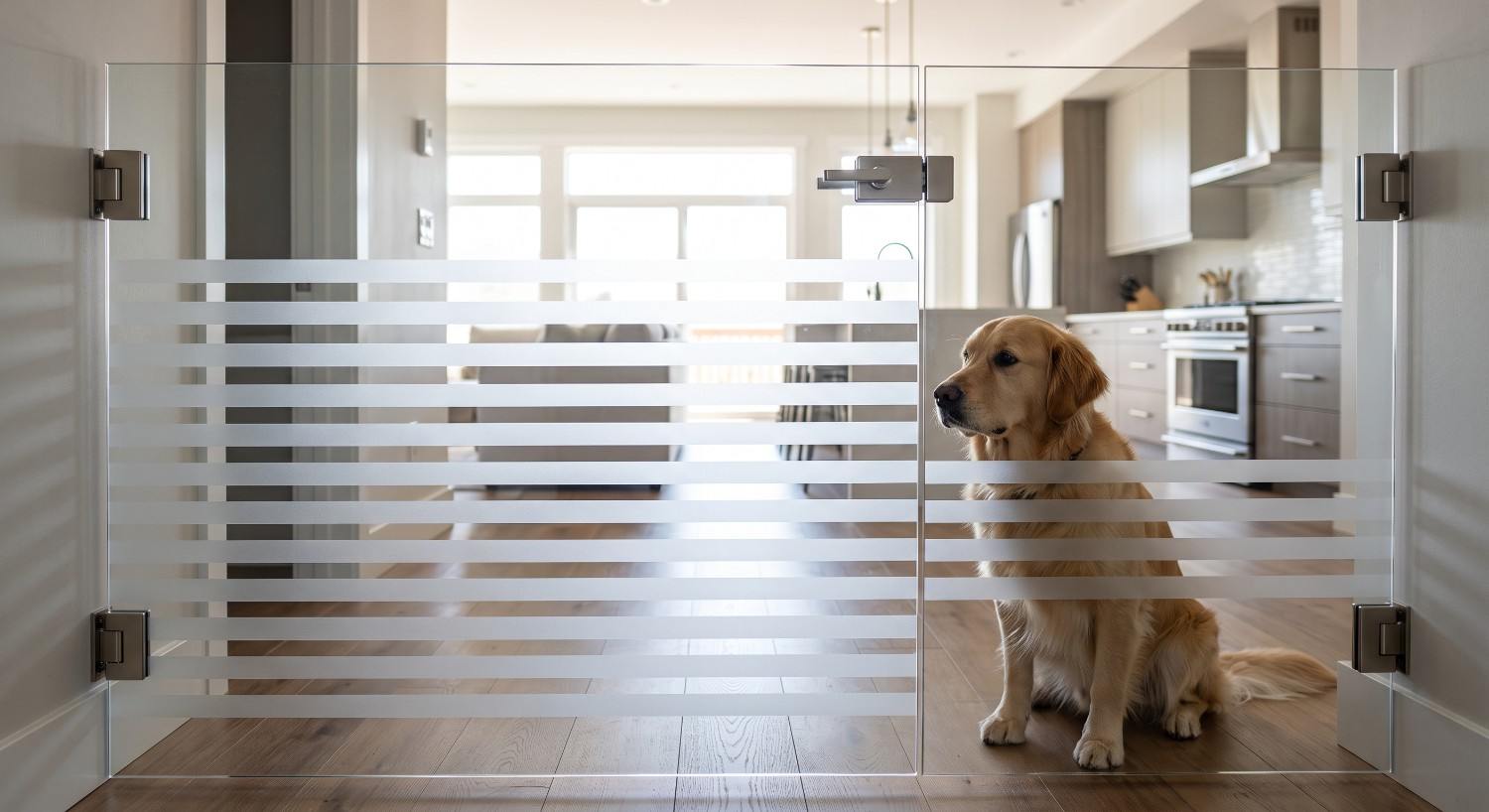
This is often the most practical option. Multiple stripes across the width of the panel create a strong visual cue without blocking too much light.
Best for: Hallways, kitchens, and open concept homes.
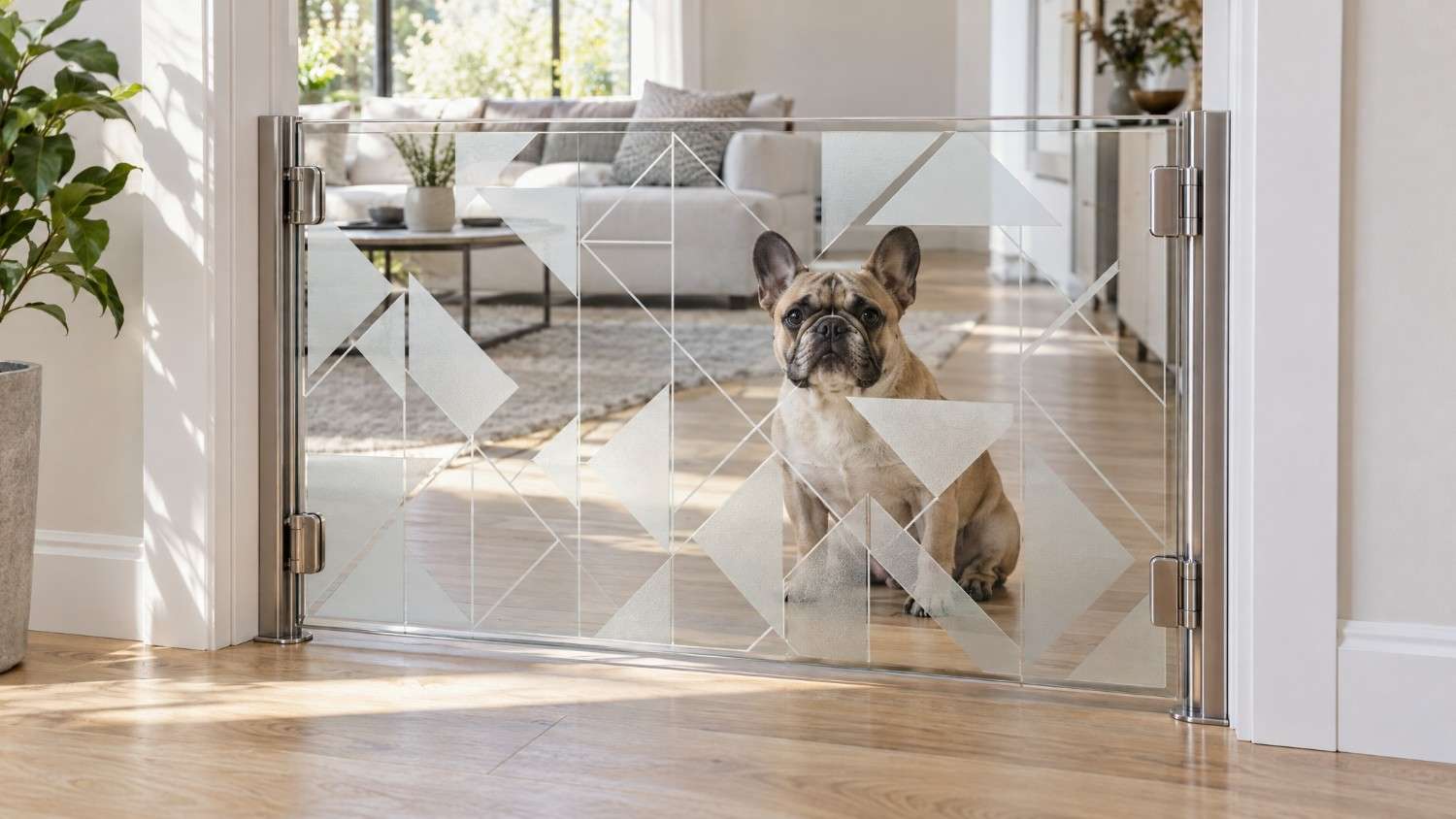
Squares, lines, or abstract shapes provide consistent contrast across the panel.
Best for: Contemporary interiors.
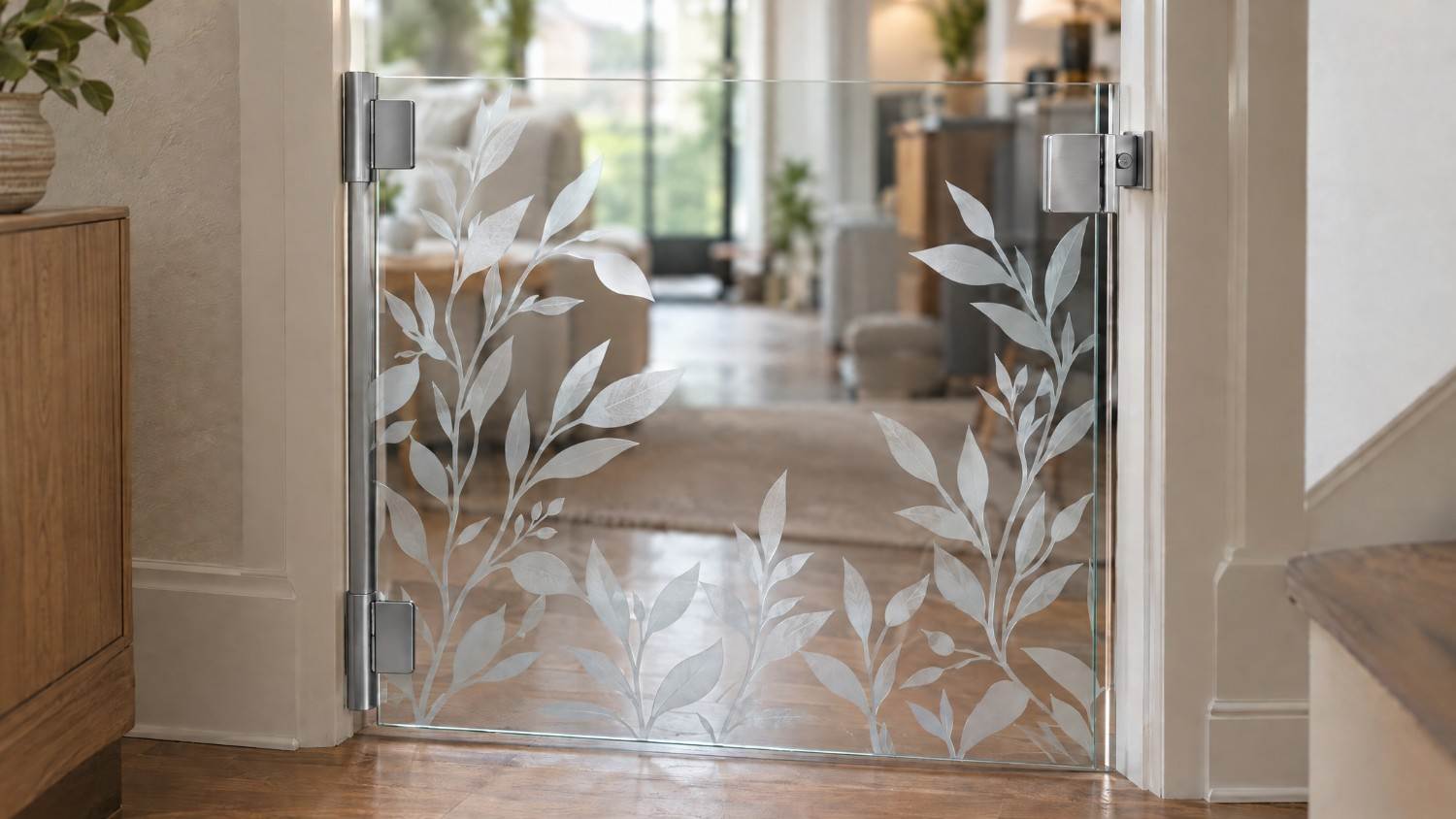
Organic patterns break up reflections and add a softer aesthetic.
Best for: Transitional or traditional homes.
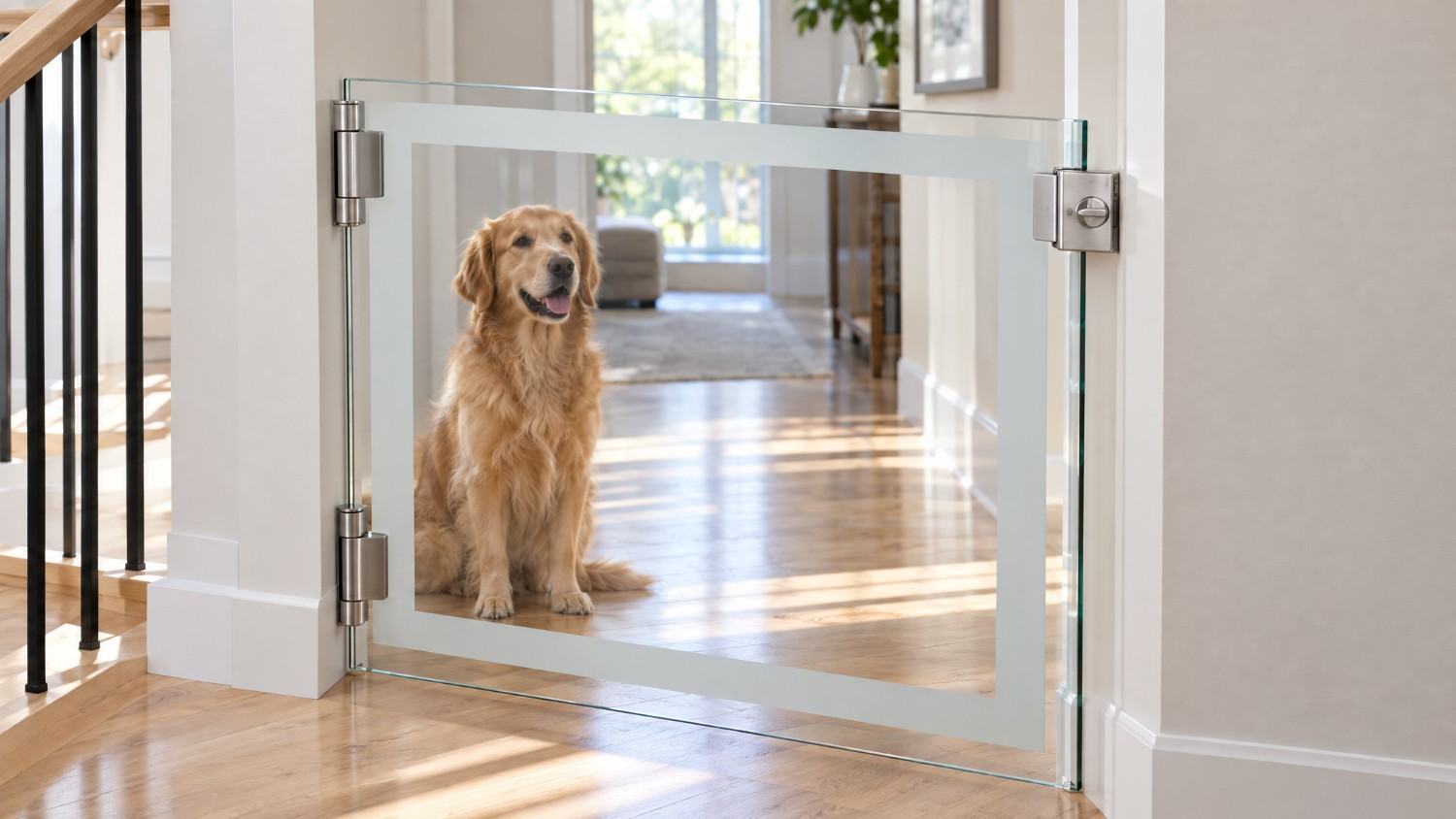
A frosted border helps define the edges of the gate, which can improve visibility when approaching from the side.
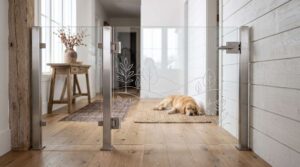
Best for: Frameless glass pet gate designs.
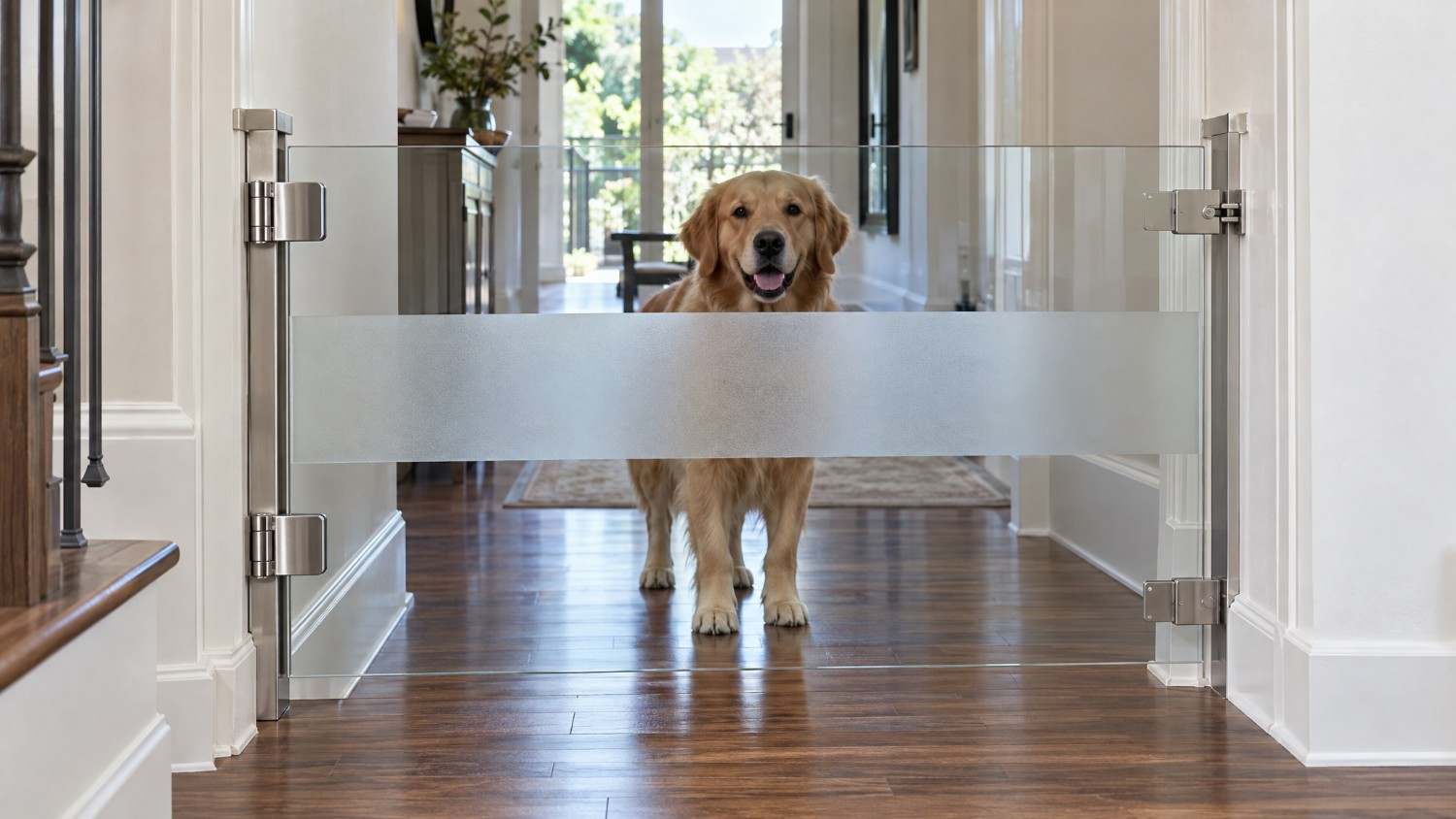
A frosted center section at medium height is highly noticeable to many dogs while preserving clear upper and lower areas.
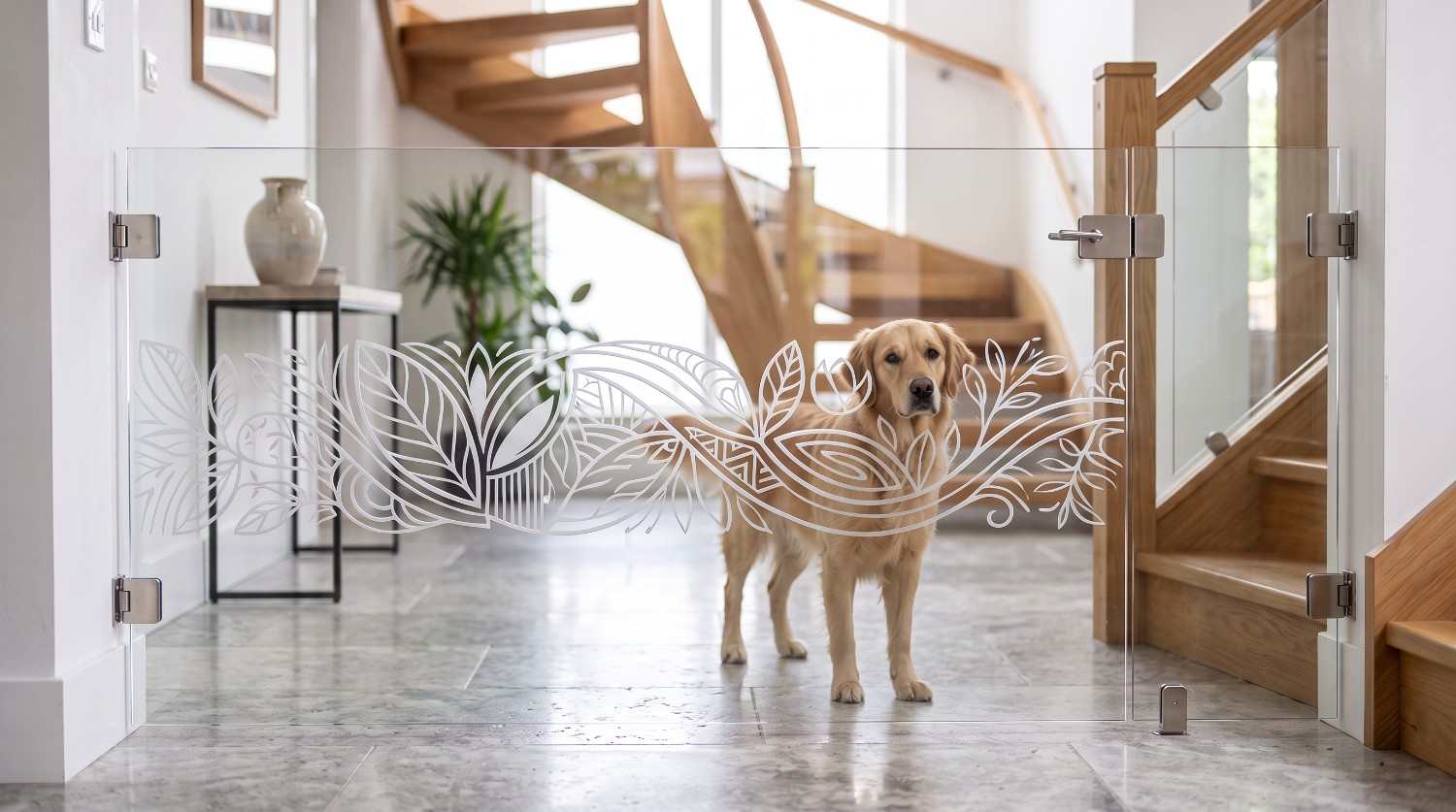
A custom glass dog barrier can incorporate house numbers, family motifs, or decorative artwork while still serving as a visibility marker.
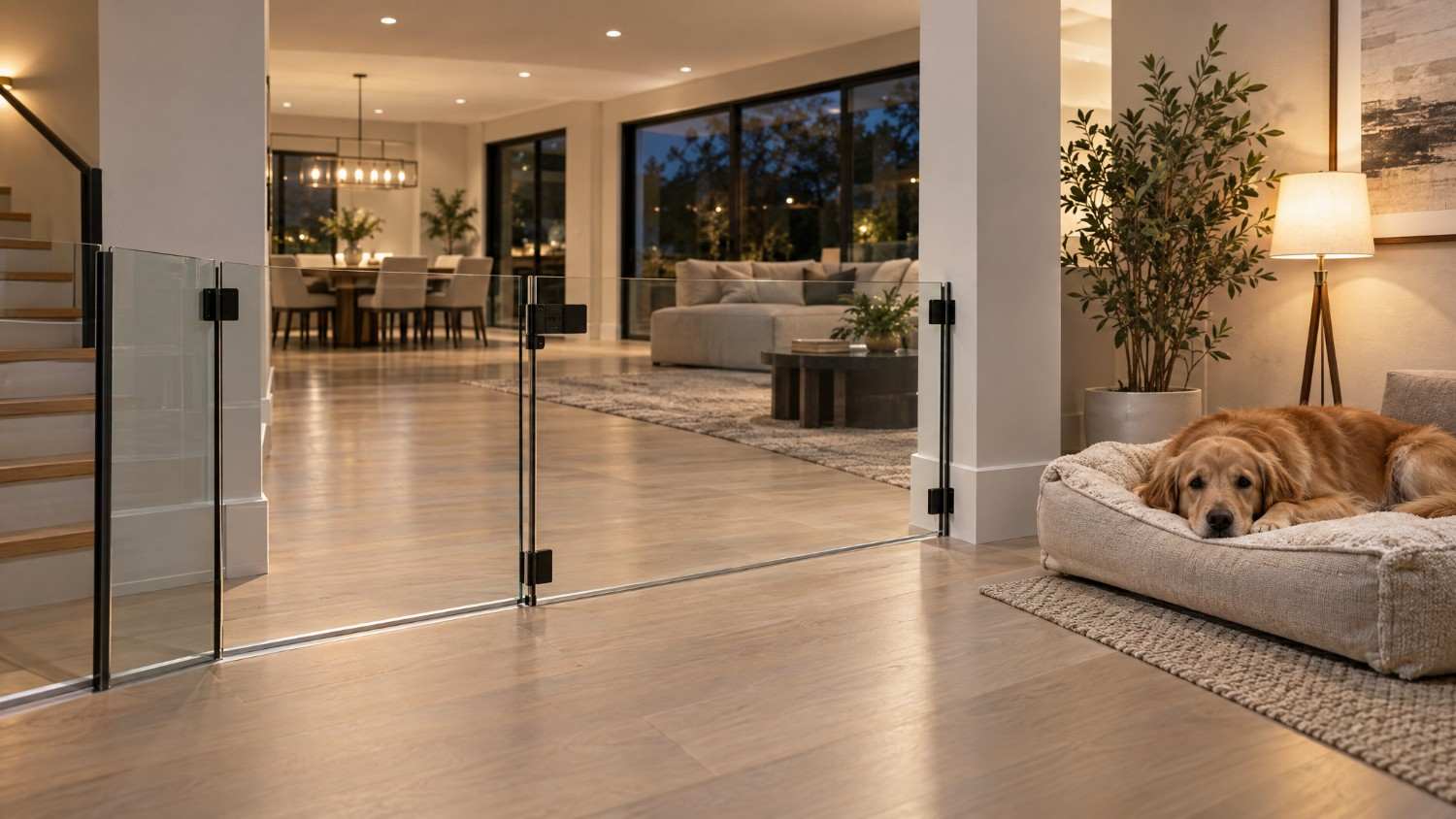
Etched glass helps significantly, but it should be part of a broader pet safety strategy.
Pet Safety Tip
Ensure both sides of the glass barrier are evenly lit, especially in the evening.
Decorative decals or subtle visibility markers can help during the training period.
Walk your dog to the gate on a leash and reward calm stops and turns.
Keep high-speed play and toy throwing away from glass barriers and maintain clear walking paths.
When installing a new glass indoor pet barrier, give your dog time to learn the new boundary. Most dogs adapt quickly when introduced calmly and consistently.
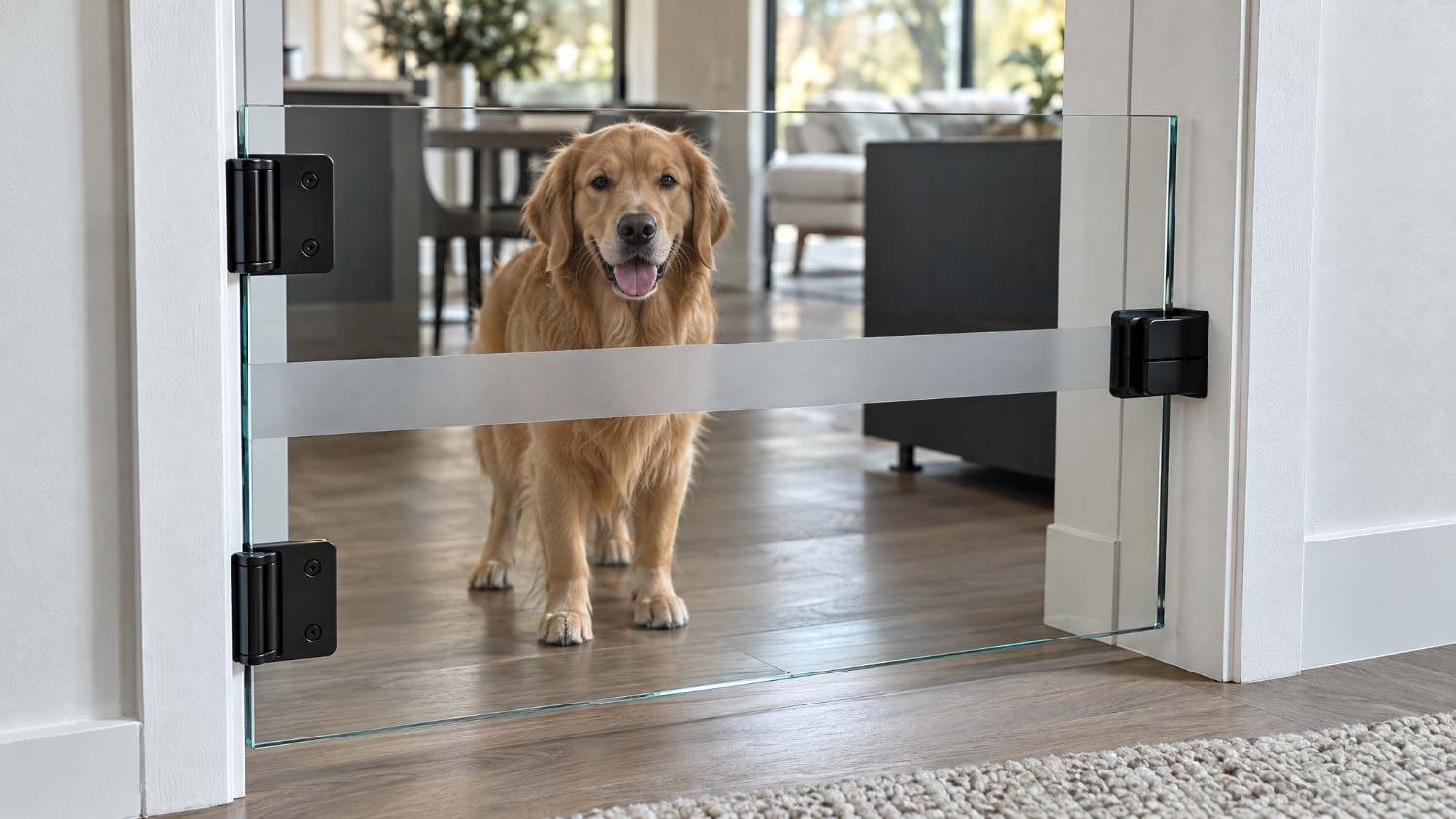
A safe and effective gate is not just about the glass itself. The entire system matters.
1. Measure Carefully: Every opening is different, which is why accurate measurements are important. Ordering custom cut clear glass for the dog gate ensures the panel fits the opening correctly while providing the appearance and functionality your space requires.
2. Prioritize Tempered Safety Glass: This should be the first specification you confirm with the manufacturer or installer.
3. Evaluate Hardware Quality: Choose durable hinges, clamps, and latches designed for the weight of the glass panel.
4. Decide Between Clear and Etched: For homes with active dogs, etched or frosted designs generally provide better visibility than fully clear panels.
5. Consider Children and Pets Together: A pet safety glass gate should work for the entire household, including toddlers, older adults, and multiple pets.
6. Match Your Interior Style
Modern options include:
The best choice balances safety, visibility, durability, and aesthetics.
Dogs often struggle to interpret transparent barriers, especially when reflections, lighting, and excitement are involved. A completely clear panel can appear deceptively open, increasing the risk of accidental collisions.
Etched and frosted glass provide simple but effective visibility markers that help dogs recognize the barrier before contact occurs. When combined with tempered safety glass, polished edges, quality hardware, and proper installation, these designs offer a safer and more pet friendly solution for modern homes.
For homeowners who want a contemporary look without sacrificing indoor safety, a well-designed Glass Dog Gate with decorative etched patterns can provide the best balance of visibility, durability, privacy, and architectural style.
Sometimes, but not always. Dogs may fail to recognize a perfectly transparent panel, especially when it reflects light or reveals a familiar space behind it.
Yes. Etched patterns create contrast and visual markers that make the barrier more noticeable.
No solution can guarantee zero accidents, but frosted or etched glass can significantly reduce the likelihood of a dog running into the panel.
Tempered safety glass is designed for residential safety applications and is generally considered the appropriate choice for interior glass gates and partitions.
Puppies can see glass, but they may have even less experience interpreting transparent barriers, so supervision and training are especially important.
Yes. A properly installed indoor glass dog gate made from tempered architectural glass is designed for everyday household use.
Dogs may react to reflections, but they do not always understand them as reflections of themselves. This can contribute to confusion around glass surfaces.
The appropriate thickness depends on the size of the panel and the mounting system. A professional manufacturer or installer should specify the correct tempered glass thickness for the application.
Decorative etched or frosted glass can improve visibility and reduce the chance of accidental collisions.
Yes, provided the gate uses appropriately sized tempered glass panels and heavy-duty hardware designed for the expected load and activity level.

Explore all things glass—from stylish table tops and insulated options to tinted and frosted designs. Discover guides on glass railings, custom cut glass, shelves, and stunning backsplash ideas for a modern home or office upgrade.