
My Cart
You have no items in your shopping cart.
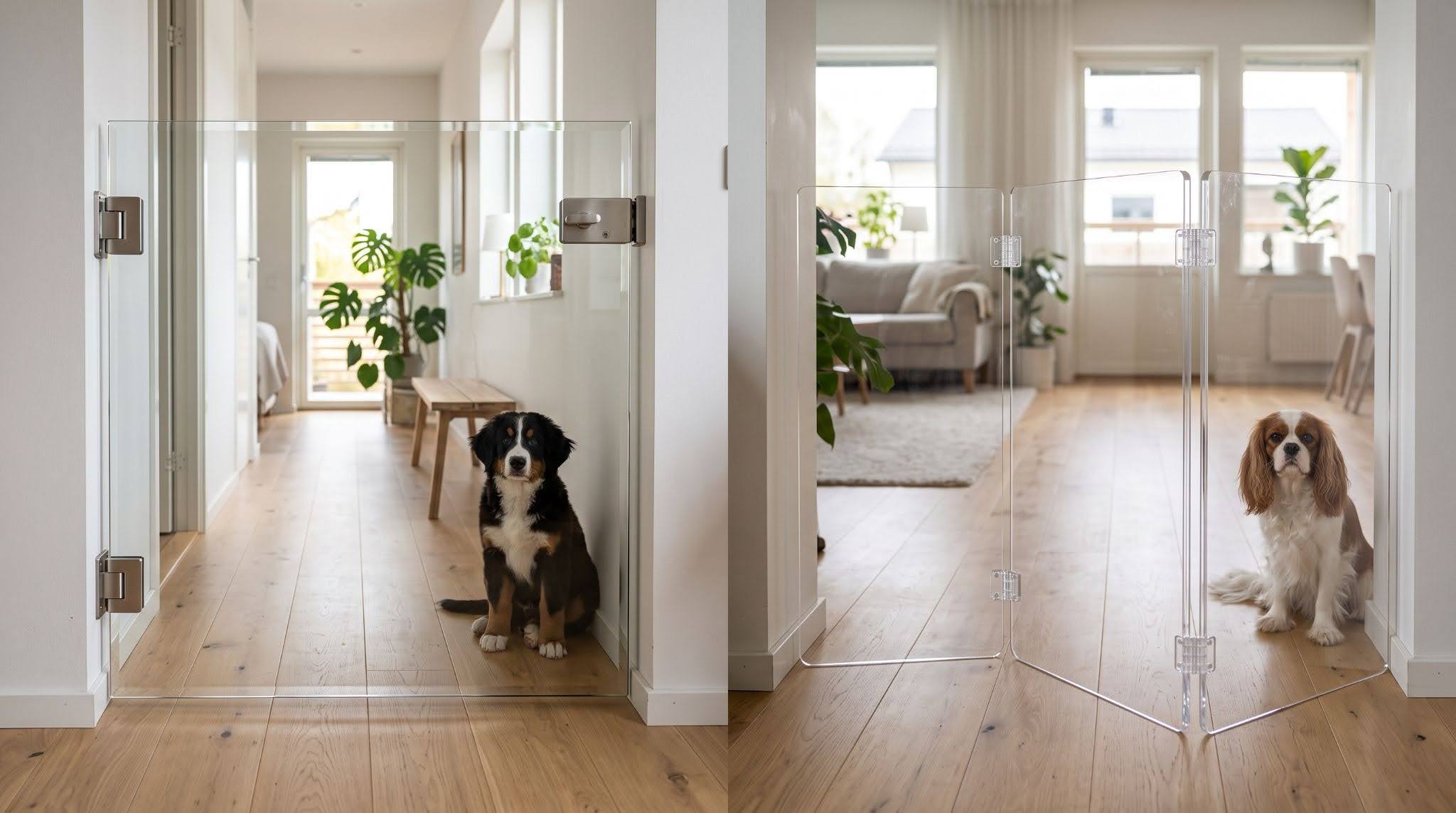
While both materials are popular choices for a modern clear dog barrier, they perform very differently in real-world residential environments.
Many homeowners are drawn to a clear glass dog gate because it preserves an open floor plan, allows natural light to flow, and blends seamlessly with contemporary interiors. However, structural performance varies significantly depending on whether you choose a heavy-duty wall-mounted glass gate or a lightweight, freestanding clear pet gate made of acrylic.
This guide from Fab Glass and Mirror compares both materials across exact technical specifications, costs, and real-world performance to help you choose the best option for your home.
| Feature | Glass | Acrylic |
| Scratch resistance | Excellent | Scratches easily |
| Optical clarity | Outstanding | Good, may haze over time |
| Long-term appearance | Maintains clarity | Can develop fine scratches |
| Cleaning | Easy with standard glass cleaners | Requires specialized care |
| Heat resistance | Excellent | Lower than glass |
| UV resistance | Excellent | May yellow depending on quality and exposure |
| Premium appearance | Excellent | Good |
| Cost | Typically, higher | Usually, lower |
Although both materials appear transparent, they are manufactured differently and have distinct physical properties.
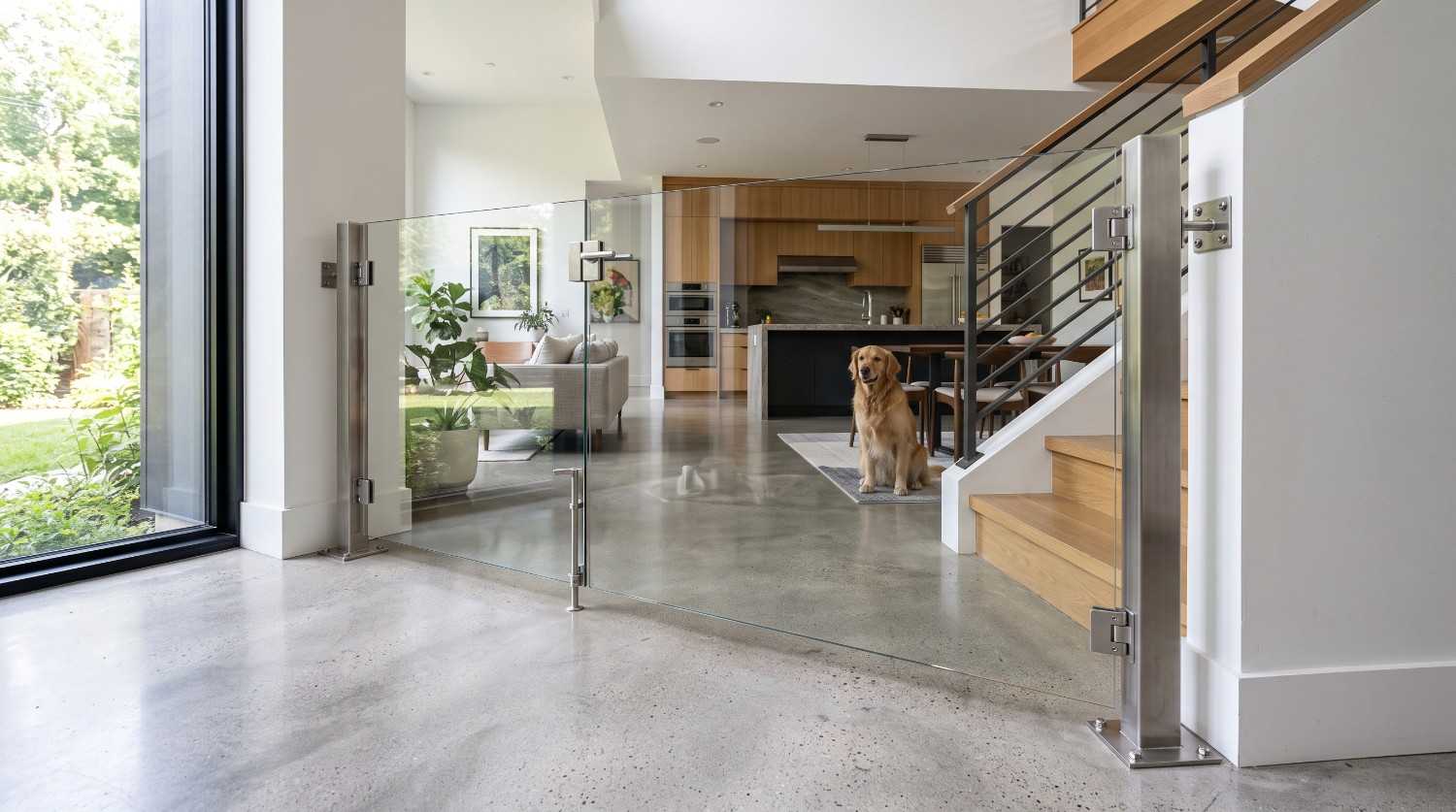
Architectural glass used in pet barriers is typically 3/8-inch to 1/2-inch thick fully tempered safety glass. Through a process of extreme heating and rapid cooling, tempered glass becomes roughly four to five times stronger than standard annealed glass. It offers exceptional scratch resistance, structural rigidity, and permanent optical clarity. However, due to its weight (roughly 3.3 to 5 lbs per square foot), glass almost always requires heavy-duty wall anchor hardware or post-mounting systems.
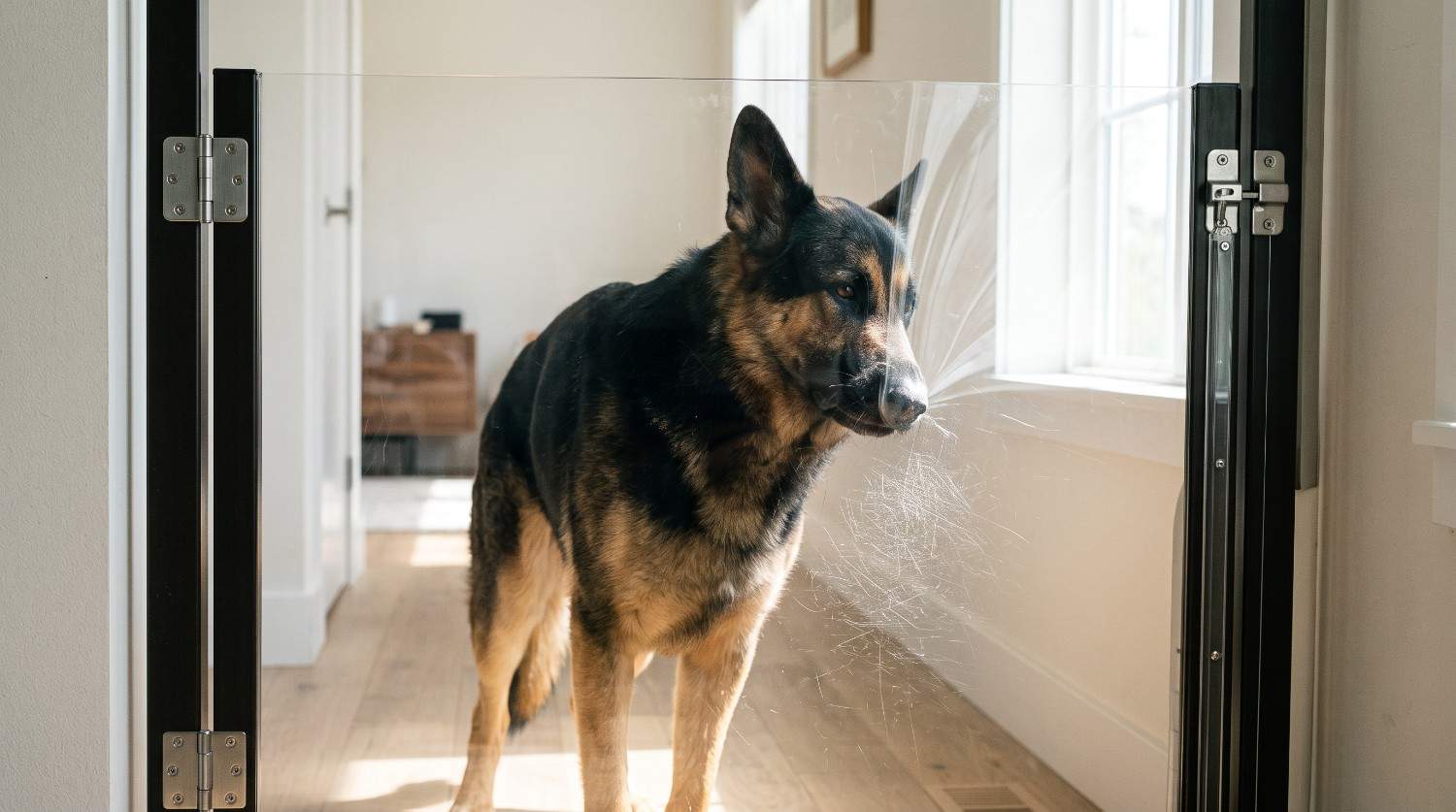
Acrylic (polymethyl methacrylate) is a rigid, transparent thermoplastic that is approximately 50% lighter than glass. High-grade cell-cast acrylic offers good optical clarity and excellent impact resistance, up to 17 times that of standard plate glass, making it virtually shatterproof against dog collisions. However, acrylic has a much softer surface rating than glass, making it far more susceptible to micro-scratches from dog claws, chew attempts, and rough cleaning tools.
Safety should always be the first priority when choosing a pet gate.
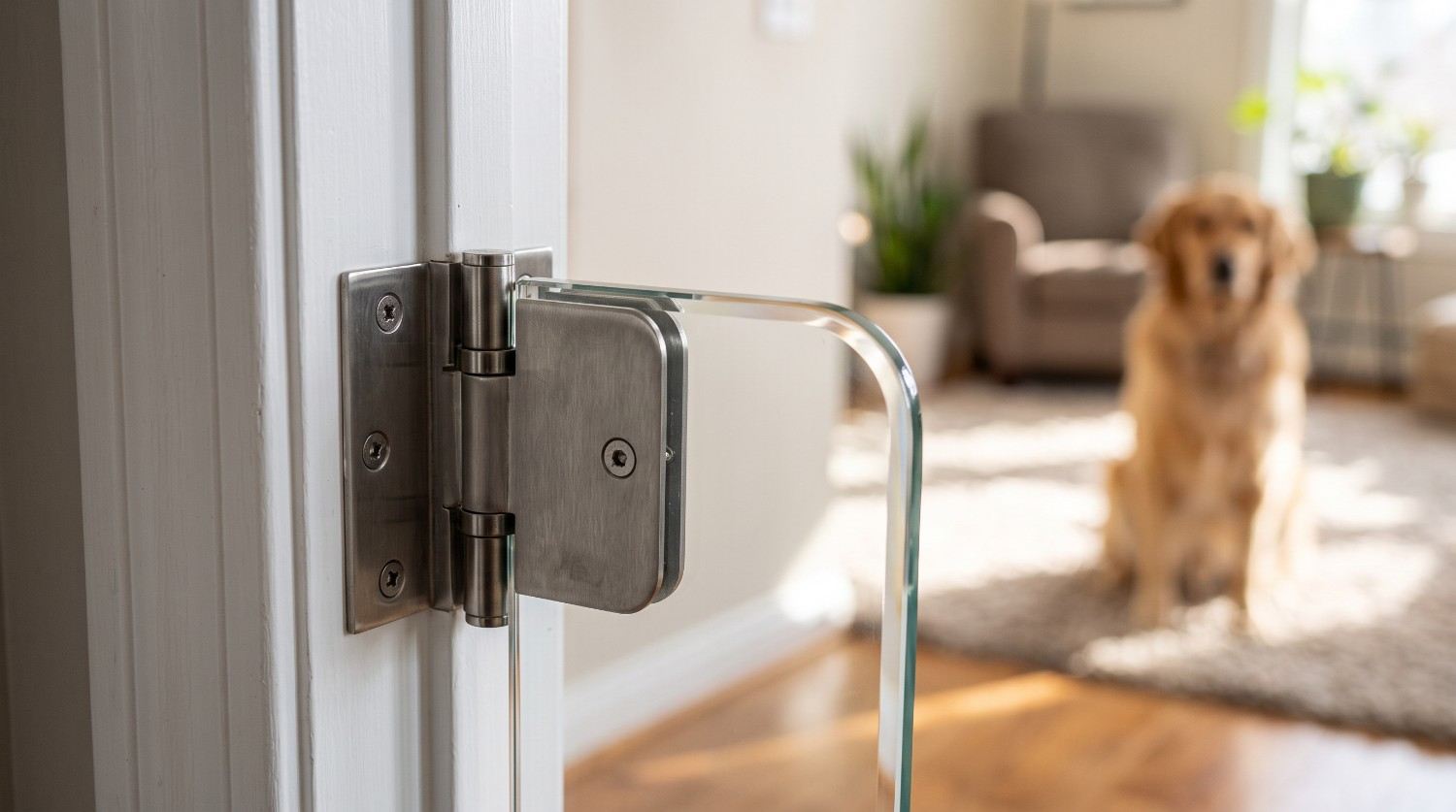
Professionally manufactured tempered safety glass is designed specifically for residential applications. If damaged, it breaks differently than standard glass, reducing the likelihood of dangerous sharp shards.
Additional safety features often include:
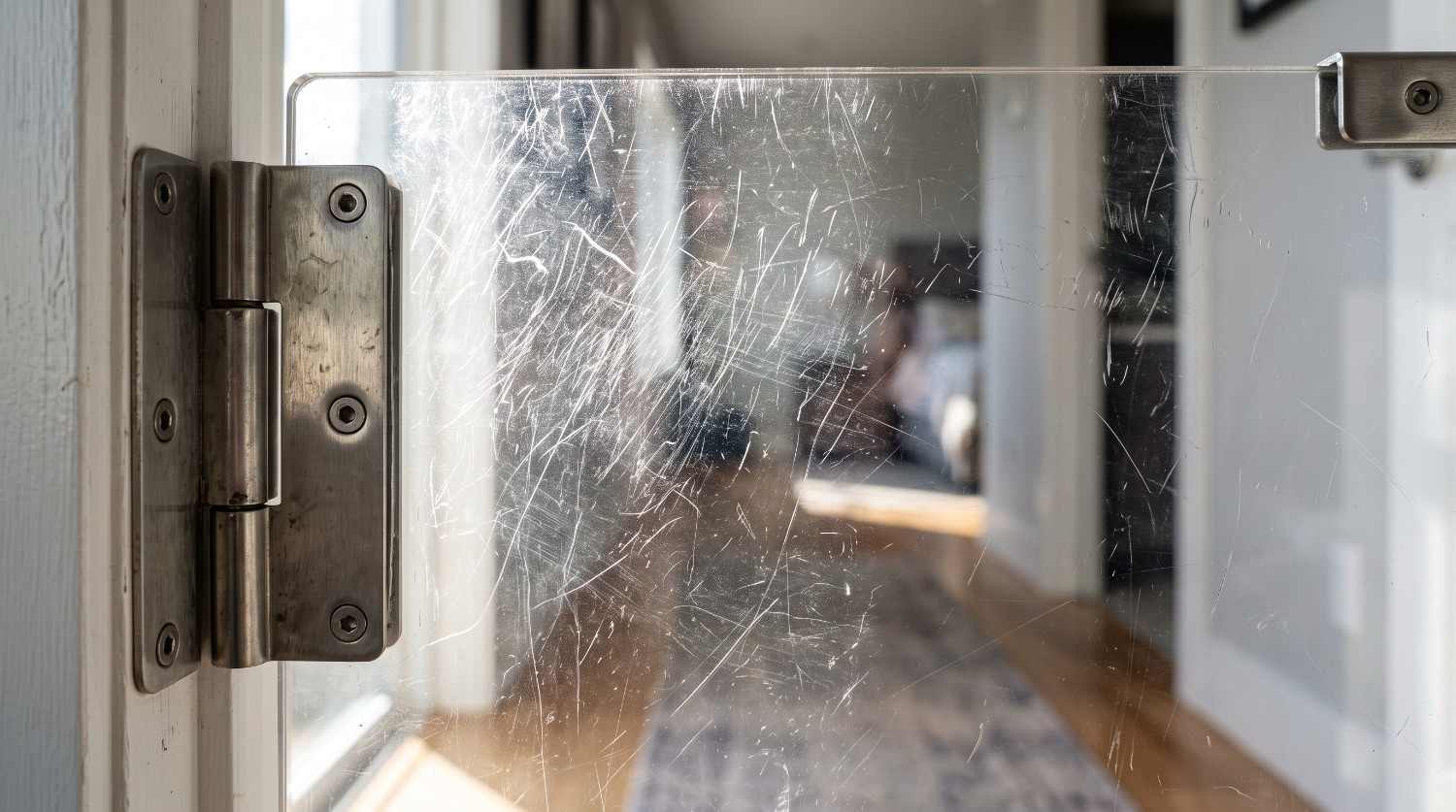
Acrylic is highly impact resistant, but its surface characteristics differ significantly from glass. Over time, repeated scratching and wear can reduce visibility and affect appearance. Neither material should be installed without quality hardware or proper support.
A pet gate experiences daily use, including paw contact, cleaning, opening, and closing.
One of glass’s greatest advantages is its long-term durability. Benefits include:
Glass does not typically develop the cloudy appearance associated with surface scratching.
Although durable in many situations, acrylic is softer than glass. Common concerns include:
For busy households with energetic pets, these maintenance considerations can become noticeable after years of use.
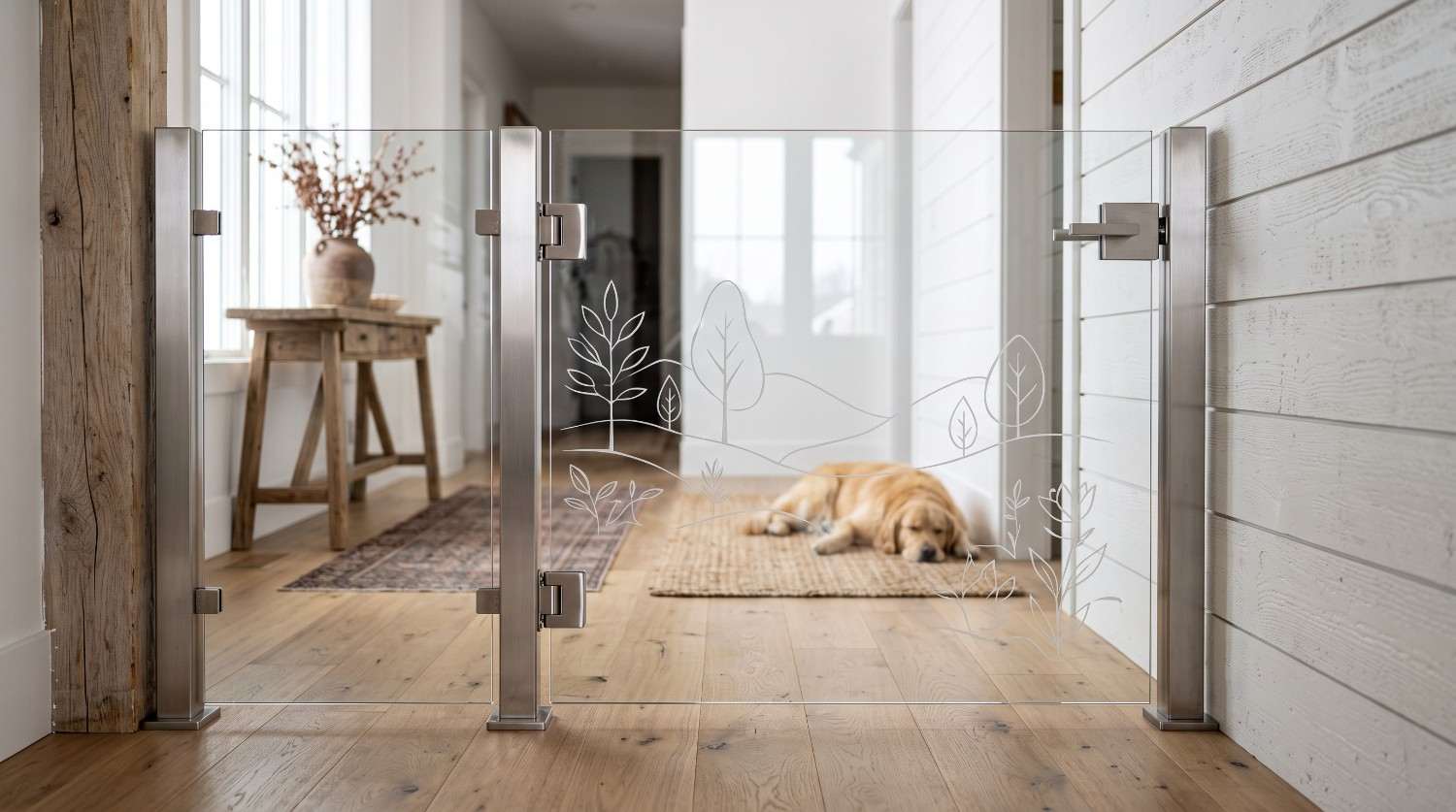
Modern homeowners often choose transparent gates because they preserve the openness of a room.
Glass complements nearly every interior design style, including:
It reflects light naturally while maintaining exceptional clarity. Decorative options include:
These finishes add character without sacrificing sophistication.
Acrylic glass can provide a clean appearance initially, but surface scratches may become more visible under bright lighting. For homeowners seeking a long-term premium aesthetic, glass generally retains its visual appeal more effectively.
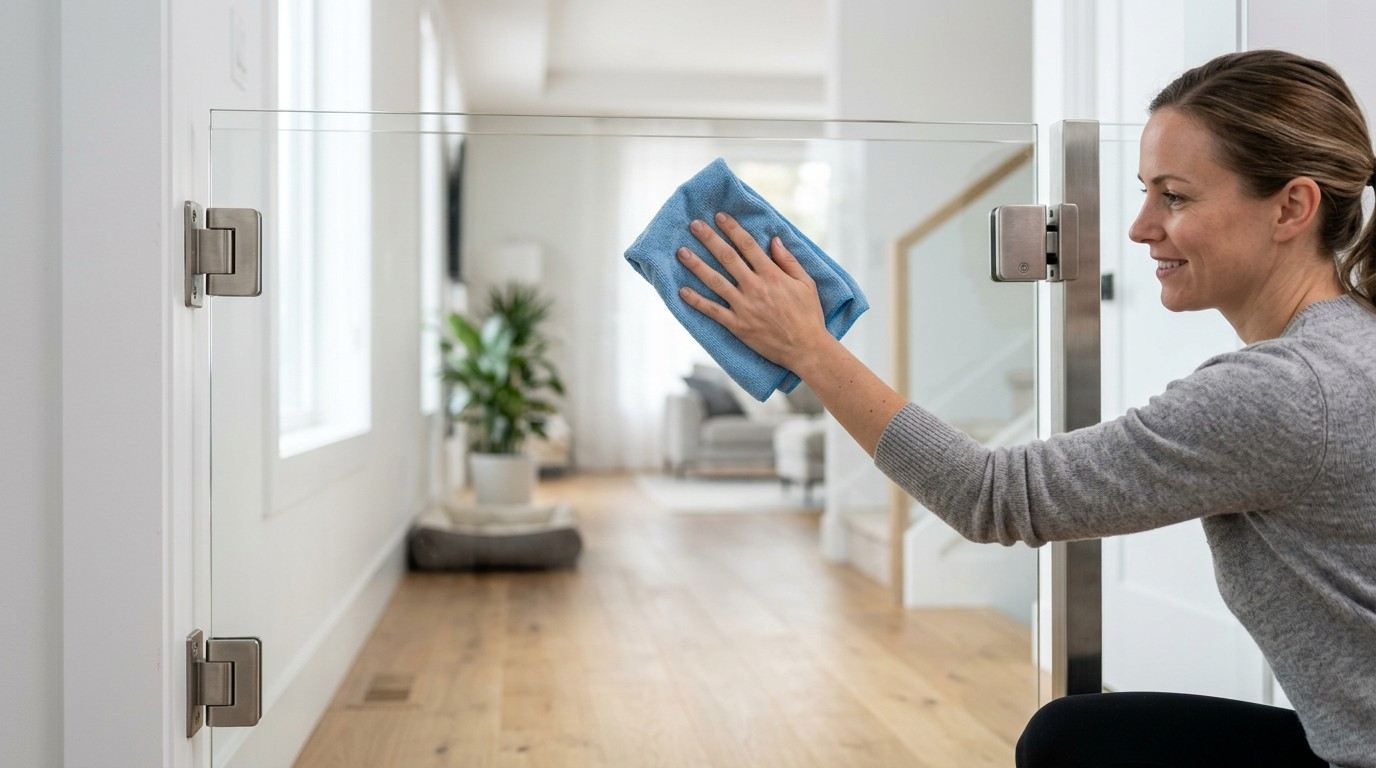
Routine cleaning plays an important role in keeping transparent barriers looking their best.
Glass is relatively simple to maintain. Most homeowners can clean it using:
Because the surface is highly scratch resistant, everyday maintenance is straightforward.
Acrylic requires greater care. Certain cleaners or rough cloths may damage the surface, so manufacturers often recommend specialized cleaning products and soft materials designed specifically for acrylic.
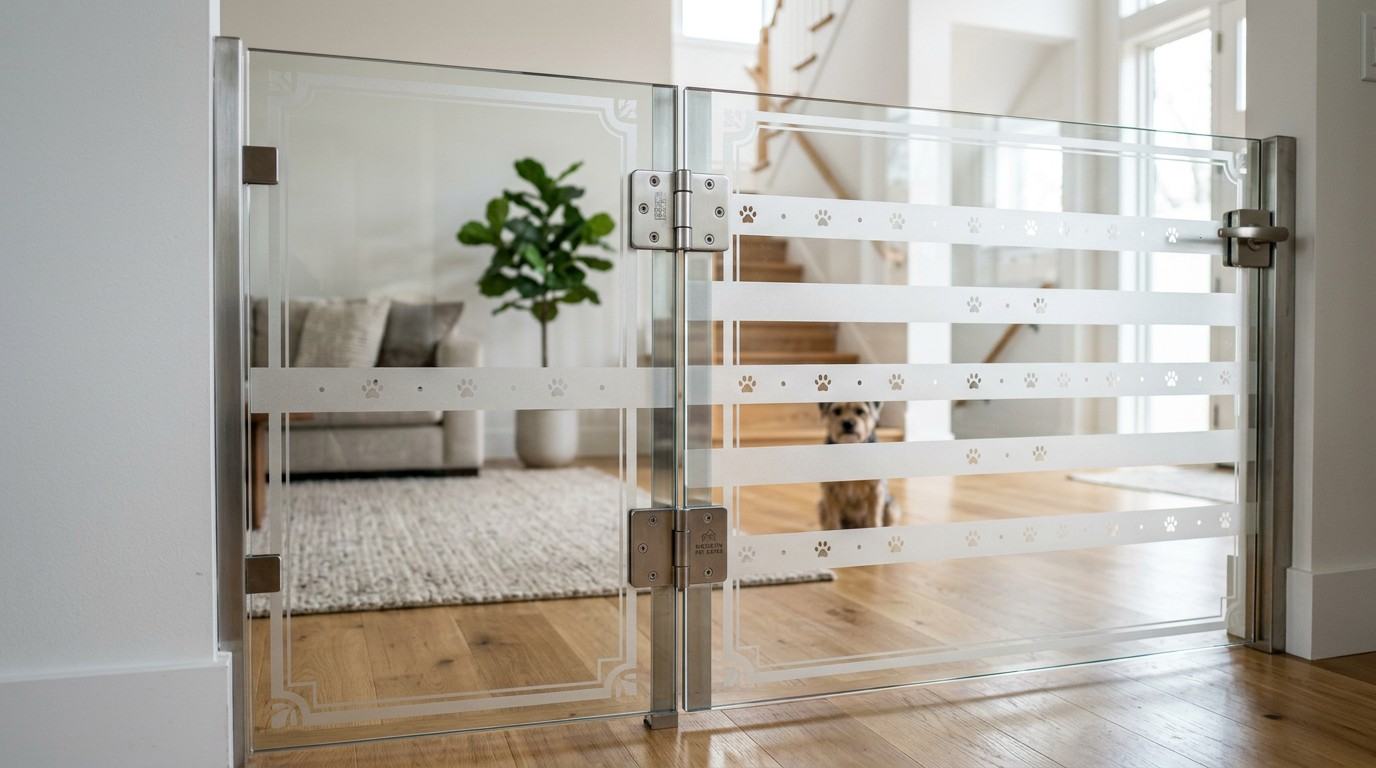
One factor many homeowners overlook is whether pets can easily recognize the barrier. The answer is, perfectly transparent surfaces can sometimes be difficult for dogs to detect, particularly during play or moments of excitement.
Glass gates offer several decorative options that improve visibility, including:
These visual markers help distinguish the barrier while maintaining an elegant appearance. For a detailed explanation of canine vision and practical safety recommendations, read our guide Can Dogs See Glass? How Etched Glass Gates Keep Pets Safe.
| Homeowner TipIf you choose a clear glass dog gate, consider adding etched or frosted elements rather than leaving the entire panel perfectly clear. Decorative patterns improve visibility while enhancing the overall design. |
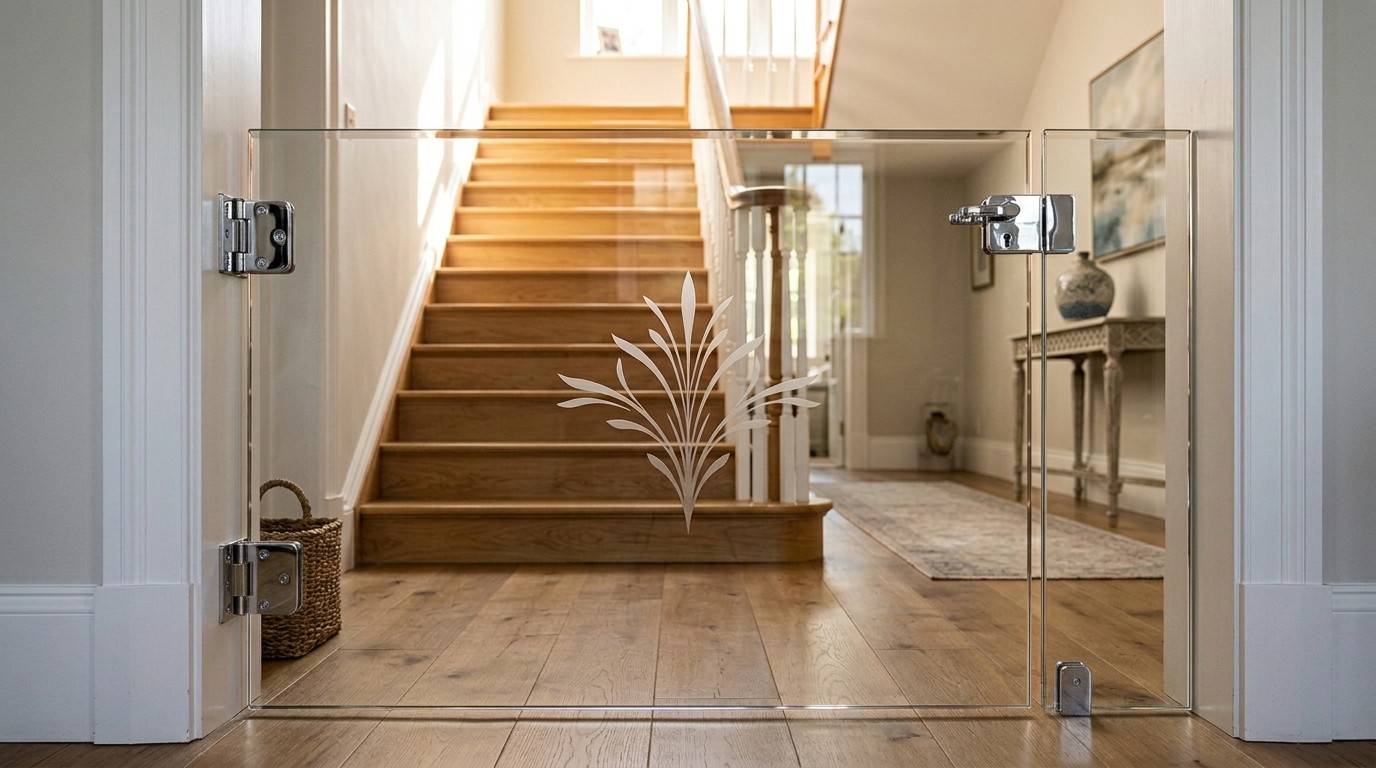
Both materials can be fabricated into different sizes and configurations. Glass offers extensive customization, including:
These options make glass suitable for entryways, hallways, stair openings, and open-concept living spaces.
Initial purchase price is only one part of the equation.
Glass often represents a larger upfront investment because of the manufacturing process and hardware requirements. However, many homeowners consider the long-term value worthwhile because glass:
Acrylic may cost less initially, but long-term maintenance and cosmetic wear should also be considered when evaluating overall value.
| Home Type | Recommended Material |
| Modern interiors | Glass |
| Luxury homes | Glass |
| Multi-pet households | Glass |
| Homes prioritizing long-term durability | Glass |
| Design-focused renovations | Glass |
| Budget-conscious projects | Acrylic may be considered |
Both glass and acrylic can serve as transparent pet barriers, but they offer different advantages. Acrylic provides a lightweight option with a lower initial cost, while glass excels in durability, optical clarity, scratch resistance, and long-term appearance.
For most homeowners, especially those investing in a modern interior, professionally manufactured tempered safety glass offers the best balance of safety, aesthetics, and lasting performance. Decorative options such as etched or frosted finishes can also improve visibility for pets while enhancing the overall design of the space.
When viewed over the life of the product rather than just the purchase price, glass is often the material that delivers greater value, making it the preferred choice for homeowners seeking a durable and elegant pet gate solution.
Tempered safety glass is engineered for residential safety and offers excellent durability for properly installed interior gates. Acrylic is more impact resistant but generally scratches more easily.
Glass typically maintains its optical clarity for many years because it is highly resistant to surface scratching.
Glass is generally easier to maintain using standard household glass cleaners and microfiber cloths.
Yes. Acrylic has a softer surface than glass, making it more susceptible to scratches from everyday use.
Yes. Etched and frosted patterns create visual markers that make transparent barriers easier for many dogs to recognize.
Professionally manufactured tempered safety glass is commonly used in residential applications because it is specifically designed for safety.
Glass is widely regarded as offering the most refined, architectural appearance for residential interiors.
With proper installation and routine care, glass generally maintains its appearance longer because it resists scratching and surface wear.
Yes. Both glass and acrylic can be fabricated in custom sizes and configurations, depending on the manufacturer.
For homeowners seeking durability, long-term appearance, ease of maintenance, and premium design, glass is typically the stronger long-term investment.

Explore all things glass—from stylish table tops and insulated options to tinted and frosted designs. Discover guides on glass railings, custom cut glass, shelves, and stunning backsplash ideas for a modern home or office upgrade.